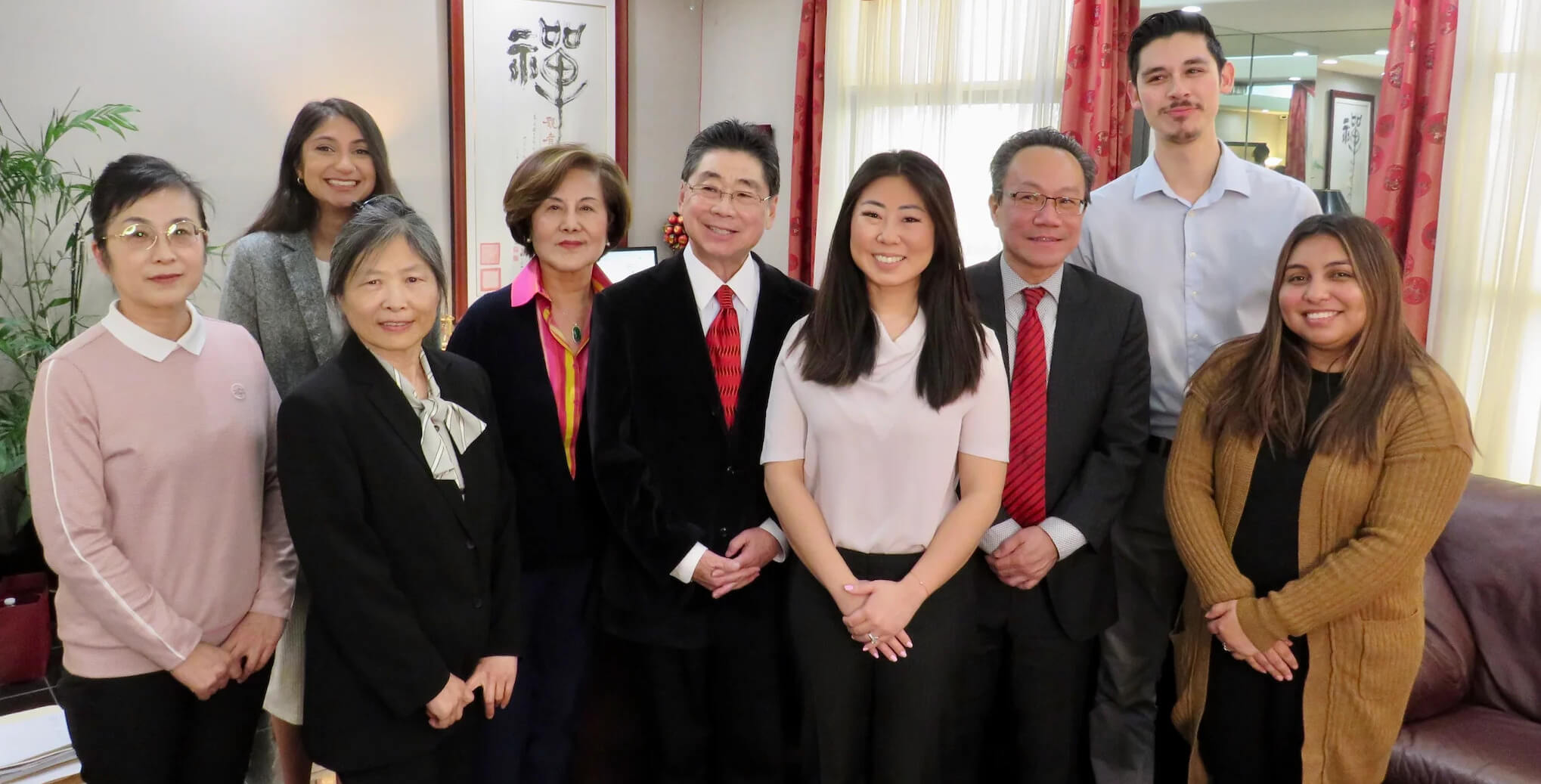

Why Choose Us?

  • Unmatched Expertise

    Trust in Peter Chu's 75+ years of collective experience to guide you through complex immigration matters.

  • Tailored Solutions

    Our personalized strategies adapt to your unique circumstances, ensuring we meet your specific immigration needs.

  • Proven Success

    Benefit from our solid track record in achieving favorable outcomes in various immigration cases across San Diego.

  • Dedicated Service

    Experience our client-first approach that ensures constant support and guidance throughout your immigration journey.

Dallas processed over 12,400 employment-based immigrant visa applications through USCIS Texas Service Center in fiscal year 2025, making it one of the highest-volume EB-1A extraordinary ability visa filing jurisdictions in the United States. For professionals across Uptown, Deep Ellum, and Oak Lawn seeking first preference employment-based classification without labor certification or employer sponsorship, the difference between an approved I-140 petition and a Request for Evidence often comes down to whether a licensed immigration attorney structured the evidence presentation to meet the three-of-ten regulatory criteria under 8 CFR 203.5. Law office of Peter Darwin Chu represents EB-1A petitioners throughout Dallas, TX, and has filed extraordinary ability petitions across scientific research, technology entrepreneurship, athletics, and academic fields in federal immigration proceedings.

Book a Consultation

Law office of Peter Darwin Chu is a licensed immigration law firm serving Dallas residents seeking EB-1A extraordinary ability visa representation — with consultations available within 48 hours, case preparation handled by experienced immigration counsel, and I-140 petition filing coordinated through USCIS Texas Service Center in Irving. The firm represents petitioners who qualify under at least three of the ten evidentiary categories defined in 8 CFR 203.5(h), including original contributions of major significance, published material about the applicant, and judging the work of others in the field.

EB-1A Attorney Dallas Available Across Dallas and Surrounding Areas

Law office of Peter Darwin Chu represents EB-1A extraordinary ability visa applicants throughout Dallas County and surrounding communities in TX — including residents of Uptown, Deep Ellum, Oak Lawn, Preston Hollow, and Lakewood (zip codes 75065, 75201, 75202, 75203, 75204). All Texas residents with qualifying extraordinary ability credentials in sciences, arts, education, business, or athletics are eligible for representation regardless of current employment status or physical location within the state.

What Dallas EB-1A Visa Applicants Can Access

Initial Extraordinary Ability Assessment

A substantive 60-90 minute consultation where we evaluate whether your professional achievements satisfy at least three of the ten regulatory criteria under 8 CFR 203.5(h) — including awards, published material about you, original contributions of major significance, membership in associations requiring outstanding achievement, high salary evidence, and comparable evidence. This assessment includes review of your CV, publications list, citation metrics, media coverage, and letters of recommendation before advising whether EB-1A classification is the appropriate pathway or whether EB-2 NIW or O-1 nonimmigrant status would better serve your case strategy. Dallas applicants typically schedule this consultation within one week of initial contact.

EB-1A Visa I-140 Petition Preparation and Filing

Comprehensive preparation of Form I-140 Immigrant Petition for Alien Workers with supporting evidence organized by regulatory category — including expert opinion letters drafted by recognized authorities in your field, detailed exhibit lists cross-referenced to petition arguments, and a legal brief addressing how your sustained national or international acclaim satisfies the two-prong test established in Kazarian v. USCIS (2010). We coordinate directly with your expert letter writers, obtain certified translations of foreign-language documents, and prepare you for potential Requests for Evidence before filing with USCIS Texas Service Center. Filing fees currently total $700 (I-140 base) plus $2,805 (premium processing if elected).

Response to USCIS Requests for Evidence

If USCIS issues an RFE questioning whether your evidence demonstrates sustained acclaim or whether you will continue working in your area of extraordinary ability in the United States, we prepare a comprehensive response brief with supplemental evidence — additional expert letters, updated citation reports, new awards or recognition received since filing, and legal argument addressing each USCIS concern. RFE response timelines in EB-1A cases are typically 87 days from issuance, and premium processing is not available during the RFE response period.

Immigrant Visas Adjustment of Status and Consular Processing Coordination

Once your I-140 is approved and a visa number is immediately available (EB-1 category is current for all countries as of January 2026), we file Form I-485 Application to Register Permanent Residence if you are in the United States, or coordinate DS-260 consular processing if you are abroad. Dallas applicants adjusting status file with USCIS National Benefits Center and typically wait 8-14 months for interview scheduling at the Dallas USCIS Field Office.

Get clear, expert legal guidance tailored to your visa, green card, or citizenship needs.

Licensed Immigration Counsel in Dallas, TX

Law office of Peter Darwin Chu maintains all required Texas state bar licenses and professional liability coverage as mandated for immigration law practice. We operate under American Immigration Lawyers Association ethical standards and comply with 8 CFR 1003.102 governing representation before USCIS, Immigration Court, and Board of Immigration Appeals. All client funds are held in IOLTA-compliant trust accounts, and all fee agreements are provided in writing before representation begins as required under Texas Disciplinary Rules of Professional Conduct Rule 1.04. We do not guarantee petition approval outcomes — USCIS adjudication decisions are discretionary and based on evidence presented — but we provide transparent case assessments based on current regulatory standards and published USCIS policy guidance.

Inquire now to check if you qualify

What If I Don't Have All Ten Extraordinary Ability Criteria — Can I Still Apply for EB-1A in Dallas?

Yes — you need to satisfy only three of the ten regulatory criteria listed in 8 CFR 203.5(h), not all ten. The most commonly satisfied criteria are: published material about you in professional or major media, original contributions of major significance to your field, and authorship of scholarly articles. If you cannot meet three of the standard ten, you may submit 'comparable evidence' under the catch-all provision, though this requires stronger legal argument. Many Dallas EB-1A applicants qualify through a combination of citations (demonstrating influence), media coverage (demonstrating acclaim), and expert letters (documenting contributions) even without major prizes or high salary evidence.

What If USCIS Issues a Request for Evidence on My Dallas EB-1A Petition?

Approximately 40-50% of EB-1A petitions receive Requests for Evidence, most commonly questioning whether your acclaim is 'sustained' or whether your achievements rise to 'extraordinary' level compared to others in the field. An RFE is not a denial — it is an opportunity to submit additional evidence and legal argument. Law office of Peter Darwin Chu responds to RFEs with supplemental expert letters, updated citation metrics, new awards or recognition obtained since filing, and detailed legal briefs addressing each USCIS concern point-by-point. RFE responses must be filed within 87 days of issuance, and the quality of the response often determines approval or denial.

What If My EB-1A Petition Is Denied — Can I Refile in Dallas?

Yes — there is no limit on the number of times you may file an EB-1A petition, and a prior denial does not bar future applications if your credentials have strengthened. The key is addressing the specific deficiencies identified in the denial notice — typically insufficient evidence of sustained acclaim, lack of original contributions, or failure to demonstrate that you will continue work in your area of extraordinary ability in the United States. Many Dallas applicants successfully refile after obtaining additional expert letters, publishing new research, receiving new awards, or accumulating more citations. We review denial notices during initial consultations to assess whether refiling is strategically sound.

What If I'm Currently on an H-1B Visa — Can I Apply for EB-1A While Working in Dallas?

Yes — you can file an EB-1A petition while in H-1B status, and your current employer does not need to sponsor the petition or even know you are filing. EB-1A is a self-petition that does not require a job offer or labor certification. If approved, you can file I-485 adjustment of status immediately (EB-1 category is current) and obtain work authorization (EAD) and advance parole travel documents while waiting for your green card interview. Many Dallas professionals in technology, research, and business fields pursue EB-1A while maintaining H-1B employment as a dual-track immigration strategy.

Why Dallas Professionals Choose Law office of Peter Darwin Chu Over Alternative EB-1A Filing Methods

Dallas EB-1A applicants typically consider three pathways: self-filing the I-140 petition using online templates, hiring a general immigration firm that handles all visa categories, or retaining specialized EB-1A extraordinary ability visa Dallas counsel with direct experience in this classification. Here's the honest answer: EB-1A petitions have the highest evidentiary burden of any employment-based immigrant category — you must prove sustained national or international acclaim and demonstrate that you rank among the small percentage who have risen to the very top of your field. Template-based filings fail to address the two-prong Kazarian test that USCIS applies to every EB-1A petition, and general immigration firms often lack the technical expertise to evaluate whether your research citations, conference presentations, or industry awards satisfy 'original contribution of major significance' standards under current adjudication policy. Law office of Peter Darwin Chu limits its practice to employment-based and nonimmigrant visa matters for professionals in sciences, technology, business, and athletics — ensuring every petition is drafted by counsel familiar with field-specific evidence standards and current USCIS policy memoranda.

| Filing Method | Evidence Organization | Expert Letter Quality | RFE Response Experience | Bottom Line |
|---|---|---|---|
| Self-Filing | Unstructured document upload | Generic templates | No legal argument | High denial risk — lacks regulatory framework |
| General Immigration Firm | Basic checklist approach | Standard recommendation letters | Limited EB-1A case history | May miss field-specific evidence opportunities |
| Immigration Attorney Dallas Specialized Counsel | Organized by 8 CFR 203.5(h) criteria | Detailed expert opinions from recognized authorities | Track record in this classification | Strongest positioning for sustained acclaim standard |
| Law office of Peter Darwin Chu | Cross-referenced legal brief with exhibit numbering | Coordinates directly with expert letter writers in your field | RFE response includes supplemental evidence and case law | Purpose-built for extraordinary ability classification |

Get in touch

Frequently Asked Questions

Find answers to common questions about our services

  • Standard I-140 processing at USCIS Texas Service Center currently averages 6-9 months from filing to decision. Premium processing is available for an additional $2,805 fee and guarantees a decision within 15 calendar days, though this timeline applies onl

  • You must satisfy at least three of ten regulatory criteria under 8 CFR 203.5(h): receipt of major internationally recognized awards, membership in associations requiring outstanding achievement, published material about you in major media, judging the wor

  • Yes — EB-1A is a self-petition that does not require employer sponsorship, job offer, or labor certification. You must demonstrate that you intend to continue working in your area of extraordinary ability in the United States, but this can be through self

  • EB-1A legal fees typically range from $8,000 to $15,000 for full I-140 petition preparation, depending on case complexity and the number of expert letters required. This fee covers consultation, evidence evaluation, drafting the legal brief, coordinating

  • EB-1A requires proof of extraordinary ability and sustained national or international acclaim — you must rank at the very top of your field. EB-2 National Interest Waiver requires advanced degree (or bachelor's plus five years progressive experience) and

  • Yes — your spouse and unmarried children under 21 are eligible for derivative green cards as EB-1 dependents. They do not need to independently qualify for extraordinary ability. You list them on Form I-140, and they file their own I-485 adjustment applic

  • Changing employers after filing your I-140 does not affect your EB-1A petition — it is a self-petition tied to you, not your employer. However, you must continue working in your area of extraordinary ability. If you move from research to an unrelated fiel

  • No — EB-1A representation is not location-dependent. Law office of Peter Darwin Chu represents clients throughout Texas and nationwide, with consultations conducted by video conference and all case documents exchanged electronically. You file your I-140 w

Need Personalized Immigration Guidance?

Law office of Peter Darwin Chu provides EB-1A attorney Dallas representation for extraordinary ability visa applicants throughout Texas, with I-140 petition preparation, USCIS RFE response, and adjustment of status coordination available through our licensed immigration counsel team.

Related Immigration Services for Dallas Professionals

Dallas professionals pursuing employment-based immigration often evaluate multiple visa classifications depending on their career stage and credentials. If you do not yet meet all three EB-1A criteria, consider the EB-2 Visa National Interest Waiver pathway, which requires advanced degree or exceptional ability but has a lower evidentiary threshold than extraordinary ability classification. Technology entrepreneurs and startup founders may qualify for E-2 Visa Investment status if investing substantial capital in a U.S. enterprise. Athletes, artists, and entertainment professionals often begin with O-1 Visa Guidance nonimmigrant status before transitioning to EB-1A Visa immigrant classification once their acclaim is sustained over multiple years. Researchers and academics should also review EB-1B Visa outstanding professor or researcher classification if employed by a university or private research institution. For professionals in Los Angeles and Southern California, we also serve clients through our EB-1A Visa Los Angeles and EB-1A Visa Long Beach practice locations.

Speak With Us Today