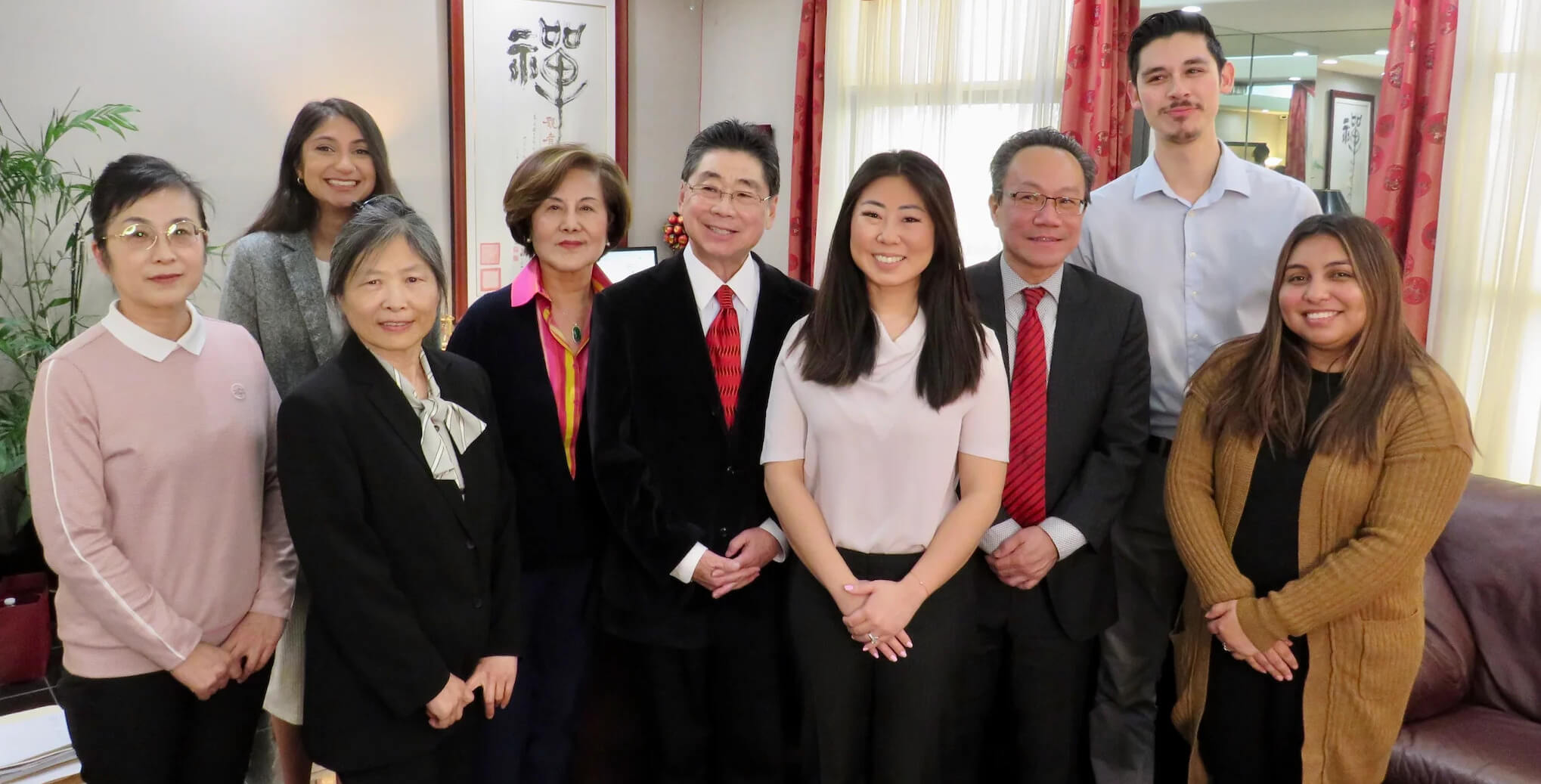

Why Choose Us?

  • Unmatched Expertise

    Trust in Peter Chu's 75+ years of collective experience to guide you through complex immigration matters.

  • Tailored Solutions

    Our personalized strategies adapt to your unique circumstances, ensuring we meet your specific immigration needs.

  • Proven Success

    Benefit from our solid track record in achieving favorable outcomes in various immigration cases across San Diego.

  • Dedicated Service

    Experience our client-first approach that ensures constant support and guidance throughout your immigration journey.

Denver's technology and research sectors employed over 180,000 professionals in 2025, creating one of the nation's fastest-growing pools of EB-1A extraordinary ability visa candidates — from quantum computing researchers at CU Boulder to renewable energy innovators across the Front Range. For professionals seeking permanent residency through the EB-1A extraordinary ability category, the difference between approval and a Request for Evidence often comes down to whether your petition demonstrates sustained national acclaim through evidence standards USCIS adjudicators actually apply. Law Office of Peter Darwin Chu has represented EB-1A petitioners across Denver, CO, and understands how to document extraordinary ability claims under the ten regulatory criteria established in 8 CFR 204.5(h)(3). We serve clients throughout the Denver metro area with case assessments typically scheduled within five business days.

Book a Consultation

Law Office of Peter Darwin Chu is a Colorado-licensed immigration law firm serving Denver residents seeking EB-1A extraordinary ability visa representation — with case strategy sessions available by phone, video conference, or in-person consultation at our office. We prepare petitions that address all ten USCIS evidentiary criteria, including evidence of original contributions of major significance, authorship of scholarly articles, and membership in associations requiring outstanding achievement. Our practice focuses exclusively on employment-based immigration, ensuring every EB-1A case receives specialized attention from an attorney familiar with both USCIS policy memoranda and Administrative Appeals Office precedent decisions.

EB-1A Attorney Denver Available Across Denver and Surrounding Areas

Law Office of Peter Darwin Chu represents EB-1A extraordinary ability visa petitioners throughout Denver, CO, and the Front Range corridor — including professionals in Capitol Hill (80203), LoDo and Union Station (80202), Five Points and RiNo (80205), Highland and Berkeley (80211), and Washington Park neighborhoods (80209). We also serve clients in zip codes 80201, 80202, 80203, 80204, and 80205, with virtual consultations available for Colorado residents statewide who cannot travel to our office for initial meetings.

What Denver EB-1A Petitioners Can Access

Extraordinary Ability Criteria Assessment

Every EB-1A petition must demonstrate that the beneficiary meets at least three of ten regulatory criteria established in 8 CFR 204.5(h)(3) — or provide evidence of a one-time achievement such as a Pulitzer Prize, Oscar, or Olympic medal. For Denver professionals in technology, academia, renewable energy, and aerospace engineering, this typically means documenting evidence such as: original contributions of major significance to the field, authorship of scholarly articles with significant citation records, membership in associations requiring outstanding achievement judged by recognized experts, or serving as a judge of the work of others in the same field. Law Office of Peter Darwin Chu conducts a preliminary criteria assessment during the initial consultation to identify which three-plus criteria your professional record supports and which evidence gaps must be addressed before filing. Many petitioners incorrectly assume that a doctoral degree, patents, or conference presentations alone establish extraordinary ability — they do not under current USCIS policy.

Evidence Documentation and Expert Opinion Letters

USCIS adjudicators evaluate EB-1A petitions under a two-step framework established in Kazarian v. USCIS (9th Cir. 2010) and refined in the 2010 USCIS Policy Memorandum on EB-1 petitions. First, USCIS determines whether the petitioner meets at least three regulatory criteria. Second, USCIS evaluates the totality of evidence under a final merits determination to assess whether the petitioner has sustained national or international acclaim. This means submitting evidence that meets the regulatory criteria is necessary but not sufficient — the evidence must also demonstrate that you are among the small percentage who have risen to the top of your field. We prepare petitions that address both prongs, including independent expert opinion letters from recognized authorities in your field who can evaluate your contributions' significance and impact. For Denver eb-1a extraordinary ability visa cases involving emerging technologies or interdisciplinary research, securing credible expert opinions often determines whether USCIS issues an approval or a Request for Evidence.

EB-1A Visa Priority Date and Processing Strategy

Unlike EB-2 and EB-3 employment-based categories, the EB-1A extraordinary ability category is typically current for all countries except India and China, meaning approved petitions can proceed to adjustment of status or consular processing without years-long visa bulletin backlogs. However, USCIS premium processing for EB-1A petitions — which guarantees a 15-day adjudication timeline — costs an additional $2,805 as of 2026 and does not guarantee approval, only a faster initial decision. Law Office of Peter Darwin Chu advises Denver clients on whether premium processing is strategically necessary based on work authorization gaps, pending H-1B expirations, or family immigration timelines. We also prepare concurrent I-485 adjustment of status applications when the EB-1A category is current, allowing petitioners to obtain work authorization (EAD) and advance parole travel documents while the green card application is pending.

Get in touch

Get clear, expert legal guidance tailored to your visa, green card, or citizenship needs.

Licensed Colorado Immigration Practice

Law Office of Peter Darwin Chu maintains Colorado state bar admission and complies with all American Immigration Lawyers Association (AILA) professional standards governing immigration representation. Our practice operates under Colorado Rules of Professional Conduct Rule 1.1 (competence) and Rule 1.3 (diligence), ensuring every eb-1a attorney denver case receives thorough legal research, evidence review, and petition preparation before filing. We provide written fee agreements that specify scope of representation, itemized costs for USCIS filing fees and expert opinion letters, and clear timelines for petition preparation — typically 8–12 weeks from engagement to filing for straightforward EB-1A cases with complete evidence documentation. Immigration law is federal practice, meaning our Colorado license authorizes us to represent clients before USCIS, Immigration Courts, and the Board of Immigration Appeals regardless of where the petitioner resides or where the case is adjudicated.

Inquire now to check if you qualify

What If I Have a Doctoral Degree and Publications But USCIS Previously Denied My EB-1A Petition in Denver?

A prior EB-1A denial does not permanently bar you from refiling — USCIS adjudicates each petition based on the evidence submitted, and many petitioners who receive initial denials succeed on a subsequent filing after strengthening their evidence record. The most common reasons for EB-1A denials are: (1) failure to demonstrate that the petitioner's contributions constitute major significance to the field, not merely competent work; (2) insufficient independent evidence that the petitioner is among the small percentage at the top of the field; and (3) expert opinion letters that are conclusory rather than analytical, failing to explain how the petitioner's work advanced the field. If you received a denial, Law Office of Peter Darwin Chu reviews the USCIS decision notice to identify the specific evidentiary deficiencies cited by the adjudicator, then develops a strategy to address those gaps — whether through additional publications, citation analysis, media coverage, or more credible expert opinions — before refiling. Refiling too quickly without substantive evidence improvements typically results in a second denial.

What If My Field Is Highly Specialized and USCIS Adjudicators May Not Understand Its Significance in Denver?

USCIS adjudicators are immigration officers, not subject matter experts in quantum computing, aerospace propulsion, renewable energy materials science, or other specialized fields common among Denver EB-1A petitioners. This is precisely why expert opinion letters from recognized authorities in your field are critical — they provide the adjudicator with context to evaluate whether your work constitutes a major contribution or is incremental research. The expert letters must explain: (1) the specific problem your work addresses, (2) why prior approaches were inadequate, (3) how your methodology or findings represent a significant advance, and (4) evidence of adoption or citation by other researchers demonstrating real-world impact. Generic letters stating you are 'highly qualified' or 'an expert' fail to meet this standard. For Denver professionals in emerging fields, we identify expert letter writers who have published in the same journals, hold leadership positions in the relevant professional associations, and can credibly assess your work's significance relative to the field's current state.

What If I Am Currently on an H-1B Visa and My Employer Won't Sponsor My Green Card in Denver?

The EB-1A extraordinary ability category does not require employer sponsorship — you petition for yourself, making it one of only two employment-based green card categories (along with the EB-2 National Interest Waiver) that allow self-petitioning. This means you can file an EB-1A petition while on H-1B status without your employer's knowledge or approval, and if approved, you can adjust status to permanent resident independently. However, your EB-1A petition must demonstrate that you intend to continue working in your field of extraordinary ability in the United States — USCIS will issue a Request for Evidence if your petition lacks evidence of a job offer, consulting contracts, or a business plan showing how you will continue contributing to your field after obtaining the green card. For Denver H-1B holders in technology or research roles, we prepare petitions that include letters from potential collaborators, evidence of ongoing projects, or a detailed business plan if you intend to launch a startup or consulting practice.

What If I Have Strong Evidence for Only Two of the Ten EB-1A Criteria in Denver?

You must meet at least three of the ten regulatory criteria to qualify for EB-1A classification under 8 CFR 204.5(h)(3), unless you can demonstrate a one-time achievement of major internationally recognized significance (Pulitzer, Nobel, Olympic medal, etc.). If your professional record clearly supports only two criteria, an EB-1A petition filed now will almost certainly result in denial. However, many Denver petitioners underestimate the evidence they possess because they misunderstand how USCIS defines each criterion. For example, 'judging the work of others' includes peer review of journal submissions, grant proposal evaluations, or PhD dissertation committees — not only editorial board positions. 'Original contributions of major significance' can be demonstrated through citation analysis, patents with commercial adoption, or regulatory changes influenced by your research — not only breakthrough discoveries. Law Office of Peter Darwin Chu conducts a detailed evidence inventory during the initial consultation to determine whether you have unrecognized evidence supporting a third or fourth criterion, or whether you should delay filing for 6–12 months to develop additional qualifying evidence.

Choosing an EB-1A Attorney in Denver vs. DIY Filing or General Immigration Firms

Denver professionals considering EB-1A petitions face three primary options: self-filing using online templates, hiring a general immigration attorney who handles all visa types, or engaging a firm with focused employment-based immigration experience. Here's the honest answer: EB-1A petitions are the most difficult employment-based category to win because USCIS applies a subjective standard ('small percentage at the top of the field') that requires not just meeting regulatory criteria but persuading an adjudicator that your evidence demonstrates sustained national or international acclaim. Self-filed petitions have approval rates below 40% according to USCIS data, primarily because petitioners submit evidence that technically meets the criteria but fails the final merits determination — leading to Requests for Evidence or outright denials that consume 6–12 months and the $1,015 filing fee. General immigration attorneys who handle EB-1A cases alongside family petitions, asylum applications, and naturalization matters often lack the specialized knowledge of recent AAO decisions, USCIS policy memoranda updates, and the specific types of expert opinion letters that survive scrutiny in 2026. Law Office of Peter Darwin Chu limits its practice to employment-based immigration, including EB-1A, EB-1B, EB-2, O-1, and L-1 visa categories, ensuring every case is handled by an attorney who has prepared dozens of extraordinary ability petitions and understands how USCIS distinguishes between competent professional work and true national acclaim.

ApproachEvidence StrategyExpert OpinionsFinal Merits AnalysisProfessional Assessment
Self-FilingGeneric templates, often missing critical supporting documentsRarely obtained or generic letters from colleaguesPetitioner assumes meeting 3 criteria = approvalHigh denial risk — 40% approval rate
General Immigration FirmMeets regulatory criteria but lacks depth analysisOften one expert letter, insufficient detailLimited AAO precedent knowledgeModerate risk — inconsistent outcomes
Specialized EB-1A PracticeComprehensive evidence development addressing both Kazarian prongsMultiple independent experts with field authorityStrategic narrative addressing 'top of field' standardLaw Office of Peter Darwin Chu approach — maximizes approval probability
Online Document ServicesForm completion only, no legal analysisNone — petitioner must arrangeNo merits evaluationNot legal representation — high failure rate

Frequently Asked Questions

Find answers to common questions about our services

  • Standard USCIS processing for EB-1A petitions ranges from 6 to 12 months depending on the service center assigned to your case — most Denver filings are processed at the Nebraska Service Center or Texas Service Center. You can request premium processing f

  • Yes, you can file an EB-1A petition while in the United States on B-1/B-2 visitor status, but you cannot adjust status to permanent resident from B-1/B-2 status unless you can demonstrate that you did not have immigrant intent at the time of entry. USCIS

  • Legal fees for EB-1A representation typically range from $8,000 to $15,000 depending on case complexity, the number of expert opinion letters required, and whether you need premium processing or have prior denials requiring additional briefing. This fee c

  • No, the EB-1A extraordinary ability category does not require a job offer or labor certification — you petition for yourself based on your past achievements and evidence that you will continue working in your field in the United States. However, USCIS wil

  • Yes, your spouse and unmarried children under 21 are eligible for derivative E-14 and E-15 immigrant visas based on your approved EB-1A petition. They can either adjust status concurrently with your I-485 application if you are in the United States, or ap

  • A Request for Evidence (RFE) means USCIS needs additional documentation or clarification before making a final decision — it is not a denial, but it significantly reduces your approval odds if not responded to strategically. Common RFE issues in EB-1A cas

  • The O-1 visa is a temporary nonimmigrant classification for individuals with extraordinary ability, while the EB-1A is a permanent resident (green card) category. The evidentiary standards are similar but not identical — O-1 requires sustained national or

  • Yes, if your EB-1A petition is denied, you can file an appeal to the USCIS Administrative Appeals Office (AAO) within 30 days of the denial notice, or you can file a motion to reopen or reconsider with the same service center that issued the denial. Appea

Need Personalized Immigration Guidance?

Law Office of Peter Darwin Chu provides eb-1a attorney denver services to Colorado extraordinary ability visa petitioners through comprehensive case assessments, evidence strategy development, expert opinion coordination, and petition drafting designed to meet both the regulatory criteria and final merits determination standards under current USCIS policy.

Related Immigration Services for Denver Professionals

Denver professionals who do not yet qualify for EB-1A extraordinary ability classification may benefit from our EB-1B Visa representation for outstanding researchers and professors, or our EB-2 Visa services for advanced degree holders pursuing National Interest Waiver petitions that do not require the 'top of field' standard. Technology professionals and entrepreneurs may also qualify for O-1 Visa temporary status as a bridge to permanent residency, while multinational executives can explore EB-1C Visa classification through their U.S. employer. We also represent clients pursuing EB-1A Visa in Gaslamp, EB-1A Visa Los Angeles, and EB-1A Visa Long Beach for professionals relocating to California, as well as EB-3 Visa Long Beach cases for skilled workers. For immediate case evaluation, contact our office to schedule a consultation where we assess your credentials against current USCIS extraordinary ability standards and advise on the most appropriate visa pathway.

Speak With Us Today