
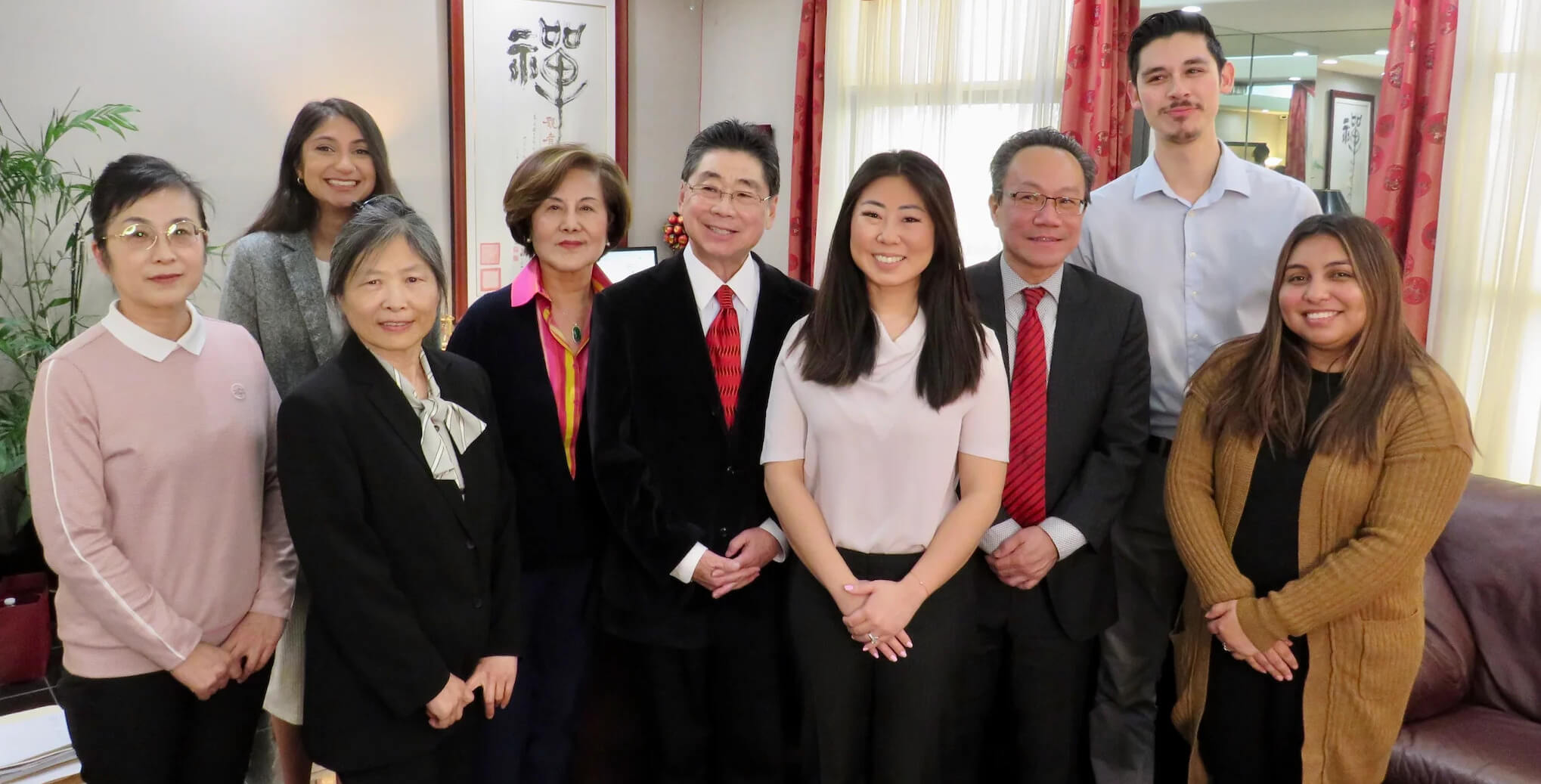
Why Choose Us?
-

Unmatched Expertise
Trust in Peter Chu's 75+ years of collective experience to guide you through complex immigration matters.
-

Tailored Solutions
Our personalized strategies adapt to your unique circumstances, ensuring we meet your specific immigration needs.
-

Proven Success
Benefit from our solid track record in achieving favorable outcomes in various immigration cases across San Diego.
-

Dedicated Service
Experience our client-first approach that ensures constant support and guidance throughout your immigration journey.


Get clear, expert legal guidance tailored to your visa, green card, or citizenship needs.

Inquire now to check if you qualify
EB-1A vs. EB-2 NIW vs. Employer-Sponsored Green Cards in Houston
Houston professionals seeking permanent residency face three primary pathways: EB-1A (extraordinary ability, self-petition), EB-2 National Interest Waiver (advanced degree with national importance work, self-petition), and employer-sponsored EB-2/EB-3 (requires PERM labor certification). Here's the honest answer: EB-1A is the fastest pathway if you qualify — no labor certification, no employer sponsorship, and current priority dates for most countries. EB-2 NIW offers similar self-petition advantages but requires proving your work benefits U.S. national interest, a lower standard than extraordinary ability but still demanding substantial evidence. Employer-sponsored EB-2/EB-3 petitions require your employer to complete a 6–12 month PERM labor certification proving no qualified U.S. workers are available — and tie your green card to that specific employer. The tradeoff: EB-1A has the highest evidentiary burden but the shortest timeline and greatest flexibility.
| Pathway | Self-Petition | Timeline | Evidentiary Standard | Professional Assessment |
|---|---|---|---|---|
| EB-1A Extraordinary Ability | Yes | 15 days (premium) or 6–12 months (regular) | Sustained national/international acclaim in your field | Fastest route if you meet 3+ criteria — no employer lock-in |
| EB-2 National Interest Waiver | Yes | 12–18 months (no premium) | Advanced degree + work of national importance | Lower bar than EB-1A but slower adjudication |
| Employer-Sponsored EB-2/EB-3 | No | 18–36 months (PERM + I-140 + priority date wait) | PERM labor certification + job offer | Employer dependency — lose job, lose petition |
| O-1 Nonimmigrant (Temporary) | No (employer sponsors) | 15 days (premium) or 2–3 months | Extraordinary ability (temporary work) | Not a green card — must renew every 1–3 years |
Frequently Asked Questions
Find answers to common questions about our services
-
USCIS processing times for EB-1A petitions vary by service center and whether you elect premium processing. With premium processing (currently $2,805), USCIS adjudicates your I-140 petition within 15 calendar days. Without premium processing, regular adju
-
EB-1A representation fees vary by case complexity, but Houston immigration attorneys typically charge $8,000–$15,000 for petition preparation, evidence compilation, expert letter coordination, and USCIS submission. This attorney fee is separate from gover
-
Yes — you can file an EB-1A petition regardless of your current visa status, including F-1 student visa, B-1/B-2 tourist visa, or even no status (overstay). EB-1A is an immigrant visa petition that evaluates your qualifications, not your current lawful st
-
EB-1A extraordinary ability petitions are available to individuals in sciences, arts, education, business, or athletics — the five statutory categories under INA 203(b)(1)(A). In Houston, common qualifying fields include petroleum engineering, medical res
-
If USCIS denies your EB-1A petition, you have three options: file a motion to reconsider or reopen with the same service center, file an appeal with the USCIS Administrative Appeals Office (AAO), or prepare and file a new petition with additional evidence
-
No — EB-1A is a self-petition classification that requires no employer sponsorship, no job offer, and no labor certification. You file Form I-140 as the petitioner on your own behalf, demonstrating extraordinary ability in your field. This is the primary
-
USCIS evaluates EB-1A petitions under 10 regulatory criteria found in 8 CFR 204.5(h)(3). You must satisfy at least three: (1) receipt of nationally or internationally recognized prizes or awards, (2) membership in associations requiring outstanding achiev
-
Yes — your spouse and unmarried children under 21 are eligible for derivative E-11 and E-12 immigrant visas based on your approved EB-1A petition. They do not file separate I-140 petitions — they are included as dependents on your I-485 adjustment of stat
Need Personalized Immigration Guidance?

