
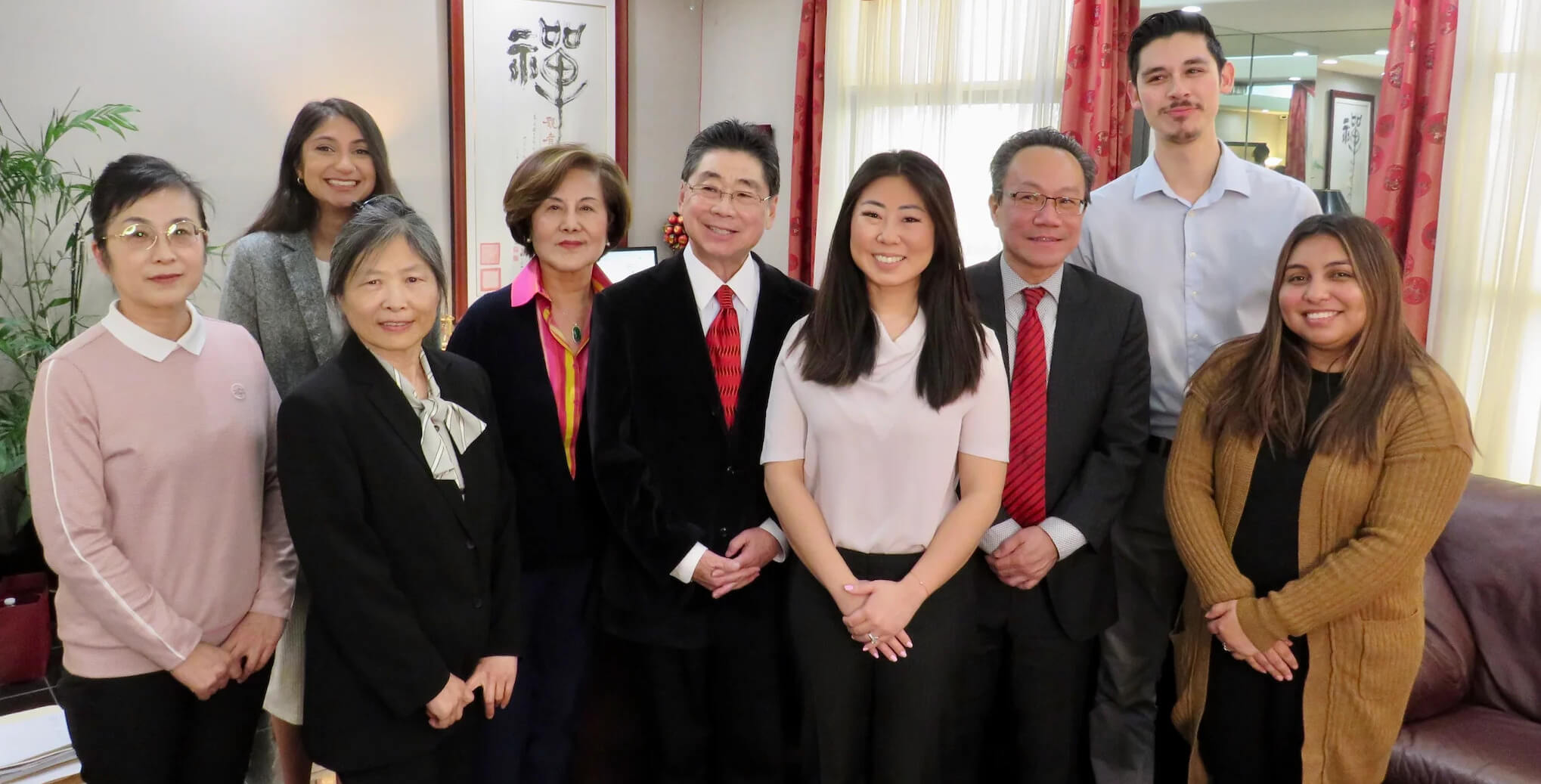
Why Choose Us?
-

Unmatched Expertise
Trust in Peter Chu's 75+ years of collective experience to guide you through complex immigration matters.
-

Tailored Solutions
Our personalized strategies adapt to your unique circumstances, ensuring we meet your specific immigration needs.
-

Proven Success
Benefit from our solid track record in achieving favorable outcomes in various immigration cases across San Diego.
-

Dedicated Service
Experience our client-first approach that ensures constant support and guidance throughout your immigration journey.


Get clear, expert legal guidance tailored to your visa, green card, or citizenship needs.

Inquire now to check if you qualify
Why Ontario Professionals Choose Licensed Immigration Counsel Over DIY EB-1A Filing
Ontario residents filing EB-1A petitions choose between three primary paths: self-filing using USCIS templates and online guides, engaging a document preparation service, or retaining a licensed immigration attorney. Document preparation services — often marketed as low-cost alternatives to attorneys — cannot provide legal advice, cannot represent you before USCIS, and cannot respond to RFEs on your behalf under 8 CFR 292.1, meaning you are left to navigate complex evidentiary arguments alone if USCIS issues a deficiency notice. Self-filing avoids upfront legal fees but carries substantial risk: USCIS data shows that pro se employment-based petitions have denial rates 2–3 times higher than attorney-filed cases, and a denied EB-1A petition can delay your permanent residence pathway by years.
Here's the honest answer: EB-1A petitions are the most evidence-intensive and legally complex of all employment-based green card categories. USCIS adjudicators apply the Kazarian two-step analysis — first determining whether you satisfy at least three regulatory criteria, then evaluating whether the totality of evidence demonstrates sustained national or international acclaim. Most self-filed petitions fail the second step, not the first. Law office of Peter Darwin Chu structures every petition to satisfy both prongs, using legal precedent from AAO decisions and federal case law to frame your evidence in terms USCIS officers are trained to recognize. The cost of an attorney is often smaller than the cost of a denial and refiling.
| Approach | Legal Representation | RFE Response | Success Rate | Professional Assessment |
|---|---|---|---|---|
| Self-Filing | None — you interpret regulations | You draft response alone | 30–40% (estimated) | High risk for professionals without legal training in immigration law |
| Document Prep Service | No attorney involvement | Cannot respond — you handle it | 35–45% (estimated) | Leaves you unrepresented when USCIS challenges your evidence |
| Licensed Attorney | Licensed CA counsel | Attorney-drafted response | 70–85% (varies by case strength) | Only option providing legal advice, representation, and RFE defense |
Frequently Asked Questions
Find answers to common questions about our services
-
Standard USCIS processing for EB-1A petitions ranges from 6 to 12 months depending on the service center assigned. Ontario residents can request 15-day premium processing by filing Form I-907 with an additional $2,805 fee, guaranteeing adjudication within
-
Yes, the EB-1A category does not require a one-time achievement like a Nobel Prize, Oscar, or Olympic medal — though such awards satisfy the extraordinary ability standard automatically. Most EB-1A approvals are granted to professionals who satisfy at lea
-
The EB-1A extraordinary ability visa is an immigrant (permanent residence) petition, while the O-1 is a nonimmigrant (temporary) work visa. Both require evidence of extraordinary ability, but the O-1 standard is slightly lower and allows employer sponsors
-
No, the EB-1A extraordinary ability visa does not require a job offer or employer sponsorship. You must demonstrate that you will continue working in your area of extraordinary ability in the United States, but you can be self-employed, a business owner,
-
A Request for Evidence (RFE) gives you 87 days to submit additional documentation addressing evidentiary deficiencies identified by the USCIS adjudicating officer. Common RFE issues include insufficient proof that awards were nationally or internationally
-
Yes, your spouse and unmarried children under 21 are eligible for derivative EB-1 status and can file Form I-485 adjustment of status concurrently with your EB-1A petition if your priority date is current. Ontario residents whose family members are abroad
-
Attorney fees for EB-1A petitions typically range from $8,000 to $15,000 depending on case complexity, the volume of evidence requiring organization, and whether premium processing or RFE response is needed. USCIS filing fees for Form I-140 are $700, and
-
USCIS requires at least three of ten regulatory criteria under 8 CFR 204.5(h)(3), including: receipt of nationally or internationally recognized awards, membership in associations requiring outstanding achievement, published material about you in professi
Need Personalized Immigration Guidance?

