
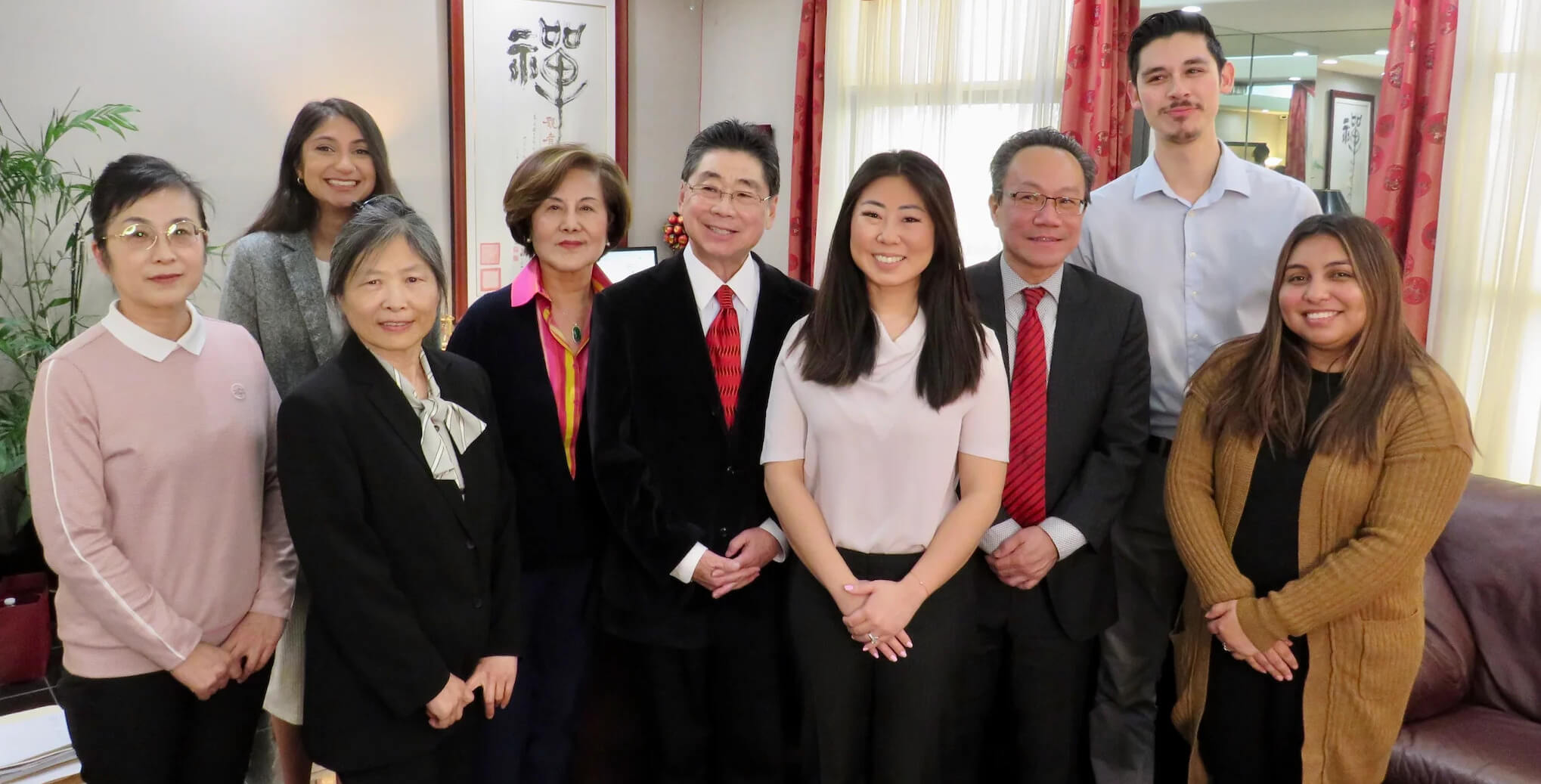
Why Choose Us?
-

Unmatched Expertise
Trust in Peter Chu's 75+ years of collective experience to guide you through complex immigration matters.
-

Tailored Solutions
Our personalized strategies adapt to your unique circumstances, ensuring we meet your specific immigration needs.
-

Proven Success
Benefit from our solid track record in achieving favorable outcomes in various immigration cases across San Diego.
-

Dedicated Service
Experience our client-first approach that ensures constant support and guidance throughout your immigration journey.


Get clear, expert legal guidance tailored to your visa, green card, or citizenship needs.

Inquire now to check if you qualify
EB-1A Attorney in Pasadena vs. General Immigration Practitioners vs. Self-Filing
Pasadena EB-1A applicants have three paths: hiring an EB-1A-focused attorney, working with a general immigration practitioner who handles all visa categories, or self-filing. Each path produces measurably different approval rates and evidence quality outcomes.
Here's the honest answer: general immigration practitioners who prepare family-based petitions, deportation defense, and naturalization applications 80% of the time do not have the evidence architecture expertise or regulatory fluency to build EB-1A petitions that survive RFE scrutiny. EB-1A adjudication turns on narrow regulatory interpretation — what constitutes 'major significance' under 8 CFR 203.5(h)(3)(v), whether acclaim is 'sustained' versus 'emerging', and how citation metrics translate to 'original contribution' evidence. A practitioner who files two EB-1A petitions per year cannot maintain the case law knowledge or expert letter quality standards required for consistent approvals.
| Approach | Evidence Strategy | RFE Rate | Professional Assessment |
|---|---|---|---|
| EB-1A-Focused Attorney (Law Office of Peter Darwin Chu) | Regulatory criteria mapping before drafting; expert letters from independent authorities; citation and impact metrics structured to 'major significance' standard | 15–25% (industry baseline for well-prepared petitions) | Best outcome probability — evidence built to regulatory standard from filing, not after RFE |
| General Immigration Practitioner | Template-based petition; generic support letters; minimal criteria-specific evidence development | 45–60% (significantly higher due to insufficient initial evidence) | Higher RFE risk — practitioner lacks EB-1A-specific case law fluency and evidence quality benchmarks |
| Self-Filing | Applicant drafts petition without regulatory training; may misinterpret criteria or submit irrelevant evidence | 60–75% (RFE rate approaches denial rate for complex cases) | Highest risk — most self-filers cannot distinguish between 'acclaim' and 'extraordinary ability' evidentiary standards |
| No Action / Delayed Filing | N/A | N/A | Misses priority date advantage and delays permanent residence timeline indefinitely |
Frequently Asked Questions
Find answers to common questions about our services
-
Evidence development and petition preparation typically take 60–90 days depending on expert letter-writer availability and documentation complexity. After filing with USCIS, standard processing time is 6–12 months, though premium processing (15-day adjudi
-
EB-1A requires sustained national or international acclaim and documentation that you are one of a small percentage who have risen to the very top of your field. O-1 requires distinction, a lower standard. Both use similar evidentiary criteria, but EB-1A
-
Yes. EB-1A is available to applicants regardless of current immigration status, including those in the U.S. on H-1B, L-1, O-1, F-1 OPT, or J-1 status. You can file EB-1A while maintaining your nonimmigrant status, and approval does not automatically termi
-
No. EB-1A does not require a U.S. employer sponsor or labor certification — you can self-petition. However, you must demonstrate that you intend to continue working in your field of extraordinary ability after entering the United States. Pasadena research
-
Original contributions of major significance — one of the ten EB-1A criteria under 8 CFR 203.5(h)(3)(v) — require evidence that your work has influenced your field beyond incremental advancement. Pasadena researchers typically satisfy this through citatio
-
EB-1A attorney fees vary based on case complexity, evidence development requirements, and RFE risk. The Law Office of Peter Darwin Chu provides fixed-fee pricing after an initial case assessment — typical ranges for Pasadena EB-1A petitions are between $8
-
Yes. EB-1A denial does not prohibit refiling, and many denied petitions are approved on a second attempt after additional evidence development or regulatory argument refinement. Denials typically occur because USCIS determined that the evidence did not es
-
Yes, if the entrepreneur demonstrates extraordinary ability in business, not merely successful venture operation. USCIS applies the same sustained acclaim and top-of-field standard to business founders as to researchers and artists. Pasadena entrepreneurs
Need Personalized Immigration Guidance?

