
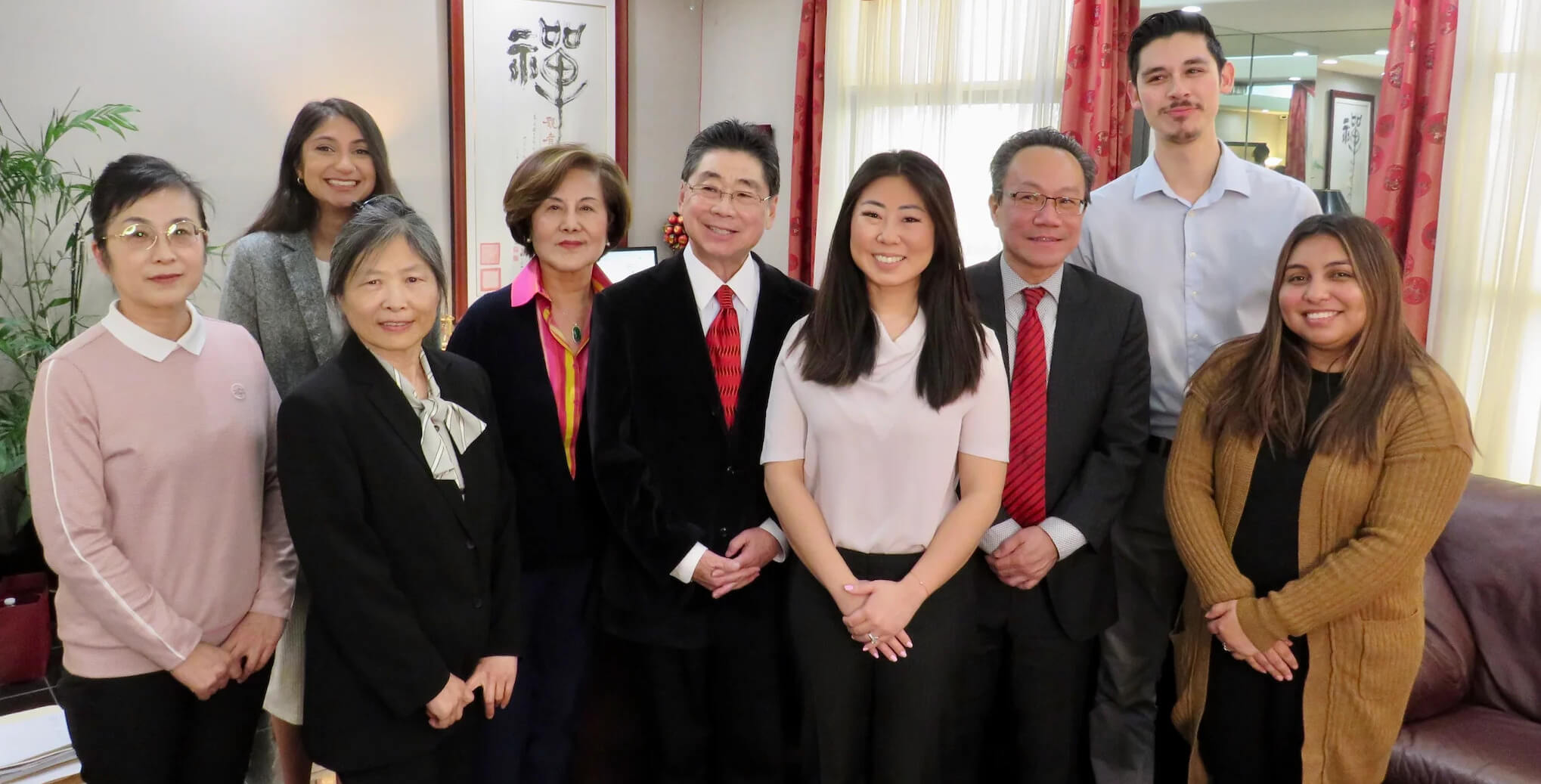
Why Choose Us?
-

Unmatched Expertise
Trust in Peter Chu's 75+ years of collective experience to guide you through complex immigration matters.
-

Tailored Solutions
Our personalized strategies adapt to your unique circumstances, ensuring we meet your specific immigration needs.
-

Proven Success
Benefit from our solid track record in achieving favorable outcomes in various immigration cases across San Diego.
-

Dedicated Service
Experience our client-first approach that ensures constant support and guidance throughout your immigration journey.


Get clear, expert legal guidance tailored to your visa, green card, or citizenship needs.

Inquire now to check if you qualify
Choosing an EB-1A Attorney in Phoenix: What Distinguishes Experienced Immigration Counsel
Phoenix EB-1A applicants typically evaluate three categories of representation: general immigration attorneys who handle all visa categories, specialized employment-based immigration firms, and document preparation services that do not provide legal advice. Each approach carries different risk profiles and cost structures.
Here's the honest answer: EB-1A petitions are among the most documentation-intensive and legally complex immigrant visa categories, requiring detailed knowledge of the Kazarian two-step analysis framework, USCIS policy memoranda governing extraordinary ability adjudication, and case law interpreting the 'sustained national or international acclaim' standard. General immigration practitioners who primarily handle family-based petitions or asylum cases often lack this specialized knowledge, resulting in poorly structured evidence submissions that trigger RFEs or denials. Document preparation services cannot provide legal advice on which evidence satisfies specific regulatory criteria or how to respond to RFE challenges — they can only format documents you provide. Law Office of Peter Darwin Chu limits its practice to employment-based and investor immigration categories, ensuring every EB-1A petition is handled by an attorney with direct USCIS adjudication experience in this category.
| Approach | EB-1A Case Volume | Criterion Analysis Depth | RFE Response Experience | Professional Assessment |
|---|---|---|---|---|
| General Immigration Attorney | Low — mixed caseload across all categories | Surface-level — relies on client to identify qualifying evidence | Limited — unfamiliar with EB-1A-specific policy guidance | May lack specialized knowledge of extraordinary ability standards |
| Document Prep Service | N/A — cannot provide legal advice | None — formats client-provided documents only | None — cannot represent clients in RFE responses | Cannot advise on evidence sufficiency or legal strategy |
| Specialized Employment-Based Firm | High — focused practice area | Detailed — applies Kazarian framework and precedent case law | Extensive — cites policy memos and appeals decisions | Structured approach based on adjudication patterns and case law |
| Law Office of Peter Darwin Chu | EB-1A and employment immigration focus | Criterion-by-criterion evidence mapping with citation metrics | Direct USCIS RFE response experience across all EB-1A categories | Specialized immigration practice with employment-based petition experience |
Frequently Asked Questions
Find answers to common questions about our services
-
EB-1A attorney fees in Phoenix typically range from $8,000 to $15,000 for petition preparation, evidence structuring, and USCIS filing, with variation based on case complexity, the number of regulatory criteria being claimed, and whether translation or ex
-
Standard EB-1A adjudication timelines range from 4 to 8 months from USCIS filing to approval decision, depending on service center workload and whether the petition triggers an RFE. Phoenix applicants can request premium processing for an additional $2,80
-
Yes — the EB-1A does not require a current job offer or employer sponsorship. You must demonstrate that you intend to continue working in your area of extraordinary ability in the United States, but USCIS does not require proof of a specific employment co
-
The EB-1A is an immigrant visa (green card) category for individuals with extraordinary ability who seek permanent residency, while the O-1 is a nonimmigrant visa for temporary work authorization in the U.S. The O-1 requires employer sponsorship and a spe
-
No — the EB-1A statute does not require any specific degree, educational credential, or academic affiliation. USCIS evaluates your extraordinary ability based on the ten regulatory criteria under 8 CFR 204.5(h)(3), which include awards, published material
-
If USCIS denies your EB-1A petition, you have several procedural options depending on the denial reasoning. You can file a motion to reopen (if new evidence is available that was not previously submitted) or a motion to reconsider (if USCIS made a legal o
-
Yes — your spouse and unmarried children under age 21 are eligible for derivative immigration status under your approved EB-1A petition. They receive E-14 and E-15 dependent immigrant visas, respectively, and can adjust status to lawful permanent residenc
-
Your EB-1A priority date is the date USCIS receives your Form I-140 petition. Because EB-1A is classified under the first preference employment-based category, it typically has visa number availability with no multi-year backlogs (unlike EB-2 and EB-3 cat
Need Personalized Immigration Guidance?

