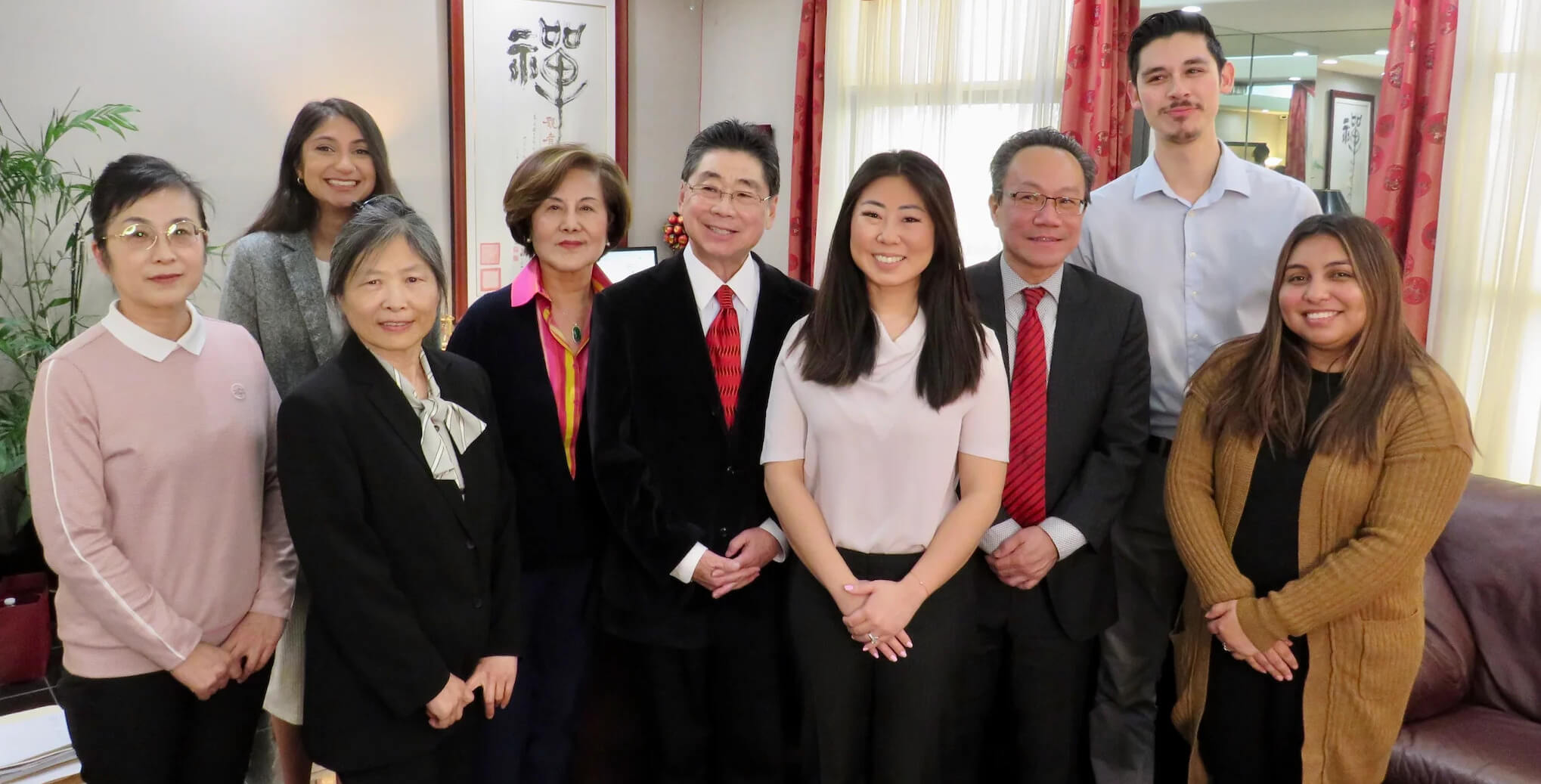

Why Choose Us?

  • Unmatched Expertise

    Trust in Peter Chu's 75+ years of collective experience to guide you through complex immigration matters.

  • Tailored Solutions

    Our personalized strategies adapt to your unique circumstances, ensuring we meet your specific immigration needs.

  • Proven Success

    Benefit from our solid track record in achieving favorable outcomes in various immigration cases across San Diego.

  • Dedicated Service

    Experience our client-first approach that ensures constant support and guidance throughout your immigration journey.

Placentia, CA, home to over 52,000 residents in northern Orange County, has seen a 23% increase in immigrant entrepreneur and professional visa applications since 2023 — reflecting the city's proximity to both Los Angeles tech corridors and Orange County's biomedical research hubs. For EB-1A extraordinary ability visa applicants in Placentia navigating the complex evidentiary requirements of 8 CFR 204.5(h)(3), the difference between approval and a Request for Evidence often comes down to whether your petition was prepared by an immigration attorney who understands USCIS adjudication standards and federal appellate precedent. Law office of Peter Darwin Chu has represented EB-1A petitioners across California's Central District federal immigration courts, including cases originating in Orange County, and knows how to build the documentation record USCIS officers actually evaluate.

Book a Consultation

Law office of Peter Darwin Chu is a California-licensed immigration law firm serving Placentia residents with EB-1A extraordinary ability visa petitions — offering federal court litigation experience, same-week consultations, and representation under California State Bar oversight with no upfront government filing fees until your petition is approved. We handle all three EB-1A evidentiary pathways: one-time achievement (major international award), three of ten regulatory criteria, or comparable evidence when standard criteria don't apply to your field.

EB-1A Attorney Placentia Available Across Placentia and Surrounding Areas

Law office of Peter Darwin Chu represents EB-1A petitioners throughout Placentia, CA, and northern Orange County — including the Bradford, Kraemer, and Tri-City neighborhoods (zip codes 92670, 92870, and 92871) — as well as adjacent communities where extraordinary ability professionals live and work. All California residents with qualifying achievements in sciences, arts, education, business, or athletics are eligible for representation regardless of county, and we regularly handle cases for clients residing outside California whose work or employer ties bring them within federal jurisdiction.

What Placentia EB-1A Petitioners Can Access

Initial Eligibility Assessment and Evidence Mapping

Before any petition is filed, we conduct a substantive 60–90 minute review of your professional record to determine whether you meet the statutory threshold for 'extraordinary ability' under INA Section 203(b)(1)(A). This is not a screening call — we evaluate your publications, citations, peer review history, media coverage, memberships, and awards against the three-of-ten criteria codified at 8 CFR 204.5(h)(3) and identify which pathway (major award, regulatory criteria, or comparable evidence) your case fits. Placentia professionals in fields like biomedical engineering, artificial intelligence research, and digital media production often qualify under criteria USCIS adjudicators rarely see, and mapping your evidence correctly from the start determines whether your petition survives the two-step Kazarian analysis federal courts require.

Petition Preparation and Documentation Strategy

Once retained, we prepare the I-140 petition, draft the legal brief explaining how your achievements satisfy each claimed criterion under current USCIS Policy Manual guidance, and coordinate the collection of evidentiary exhibits — expert letters, citation reports, membership verification, media clips, and salary documentation. In Placentia's competitive immigrant visa market, USCIS officers issue Requests for Evidence (RFEs) on approximately 40% of EB-1A petitions, most commonly challenging whether achievements demonstrate 'sustained national or international acclaim.' We draft petitions to preemptively address the most common RFE triggers and include legal arguments citing Matter of Chawathe and Kazarian v. USCIS to establish the correct standard of review.

Immigrant Visas and EB-1A Visa Premium Processing

For Placentia petitioners who need expedited adjudication — startup founders with investor deadlines, researchers with grant cycles, or professionals facing H-1B status gaps — we file Form I-907 Premium Processing requests that guarantee USCIS response within 15 calendar days. Premium Processing does not increase approval odds, but it eliminates the 4–8 month standard processing window and provides clarity for career planning.

Get in touch

Get clear, expert legal guidance tailored to your visa, green card, or citizenship needs.

Licensed EB-1A Immigration Representation in Placentia, CA

Law office of Peter Darwin Chu operates under California State Bar oversight and maintains all required professional liability coverage and IOLTA (Interest on Lawyers' Trust Account) compliance as mandated by California Rules of Professional Conduct Rule 1.15. Unlike visa consulting firms or notarios (who are prohibited from providing legal advice under California Business and Professions Code Section 6125), we are authorized to represent clients before USCIS, federal immigration courts, and the Board of Immigration Appeals. Every EB-1A petition we file includes a Notice of Entry of Appearance as Attorney (Form G-28) establishing our legal authority to act on your behalf, and our retainer agreements comply with California State Bar fee disclosure requirements. We do not guarantee petition approval — no attorney ethically can — but we do guarantee that every filing meets federal regulatory standards and is supported by legal arguments grounded in published federal court precedent.

Inquire now to check if you qualify

What If I Don't Have a Major International Award — Can I Still Qualify for EB-1A in Placentia?

Yes — the vast majority of approved EB-1A petitions do not involve Nobel Prizes, Olympic medals, or Pulitzer awards. USCIS regulations at 8 CFR 204.5(h)(3) allow petitioners to qualify by meeting at least three of ten alternative criteria: authorship of scholarly articles, membership in associations requiring outstanding achievement, published material about your work in major media, original contributions of major significance to your field, judging the work of others, high salary compared to field standards, exhibition of your work, employment in a critical or essential capacity for distinguished organizations, or receipt of lesser nationally or internationally recognized prizes. In Placentia's biotech and technology sectors, professionals frequently qualify through combinations of peer-reviewed publications, citation metrics, conference presentations, and expert letters documenting field impact — without ever winning a major award.

What If USCIS Issues a Request for Evidence on My Placentia-Filed EB-1A Petition?

An RFE (Request for Evidence) is not a denial — it is USCIS requesting additional documentation or clarification before making a final decision. RFEs are common in EB-1A cases and typically challenge whether the evidence demonstrates 'sustained national or international acclaim' or whether your achievements rise to the level of 'extraordinary ability' rather than mere expertise. In Placentia cases, we respond to RFEs with supplemental expert letters, additional citation analyses, media coverage we did not include in the original filing, and legal memoranda citing federal court precedent on the applicable standard of review. The response deadline is typically 87 days from the RFE notice date, and missing this deadline results in automatic petition denial, making prompt attorney involvement critical.

What If My Field Doesn't Fit Traditional EB-1A Criteria — How Does That Work in Placentia?

When your profession or achievements do not align with the ten standard criteria at 8 CFR 204.5(h)(3) — common in emerging fields like AI ethics, digital content creation, or cryptocurrency development — USCIS regulations allow petitioners to submit 'comparable evidence' under 8 CFR 204.5(h)(4). This requires a legal argument explaining why traditional criteria (like 'exhibition of work' for visual artists) do not apply to your field and proposing alternative evidence that demonstrates equivalent acclaim. For Placentia professionals in non-traditional fields, we draft these comparable evidence arguments by analogizing to published Administrative Appeals Office (AAO) decisions and federal court rulings that have approved comparable evidence in similar contexts.

What If I'm Currently on H-1B Status in Placentia — Can I File EB-1A Without Employer Sponsorship?

Yes — EB-1A is a self-petition category, meaning you do not need employer sponsorship, a labor certification, or a job offer to file. If you currently hold H-1B status in Placentia, you can file your own I-140 petition based on your personal extraordinary ability achievements, and approval gives you the option to file I-485 Adjustment of Status (if a visa number is available) or port your priority date to a future employer-sponsored petition. This independence is particularly valuable for Placentia professionals in volatile industries, startup founders, or researchers whose funding or institutional affiliation may change before their green card is approved.

Choosing EB-1A Representation in Placentia: Attorney vs. Visa Consultant vs. DIY Filing

Placentia EB-1A applicants face three representation options: a licensed immigration attorney, a visa consulting service, or self-filing. Here's the honest answer: visa consultants and document preparation services are prohibited under California Business and Professions Code Section 6125 from providing legal advice, interpreting USCIS regulations, or representing you in federal court if your petition is denied and you appeal. They can type forms and translate documents — nothing more. Self-filing is legally permissible, but the 2023 USCIS Policy Manual revision to EB-1A adjudication standards added a 'final merits determination' step that requires legal argumentation beyond simply checking regulatory boxes, and pro se petitioners have no recourse if USCIS misapplies the Kazarian two-step analysis. An immigration attorney licensed in California can draft legal briefs citing federal appellate precedent, respond to RFEs with evidentiary objections grounded in administrative law, and file appeals to the Administrative Appeals Office or federal district court if your petition is wrongly denied.

OptionLegal AdviceRFE ResponseFederal Court AppealProfessional Assessment
Licensed Immigration Attorney✓ Full legal representation✓ Evidence + legal argument✓ Authorized to fileOnly option with enforceable malpractice liability and court access
Visa Consultant✗ Prohibited by CA lawLimited to document submission✗ Not authorizedCannot provide legal strategy or interpret regulations
Self-Filing (Pro Se)✗ No legal guidance✗ No legal training✓ Can file but rarely succeedsNo protection against procedural errors or Kazarian misapplication
Notario / Document Prep✗ Illegal if they give advice✗ Form completion only✗ Not authorizedCriminally prohibited from practicing immigration law in California

Frequently Asked Questions

Find answers to common questions about our services

  • Standard I-140 processing for EB-1A petitions filed from Placentia averages 4–8 months at USCIS California Service Center, though processing times fluctuate based on agency workload. Premium Processing (Form I-907, $2,805 fee as of 2026) guarantees a resp

  • EB-1A attorney fees in Placentia typically range from $8,000 to $15,000 depending on case complexity, number of claimed criteria, and whether Premium Processing or RFE response is required. Most immigration attorneys charge a flat fee paid in installments

  • Yes — EB-1A petitions can be filed regardless of your current immigration status, including H-1B, L-1, O-1, F-1 OPT, or even as a visa overstay (though overstays create separate adjustment of status complications). Filing an I-140 immigrant petition does

  • EB-1A (extraordinary ability) and EB-2 NIW (National Interest Waiver) are both self-petition categories requiring no employer sponsorship, but EB-1A requires a higher achievement standard — sustained national or international acclaim — while EB-2 NIW requ

  • No — EB-1A is a self-petition based on your personal achievements, not a specific job offer. You must demonstrate intent to continue working in your field of extraordinary ability in the United States, but USCIS does not require a formal employment contra

  • If USCIS denies your I-140, you have three options: file a motion to reopen or reconsider within 30 days, appeal to the USCIS Administrative Appeals Office (AAO) within 30 days, or refile a new petition with strengthened evidence. Denials typically cite i

  • Yes — your spouse and unmarried children under 21 automatically qualify as derivative beneficiaries under EB-1 classification once your I-140 is approved. They do not file separate immigrant petitions; instead, they file I-485 Adjustment of Status (if in

  • Kazarian v. USCIS is a 2010 Ninth Circuit Court of Appeals decision establishing the mandatory two-step framework USCIS must use to adjudicate EB-1A petitions. Step one: determine whether the petitioner submitted qualifying evidence for at least three of

Need Personalized Immigration Guidance?

Law office of Peter Darwin Chu provides EB-1A extraordinary ability visa representation to Placentia, CA, residents through substantive initial consultations, federal court litigation experience, and petition strategies designed to survive USCIS's two-step Kazarian analysis under current Policy Manual standards.

Placentia residents pursuing employment-based immigration have multiple visa pathways depending on their qualifications and employer situation. Our Immigrant Visas practice includes all five EB preference categories, and professionals who do not meet EB-1A standards may qualify for EB-2 Visa advanced degree or exceptional ability petitions, or EB-3 Visa skilled worker sponsorship. For comparison with non-immigrant work authorization, review our O-1 Visa Guidance for extraordinary ability professionals in temporary status, or H-1B Visa Guidance for specialty occupation workers. Once your immigrant visa is approved and you have maintained permanent resident status, our Citizenship practice handles naturalization applications for California residents ready to pursue U.S. citizenship.

Speak With Us Today