
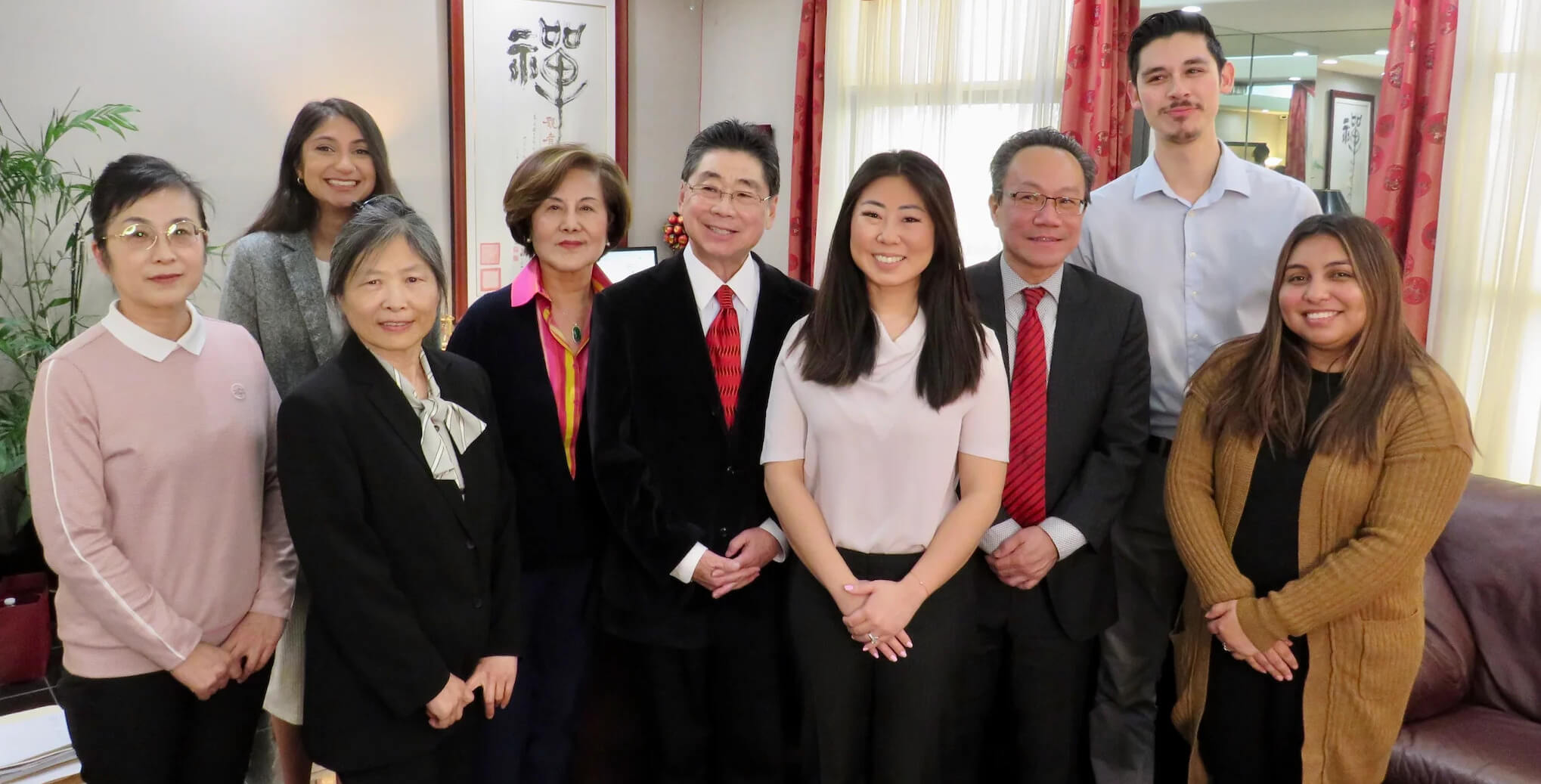
Why Choose Us?
-

Unmatched Expertise
Trust in Peter Chu's 75+ years of collective experience to guide you through complex immigration matters.
-

Tailored Solutions
Our personalized strategies adapt to your unique circumstances, ensuring we meet your specific immigration needs.
-

Proven Success
Benefit from our solid track record in achieving favorable outcomes in various immigration cases across San Diego.
-

Dedicated Service
Experience our client-first approach that ensures constant support and guidance throughout your immigration journey.


Get clear, expert legal guidance tailored to your visa, green card, or citizenship needs.

Inquire now to check if you qualify
Comparing Your EB-1A Representation Options in San Francisco
San Francisco petitioners evaluating EB-1A counsel typically consider three categories: general immigration firms handling all visa types, boutique employment-based practices, and solo practitioners. General immigration practices offer convenience but often lack deep EB-1A case law expertise — their attorneys may handle family-based petitions, asylum claims, and naturalization cases in the same week, diluting their familiarity with the nuanced evidentiary standards that distinguish approved EB-1A petitions from denied ones. Boutique employment-based firms provide specialized knowledge but frequently operate on a volume model, assigning junior associates to prepare your I-140 while partners focus on client acquisition. Solo practitioners offer personalized attention but may lack the institutional resources to rapidly obtain expert opinion letters, conduct citation impact analysis, or respond to RFEs within tight deadlines.
Here's the honest answer: EB-1A petitions are the most scrutinized employment-based visa category because they require no employer sponsorship and no labor certification — USCIS expects bulletproof evidence that you meet the 'small percentage at the top of your field' standard. Law office of Peter Darwin Chu limits its practice to employment-based immigrant and nonimmigrant visas, ensuring every EB-1A petition receives counsel who has argued comparable evidence provisions, cited circuit court precedent, and successfully overcome RFEs in this specific classification. We do not handle family-based petitions, deportation defense, or naturalization — only the visa categories where evidentiary standards and adjudication procedures require daily immersion to master.
| Option | EB-1A Case Focus | Evidence Strategy | RFE Response Experience | Professional Assessment |
|---|---|---|---|---|
| General Immigration Firm | Mixed practice area | Generic template approach | Limited AAO precedent citation | May lack specialized depth |
| Volume-Based Boutique | High caseload model | Junior associate preparation | Standard response procedures | Efficient but less personalized |
| Law Office of Peter Chu | EB-1A & employment-based only | Field-specific evidence tailoring | Direct attorney RFE drafting with circuit court citation | Specialized counsel with adjudication experience |
| Solo Practitioner | Personalized attention | May lack institutional research tools | Limited peer review resources | Attentive but resource-constrained |
Frequently Asked Questions
Find answers to common questions about our services
-
USCIS processing times for EB-1A I-140 petitions filed from California Service Center currently average 4.5 to 7.5 months for regular processing. Premium processing — available for an additional $2,805 filing fee — guarantees a 15-business-day adjudicatio
-
Yes — EB-1A petitions can be filed by individuals currently residing abroad, and approval does not require you to be physically present in the U.S. during adjudication. If approved while abroad, you proceed through consular processing at a U.S. embassy or
-
EB-1A legal representation fees in San Francisco typically range from $8,000 to $18,000 depending on case complexity, the amount of evidence development required, and whether premium processing or RFE response is included. This attorney fee is separate fr
-
No — EB-1A is a self-petition classification that requires no employer sponsorship, labor certification, or job offer. You file Form I-140 on your own behalf, demonstrating that you possess extraordinary ability and that your continued work in your field
-
For San Francisco tech professionals, the most persuasive evidence combines high salary documentation (W-2s or offer letters showing compensation in the top 10% of your occupation per Department of Labor wage data), authorship of technical publications or
-
If your I-140 petition is denied, you receive a written decision explaining the specific evidentiary deficiencies and the regulatory basis for denial. You have three options: file a motion to reopen or reconsider with USCIS within 30 days (arguing the off
-
Both EB-1A and O-1 require extraordinary ability, but the evidentiary standards differ significantly. EB-1A requires evidence of 'sustained national or international acclaim' and that you are among the small percentage at the very top of your field — a hi
-
Yes — EB-1A petitions can and should include evidence of extraordinary ability demonstrated anywhere in the world. USCIS evaluates your sustained acclaim regardless of where you earned it. Many San Francisco petitioners built their reputations through wor
Need Personalized Immigration Guidance?

