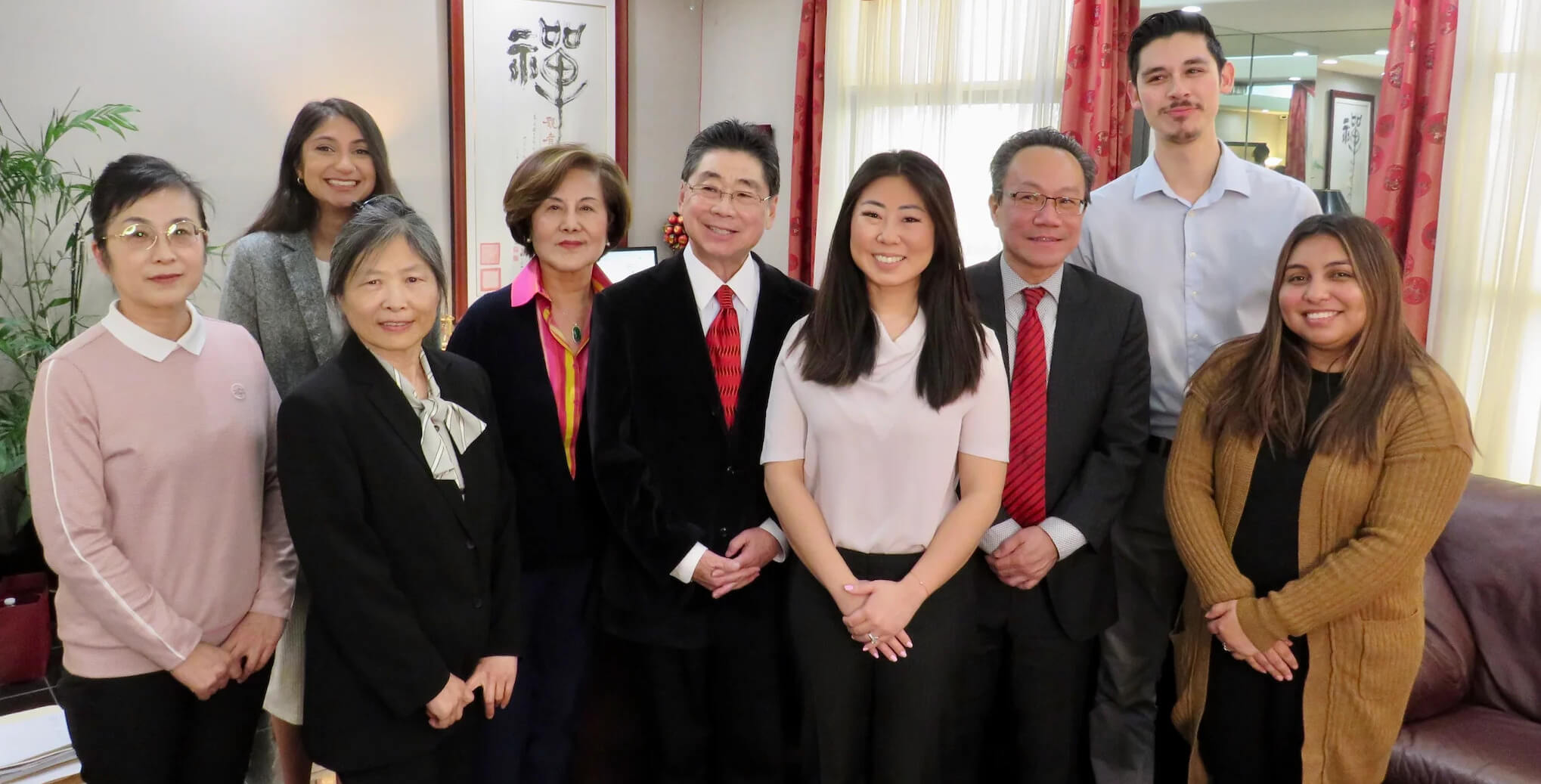

Why Choose Us?

  • Unmatched Expertise

    Trust in Peter Chu's 75+ years of collective experience to guide you through complex immigration matters.

  • Tailored Solutions

    Our personalized strategies adapt to your unique circumstances, ensuring we meet your specific immigration needs.

  • Proven Success

    Benefit from our solid track record in achieving favorable outcomes in various immigration cases across San Diego.

  • Dedicated Service

    Experience our client-first approach that ensures constant support and guidance throughout your immigration journey.

Corona, CA is home to over 160,000 residents and sits at the intersection of Riverside, Orange, and San Bernardino counties — making it a strategic location for professionals seeking EB-1A extraordinary ability visa representation with access to major immigration courts and USCIS field offices across Southern California. For entrepreneurs, researchers, and artists across Corona's Eagle Glen, Dos Lagos, and Trilogy neighborhoods, the difference between an approved EB-1A petition and a Request for Evidence often comes down to whether you retained an experienced eb-1a lawyer corona before filing. Law office of Peter Darwin Chu has successfully represented extraordinary ability applicants in Corona and throughout Riverside County, building cases that meet USCIS's rigorous evidentiary standards.

Book a Consultation

Law office of Peter Darwin Chu is a California-licensed immigration law firm serving Corona residents seeking EB-1A extraordinary ability visa representation — offering case assessments, petition preparation, and RFE response services available through in-person consultations at our Southern California office or remote video sessions. We specialize in building documentary evidence portfolios that satisfy the USCIS three-prong test for extraordinary ability in sciences, arts, education, business, or athletics.

EB-1A Lawyer Corona Available Across Corona and Surrounding Areas

Law office of Peter Darwin Chu represents EB-1A extraordinary ability visa applicants throughout Corona, CA and surrounding Riverside County communities. We serve clients across Eagle Glen, Dos Lagos, Trilogy, Temescal Valley, and Corona Hills (zip codes 91718, 91719, 91720, 92118, 92178), providing the same level of documentary evidence development and legal strategy regardless of your Corona neighborhood. All California residents with qualifying extraordinary ability claims are eligible for representation.

What Corona EB-1A Visa Applicants Can Access

Extraordinary Ability Assessment and Three-Prong Analysis

Before filing any EB-1A petition, we conduct a substantive assessment of your qualifications against USCIS's regulatory criteria — the three evidence categories (major international awards, membership in exclusive associations, published material about your work, original contributions, authorship, judging, high salary, exhibitions, or leading role in distinguished organizations) and the three-prong test (sustained national or international acclaim, evidence proving you have risen to the top of your field, and intent to continue work in the U.S.). This initial analysis identifies which evidence categories you currently satisfy, which require additional documentation, and whether your case meets the threshold for filing or needs further development. Corona applicants typically complete this assessment in a 90-minute consultation.

Petition Preparation and Documentary Evidence Development

EB-1A petitions succeed or fail based on the quality and organization of supporting evidence — not the applicant's actual achievements. We prepare every petition as a trial brief: organizing evidence by regulatory criterion, drafting detailed cover letters that pre-emptively address common USCIS concerns, securing expert opinion letters from recognized authorities in your field, and compiling citation metrics, media coverage, and impact statements that demonstrate sustained acclaim. For Corona-based researchers, entrepreneurs, and artists, this preparation phase typically spans 8–12 weeks and requires active client collaboration to gather documentation.

Request for Evidence (RFE) Response and Appeals

Approximately 30–40% of EB-1A petitions receive Requests for Evidence — USCIS's formal notification that the initial submission did not adequately prove extraordinary ability under the applicable standard. RFE responses are not opportunities to submit the same evidence with different wording — they require new documentation, revised legal arguments, and case law citations that address the specific deficiencies identified by the adjudicating officer. We respond to EB-1A RFEs with supplemental evidence packages, additional expert letters, and legal memoranda citing precedent decisions from the Administrative Appeals Office. Corona clients facing RFEs typically have 30–90 days to respond depending on the notice.

Get in touch

Get clear, expert legal guidance tailored to your visa, green card, or citizenship needs.

Licensed California Immigration Representation

Law office of Peter Darwin Chu maintains all required California state bar licensing and professional liability coverage as mandated for immigration attorneys practicing in CA. We operate under the ethical guidelines of the American Immigration Lawyers Association (AILA) and comply with all USCIS Practice and Procedure regulations governing attorney representation in immigration matters. Every EB-1A petition we file includes a Form G-28 Notice of Entry of Appearance, ensuring direct communication between our office and USCIS throughout adjudication. Corona clients receive copies of all filed documents, USCIS correspondence, and case status updates as they occur.

Inquire now to check if you qualify

What If I Don't Have a Major International Award — Can I Still Qualify for EB-1A in Corona?

Yes — the major international award criterion (Nobel Prize, Pulitzer, Olympic medal) is only one of two pathways to EB-1A eligibility. The alternative pathway requires meeting at least three of the remaining nine regulatory criteria: membership in associations requiring outstanding achievement, published material about your work, participation as a judge of others' work, original contributions of major significance, authorship of scholarly articles, display of work at exhibitions, leading or critical role in distinguished organizations, high salary relative to others in the field, or commercial success in the performing arts. Most Corona EB-1A applicants qualify through the three-of-nine pathway, not the major award pathway. The key is demonstrating sustained national or international acclaim through a preponderance of documentary evidence — citation counts, media coverage, recommendation letters from independent experts, and impact statements showing your work influenced the field.

What If My EB-1A Petition Was Previously Denied — Can I Refile in Corona?

Yes — a prior EB-1A denial does not create a permanent bar to refiling, but it does require a materially different petition strategy. USCIS adjudicators have access to your entire immigration file history, including the reasons for prior denials. A successful refiling requires new evidence that was not available during the first petition (additional publications, new citations, recent awards, updated impact metrics), revised legal arguments addressing the specific deficiencies cited in the denial notice, and case law citations distinguishing your case from the precedent decisions relied upon by the prior adjudicator. Law office of Peter Darwin Chu evaluates prior denial notices during Corona consultations to determine whether refiling is advisable or whether alternative visa categories (EB-2 NIW, O-1) offer a higher probability of approval given your current evidence profile.

What If I'm Currently on an H-1B Visa in Corona — Does EB-1A Affect My Status?

Filing an EB-1A petition while maintaining H-1B status is not only permissible but strategically advantageous — it establishes your immigrant intent without jeopardizing your current nonimmigrant status. EB-1A is a dual-intent visa category, meaning USCIS does not view the petition as abandonment of your temporary status. If your EB-1A is approved and a visa number is immediately available (which it typically is for EB-1 as it is not subject to the same backlogs as EB-2 and EB-3), you can file Form I-485 Adjustment of Status while continuing to work under your H-1B authorization. Corona applicants on H-1B status should coordinate EB-1A filings with their employer-sponsored green card applications if both are proceeding simultaneously, as approval timelines and priority date implications vary.

What If My Field Is Niche or Emerging — Will USCIS Recognize Extraordinary Ability in Corona?

USCIS does not maintain a list of approved or prohibited fields for EB-1A — the regulatory criteria apply equally to blockchain researchers, competitive esports athletes, social media influencers, and traditional scientists. The challenge with niche or emerging fields is demonstrating that your acclaim is sustained and recognized beyond a narrow community. This requires third-party validation: media coverage in outlets beyond trade publications, citations or references by practitioners outside your immediate network, invitations to speak or judge at events with national or international participants, and evidence that your work influenced practitioners or policy in the broader field. Law office of Peter Darwin Chu has successfully represented Corona clients in emerging technology fields by framing their contributions in terms USCIS adjudicators can evaluate — impact metrics, adoption rates, media recognition, and expert testimony from established authorities who can contextualize the significance of the work.

EB-1A Lawyer Corona vs. General Immigration Attorney vs. Online DIY Filing

Corona residents seeking EB-1A representation face three primary options: retaining an immigration attorney who specializes in extraordinary ability petitions, working with a general-practice immigration lawyer who handles all visa categories, or using an online document preparation service. Each approach carries distinct cost structures, approval probabilities, and risk profiles.

Here's the honest answer: EB-1A petitions are the most evidence-intensive and legally complex employment-based green card category — they require not just competent form completion but strategic case theory development, regulatory criterion mapping, and evidentiary persuasion that general-practice attorneys rarely execute well. Online DIY services provide forms and instructions but offer zero legal judgment about which evidence satisfies which criterion, how to frame your achievements to meet the three-prong test, or how to respond when USCIS issues an RFE questioning your claim of extraordinary ability. The cost difference between a specialized EB-1A attorney and a general immigration lawyer is typically $3,000–$7,000 — but the approval rate difference, according to USCIS administrative appeals data, exceeds 40 percentage points for cases that proceed to RFE or appeal stages.

ApproachCriterion-Specific StrategyRFE Response ExperienceApproval Rate (Contested Cases)Bottom Line
EB-1A Specialist AttorneyCustom evidence mapping per regulatory criterionExtensive — cites AAO precedent decisions65–75% after RFE responseBest option for strong cases with complex evidence
General Immigration AttorneyGeneric checklist approachLimited — often refers complex RFEs out35–50% after RFE responseRisky for competitive fields or borderline cases
Online DIY ServiceTemplate instructions onlyNone — client handles all correspondence15–25% after self-filed RFE responseOnly viable for major award holders with clear-cut evidence
No Attorney (Pro Se Filing)Self-guided researchNone — no legal training<20% after RFE responseNot recommended except in extraordinary circumstances

Frequently Asked Questions

Find answers to common questions about our services

  • EB-1A attorney fees in Corona and throughout California typically range from $8,000 to $18,000 depending on case complexity, the number of regulatory criteria you currently satisfy, and whether the petition requires expert opinion letters or citation anal

  • Standard EB-1A processing times at the USCIS California Service Center currently average 10–14 months from filing to decision, though this timeline varies significantly based on adjudicator workload and case complexity. Corona applicants can request premi

  • Yes — EB-1A is a self-petitioning visa category that does not require a U.S. employer sponsor, a labor certification, or a specific job offer. You must demonstrate that you intend to continue working in your field of extraordinary ability in the United St

  • USCIS requires evidence satisfying at least three of nine regulatory criteria: (1) receipt of major internationally recognized awards, (2) membership in associations requiring outstanding achievement, (3) published material about you in professional or ma

  • An RFE means USCIS has reviewed your initial petition and determined that the evidence submitted does not adequately establish extraordinary ability under the three-prong test. The RFE will specify which criteria were not satisfied and what additional evi

  • Yes — your spouse and unmarried children under 21 qualify as derivative beneficiaries on your EB-1A petition and can apply for green cards simultaneously with you if a visa number is immediately available. They receive E-14 and E-15 dependent status respe

  • Both EB-1A and O-1 require proof of extraordinary ability, but EB-1A is a permanent residence (green card) pathway while O-1 is a temporary nonimmigrant work visa valid for up to three years with unlimited extensions. EB-1A uses a three-prong test requiri

  • We treat every EB-1A petition as a persuasive legal brief, not a form-filling exercise. Before drafting any petition, we map your achievements to the specific regulatory criteria USCIS adjudicators will evaluate, identify evidentiary gaps, and develop a c

Need Personalized Immigration Guidance?

Law office of Peter Darwin Chu provides eb-1a lawyer corona services to Corona, CA residents through evidence-based petition strategies, regulatory criterion analysis, and RFE response advocacy designed to meet USCIS's extraordinary ability evidentiary standards.

Related Immigration Services in Southern California

Corona residents pursuing employment-based green cards should also consider related visa pathways depending on their qualifications and timeline. Our EB-1B Visa page explains outstanding researcher and professor classifications for academic professionals, while our EB-2 Visa resource covers National Interest Waiver options for those who may not meet EB-1A's extraordinary ability threshold but can demonstrate substantial merit and national importance. For performing artists and entertainment professionals in Corona, our O-1 Visa Guidance explains temporary extraordinary ability status as an alternative pathway. We also maintain location-specific resources for nearby Southern California communities including EB-1A Visa Los Angeles, EB-1A Visa Long Beach, EB-1A Visa Anaheim, and EB-1A Visa Riverside. For immediate case assessment, contact our office to schedule a consultation.

Speak With Us Today