
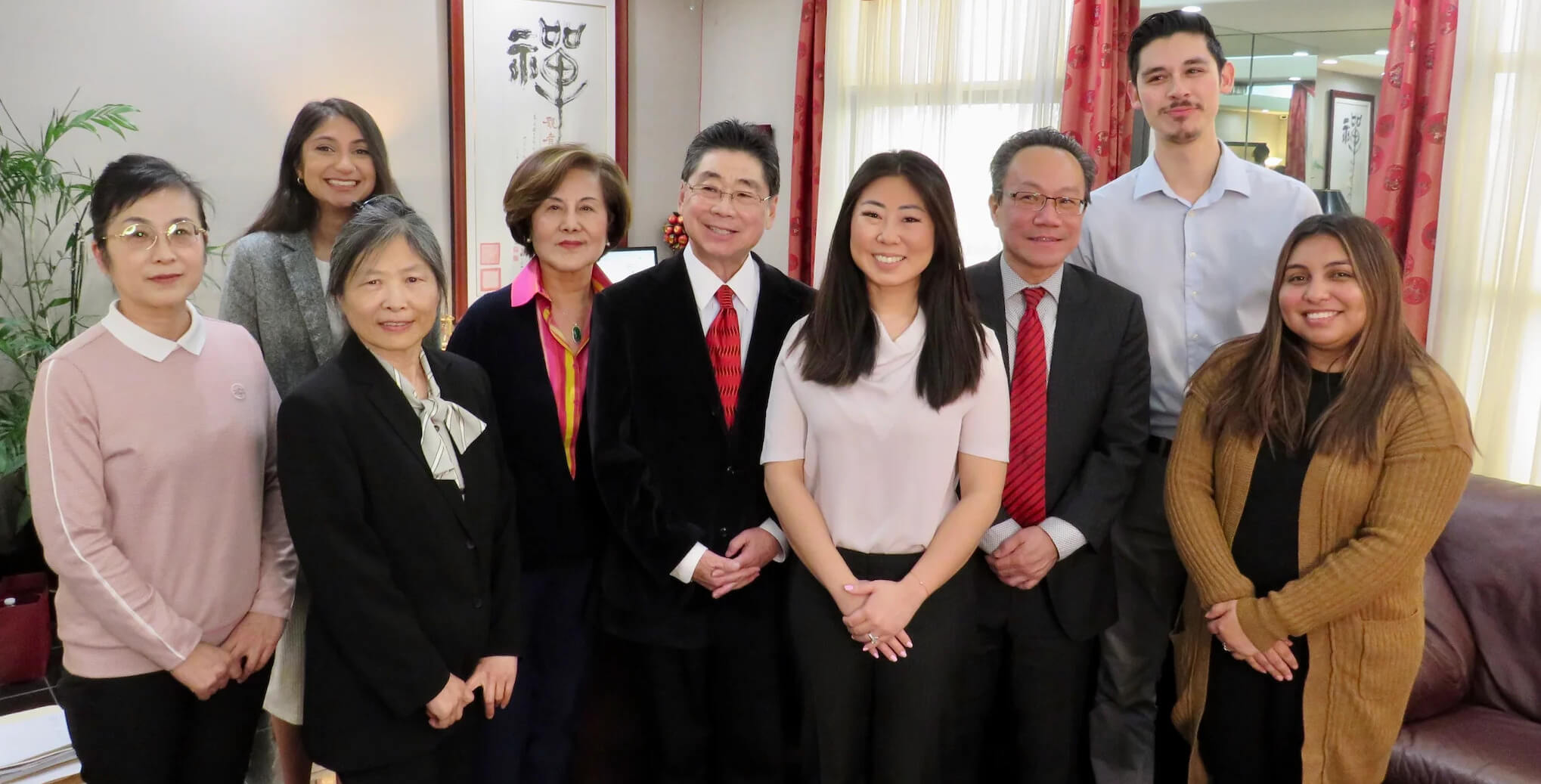
Why Choose Us?
-

Unmatched Expertise
Trust in Peter Chu's 75+ years of collective experience to guide you through complex immigration matters.
-

Tailored Solutions
Our personalized strategies adapt to your unique circumstances, ensuring we meet your specific immigration needs.
-

Proven Success
Benefit from our solid track record in achieving favorable outcomes in various immigration cases across San Diego.
-

Dedicated Service
Experience our client-first approach that ensures constant support and guidance throughout your immigration journey.


Get clear, expert legal guidance tailored to your visa, green card, or citizenship needs.

Inquire now to check if you qualify
How EB-1A Representation in Rancho Cucamonga Compares to Other Immigration Pathways
Rancho Cucamonga professionals pursuing U.S. permanent residency typically evaluate three pathways: EB-1A extraordinary ability, EB-2 National Interest Waiver (NIW), and employer-sponsored EB-2 or EB-3 petitions. Each has distinct evidentiary requirements, timelines, and employer dependencies. Here's the honest answer: EB-1A offers the fastest route to permanent residency for individuals who meet the 'small percentage at the top' standard in their field, but the evidentiary bar is higher than EB-2 NIW. EB-2 NIW requires proof your work is in the national interest but does not require employer sponsorship. Employer-sponsored EB-2/EB-3 petitions require PERM labor certification — a 6–12 month process where your employer must prove no qualified U.S. workers are available — and you remain dependent on that employer throughout the green card process. The Law Office of Peter Darwin Chu conducts side-by-side eligibility assessments to determine which category your credentials best support.
| Category | Employer Sponsorship Required | Evidentiary Standard | Timeline to Green Card | Professional Assessment |
|---|---|---|---|---|
| EB-1A Extraordinary Ability | No — self-petition | Top of field in 3+ of 10 criteria | 6–12 months (current priority dates) | Fastest pathway for high achievers — no employer dependency |
| EB-2 NIW | No — self-petition | National interest + advanced degree | 12–24 months (current backlog) | Strong option if EB-1A evidence is marginal |
| EB-2/EB-3 Employer-Sponsored | Yes — employer must sponsor | PERM labor certification + job offer | 18–36 months (PERM + I-140 + I-485) | Requires employer commitment; vulnerable to job loss |
| Family-Based (Marriage/Parent) | No — relative sponsors | Relationship proof + affidavit of support | 12–24 months (immediate relative) | Only available if qualifying family relationship exists |
Frequently Asked Questions
Find answers to common questions about our services
-
EB-1A legal fees in Rancho Cucamonga typically range from $8,000 to $15,000 for full petition preparation, federal filing, and representation through adjudication — not including USCIS filing fees ($700 for Form I-140, $2,805 for premium processing if req
-
Standard EB-1A processing times from Rancho Cucamonga average 6–12 months from I-140 filing to approval, though actual timelines depend on which USCIS service center receives your petition (California Service Center or Texas Service Center) and whether yo
-
The ten criteria under 8 CFR § 204.5(h)(3) are: (1) receipt of nationally or internationally recognized prizes or awards for excellence, (2) membership in associations requiring outstanding achievements, (3) published material about you in professional or
-
Yes — EB-1A is a self-petition category that does not require employer sponsorship, labor certification, or a job offer. You file Form I-140 independently based on your personal credentials and documented extraordinary ability in your field. This makes EB
-
If USCIS denies your EB-1A petition, you have three options: (1) file a motion to reopen or reconsider within 33 days of the denial notice, presenting new evidence or legal arguments USCIS did not previously consider, (2) file an appeal to the Administrat
-
Yes — after EB-1A approval and adjustment to permanent resident status, you are expected to continue working in the field of extraordinary ability for which you qualified. USCIS may question your eligibility during the green card interview or at re-entry
-
Yes — your spouse and unmarried children under 21 are eligible for derivative status under your approved EB-1A petition. They receive E-14 (spouse) and E-15 (children) classification and can file Form I-485 concurrently with your adjustment of status appl
-
EB-1A is an immigrant visa category leading to permanent residency (green card), while O-1 is a non-immigrant visa allowing temporary work authorization for individuals with extraordinary ability. Both require demonstrating top-tier achievements in your f
Need Personalized Immigration Guidance?

