
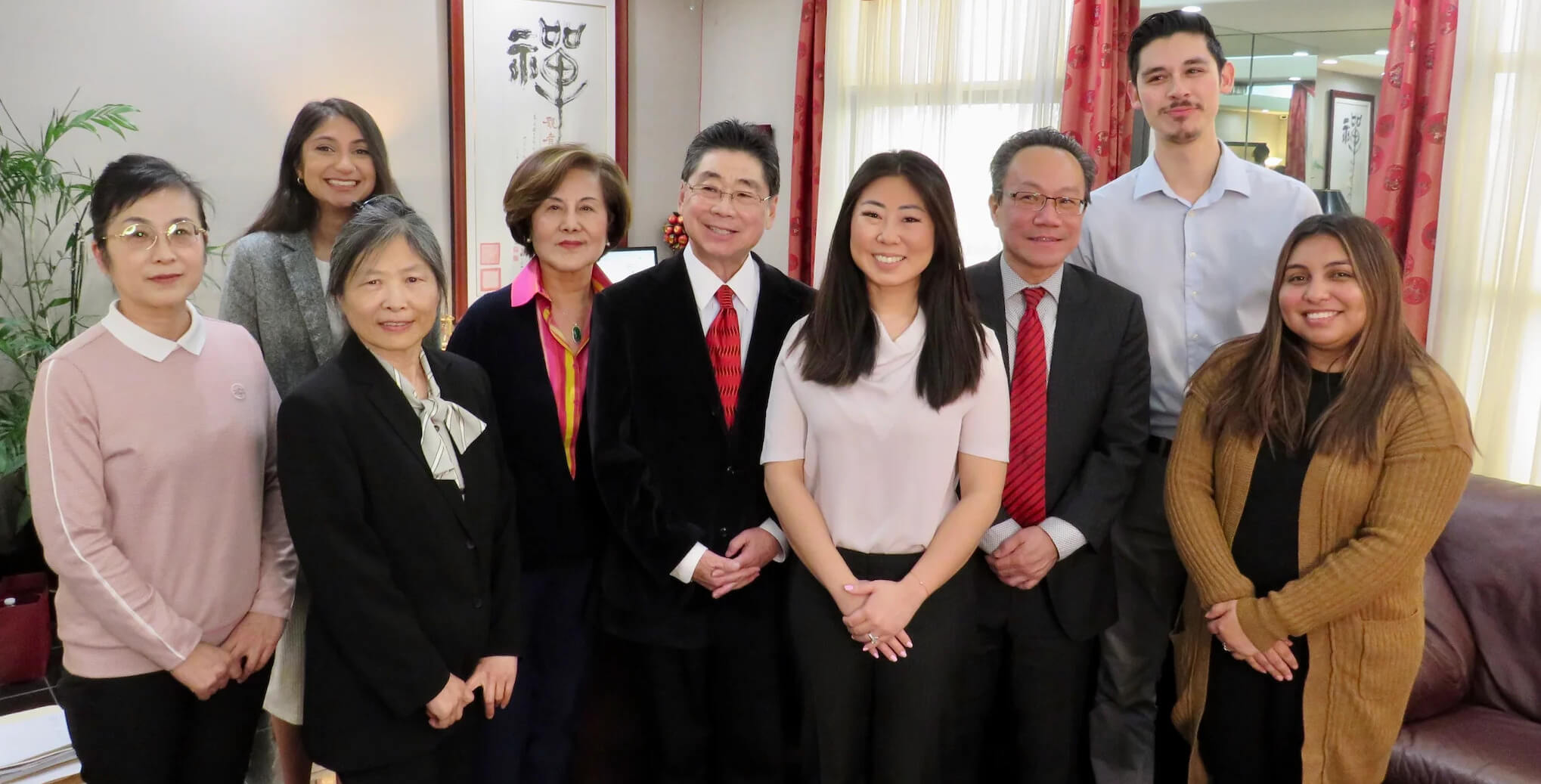
Why Choose Us?
-

Unmatched Expertise
Trust in Peter Chu's 75+ years of collective experience to guide you through complex immigration matters.
-

Tailored Solutions
Our personalized strategies adapt to your unique circumstances, ensuring we meet your specific immigration needs.
-

Proven Success
Benefit from our solid track record in achieving favorable outcomes in various immigration cases across San Diego.
-

Dedicated Service
Experience our client-first approach that ensures constant support and guidance throughout your immigration journey.


Get clear, expert legal guidance tailored to your visa, green card, or citizenship needs.

Inquire now to check if you qualify
Why Stanton Professionals Choose Law Office of Peter Darwin Chu Over Generic Immigration Mills
EB-1A extraordinary ability petitions are not form-filling exercises — they are evidence-based advocacy documents that require substantive knowledge of USCIS adjudication standards, relevant case law, and the specific evidentiary demands of your professional field. Many online immigration services and high-volume firms treat EB-1A petitions as templates, resulting in generic evidence packages that fail to distinguish your achievements from those of other professionals in your field. Here's the honest answer: if your petition does not explicitly address the 'final merits determination' standard established in Kazarian v. USCIS — demonstrating that your achievements reflect sustained national or international acclaim — it will likely receive a Request for Evidence or outright denial, regardless of how many credentials you hold.
| Approach | Evidence Strategy | Legal Brief Quality | RFE Response | Professional Assessment |
|---|---|---|---|---|
| Law Office of Peter Darwin Chu | Field-specific evidence packages citing AAO precedent decisions | Custom legal briefs addressing Kazarian final merits standard | Comprehensive responses with supplemental expert letters | Substantive advocacy, not form completion |
| Online DIY Platforms | Generic document checklists with no field context | No legal brief or argument | Template responses with no case-specific analysis | High risk of RFE or denial |
| High-Volume Immigration Mills | Cookie-cutter packages with minimal customization | Recycled briefs from prior cases | Rushed responses missing key arguments | Volume over quality — your case is one of hundreds |
| General Practice Attorneys | Limited EB-1A experience, unfamiliar with recent precedent | Weak or absent legal arguments | Inadequate responses due to lack of specialization | Lack of immigration-specific expertise |
Frequently Asked Questions
Find answers to common questions about our services
-
EB-1A attorney fees typically range from $8,000 to $15,000 depending on case complexity, the number of evidentiary criteria your case satisfies, and whether a Request for Evidence response is required. This fee covers petition preparation, legal brief dra
-
USCIS Texas Service Center currently processes EB-1A I-140 petitions in approximately 6–12 months under regular processing. Premium processing reduces this to 15 calendar days for an additional $2,500 fee. After I-140 approval, you must either adjust stat
-
You must demonstrate that you meet at least three of the ten regulatory criteria under 8 CFR 213.5(h)(3): receipt of major awards, membership in selective associations, published material about your work, participation as a judge of others' work, original
-
Yes, you may file an EB-1A petition while maintaining H-1B, L-1, O-1, or other nonimmigrant status. Filing an immigrant petition does not violate the terms of your nonimmigrant visa, and USCIS will not penalize you for seeking permanent residency. Once yo
-
A Request for Evidence (RFE) means USCIS found your initial petition insufficient to prove extraordinary ability and is requesting additional documentation or clarification. You have 87 days to respond with supplemental evidence, expert letters, and legal
-
No, the EB-1A category does not require a job offer or employer sponsorship. You may self-petition by demonstrating that you intend to continue working in your area of extraordinary ability in the United States. This makes EB-1A particularly attractive fo
-
Both EB-1A and EB-2 NIW allow self-petitioning without employer sponsorship, but EB-1A requires proof of extraordinary ability (top of your field nationally or internationally), while EB-2 NIW requires an advanced degree and proof that your work is in the
-
Yes, your spouse and unmarried children under 21 may apply for derivative EB-1 green cards based on your approved I-140 petition. They will file Form I-485 (if adjusting status in the U.S.) or apply for immigrant visas at a U.S. consulate abroad concurren
Need Personalized Immigration Guidance?

