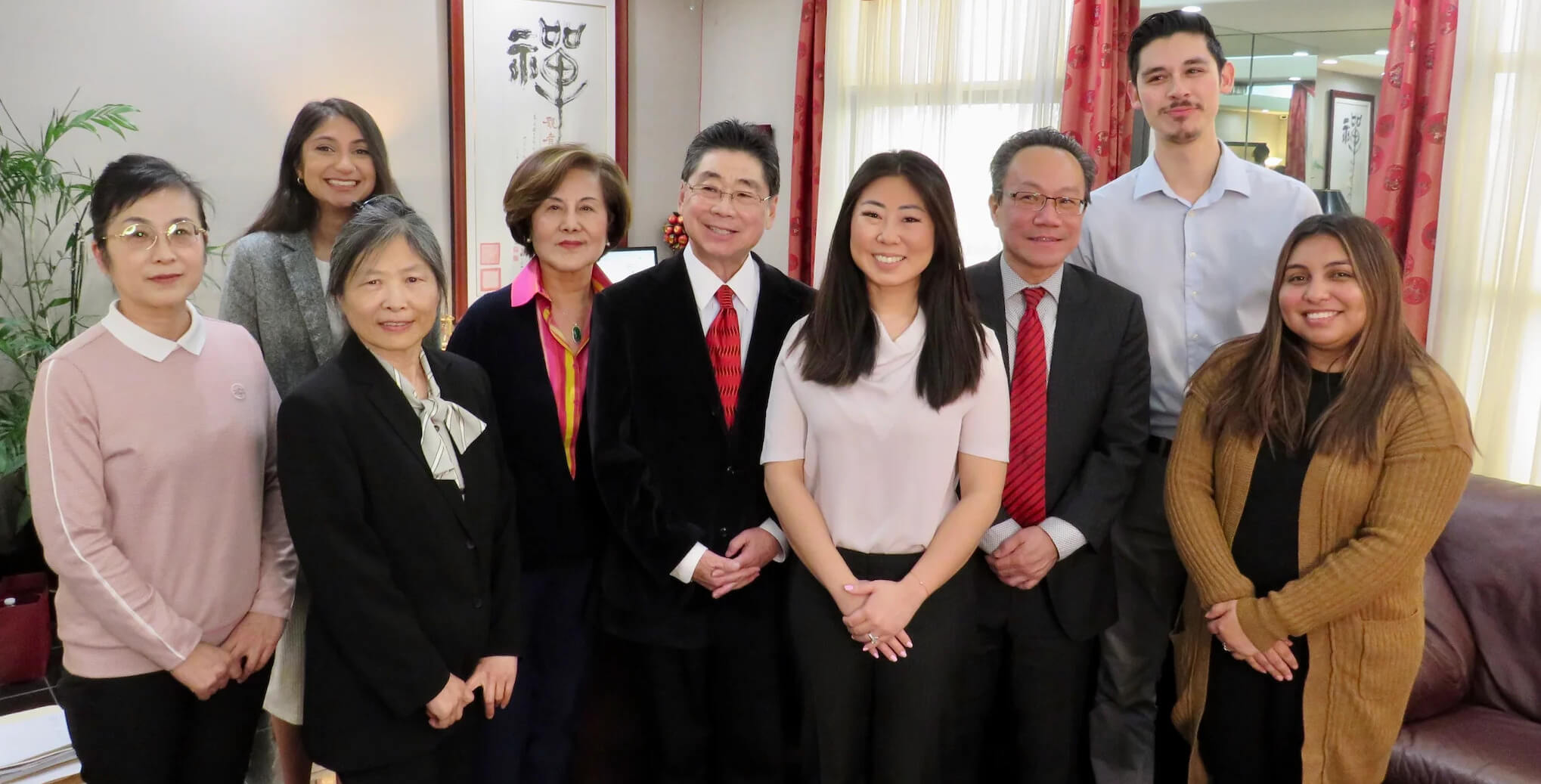

Why Choose Us?

  • Unmatched Expertise

    Trust in Peter Chu's 75+ years of collective experience to guide you through complex immigration matters.

  • Tailored Solutions

    Our personalized strategies adapt to your unique circumstances, ensuring we meet your specific immigration needs.

  • Proven Success

    Benefit from our solid track record in achieving favorable outcomes in various immigration cases across San Diego.

  • Dedicated Service

    Experience our client-first approach that ensures constant support and guidance throughout your immigration journey.

Upland, CA is home to over 79,000 residents — many of whom are high-achieving professionals in technology, healthcare, and academia seeking permanent residency through extraordinary ability classification. For EB-1A extraordinary ability visa Upland applicants navigating USCIS evidentiary standards, the difference between approval and a Request for Evidence often comes down to how the petition frames sustained national or international acclaim across the required criteria. Law office of Peter Darwin Chu has guided dozens of California EB-1A petitioners through this federal process, building petitions that meet the strict 'extraordinary ability' threshold under INA Section 203(b)(1)(A).

Book a Consultation

Law office of Peter Darwin Chu is a California-licensed immigration law firm serving Upland residents with EB-1A extraordinary ability visa petitions — providing evidence assembly, criterion mapping, and federal filing for professionals demonstrating sustained acclaim in sciences, arts, education, business, or athletics. Initial consultations are substantive 60-minute case assessments, not brief screening calls, where we evaluate your qualifications against all ten USCIS criteria before advising on petition viability.

EB-1A Lawyer Upland Available Across Upland and Surrounding Areas

Law office of Peter Darwin Chu represents EB-1A petitioners throughout Upland, CA — including residents in the North Upland, Foothill Knolls, and San Antonio Heights neighborhoods across zip codes 91784, 91785, and 91786. All California residents with qualifying extraordinary ability credentials are eligible for representation regardless of county, and we regularly file petitions for professionals based in San Bernardino County and Los Angeles County who work in fields ranging from biotechnology research to software engineering.

What Upland Residents Can Access

EB-1A Criterion Mapping and Evidence Assembly

The EB-1A category requires meeting at least three of ten regulatory criteria — ranging from original contributions of major significance to authorship of scholarly articles — and many Upland applicants underestimate which evidence USCIS will credit. We map your professional history against 8 CFR 204.5(h)(3), identify the strongest three-plus criteria for your case, and assemble supporting documentation including expert letters, citation metrics, media coverage, and membership credentials before filing. This front-end work is what prevents the costly Request for Evidence cycle that derails 40% of self-filed EB-1A petitions.

EB-1A Visa Federal Filing and USCIS Response

Once your evidence package is complete, we prepare Form I-140 (Immigrant Petition for Alien Workers) with a detailed legal brief explaining how your credentials meet the 'extraordinary ability' standard — the same threshold applied to Nobel laureates and Olympic medalists. If USCIS issues a Request for Evidence or Notice of Intent to Deny, we have 30-90 days to submit supplemental documentation and legal argument. Our Upland EB-1A clients receive same-week response drafting and filing to preserve petition deadlines.

Priority Date Preservation and Adjustment of Status

EB-1A petitions in the first preference category are typically current (no visa backlog), but your priority date — the date USCIS receives your I-140 — determines your place in line if retrogression occurs. For Upland residents already in the U.S. on H-1B, L-1, or O-1 status, we file concurrent I-485 adjustment of status applications where possible, allowing you to remain in California while your green card processes rather than consular processing abroad.

Get clear, expert legal guidance tailored to your visa, green card, or citizenship needs.

Licensed Immigration Representation in California

Law office of Peter Darwin Chu operates under California State Bar regulations and maintains all required professional liability coverage for immigration practice. EB-1A petitions are federal filings governed by USCIS Policy Manual Volume 6, Part F, and we stay current on adjudication trends through regular monitoring of Administrative Appeals Office decisions and federal district court rulings on extraordinary ability standards. Our Upland clients receive case updates within 48 hours of any USCIS correspondence, and all client funds are held in IOLTA-compliant trust accounts as required under California Rules of Professional Conduct Rule 1.15.

Inquire now to check if you qualify

What If I Don't Have a Nobel Prize or Olympic Medal — Can I Still Qualify for EB-1A in Upland?

Yes — the one-time achievement criterion (major internationally recognized award) is only one of ten possible pathways, and the vast majority of approved EB-1A petitions rely on meeting three or more of the other nine criteria instead. Upland residents working in fields like software architecture, biomedical research, or academic publishing typically qualify through a combination of authorship (peer-reviewed publications), original contributions (patents, widely adopted methodologies), judging (peer review service), and membership in associations requiring outstanding achievement. USCIS does not require global fame — it requires documentation of sustained national or international acclaim within your specific field.

What If My Field Doesn't Produce Traditional Evidence Like Publications or Awards?

Fields like entrepreneurship, product design, and business leadership require creative evidence assembly, but EB-1A approval is absolutely achievable for Upland applicants in these domains. We have successfully petitioned using evidence such as venture capital funding rounds (demonstrating investor recognition of extraordinary ability), acquisition offers for companies you founded, media coverage in trade publications, speaking invitations at industry conferences, and expert letters from competitors or collaborators attesting to your influence. The key is framing this evidence within USCIS's ten-criterion framework through a well-constructed legal brief.

What If I'm Already in the U.S. on H-1B Status — Do I Need to Leave to Apply for EB-1A?

No — Upland residents on valid H-1B, L-1, O-1, or other nonimmigrant status can file EB-1A petitions while remaining in California, and if your priority date is current, you can file Form I-485 (adjustment of status) concurrently with your I-140. This allows you to apply for work authorization (EAD) and advance parole travel permission while your green card processes, typically within 12-18 months. You do not need to return to your home country for consular processing unless you prefer that pathway or have specific visa stamping needs.

What If USCIS Issues a Request for Evidence on My EB-1A Petition Filed from Upland?

A Request for Evidence (RFE) is not a denial — it is USCIS asking for clarification or additional documentation on specific criteria they believe are not yet sufficiently proven. Upland EB-1A petitioners who receive RFEs have 30-90 days to respond, and the response can include new evidence that was not part of the original filing, such as additional expert letters, updated citation counts, or newly published articles. We analyze every RFE to determine whether the issue is evidentiary (solvable with more documentation) or legal (requiring revised argumentation), and our response strategy depends on that diagnosis. Approximately 60% of RFEs are successfully overcome with a well-targeted response.

Why Upland EB-1A Applicants Choose Specialized Immigration Counsel Over General Practice Firms

EB-1A petitions are not standard immigration filings — they require deep familiarity with federal adjudication trends, USCIS Policy Manual updates, and Administrative Appeals Office precedent decisions that shape how officers evaluate 'extraordinary ability' evidence. Many Upland residents initially consult general practice law firms that handle immigration as one of many practice areas, or they attempt self-filing using online guides. Here's the honest answer: EB-1A petition approval rates vary wildly by representation type — specialized immigration firms focusing on employment-based green cards achieve approval rates 30-40 percentage points higher than general practitioners or pro se filers, according to USCIS FOIA-released data. This gap exists because EB-1A success depends on evidence framing, not just evidence volume.

OptionEvidence StrategyUSCIS Policy FamiliarityProfessional Assessment
Self-Filing (Pro Se)Submits resume and awards without criterion mappingRelies on online guides, misses recent policy shiftsHigh RFE risk — 40%+ initial rejection rate
General Practice FirmStandard I-140 template with minimal legal briefLimited EB-1A case volume, reactive to RFEsInconsistent outcomes — depends on assigned attorney's experience
EB-1A Specialized CounselCriterion-mapped evidence package with custom legal briefTracks AAO decisions and adjudication trendsProactive framing — lowest RFE rate, fastest approval timeline

Law office of Peter Darwin Chu focuses exclusively on employment-based and family-based immigration — we do not practice personal injury, business formation, or estate planning. Every Upland EB-1A petition is handled by an attorney who has filed dozens of extraordinary ability cases and knows which evidence USCIS officers will credit before you spend months assembling it.

Get in touch

Frequently Asked Questions

Find answers to common questions about our services

  • Standard processing for Form I-140 EB-1A petitions is currently 6-12 months depending on the USCIS service center (California petitions are typically routed to California Service Center or Nebraska Service Center). Upland residents can request premium pro

  • EB-1A is an immigrant visa (green card) pathway requiring extraordinary ability evidence but no employer sponsor or job offer, while O-1 is a nonimmigrant (temporary) visa requiring employer sponsorship and demonstrating extraordinary ability or achieveme

  • Yes, you can file Form I-140 EB-1A while in the U.S. on B-1/B-2 tourist status, but you cannot file concurrent I-485 adjustment of status unless you have a current priority date and are in valid nonimmigrant status that permits dual intent (such as H-1B o

  • Attorney fees for EB-1A petition preparation and filing typically range from $8,000 to $15,000 depending on case complexity, field of expertise, and whether expert letters or translations are required. This fee covers evidence assembly, criterion mapping,

  • The two most frequent denial reasons are (1) failing to meet at least three of the ten regulatory criteria with sufficient documentation, and (2) failing to demonstrate that the applicant will continue working in their field of extraordinary ability in th

  • Yes — your spouse and unmarried children under 21 are eligible for derivative E-14 and E-15 immigrant visas based on your approved EB-1A petition. They do not need to independently demonstrate extraordinary ability; their status is entirely dependent on y

  • EB-1A petitions do not require that your extraordinary ability was demonstrated within the U.S. — USCIS evaluates your sustained national or international acclaim regardless of where the achievements occurred. Many Upland EB-1A petitioners are recent arri

  • USCIS defines extraordinary ability as 'a level of expertise indicating that the individual is one of that small percentage who have risen to the very top of the field of endeavor' (8 CFR 204.5(h)(2)). This does not require global fame or household name r

Need Personalized Immigration Guidance?

Law office of Peter Darwin Chu provides EB-1A lawyer Upland services with federal filing expertise, criterion-mapped evidence assembly, and RFE response representation for California residents demonstrating extraordinary ability in sciences, arts, education, business, or athletics.

Upland EB-1A petitioners often explore related immigration pathways depending on their career stage and evidence profile. Researchers and academics may compare EB-1A Visa to EB-1B Visa outstanding professor or researcher classification, which requires a permanent job offer but has a slightly lower evidentiary bar. Entrepreneurs and business leaders frequently evaluate EB-2 Visa National Interest Waiver petitions as an alternative if they do not yet meet three EB-1A criteria. Upland residents currently on nonimmigrant status may also explore O-1 Visa Guidance for temporary work authorization while building their EB-1A evidence profile, or review our EB-1A Visa Los Angeles and EB-1A Visa Long Beach pages for Southern California case examples. For immediate case assessment, contact our office to schedule a consultation.

Speak With Us Today