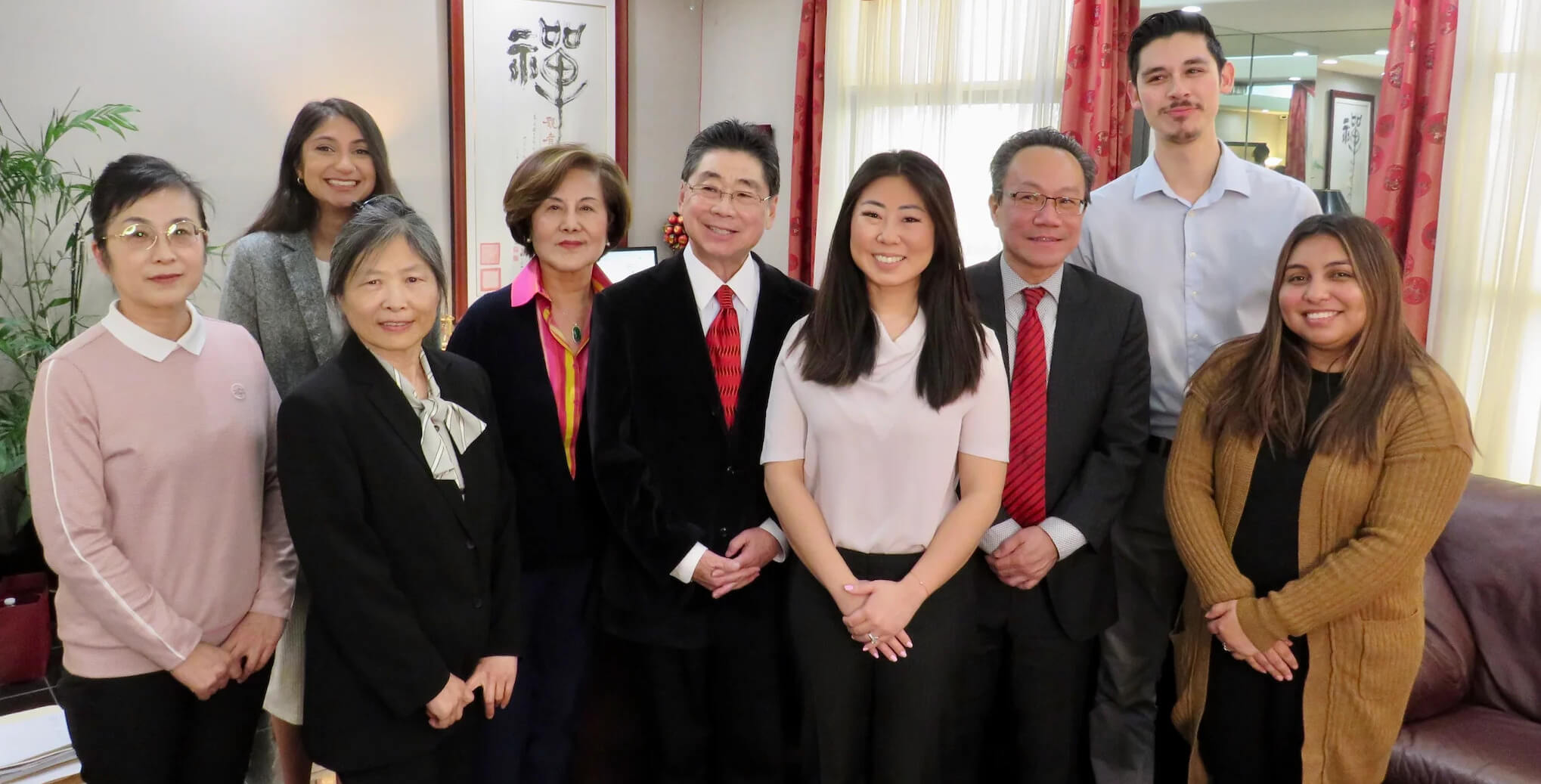

Why Choose Us?

  • Unmatched Expertise

    Trust in Peter Chu's 75+ years of collective experience to guide you through complex immigration matters.

  • Tailored Solutions

    Our personalized strategies adapt to your unique circumstances, ensuring we meet your specific immigration needs.

  • Proven Success

    Benefit from our solid track record in achieving favorable outcomes in various immigration cases across San Diego.

  • Dedicated Service

    Experience our client-first approach that ensures constant support and guidance throughout your immigration journey.

Alhambra's proximity to major research institutions — including California State University Los Angeles and Pasadena's research corridor — makes the city home to over 2,400 employed scientists and postsecondary educators, many of whom pursue EB-1B outstanding researcher visa classification. For researchers and professors working across Alhambra's academic and biotech communities, the difference between a successful EB-1B petition and a Request for Evidence often hinges on whether expert immigration counsel reviewed the evidence packet before filing. Law office of Peter Darwin Chu represents EB-1B outstanding researcher visa alhambra applicants throughout California, bringing specialized knowledge of USCIS evidentiary standards for advanced academic positions.

Book a Consultation

Law office of Peter Darwin Chu is a California-licensed immigration law firm serving Alhambra residents pursuing EB-1B outstanding researcher or professor status — offering case evaluations, petition drafting, and RFE response representation with same-week consultations available. The firm handles EB-1B cases for university faculty, postdoctoral researchers, and private-sector scientists meeting the statutory requirements of permanent job offers and international recognition.

EB-1B Attorney Alhambra Available Across Alhambra and Surrounding Areas

Law office of Peter Darwin Chu represents EB-1B visa applicants throughout Alhambra, CA, including residents in the Midwick Tract, Emery Park, and Alhambra Park neighborhoods (zip codes 91801, 91802, 91803, 91804, and 91841). California researchers employed at institutions anywhere in the state are eligible for representation regardless of their residential county.

What Alhambra Researchers Can Access

EB-1B Petition Strategy and Evidence Assembly

The EB-1B classification requires proof of international recognition, a permanent research or teaching position, and at least three years of relevant experience. Law office of Peter Darwin Chu evaluates whether your publication record, citation metrics, peer review history, and employer documentation meet USCIS standards under the two-prong statutory test defined in 8 CFR 204.5(i)(3). Alhambra-area researchers working in molecular biology, computer science, and materials engineering receive guidance on structuring recommendation letters, documenting original contributions, and distinguishing outstanding researcher status from the EB-1A extraordinary ability classification.

Request for Evidence (RFE) Response

Nearly 40% of EB-1B petitions receive RFEs requesting additional evidence of international recognition or permanence of the job offer. When USCIS questions whether your citation count demonstrates sustained acclaim or whether your employment contract qualifies as 'permanent,' Law office of Peter Darwin Chu prepares legally sufficient responses citing precedent decisions from the Administrative Appeals Office and addressing each deficiency point-by-point within the statutory response deadline.

EB-1A Visa and EB-1C Visa Law Office Comparison Counsel

Some researchers qualify for multiple employment-based first-preference classifications. California academics with exceptional citation records may pursue EB-1A extraordinary ability (which does not require a job offer), while researchers transitioning from foreign institutions to U.S. corporate labs may qualify for EB-1C multinational manager classification. Law office of Peter Darwin Chu evaluates all three pathways during initial consultation to identify the classification with the highest approval probability for your specific evidence profile.

Get clear, expert legal guidance tailored to your visa, green card, or citizenship needs.

Licensed Immigration Representation in California

Law office of Peter Darwin Chu maintains all required California State Bar licenses and operates under the professional conduct standards established by the American Immigration Lawyers Association (AILA). All EB-1B petitions are prepared in compliance with USCIS Policy Manual Volume 6, Part F, and all client communications are protected under attorney-client privilege as defined in California Evidence Code Section 954. The firm carries professional liability coverage and provides written fee agreements for every EB-1B representation matter as required under California Rules of Professional Conduct.

Get in touch

Inquire now to check if you qualify

What If My EB-1B Petition Is Denied — Can I Refile in Alhambra?

Yes, you can refile an EB-1B petition after denial, and many denials are reversed on refiling with stronger evidence. USCIS denials typically cite insufficient proof of international recognition or failure to demonstrate a permanent job offer. Law office of Peter Darwin Chu reviews the denial notice to identify which evidentiary criterion failed, then restructures the petition with additional citation analyses, supplemental recommendation letters, or revised employer attestations. Alhambra researchers who receive denials based on citation count can often strengthen their cases by documenting post-filing citations or demonstrating influence through patent citations and conference keynotes.

What If I'm Already in the U.S. on an H-1B — Does That Affect My EB-1B Filing in Alhambra?

No, current H-1B status does not prevent EB-1B filing and may actually simplify the process. Researchers in valid H-1B status can file EB-1B petitions concurrently with adjustment of status (Form I-485) if a visa number is immediately available, allowing you to remain in the U.S. throughout processing. California universities frequently sponsor EB-1B petitions for H-1B postdoctoral researchers who have accumulated the required three years of research experience. Law office of Peter Darwin Chu coordinates EB-1B filings with H-1B extension timelines to ensure continuous work authorization for Alhambra-area academics.

What If My Institution Refuses to Sponsor My EB-1B Petition in Alhambra?

EB-1B petitions require employer sponsorship — the petitioning entity must be the U.S. institution offering the permanent research or teaching position. If your California employer declines to sponsor, you cannot self-petition under EB-1B (though you may qualify for EB-1A extraordinary ability, which allows self-petitioning). Some institutions refuse sponsorship due to budget constraints or institutional policy rather than candidate qualifications. Law office of Peter Darwin Chu assists Alhambra researchers in negotiating sponsorship terms, drafting institutional sponsor letters, or evaluating whether transitioning to a different classification or employer resolves the sponsorship barrier.

What If I Have Fewer Than Three Years of Research Experience — Can I Still Apply for EB-1B in Alhambra?

No, the EB-1B statutory requirement mandates at least three years of experience in teaching or research in the academic field. This experience must be documented and cannot include doctoral study time unless you were employed as a research assistant or teaching assistant during that period. California postdocs who completed their PhD in two years and have one year of postdoctoral work do not yet meet the three-year threshold. Law office of Peter Darwin Chu evaluates whether time spent in combined research and teaching roles, fellowship positions, or pre-doctoral employment qualifies toward the three-year requirement under USCIS interpretation of 'experience in the academic field.'

Why Alhambra Researchers Choose Specialized EB-1B Counsel Over General Immigration Practitioners

EB-1B outstanding researcher petitions require evidentiary strategies distinct from family-based immigration or routine employment authorization cases. General immigration practitioners may lack familiarity with citation metrics analysis, AAO precedent decisions interpreting 'international recognition,' or the documentation standards for permanent research positions versus term-limited postdoctoral appointments. Here's the honest answer: filing an EB-1B petition without counsel experienced in academic immigration increases the RFE rate and reduces approval speed — two outcomes that directly delay your priority date and employment mobility.

ApproachEvidence StrategyRFE RiskCost TransparencyProfessional Assessment
Specialized EB-1B AttorneyCitation analysis, publication impact, peer review documentationLow — proactive AAO complianceWritten fee agreement, cost itemizationHighest approval probability with lowest refiling risk
General Immigration PractitionerStandard template letters, generic recommendation draftsModerate — may miss field-specific evidenceFlat fee, limited revisionAdequate for straightforward cases; weaker for borderline citation records
DIY Petition FilingSelf-assessed evidence sufficiencyHigh — no legal review of statutory interpretationFiling fee only ($700–$1,000)Feasible only for researchers with unambiguous international acclaim and institutional guidance
University In-House CounselInstitution-reviewed but not individualizedLow to moderate — varies by institutionNo cost to applicant (employer-paid)Reliable but constrained by institutional templates and timelines

Frequently Asked Questions

Find answers to common questions about our services

  • Standard EB-1B processing at USCIS currently averages 6–12 months, though premium processing (15-day adjudication for an additional $2,805 fee) is available for EB-1B petitions filed by qualifying institutions. California researchers can check current pro

  • EB-1A extraordinary ability classification allows self-petitioning without employer sponsorship and requires meeting at least three of ten regulatory criteria demonstrating sustained national or international acclaim. EB-1B outstanding researcher classifi

  • Yes, postdoctoral researchers can qualify if the position is classified as permanent or indefinite rather than term-limited. USCIS interprets 'permanent' broadly to include positions without a pre-determined end date, even if renewable contracts are used.

  • International recognition is demonstrated by meeting at least two of six regulatory criteria: major prizes or awards, membership in associations requiring outstanding achievement, published material in professional publications about your work, participat

  • Yes, EB-1B classification is available to researchers employed by private companies if the employer has a documented research department and at least three full-time researchers, and the beneficiary will work in a research capacity. California biotech fir

  • An RFE requires a detailed written response within the deadline specified in the notice (typically 87 days). The response must directly address each deficiency cited by USCIS and provide additional documentation or legal argument explaining why the origin

  • Yes, your spouse and unmarried children under 21 qualify for derivative E-14 (spouse) and E-15 (child) status and can file for adjustment of status concurrently with your EB-1B-based I-485 or apply for immigrant visas at a U.S. consulate abroad. Derivativ

  • Attorney fees for EB-1B petition preparation typically range from $5,000 to $12,000 depending on case complexity, evidence volume, and whether premium processing or concurrent adjustment of status filing is requested. Government filing fees include the I-

Need Personalized Immigration Guidance?

Law office of Peter Darwin Chu provides EB-1B attorney Alhambra services to California researchers and professors through comprehensive petition preparation, RFE response, and priority date strategy consultations available to all Alhambra, CA residents with qualifying academic credentials.

Researchers exploring employment-based immigration options may also benefit from reviewing related visa classifications handled by Law office of Peter Darwin Chu. The EB-1A Visa page explains extraordinary ability classification for self-petitioning academics, while the EB-2 Visa section covers advanced degree professional pathways. California scholars can compare first-preference options through the EB-1C Visa Law Office resource for multinational executives. Additional guidance on related visa categories appears on the EB-1A Visa In Gaslamp and EB-1B Visa pages.

Speak With Us Today