
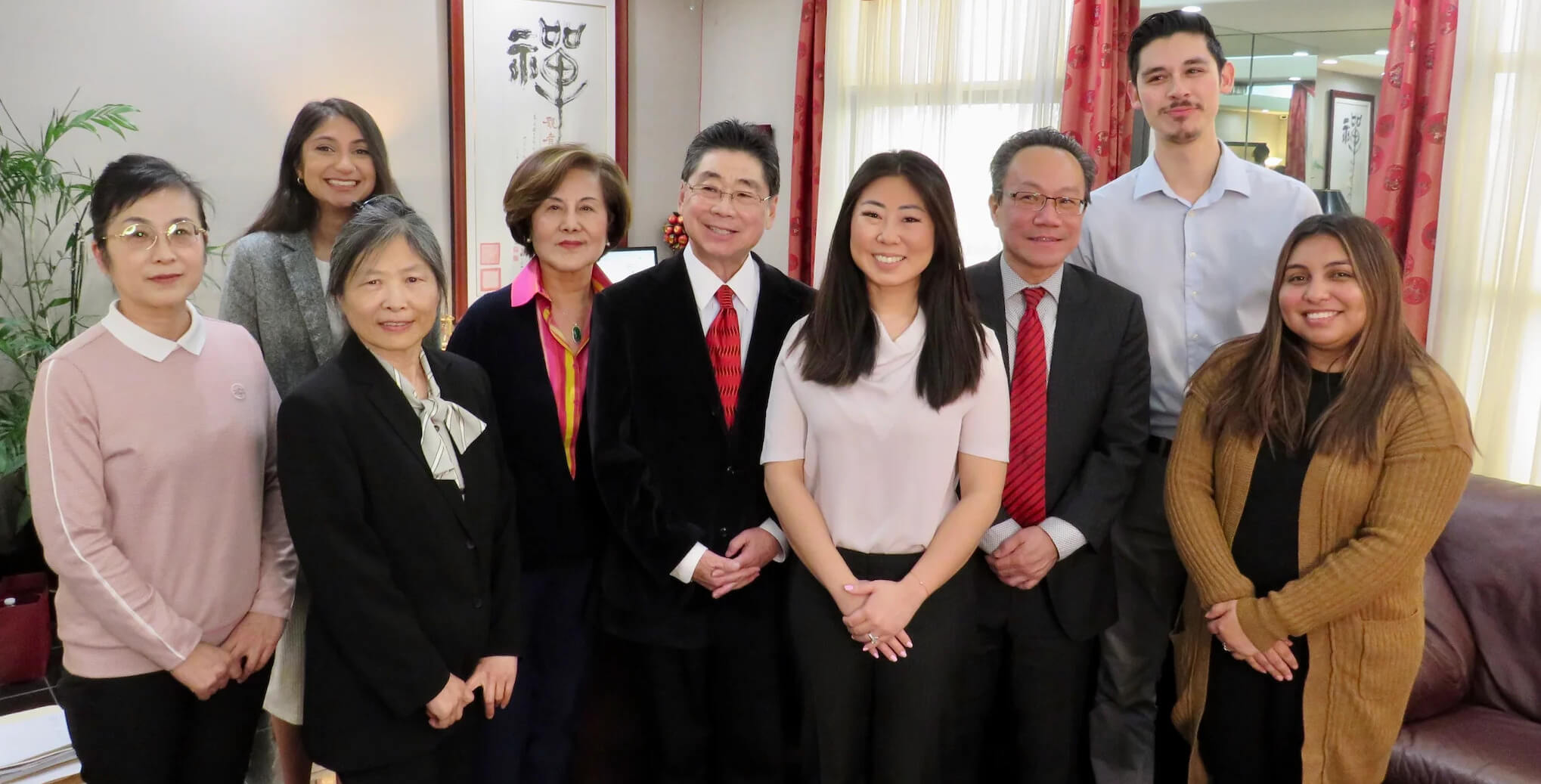
Why Choose Us?
-

Unmatched Expertise
Trust in Peter Chu's 75+ years of collective experience to guide you through complex immigration matters.
-

Tailored Solutions
Our personalized strategies adapt to your unique circumstances, ensuring we meet your specific immigration needs.
-

Proven Success
Benefit from our solid track record in achieving favorable outcomes in various immigration cases across San Diego.
-

Dedicated Service
Experience our client-first approach that ensures constant support and guidance throughout your immigration journey.


Get clear, expert legal guidance tailored to your visa, green card, or citizenship needs.

Inquire now to check if you qualify
Comparing EB-1B to Alternative Immigration Pathways in Aliso Viejo
Researchers in Aliso Viejo typically weigh EB-1B outstanding researcher classification against EB-2 National Interest Waiver (NIW), O-1 nonimmigrant status, and employer-sponsored PERM labor certification. Each pathway has distinct evidentiary requirements, processing timelines, and strategic trade-offs. Here's the honest answer: EB-1B offers the fastest route to permanent residency for researchers with strong publication records and institutional backing, but it requires employer sponsorship and a permanent job offer — unlike EB-2 NIW, which you can self-petition. If your research has clear national importance but your citation record is still building, NIW may be strategically stronger. If you need immediate work authorization and plan to remain in research temporarily, O-1 status provides a nonimmigrant bridge while you build the record for EB-1B.
| Pathway | Employer Sponsorship Required | Processing Time | Key Advantage | Bottom Line |
|---|---|---|---|---|
| EB-1B Outstanding Researcher | Yes — permanent job offer | 6–12 months (I-140) | No labor certification, faster than EB-2 | Best for researchers with institutional backing and strong international acclaim |
| EB-2 National Interest Waiver | No — self-petition | 12–18 months | No employer requirement | Best for researchers whose work has clear U.S. national importance and independent funding |
| O-1 Extraordinary Ability | Yes — employer petition | 2–4 months (premium available) | Nonimmigrant, allows dual intent | Best for temporary research roles or when building EB-1B record |
| EB-2 with PERM Labor Certification | Yes — requires recruitment | 18–24 months (PERM + I-140) | Standard employment-based path | Slower fallback if EB-1B or NIW criteria not met |
Frequently Asked Questions
Find answers to common questions about our services
-
EB-1B I-140 petitions filed through California Service Center typically process in 6–12 months under standard processing, though premium processing (15-day adjudication for an additional $2,500 fee) is available for most cases. Once the I-140 is approved,
-
No — EB-1B classification requires at least three years of research experience in your field, which USCIS calculates from the date you completed your degree (PhD or foreign equivalent). Postdoctoral research, pre-doctoral fellowships, and doctoral candida
-
EB-1A extraordinary ability classification does not require employer sponsorship — you can self-petition — and it does not require a permanent job offer. EB-1B outstanding researcher classification requires employer sponsorship and a permanent research po
-
No — EB-1B outstanding researcher classification is exempt from the PERM labor certification process, which is one of its primary strategic advantages over EB-2 and EB-3 employment-based green cards. This exemption eliminates the 6–12 month recruitment an
-
A Request for Evidence (RFE) is USCIS's formal request for additional documentation to support your claim of outstanding researcher status or to clarify the permanence of the job offer. Common RFE issues in Aliso Viejo EB-1B cases include insufficient evi
-
Yes, but with important conditions. If your I-485 adjustment of status application has been pending for 180 days or more, you can change employers under AC21 portability rules — provided the new position is in the same or similar occupational classificati
-
USCIS interprets 'original contributions of major significance' as research that has been adopted, implemented, or cited by independent researchers and has demonstrably influenced the field. Evidence includes citation metrics showing your work is frequent
-
EB-1B is an immigrant visa category leading to permanent residency, while O-1 is a nonimmigrant visa allowing temporary work authorization for up to three years (renewable indefinitely). Both require evidence of sustained acclaim, but O-1 applies an 'extr
Need Personalized Immigration Guidance?

