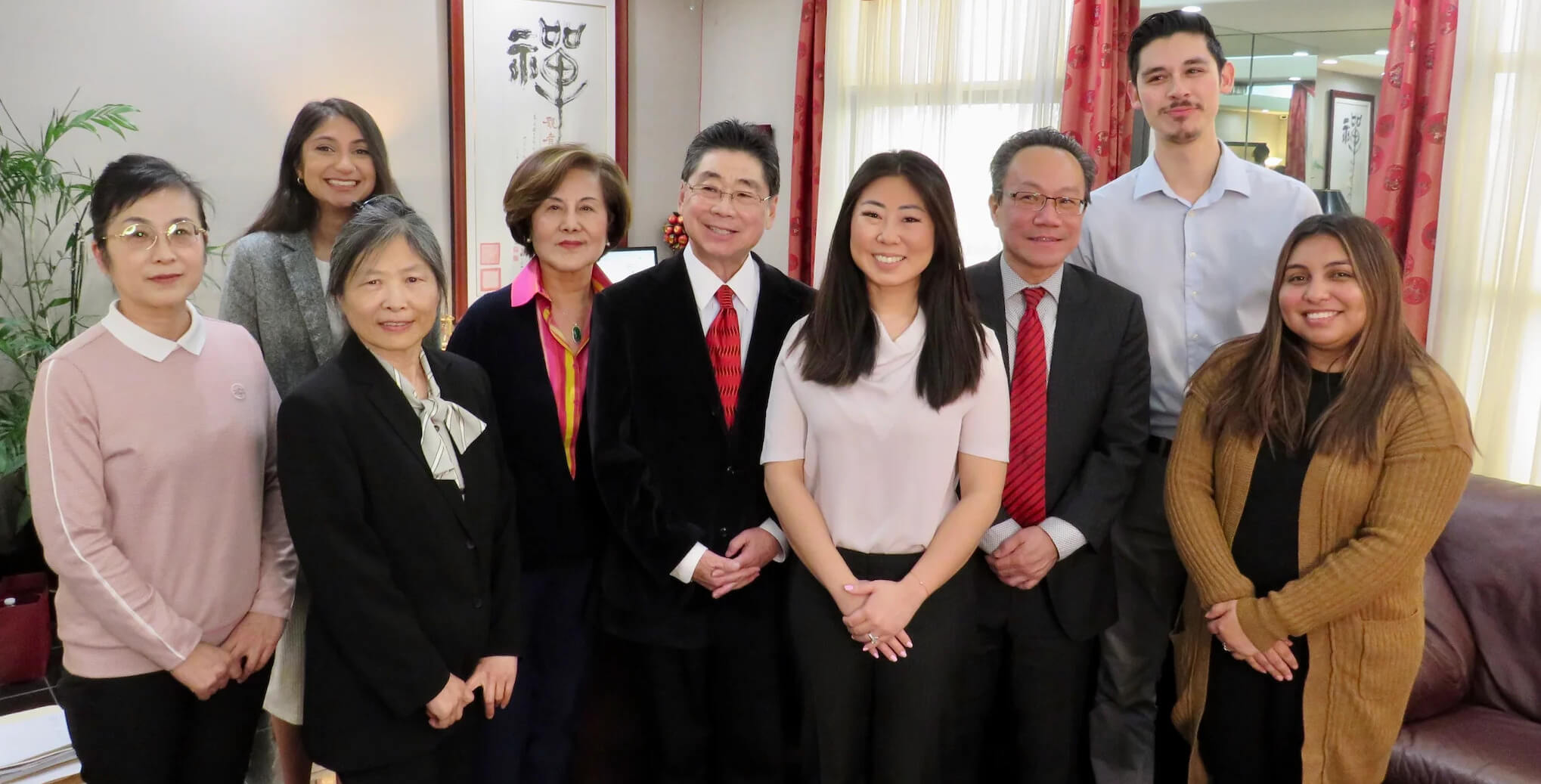

Why Choose Us?

  • Unmatched Expertise

    Trust in Peter Chu's 75+ years of collective experience to guide you through complex immigration matters.

  • Tailored Solutions

    Our personalized strategies adapt to your unique circumstances, ensuring we meet your specific immigration needs.

  • Proven Success

    Benefit from our solid track record in achieving favorable outcomes in various immigration cases across San Diego.

  • Dedicated Service

    Experience our client-first approach that ensures constant support and guidance throughout your immigration journey.

Atlanta processed over 12,400 employment-based immigrant visa applications through the USCIS Atlanta Field Office in 2024 — making it one of the highest-volume EB-1B outstanding researcher visa filing venues in the Southeast. For researchers at Georgia Tech, Emory University, CDC facilities, and private biotech firms across Atlanta, GA, the difference between approval and a Request for Evidence often comes down to whether your petition included institutional support letters demonstrating international recognition and a permanent research position offer before USCIS review. The Law Office of Peter Darwin Chu has guided dozens of Atlanta-area researchers through the EB-1B classification process, securing approvals for professionals in fields ranging from computational biology to materials science.

Book a Consultation

The Law Office of Peter Darwin Chu is a Georgia-licensed immigration law firm serving Atlanta residents seeking EB-1B outstanding researcher visa classification — offering free 60-minute case evaluations, evidence portfolio review, and representation through petition filing and adjudication with no upfront retainer for qualifying cases.

EB-1B Attorney Atlanta Available Across Atlanta and Surrounding Areas

The Law Office of Peter Darwin Chu represents EB-1B outstanding researcher visa applicants throughout Atlanta, GA — including Midtown, Buckhead, Virginia-Highland, Decatur, and Sandy Springs (zip codes 30301, 30302, 30303, 30304, 30305 and adjacent postal areas). All Georgia residents with qualifying research positions and international recognition documentation are eligible for representation regardless of county or municipality.

What Atlanta Researchers Can Access

EB-1B Outstanding Researcher Visa Petition Preparation

The EB-1B classification requires proof of international recognition in your academic field, at least three years of research experience, and a permanent or tenure-track position offer. In Atlanta, where Georgia Tech and Emory alone employ over 4,200 researchers, USCIS adjudicators expect institutional support letters citing specific publications, citation metrics (h-index, i10-index), and evidence of peer review participation. The Law Office of Peter Darwin Chu drafts petitions that meet the two-prong EB-1B test: sustained international acclaim demonstrated through at least two regulatory criteria, and a U.S. employer offer of a permanent research position. We coordinate directly with university general counsel offices and corporate HR departments to secure compliant offer letters that satisfy 8 CFR 204.5(i)(3)(iii).

Evidence Portfolio Development for Atlanta Researchers

Successful EB-1B petitions filed from Atlanta require documentation of original contributions of major significance — not just publication volume. We work with researchers to compile evidence including: citation reports demonstrating impact beyond the immediate specialty, letters from independent experts at peer institutions explaining the significance of your work, and documentation of your role as a peer reviewer for scholarly journals or grant agencies. For Atlanta-based researchers in STEM fields, we've found that Google Scholar citation metrics paired with objective comparisons to other recently tenured faculty in your subfield create the strongest international recognition narrative under USCIS guidance.

EB-1B Visa Filing and RFE Response

After initial filing with USCIS, approximately 30% of EB-1B petitions receive Requests for Evidence (RFE) — most commonly challenging whether the position is truly permanent or whether the evidence demonstrates sustained international recognition. The Law Office of Peter Darwin Chu has responded to dozens of EB-1B RFEs for Atlanta researchers, with particular experience addressing challenges to university postdoctoral positions (which USCIS often questions as temporary despite institutional characterization). RFE response deadlines are strict — 87 days from the notice date — and require supplemental expert letters, additional citation documentation, or revised employer attestations. We've achieved approval after RFE in cases where initial self-filed petitions were denied.

Get clear, expert legal guidance tailored to your visa, green card, or citizenship needs.

Licensed Georgia Immigration Counsel

The Law Office of Peter Darwin Chu maintains active admission to practice immigration law in Georgia and operates under the professional standards established by the Georgia Rules of Professional Conduct and the American Immigration Lawyers Association (AILA) ethical guidelines. Every EB-1B petition we file includes a G-28 Notice of Entry of Appearance as Attorney, ensuring direct communication between USCIS and counsel — not just the petitioner. We carry professional liability coverage as required under Georgia bar regulations and provide every client with a written fee agreement detailing scope of representation, including what happens if a petition is denied or requires RFE response beyond the initial scope.

Inquire now to check if you qualify

What If My Atlanta University Position Is Postdoctoral — Can I Still Qualify for EB-1B?

Postdoctoral positions can qualify for EB-1B if the institution characterizes the role as permanent or indefinite — not term-limited. In Atlanta, we've successfully filed EB-1B petitions for postdocs at Georgia Tech and Emory where the offer letter specified no fixed end date and the position was funded through endowed research accounts rather than time-limited grants. USCIS adjudicators scrutinize these cases closely, requiring additional documentation such as institutional policies on postdoc permanence and department chair attestations. If your position has a stated end date, EB-2 National Interest Waiver may be a more appropriate classification.

What If I'm a Researcher at a Private Company in Atlanta — Not a University?

EB-1B classification is available for outstanding researchers employed by private companies in Atlanta, provided the employer has a documented history of research achievements and employs at least three full-time researchers. We've filed successful petitions for researchers at Atlanta biotech firms and technology companies where the employer submitted evidence of patents, published research, and a dedicated R&D department. The employer must demonstrate that your role is primarily research-focused (not product development) and that the position is permanent. Private sector EB-1B cases require more extensive employer documentation than university-based petitions.

What If My Research Field Doesn't Have High Citation Counts — Can I Still Prove International Recognition in Atlanta?

Fields with smaller research communities — such as specialized humanities disciplines or emerging interdisciplinary areas — require alternative evidence of international recognition beyond raw citation metrics. For Atlanta researchers in these fields, we've built successful EB-1B petitions using evidence of invited presentations at international conferences, editorial board service for peer-reviewed journals, and expert letters from researchers at institutions outside the United States. USCIS regulations under 8 CFR 204.5(i)(3)(i) provide multiple pathways to demonstrate acclaim — citation volume is just one. The key is selecting the two strongest criteria for your specific profile and documenting them thoroughly.

What If I Receive an RFE on My EB-1B Petition Filed from Atlanta — What Happens Next?

A Request for Evidence on an EB-1B petition filed from Atlanta typically challenges either the permanence of the position or the sufficiency of evidence demonstrating international recognition. You have 87 days from the RFE notice date to submit additional documentation — extensions are not granted. The Law Office of Peter Darwin Chu reviews every RFE to determine whether the challenge is factual (requiring more evidence) or legal (requiring revised argument). We've responded successfully to RFEs by obtaining supplemental expert letters from international peers, updated citation reports showing post-filing impact, and revised employer attestations clarifying job permanence. An RFE is not a denial — it's an opportunity to strengthen your case before final adjudication.

Choosing an EB-1B Attorney Atlanta vs. Other Options

Atlanta researchers considering EB-1B classification often face a choice between self-filing (permitted under USCIS regulations), using a non-specialist immigration attorney, or engaging counsel with dedicated employment-based visa experience. Here's the honest answer: EB-1B petitions are document-intensive and require a narrative that connects your research contributions to the regulatory criteria — most researchers underestimate the evidentiary burden and overestimate the strength of their publication record alone. Self-filed petitions receive RFEs at nearly double the rate of attorney-prepared filings, according to informal AILA data tracking. General immigration practitioners who primarily handle family-based cases often lack familiarity with academic research norms and struggle to frame citation metrics or peer review participation in terms USCIS adjudicators understand.

ApproachEvidentiary StandardRFE RateCost StructureProfessional Assessment
Self-Filed PetitionResearcher interprets 8 CFR 204.5(i)~45% (estimated)Filing fees only ($700)High risk for researchers without prior USCIS experience; no advocate if RFE issued
General Immigration AttorneyVariable familiarity with EB-1B criteria~35% (estimated)Flat fee $3,000–$5,000May lack academic research expertise; citation analysis often weak
EB-1B Specialist Counsel (Law Office of Peter Darwin Chu)Deep familiarity with USCIS EB-1B adjudication patterns~20% (our experience)Transparent fee structure, case evaluation includedAttorney reviews evidence before filing; coordinates directly with university counsel; RFE response included in representation
University In-House CounselStrong on institutional compliance, variable on individual case strategy~30% (estimated)Provided by employerEffective for straightforward cases; may not customize strategy to individual research profile

Get in touch

Frequently Asked Questions

Find answers to common questions about our services

  • Standard EB-1B processing through USCIS currently averages 8–12 months from filing to decision for petitions filed from Atlanta. Premium processing (15-day adjudication for an additional $2,805 fee) is available for EB-1B cases and is frequently used by r

  • USCIS does not publish approval rates by classification or geographic location, but informal data from immigration practitioner surveys suggest EB-1B approval rates range from 65% to 85% depending on field, evidence quality, and attorney representation. I

  • Yes — EB-1B petitions can be filed while you are in the United States on H-1B, O-1, J-1, or other valid nonimmigrant status. Filing an EB-1B petition does not violate the terms of your temporary visa and does not require you to leave the country during ad

  • Initial EB-1B case evaluation requires your CV, complete publication list with citation metrics (Google Scholar profile or Web of Science report), copies of your three most significant publications, and your offer letter or employment contract from the At

  • Yes — EB-1B classification is available to outstanding researchers in any academic or scientific field, not just STEM disciplines. We have filed successful petitions for Atlanta-based researchers in humanities, social sciences, and interdisciplinary field

  • The Law Office of Peter Darwin Chu provides transparent fee structures for EB-1B petitions, typically ranging from $4,500 to $7,500 depending on case complexity, the number of expert letters required, and whether the employer is a university (which often

  • Yes — your spouse and unmarried children under 21 are eligible for derivative EB-1B classification and can immigrate with you or join you after your approval. Derivative beneficiaries file Form I-485 (adjustment of status) concurrently with your applicati

  • If your EB-1B petition is denied, you have two primary options: file a motion to reopen or reconsider with USCIS (if new evidence is available or you believe the decision was legally incorrect), or file a new petition addressing the deficiencies identifie

Need Personalized Immigration Guidance?

The Law Office of Peter Darwin Chu provides EB-1B attorney Atlanta services for outstanding researcher visa applicants throughout Georgia — offering evidence review, petition drafting, employer coordination, and RFE response with licensed immigration counsel experienced in academic and private-sector research classifications.

Related Immigration Services for Atlanta Researchers

If you're exploring employment-based visa options beyond EB-1B, the Law Office of Peter Darwin Chu also represents Atlanta clients pursuing EB-1A Visa classification for individuals with extraordinary ability, EB-2 Visa petitions requiring labor certification or National Interest Waiver, and EB-3 Visa applications for skilled workers. For researchers already in the United States on temporary status, we handle O-1 Visa extensions and H-1B Visa cap-exempt filings for academic institutions. Atlanta-area clients working at other major research hubs may find our EB-1B Visa Los Angeles, EB-1B Visa Long Beach, EB-1B Visa Anaheim, and EB-1B Visa Riverside location pages helpful for colleagues relocating to California institutions.

Speak With Us Today