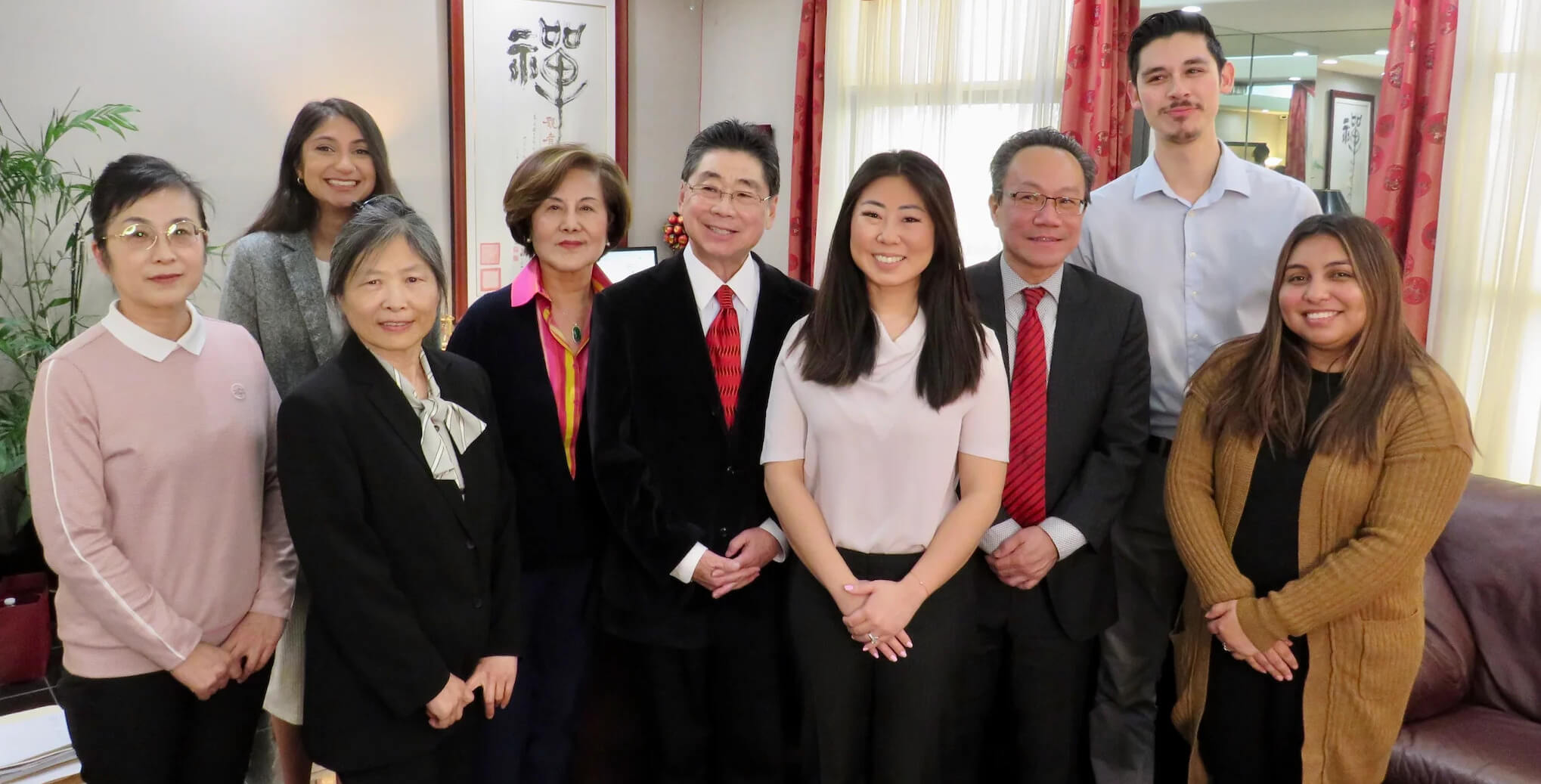

Why Choose Us?

  • Unmatched Expertise

    Trust in Peter Chu's 75+ years of collective experience to guide you through complex immigration matters.

  • Tailored Solutions

    Our personalized strategies adapt to your unique circumstances, ensuring we meet your specific immigration needs.

  • Proven Success

    Benefit from our solid track record in achieving favorable outcomes in various immigration cases across San Diego.

  • Dedicated Service

    Experience our client-first approach that ensures constant support and guidance throughout your immigration journey.

Austin's research economy employs over 18,000 STEM professionals across the University of Texas system, Dell Medical School, and private biotech firms — making it one of the fastest-growing EB-1B outstanding researcher visa filing jurisdictions in Texas. For researchers and academics navigating USCIS adjudication timelines and evidence thresholds, the difference between approval and a Request for Evidence often comes down to whether your EB-1B attorney Austin prepared your petition with documentation meeting the federal regulatory standard at 8 CFR 204.5(i)(3)(i). The Law Office of Peter Darwin Chu has filed EB-1B petitions for university faculty, postdoctoral fellows, and corporate researchers throughout Austin, TX, and understands the evidentiary demands of this employment-based immigrant visa category.

Book a Consultation

The Law Office of Peter Darwin Chu is a Texas-licensed immigration law firm serving Austin residents with EB-1B outstanding researcher visa petitions — providing case assessment, evidence compilation, and federal filing with no upfront government fee until USCIS adjudication begins. Our EB-1B attorney Austin practice focuses exclusively on employment-based immigrant visas for researchers, academics, and professionals meeting the two-prong test of international recognition and permanent research position offers.

EB-1B Attorney Austin Available Across Austin and Surrounding Areas

The Law Office of Peter Darwin Chu represents clients throughout Austin, TX, and Travis County — including the University of Texas campus district, the Dell Medical School corridor, and research facilities in zip codes 73301, 73344, 78701, 78702, and 78703. All Texas residents with qualifying outstanding researcher credentials and permanent research position offers are eligible for EB-1B representation regardless of current visa status or county of residence.

What Austin Researchers and Academics Can Access

EB-1B Petition Preparation and Federal Filing

The EB-1B outstanding researcher category requires proof of at least three years of research experience and international recognition in your academic field, plus a permanent research position offer from a U.S. university, private employer, or comparable research organization. Our Austin EB-1B attorney compiles the required documentation — including peer-reviewed publications, citation evidence, recommendation letters from independent experts, and proof of your employer's research capacity — and files Form I-140 directly with USCIS. Filing timelines depend on Premium Processing election (15-day adjudication for an additional $2,805 government fee as of 2026) versus standard processing (currently 4–7 months for EB-1 petitions filed at the Texas Service Center). Unlike EB-1A extraordinary ability cases, EB-1B petitions require employer sponsorship and a permanent position offer letter meeting the regulatory definition at 8 CFR 204.5(i)(3)(ii).

EB-1B Visa Guidance

Our immigration attorney Austin practice reviews your CV, publication record, and citation metrics during the initial consultation to assess whether you meet the two-prong EB-1B test before any filing fees are incurred. We advise on the distinction between 'outstanding researcher' (EB-1B) and 'extraordinary ability' (EB-1A) classifications, and whether your case is stronger as a self-petitioned EB-1A or employer-sponsored EB-1B filing.

Evidence Strategy for Request for Evidence (RFE) Responses

USCIS issues Requests for Evidence in approximately 30–40% of EB-1B filings when the initial petition does not conclusively demonstrate international recognition or permanent position eligibility. We structure initial filings to anticipate common RFE triggers — insufficient citation evidence, ambiguous recommendation letters, or position offer letters that do not clearly state 'permanent' or 'indefinite' duration — and prepare comprehensive responses within the 87-day statutory deadline when an RFE is issued.

Get clear, expert legal guidance tailored to your visa, green card, or citizenship needs.

Licensed Immigration Representation in Texas

The Law Office of Peter Darwin Chu is licensed to practice immigration law in Texas and maintains professional liability coverage as required under the Texas Disciplinary Rules of Professional Conduct. All EB-1B petitions are filed directly with USCIS under attorney representation, and clients receive copies of all federal correspondence, filing receipts, and USCIS notices. We do not use petition preparation services, paralegal-only representation, or notario services — every case is handled by a licensed attorney from initial consultation through final adjudication. Immigration law is exclusively federal — Texas state bar admission authorizes us to represent clients in USCIS proceedings nationwide.

Inquire now to check if you qualify

What If I Am Currently on an H-1B Visa in Austin — Can I File EB-1B Without Leaving the U.S.?

Yes — EB-1B outstanding researcher petitions are filed while you remain in the United States in valid H-1B, O-1, J-1, or other nonimmigrant status. Filing an I-140 immigrant petition does not violate nonimmigrant intent rules and does not require you to leave Austin or change your current visa status. Once the I-140 is approved and a visa number is available (EB-1 visas are typically current with no backlog for most countries), you file Form I-485 Adjustment of Status to become a lawful permanent resident without consular processing abroad. Your H-1B visa can be extended beyond the six-year maximum in one-year increments once the I-140 is approved, under AC21 portability provisions.

What If My Research Position in Austin Is Described as 'Grant-Funded' — Does That Disqualify Me from EB-1B?

Not automatically — but the position offer letter must demonstrate that your role is permanent or indefinite in duration, even if funding is grant-based. USCIS interprets 'permanent' under 8 CFR 204.5(i)(3)(ii) as either tenured, tenure-track, or an indefinite term position not contingent on a specific grant's expiration. A postdoctoral fellowship with a two-year end date does not qualify; a research scientist position with no stated end date and renewable grant funding typically does. Our EB-1B attorney Austin reviews your offer letter language and advises whether an amended letter from your employer is necessary before filing to avoid an RFE on this specific issue.

What If I Have Fewer Than 20 Citations — Can I Still Qualify for EB-1B in Austin?

Possibly — citation count is one metric of international recognition but not the sole criterion. USCIS evaluates the totality of evidence including authorship of articles in major peer-reviewed journals, participation as a peer reviewer or editorial board member, invited conference presentations, and letters from independent experts in your field. A researcher with 15 citations but five first-author publications in high-impact journals and recommendation letters from Nobel laureates may present a stronger EB-1B case than a researcher with 100 self-citations in lower-tier venues. We assess your specific publication profile during consultation and recommend whether EB-1B or EB-2 National Interest Waiver is the more viable path.

What If USCIS Issues a Request for Evidence on My EB-1B Petition Filed in Austin?

An RFE is not a denial — it is USCIS's request for additional documentation or clarification before making a final decision. You have 87 days from the date of the RFE notice to submit a comprehensive response. Common RFE issues include insufficient evidence of international recognition, unclear position offer letter language, or missing documentation of the employer's research capacity. Our immigration attorney Austin drafts detailed RFE responses with supplemental expert letters, additional publication evidence, and legal briefs citing federal case precedent. Response strategy is case-specific and must address every deficiency listed in the RFE to maximize approval likelihood.

Choosing an EB-1B Immigration Attorney in Austin vs. Other Options

Austin researchers considering EB-1B filing face three primary pathways: hiring a licensed immigration attorney, using an online petition service, or attempting a pro se (self-filed) I-140. Here's the honest answer: USCIS adjudicators review EB-1B petitions under a strict evidentiary standard codified at 8 CFR 204.5(i)(3)(i) — vague recommendation letters, insufficient citation documentation, or offer letters that do not meet the 'permanent position' definition result in denials that are difficult to overcome on appeal. Online services provide form completion but no legal analysis of whether your evidence meets the two-prong test or how to structure the petition to preempt RFEs. Pro se filings save attorney fees but cannot include the legal briefs and regulatory analysis that distinguish strong cases from marginal ones in USCIS's eyes.

| Approach | Case Assessment | Federal Filing | RFE Response | Typical Cost |
|---|---|---|---|
| Licensed Immigration Attorney | Full CV review, publication analysis, regulatory compliance check | Attorney-signed G-28, legal brief included | Comprehensive response with supplemental evidence | $4,000–$8,000 + govt fees |
| Online Petition Service | Automated checklist | Form completion only, no legal representation | Template response or referral to attorney | $1,500–$3,000 + govt fees |
| Pro Se Self-Filing | Self-assessment | Direct USCIS filing | Self-drafted response | $0 attorney fees + govt fees |
| Bottom Line | Attorney representation increases approval rate and reduces RFE likelihood — EB-1B is evidence-intensive and benefits from legal strategy, not just form completion |

Get in touch

Frequently Asked Questions

Find answers to common questions about our services

  • Standard I-140 processing at the Texas Service Center currently averages 4–7 months from filing to adjudication. Premium Processing is available for an additional $2,805 government fee and guarantees 15-business-day adjudication. Once the I-140 is approve

  • EB-1A extraordinary ability classification does not require employer sponsorship or a permanent position offer — you self-petition based solely on sustained international acclaim. EB-1B outstanding researcher requires an employer sponsor and permanent res

  • Only if the postdoc position is classified as permanent or indefinite rather than a fixed-term training appointment. Most postdoc offers state a two- or three-year term and do not meet USCIS's 'permanent position' requirement under 8 CFR 204.5(i)(3)(ii).

  • No — EB-1B outstanding researcher petitions are exempt from the labor certification requirement that applies to EB-2 and EB-3 employment-based cases. Your employer files Form I-140 directly with USCIS without first obtaining PERM approval from the Departm

  • You may file a Motion to Reopen, Motion to Reconsider, or appeal to the USCIS Administrative Appeals Office within the statutory deadline (typically 30 days from the denial notice date). Alternatively, you may file a new I-140 petition with additional evi

  • Yes — your spouse and unmarried children under 21 qualify as derivative beneficiaries under your EB-1B petition and receive E-14 and E-15 immigrant visa classifications. They file I-485 Adjustment of Status concurrently with your application or follow-to-

  • USCIS requires at least two forms of evidence from a regulatory list including: authorship of scholarly articles in major journals, participation as a peer reviewer, membership in professional associations requiring outstanding achievement, receipt of maj

  • Attorney fees for EB-1B petition preparation and filing typically range from $4,000–$8,000 depending on case complexity, publication volume, and whether Premium Processing or RFE response is required. Government filing fees are $715 for Form I-140 as of 2

Need Personalized Immigration Guidance?

The Law Office of Peter Darwin Chu provides EB-1B outstanding researcher visa representation for Austin, TX, academics and researchers through direct federal filing, evidence compilation, and RFE response — with initial consultations available within one week of inquiry.

Related Immigration Services for Austin Researchers

EB-1B outstanding researcher classification is one pathway within the employment-based immigrant visa system. Researchers who do not yet have three years of experience may qualify for EB-2 Visa with National Interest Waiver, while those with extraordinary ability and extensive independent recognition may pursue EB-1A Visa self-petitioning. Corporate researchers transferring from international offices may qualify for L-1B Visa specialized knowledge classification before transitioning to permanent residence. Austin professionals in other visa categories can review our H-1B Visa Guidance and O-1 Visa resources for comparison. All employment-based immigrant visa cases begin with case assessment and eligibility review before federal filing.

Speak With Us Today