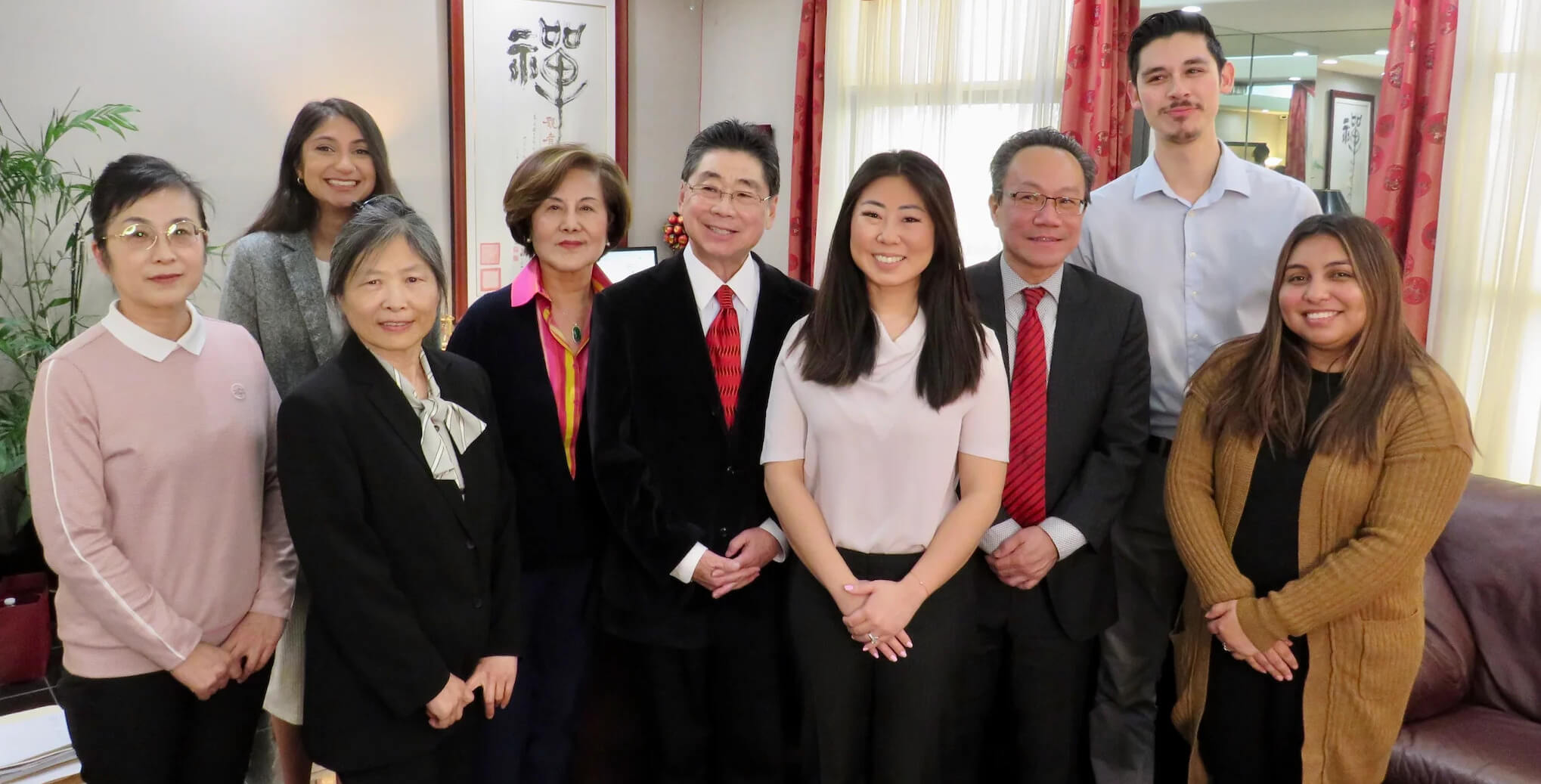

Why Choose Us?

  • Unmatched Expertise

    Trust in Peter Chu's 75+ years of collective experience to guide you through complex immigration matters.

  • Tailored Solutions

    Our personalized strategies adapt to your unique circumstances, ensuring we meet your specific immigration needs.

  • Proven Success

    Benefit from our solid track record in achieving favorable outcomes in various immigration cases across San Diego.

  • Dedicated Service

    Experience our client-first approach that ensures constant support and guidance throughout your immigration journey.

Campbell, CA is home to over 43,000 residents and serves as a bedroom community for Silicon Valley's technology and research sectors, with approximately 18% of the workforce holding advanced degrees. For researchers, postdoctoral fellows, and scientists seeking eb-1b attorney campbell representation, the distinction between a successful petition and a Request for Evidence often depends on whether counsel understands USCIS's evolving definition of 'outstanding' under 8 CFR 204.5(i)(3)(i). Law office of Peter Darwin Chu represents Campbell-based researchers through every stage of the EB-1B outstanding researcher visa campbell process, from employer sponsorship documentation to final approval.

Book a Consultation

Law office of Peter Darwin Chu is a California-licensed immigration law firm serving Campbell residents seeking EB-1B outstanding researcher visa representation — operating with contingency-free fee structures, same-week case evaluations, and direct attorney access throughout the petition process. Campbell clients access representation for university-sponsored and private research employer petitions with counsel experienced in addressing USCIS Administrative Appeals Office precedent decisions specific to the EB-1B classification.

EB-1B Attorney Campbell Available Across Campbell and Surrounding Areas

Law office of Peter Darwin Chu represents EB-1B petitioners throughout Campbell, CA and Santa Clara County — including residents in zip codes 95008, 95009, and 95011, as well as surrounding communities in San Jose, Los Gatos, and Saratoga. All California residents with qualifying research employment offers from universities or private employers meeting the regulatory 'at least three full-time researchers' threshold are eligible for representation regardless of county of residence.

What Campbell Researchers Can Access for EB-1B Representation

University-Sponsored EB-1B Petitions

For Campbell residents employed by University of California campuses, Stanford, or private research institutions, Law office of Peter Darwin Chu prepares Form I-140 petitions demonstrating that the offered position is in a tenured or tenure-track role (or a comparable term of indefinite duration) and that the beneficiary meets at least two of the six regulatory criteria under 8 CFR 204.5(i)(3)(ii). This includes drafting expert opinion letters, compiling citation metrics that satisfy USCIS's 'original scientific or scholarly research contributions of major significance' standard, and responding to Requests for Evidence that challenge whether the role qualifies as 'permanent' under the statute. Campbell clients with postdoctoral appointments receive guidance on whether their position meets the regulatory 'indefinite duration' test established in Matter of Tesoro, 1998 WL 328862 (AAO May 14, 1998).

Private Employer EB-1B Petitions

Campbell researchers employed by biotechnology firms, semiconductor research labs, or private R&D companies can qualify for EB-1B classification if the employer demonstrates it employs at least three full-time researchers and has documented achievements in the field. Law office of Peter Darwin Chu works directly with corporate counsel to establish that the employer meets 8 CFR 204.5(i)(3)(iii) requirements — including submission of evidence such as published research papers authored by company researchers, issued patents, or recognition in the industry. This is particularly relevant for Campbell residents working in Silicon Valley's applied research sector where the line between 'research' and 'product development' is often contested by USCIS adjudicators.

EB-1B Visa Criteria Documentation

Successful EB-1B petitions require evidence meeting at least two of six regulatory criteria: original contributions of major significance to the field, authorship of scholarly articles, participation as a judge of others' work, membership in associations requiring outstanding achievements, receipt of major prizes or awards, or commanding a high salary. Law office of Peter Darwin Chu assists Campbell clients in compiling citation analyses using Google Scholar or Web of Science metrics, securing expert letters from recognized authorities in the field, and documenting peer review service that satisfies the 'judge of the work of others' criterion under Kazarian v. USCIS, 596 F.3d 1115 (9th Cir. 2010).

Get clear, expert legal guidance tailored to your visa, green card, or citizenship needs.

Licensed Immigration Representation for Campbell EB-1B Petitioners

Law office of Peter Darwin Chu operates under California State Bar authorization and maintains compliance with all federal immigration practice standards under 8 CFR Part 292. Campbell clients receive representation governed by California Rules of Professional Conduct Rule 1.4 (communication) and Rule 1.15 (safekeeping property), ensuring all client funds are held in IOLTA-compliant trust accounts and all case communications are documented in writing. Unlike notarios or unlicensed consultants, licensed California immigration attorneys are subject to State Bar discipline and carry professional liability insurance covering representation errors. Every EB-1B petition prepared by Law office of Peter Darwin Chu includes a written fee agreement disclosing all costs, a realistic assessment of approval probability based on current USCIS adjudication trends, and direct attorney review of all evidence submissions before filing.

Inquire now to check if you qualify

What If My Campbell Research Position Is Postdoctoral — Does It Qualify for EB-1B?

Postdoctoral positions can qualify for EB-1B classification if they meet the 'permanent or indefinite duration' requirement under 8 CFR 204.5(i)(2). In Campbell cases involving Stanford or UC system postdocs, USCIS typically issues Requests for Evidence questioning whether a two- or three-year appointment satisfies this standard. The Administrative Appeals Office has held that positions offering the 'reasonable expectation' of indefinite renewal — supported by departmental policy statements and historical renewal rates — can qualify. Law office of Peter Darwin Chu works with Campbell postdocs to obtain letters from department chairs documenting renewal practices and to argue that the position meets the regulatory test even if technically termed 'temporary' under university HR classifications.

What If I'm a Campbell Resident Working in Industry — Can I Qualify for EB-1B Instead of EB-2 NIW?

Yes, if your employer meets the 'at least three full-time researchers' threshold and has documented achievements. Campbell residents employed by biotechnology or semiconductor firms often assume they must pursue EB-2 National Interest Waiver petitions because they work in private industry, but EB-1B remains available if the employer qualifies. The advantage is significant: EB-1B has no labor certification requirement and no PERM process. The disadvantage is that the employer must formally sponsor the petition and demonstrate its research credentials. Law office of Peter Darwin Chu evaluates whether Campbell clients' employers meet 8 CFR 204.5(i)(3)(iii) and advises on the faster approval timeline compared to EB-2 NIW.

What If USCIS Issues an RFE Questioning Whether My Campbell Research Role Is 'Permanent'?

Requests for Evidence challenging the 'permanent' nature of a research position are among the most common in EB-1B adjudications, particularly for Campbell residents in Silicon Valley where roles may be grant-funded or project-based. The key is demonstrating that the position offers indefinite duration — not that it is literally tenured. Law office of Peter Darwin Chu responds to these RFEs by submitting supplemental letters from the employer clarifying that the role will continue as long as funding is available, citing departmental policies showing historical retention of researchers beyond initial appointment terms, and distinguishing the case from positions USCIS has found to be 'temporary' in prior AAO decisions. Campbell researchers whose positions are tied to specific NIH or NSF grants receive guidance on framing the role as institutionally permanent even if grant-specific.

What If My EB-1B Outstanding Researcher Visa Campbell Petition Is Denied — Can I Refile?

Yes, and most denials are based on evidentiary insufficiency rather than ineligibility. Campbell EB-1B denials frequently result from inadequate expert letters, citation metrics presented without context, or failure to address the 'major significance' standard for original contributions. Law office of Peter Darwin Chu reviews denial notices to determine whether to file a motion to reopen, appeal to the Administrative Appeals Office, or refile with strengthened evidence. In Campbell cases where the denial was based on the 'permanence' of the role, refiling with a revised employer letter and departmental policy documentation often resolves the issue. Clients receive honest assessments of whether refiling is likely to succeed or whether an alternative classification (EB-2 NIW, EB-1A) is more appropriate.

Choosing EB-1B Counsel vs. General Immigration Services in Campbell

Campbell researchers face a choice: retain an immigration attorney who handles all visa types generically, work with a notario or visa consultant, or engage counsel with specific EB-1B experience in academic and research employer petitions. Here's the honest answer: the EB-1B classification is one of the most evidence-intensive employment-based categories, requiring detailed knowledge of how USCIS interprets 'original contributions of major significance' and 'international recognition' under current Administrative Appeals Office precedent. Generic immigration practitioners often prepare EB-1B petitions using the same template they use for PERM labor certifications, resulting in high RFE rates and denials. Notarios are prohibited from providing legal advice under California Business and Professions Code Section 6125 and cannot represent you before USCIS. Law office of Peter Darwin Chu limits its practice to employment-based and family-based immigration matters, ensuring every Campbell EB-1B petition is prepared by counsel who has reviewed recent AAO decisions and understands the specific evidence standards that apply to university and private employer sponsorships.

Service TypeEB-1B ExperienceRFE Response TimeUSCIS AAO Precedent KnowledgeProfessional Assessment
Law office of Peter Darwin ChuEB-1B specialist with university and private employer casesSame-week response draftedCurrent with AAO decisions and Kazarian frameworkLicensed CA counsel with EB-1B focus — direct attorney communication throughout
General immigration attorneyHandles all visa types including family-based2–3 week response typicalLimited to statute textMay lack depth in research classification nuances
Online DIY servicesNo attorney involvementNo RFE supportTemplate-based onlyCannot respond to USCIS legal arguments or draft expert letters
Notario/consultantProhibited from legal practice in CANot authorized to respondNot applicableIllegal practice under CA law — no recourse for errors

Get in touch

Frequently Asked Questions

Find answers to common questions about our services

  • Standard processing for Form I-140 under the EB-1B classification averages 4–6 months at the USCIS California Service Center, though timelines vary based on adjudicator workload and whether premium processing is available. Campbell researchers can request

  • EB-1B legal fees in Campbell typically range from $8,000 to $15,000 for petition preparation, depending on case complexity and whether the employer or beneficiary is paying. This fee covers Form I-140 preparation, compilation of all supporting evidence, e

  • Yes, and this is one of the most common scenarios for Campbell researchers. H-1B status does not preclude EB-1B filing — in fact, it often makes the process smoother because your employer is already sponsoring you and you have maintained lawful status. Ca

  • This is the most scrutinized criterion in EB-1B adjudications. USCIS requires evidence that your research has been adopted, implemented, or cited by others in the field — not simply that it was published. For Campbell researchers, this typically means sub

  • Yes, EB-1B requires a permanent or indefinite job offer from a qualifying employer — either a university or a private employer that meets the regulatory threshold. Unlike EB-1A (extraordinary ability), you cannot self-petition under EB-1B. Campbell resear

  • Both are first-preference employment-based immigrant classifications with no labor certification requirement and current priority dates. EB-1A is for individuals with 'extraordinary ability' and allows self-petitioning — you do not need an employer sponso

  • Yes, your spouse and unmarried children under 21 are eligible for derivative E-14 immigrant visas and can apply for green cards concurrently with your I-485 adjustment or follow-to-join later. They do not need separate employer sponsorship and their eligi

  • If your I-140 is approved but your I-485 is still pending, changing employers requires the new employer to file a new I-140 unless you invoke portability under INA Section 204(j). Portability allows you to change to a 'same or similar' position after your

Need Personalized Immigration Guidance?

Law office of Peter Darwin Chu provides eb-1b attorney campbell representation for Campbell, CA researchers through licensed California counsel with same-week consultations, flat-fee petition preparation, and RFE response service covering all six regulatory criteria under 8 CFR 204.5(i)(3)(ii).

Related Immigration Services for Campbell Residents

Campbell researchers may also benefit from reviewing our EB-1A Visa services if you qualify for the 'extraordinary ability' classification without employer sponsorship, our EB-2 Visa guidance for National Interest Waiver petitions, or our EB-1B Visa Los Angeles and EB-1B Visa Long Beach location pages for comparative regional case examples. Campbell residents employed by UC or Stanford campuses should also consult our O-1 Visa Guidance page if you are on a temporary nonimmigrant visa while your EB-1B processes. All California-based researchers are eligible for representation regardless of current visa status, and consultations include a priority date analysis and premium processing eligibility assessment.

Speak With Us Today