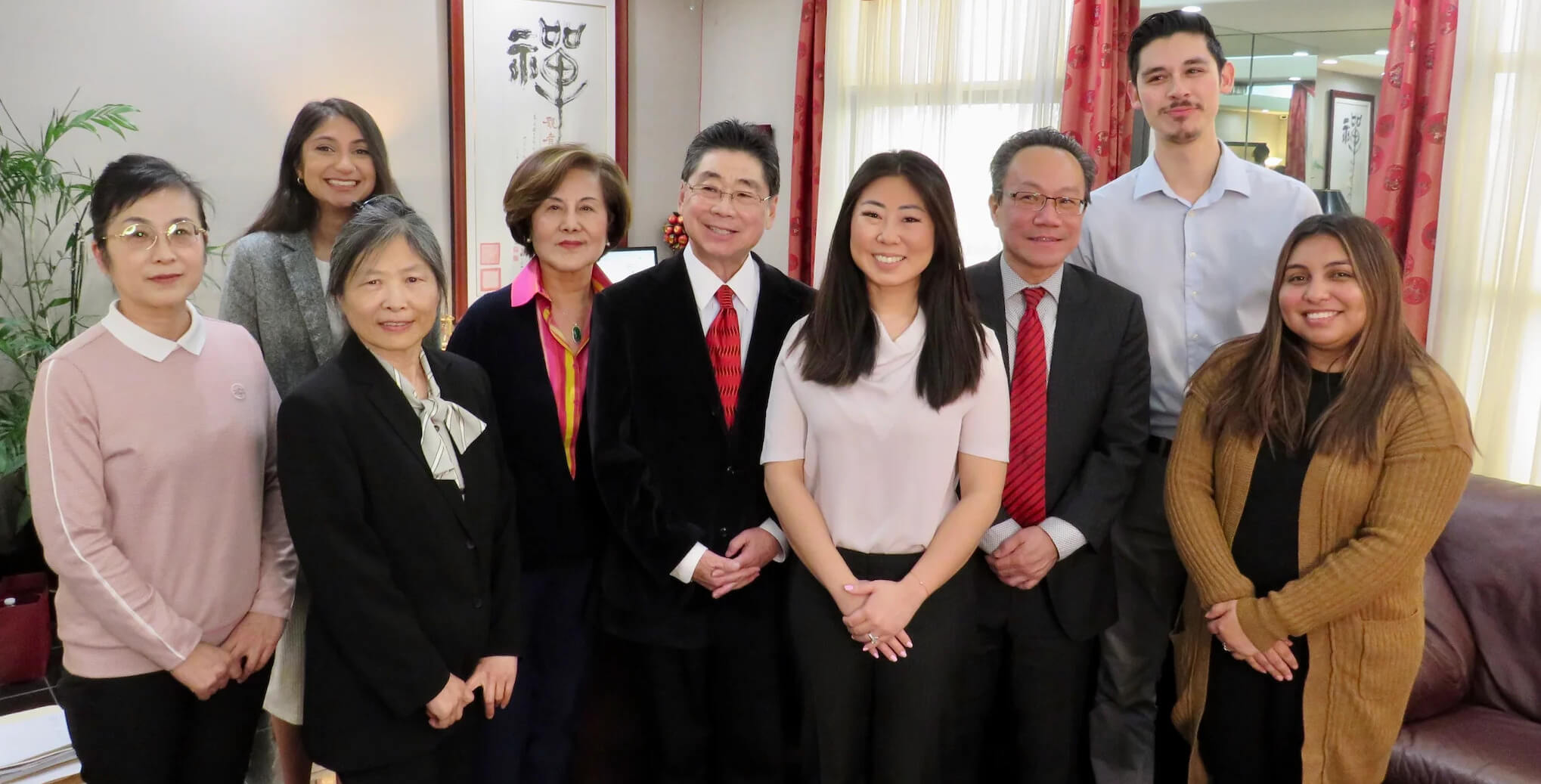

Why Choose Us?

  • Unmatched Expertise

    Trust in Peter Chu's 75+ years of collective experience to guide you through complex immigration matters.

  • Tailored Solutions

    Our personalized strategies adapt to your unique circumstances, ensuring we meet your specific immigration needs.

  • Proven Success

    Benefit from our solid track record in achieving favorable outcomes in various immigration cases across San Diego.

  • Dedicated Service

    Experience our client-first approach that ensures constant support and guidance throughout your immigration journey.

Charlotte's research institutions — including UNC Charlotte's graduate programs and the Charlotte Research Institute — employ over 3,200 academic researchers and doctoral faculty, making it one of North Carolina's fastest-growing hubs for STEM and biomedical innovation. For foreign nationals holding tenure-track positions or leading research teams, securing permanent residency through the EB-1B outstanding researcher visa requires more than strong credentials — it demands evidence packaging that satisfies USCIS's 'sustained national or international acclaim' standard under federal immigration regulations. The Law Office of Peter Darwin Chu represents EB-1B petitioners throughout Charlotte, NC, preparing immigrant visa petitions that align academic achievements with the specific evidentiary criteria outlined in 8 CFR 204.5(i)(3)(i). We handle cases filed with USCIS's Texas Service Center and provide representation for researchers employed by Charlotte-area universities, private research institutions, and corporate R&D divisions.

Book a Consultation

The Law Office of Peter Darwin Chu is a North Carolina-licensed immigration law firm serving Charlotte residents — providing EB-1B outstanding researcher visa representation for tenure-track faculty, postdoctoral researchers, and senior scientists with documented records of international recognition in their academic fields. We prepare petitions filed directly with USCIS, manage Requests for Evidence (RFEs), and coordinate with university human resources and sponsored research offices to compile qualifying documentation. Charlotte-area researchers receive case strategy consultations within one business week of initial inquiry.

EB-1B Attorney Charlotte Available Across Charlotte and Surrounding Areas

The Law Office of Peter Darwin Chu represents EB-1B petitioners throughout Charlotte, NC, including researchers and faculty employed in Uptown, University City, SouthPark, Plaza Midwood, and NoDa (zip codes 28201, 28202, 28203, 28204, 28205). We serve clients affiliated with academic institutions, medical research centers, and private-sector R&D organizations across Mecklenburg County and coordinate with university immigration offices to ensure timely USCIS filing and compliance with institutional sponsorship requirements.

What Charlotte Residents Can Access

EB-1B Petition Preparation and Filing

We prepare Form I-140 petitions for outstanding researchers and professors, compiling the three forms of evidence required under 8 CFR 204.5(i)(3)(i): documentation of sustained acclaim, evidence of at least three years of research or teaching experience, and proof of a permanent or tenure-track position offer. For Charlotte-based researchers, this includes coordination with university sponsored programs offices to obtain institutional support letters, evidence of grant funding (NIH, NSF, or private foundation awards), and documentation of the position's permanency under North Carolina employment standards. We manage all USCIS correspondence, respond to Requests for Evidence within the 87-day deadline, and provide case status updates through USCIS's online portal.

Get in touch

Evidence Compilation for 'Sustained Acclaim' Standard

USCIS requires at least two of six evidentiary criteria to establish 'outstanding' status: authorship of scholarly articles, membership in associations requiring outstanding achievement, published material about the researcher's work, participation as a peer reviewer, original contributions of major significance, or receipt of major prizes or awards. We work with Charlotte researchers to identify qualifying evidence from their academic record — citation metrics from Web of Science or Google Scholar, editorial board memberships, conference keynote invitations, and letters from independent experts in the field. Each piece of documentation is indexed, translated if necessary, and submitted with a legal brief explaining how it satisfies the regulatory standard. Cases involving interdisciplinary research or emerging fields receive tailored argumentation addressing USCIS's tendency to apply narrow definitions of 'major significance.'

University Sponsorship Coordination

EB-1B petitions require institutional sponsorship — the petitioning employer must be a university, institution of higher education, or private employer with a documented research division employing at least three full-time researchers. We coordinate directly with Charlotte-area university human resources, international student services offices, and department chairs to ensure the employer's petition letter satisfies USCIS requirements: description of the permanent position, explanation of how it meets the 'outstanding researcher' standard, and confirmation that the position is not contingent on grant funding with a defined end date. We also review employment offer letters and faculty appointment contracts to ensure they align with USCIS's permanency requirements under North Carolina employment law.

Get clear, expert legal guidance tailored to your visa, green card, or citizenship needs.

Licensed Immigration Counsel in North Carolina

The Law Office of Peter Darwin Chu is licensed to practice immigration law in North Carolina and maintains professional liability insurance as required under the North Carolina State Bar's Rules of Professional Conduct. We are registered with the Executive Office for Immigration Review (EOIR) and file petitions with USCIS's Texas Service Center, which has jurisdiction over employment-based immigrant visa petitions for North Carolina residents. All client communications are protected by attorney-client privilege under North Carolina General Statutes § 84-8, and case files are maintained in secure, encrypted systems compliant with federal e-filing requirements. We do not guarantee petition approval — USCIS adjudication is discretionary — but we provide transparent case assessments, written fee agreements, and monthly status updates throughout the process.

Inquire now to check if you qualify

What If I'm on an H-1B Visa and Want to Apply for EB-1B in Charlotte?

You can file an EB-1B petition while maintaining H-1B status — the two processes are independent. The EB-1B is an immigrant visa petition (Form I-140) that does not change your current nonimmigrant status, and you can continue working on your H-1B while the petition is pending. If your I-140 is approved and a visa number is immediately available (EB-1B petitions are typically current with no backlog), you can file Form I-485 to adjust status to permanent resident while remaining in Charlotte. If you're outside the U.S. or prefer consular processing, approval of the I-140 allows you to apply for an immigrant visa at a U.S. consulate. We coordinate EB-1B filings with H-1B renewal timelines to ensure continuous work authorization and avoid gaps in status.

What If My Research Position Is Grant-Funded — Does That Disqualify Me from EB-1B in Charlotte?

Grant-funded positions are not automatically disqualifying, but USCIS requires evidence that the position is 'permanent or indefinite' — not contingent on a specific grant with a defined end date. If your Charlotte university appointment is a tenure-track assistant professor position funded partially by an NIH R01 grant, the tenure-track nature satisfies the permanency requirement even though grant funding is temporary. However, if you hold a research associate position explicitly tied to a three-year grant with no guarantee of renewal, USCIS may issue an RFE questioning permanency. We work with university counsel to draft employer letters that emphasize the institutional commitment to the position beyond the grant period, supported by evidence of department funding history and faculty retention rates.

What If I Receive a Request for Evidence (RFE) on My Charlotte EB-1B Petition?

RFEs are issued in approximately 30-40% of EB-1B petitions, most commonly questioning whether the evidence establishes 'sustained acclaim' or whether the position qualifies as permanent. You have 87 days from the date on the RFE notice to submit additional documentation. We respond to RFEs by obtaining supplemental letters from independent experts in your field, compiling updated citation reports, and drafting a legal brief addressing USCIS's specific concerns. If the RFE questions the permanency of your Charlotte university position, we coordinate with your institution's legal counsel to provide clarifying employment documentation, department bylaws, or tenure policy excerpts. Timely, thorough RFE responses significantly improve approval rates — generic or incomplete responses often result in denial.

What If My EB-1B Petition Is Denied — Can I Refile in Charlotte?

Yes, you can refile an EB-1B petition after denial, but it is critical to address the specific reasons cited in the denial notice. If USCIS found that your evidence did not establish 'major significance' of your contributions, a new petition must include stronger documentation — additional expert letters, evidence of practical application of your research, or recognition from national-level organizations. If the denial was based on the permanency of your position, the new petition must clarify your employment terms or secure a revised offer letter from your Charlotte employer. We review denial notices to determine whether an appeal to the USCIS Administrative Appeals Office (AAO) is viable or whether refiling with enhanced evidence is the better strategy. Simply resubmitting the same evidence rarely succeeds.

Why Charlotte Researchers Choose Specialized Immigration Counsel Over General Practice Attorneys

EB-1B petitions require more than generic immigration processing — they demand an understanding of academic credentialing, peer review standards, and the evidentiary nuances that distinguish 'sustained acclaim' from routine academic productivity. Charlotte researchers comparing their options face three paths: handling the petition through their university's in-house counsel (limited to administrative support, not case strategy), hiring a general immigration attorney (who may lack experience with the 'outstanding researcher' standard), or retaining counsel with dedicated EB-1B experience who can identify qualifying evidence in interdisciplinary or emerging fields.

Here's the honest answer: university immigration offices provide form preparation and filing logistics, but they are not your advocates — their role is administrative compliance, and they will not draft legal arguments responding to USCIS's interpretation of 'major significance.' General immigration attorneys often treat EB-1B petitions as documentation-gathering exercises, submitting standard employer letters and publication lists without the tailored legal analysis required to satisfy adjudicators trained to apply narrow readings of regulatory criteria. Specialized counsel reviews your full academic record — citation impact, conference roles, editorial positions, and grant funding — and constructs a legal argument positioning your work within the 'outstanding' standard as defined by published AAO decisions and USCIS policy memoranda.

| Approach | Evidence Strategy | RFE Response | Outcome Predictability | Professional Assessment |
|---|---|---|---|
| University In-House | Standard forms, employer letter, CV | Administrative coordination only | Depends on initial strength | No legal advocacy |
| General Immigration Attorney | Document checklist approach | Generic supplemental letters | Moderate if case is strong | Lacks academic context |
| EB-1B-Focused Counsel | Tailored evidentiary argument, expert letters, regulatory citations | Responsive legal brief addressing specific USCIS concerns | Higher with strategic evidence compilation | Positions case within USCIS precedent |

Frequently Asked Questions

Find answers to common questions about our services

  • USCIS processing times for EB-1B petitions filed at the Texas Service Center — which has jurisdiction over North Carolina — currently average 6 to 9 months for standard processing. Premium processing (Form I-907) is available for an additional $2,805 fee

  • Yes, your spouse and unmarried children under 21 are eligible for derivative EB-1B status as E-14 and E-15 dependents, respectively. They can be included in your Form I-485 adjustment of status application if you are in the U.S., or they can apply for imm

  • USCIS interprets 'major significance' narrowly — it is not sufficient to show that your research is important to your subfield; you must demonstrate that it has influenced the field broadly or has been adopted in practical applications. Evidence includes

  • Yes, EB-1B petitions require employer sponsorship — you cannot self-petition under this category. You must have a permanent or tenure-track position offer from a qualifying institution: a university, institution of higher education, or private employer wi

  • EB-1A is for individuals with 'extraordinary ability' who can self-petition without employer sponsorship, while EB-1B is for 'outstanding researchers and professors' who require a job offer from a qualifying institution. EB-1A has a higher evidentiary sta

  • Attorney fees for EB-1B petition preparation typically range from $6,000 to $12,000 depending on case complexity, the number of expert letters required, and whether the case involves an RFE response. USCIS filing fees are $700 for Form I-140, $1,440 for F

  • If your Form I-140 is approved but you have not yet filed I-485 (adjustment of status), changing employers before filing I-485 requires a new I-140 petition filed by the new employer — you cannot port an approved EB-1B to a different institution. However,

  • Yes, your Charlotte employer can file an EB-1B petition on your behalf while you are abroad. Once the I-140 is approved and a visa number is available (EB-1B is typically current with no backlog), you apply for an immigrant visa through consular processin

Need Personalized Immigration Guidance?

The Law Office of Peter Darwin Chu provides EB-1B outstanding researcher visa representation for Charlotte academics and scientists, offering petition preparation, RFE response, and university sponsorship coordination with case consultations available within one business week.

Related Immigration Services for Charlotte Researchers and Professionals

EB-1B petitioners often explore alternative employment-based visa pathways depending on their career stage and credentials. The EB-1A Visa serves individuals with extraordinary ability who can self-petition without employer sponsorship, a common option for senior researchers with substantial independent recognition. The EB-2 Visa is available for professionals with advanced degrees or exceptional ability, typically requiring labor certification unless the petitioner qualifies for a National Interest Waiver. Charlotte-area professionals employed in specialty occupations may also benefit from H-1B Visa Guidance for temporary work authorization while permanent residency options are pursued. We also represent clients in Los Angeles, Long Beach, Anaheim, and Riverside — see our EB-1B Visa Los Angeles, EB-1B Visa Long Beach, EB-1B Visa Anaheim, and EB-1B Visa Riverside pages for region-specific information.

Speak With Us Today