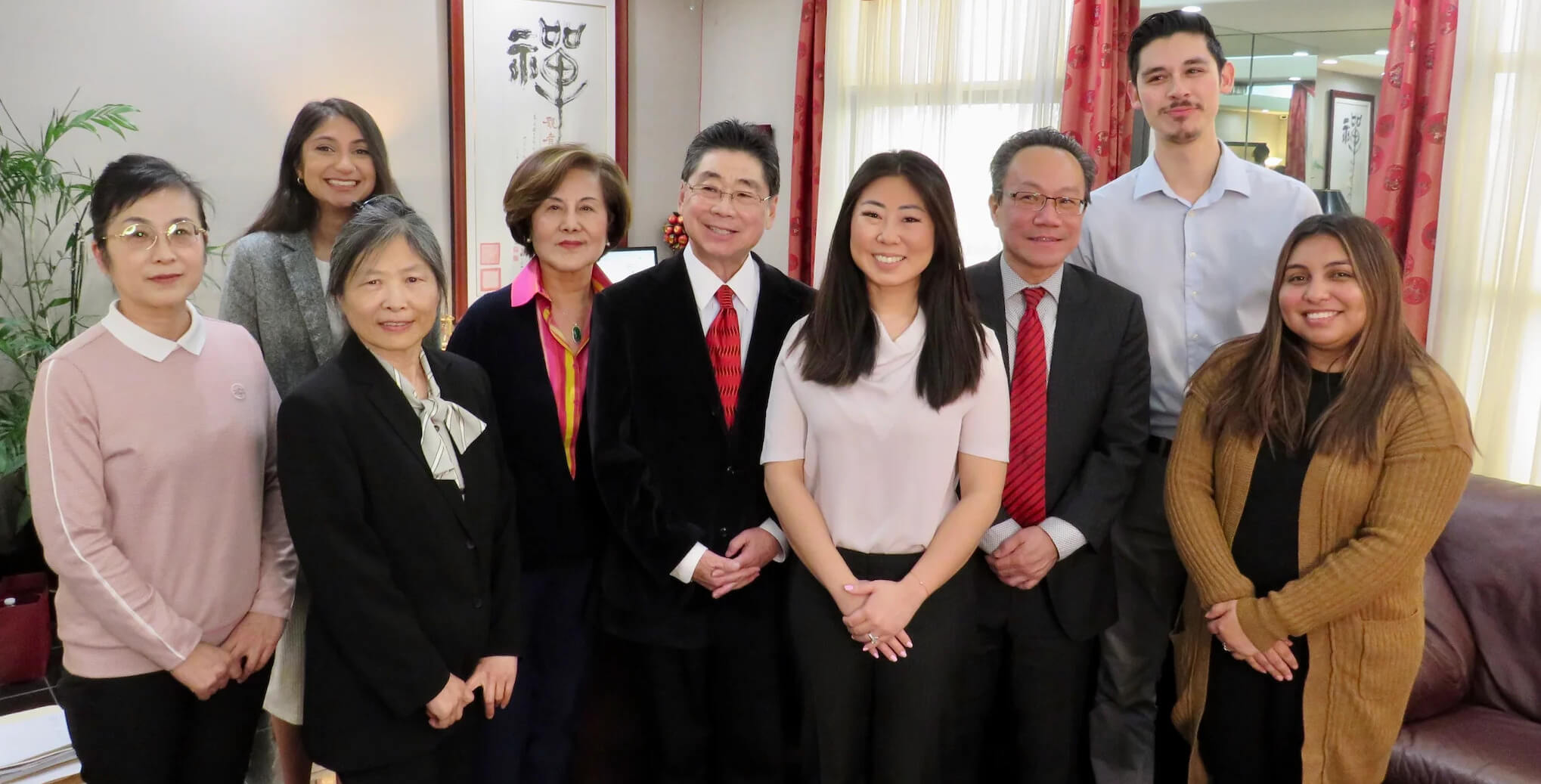

Why Choose Us?

  • Unmatched Expertise

    Trust in Peter Chu's 75+ years of collective experience to guide you through complex immigration matters.

  • Tailored Solutions

    Our personalized strategies adapt to your unique circumstances, ensuring we meet your specific immigration needs.

  • Proven Success

    Benefit from our solid track record in achieving favorable outcomes in various immigration cases across San Diego.

  • Dedicated Service

    Experience our client-first approach that ensures constant support and guidance throughout your immigration journey.

Corona, CA's academic and research community includes over 2,400 professionals working in STEM fields and advanced research roles across nearby institutions, creating substantial demand for EB-1B outstanding researcher visa counsel. For researchers and professors across Corona's 91718, 91719, and 91720 zip codes, the difference between a denied EB-1B petition and approval often comes down to whether the evidence package met the highly technical documentation standards required under 8 CFR 204.5(i)(3)(i). Law office of Peter Darwin Chu has handled EB-1B outstanding researcher visa Corona cases throughout Riverside County and knows precisely how USCIS adjudicators evaluate the six evidentiary criteria for outstanding achievement in an academic field.

Book a Consultation

Law office of Peter Darwin Chu is a California-licensed immigration law firm serving Corona residents with EB-1B attorney Corona representation — providing outstanding researcher visa petition preparation, evidence assessment, and USCIS filing services for academic professionals. We prepare comprehensive I-140 petitions that address all six regulatory criteria under 8 CFR 204.5(i)(3) and include detailed documentation of original contributions to the academic field.

EB-1B Attorney Corona Services Available Across Corona and Surrounding Areas

Law office of Peter Darwin Chu represents EB-1B outstanding researcher visa Corona applicants throughout Corona, CA, including residents in zip codes 91718, 91719, 91720, 92118, and 92178. We serve researchers, postdoctoral fellows, and tenure-track professors across all of Corona and neighboring communities in Riverside County who meet the statutory definition of outstanding researcher under INA Section 203(b)(1)(B).

What Corona Researchers Can Access

EB-1B Petition Preparation and Filing

We prepare complete I-140 Immigrant Petition for Alien Workers specifically structured for outstanding researcher classification. This includes assembling evidence across all six regulatory categories — major prizes, membership in associations requiring outstanding achievements, published material about your work in professional publications, participation as a judge of others' work, original scholarly contributions, and authorship of scholarly articles. Corona researchers receive a detailed evidence assessment before filing to identify documentation gaps. The filing package includes a comprehensive legal brief explaining how your evidence satisfies USCIS standards under the Kazarian two-step framework adopted in 2010.

Outstanding Achievement Documentation Strategy

EB-1B outstanding researcher visa Corona petitions require proof of international recognition for achievements in a specific academic field. We work with Corona clients to compile citation analyses, expert opinion letters from independent researchers in your field, evidence of your work's adoption or implementation by other researchers, and documentation of presentations at major academic conferences. Unlike EB-2 National Interest Waiver petitions, EB-1B requires a permanent job offer from a U.S. employer (university, research institution, or private employer with at least three full-time researchers), and we coordinate directly with sponsoring institutions to ensure the job offer documentation meets regulatory requirements under 8 CFR 204.5(i)(3)(iii).

Get in touch

Get clear, expert legal guidance tailored to your visa, green card, or citizenship needs.

Licensed California Immigration Counsel

Law office of Peter Darwin Chu maintains active licensure with the State Bar of California and complies with all standards under California Business and Professions Code Section 6125 governing the practice of immigration law. We carry professional liability coverage as required under California Rules of Professional Conduct and provide written fee agreements before representation begins. All EB-1B outstanding researcher visa Corona consultations are substantive case evaluations conducted by licensed immigration attorneys — not intake coordinators or paralegals — ensuring you receive accurate guidance on your petition's viability under current USCIS policy memoranda and Administrative Appeals Office decisions.

Inquire now to check if you qualify

What If My Research Field Is Highly Specialized — Can I Still Qualify for EB-1B in Corona?

Yes, highly specialized research fields do not disqualify you from EB-1B classification — in fact, niche specialization can strengthen your petition if you can demonstrate international recognition within that specific academic subfield. USCIS does not require that your field be broadly known to the general public. What matters is whether experts in your academic discipline recognize your contributions as outstanding. We help Corona researchers compile evidence showing that your work is cited, referenced, or adopted by other scholars in your subfield, even if that subfield represents a narrow academic niche.

What If I Have a Permanent Job Offer from a Private Company in Corona — Not a University?

EB-1B outstanding researcher visa Corona petitions can be sponsored by private employers, but the company must meet the statutory requirement of employing at least three full-time researchers and must demonstrate a track record of documented achievements in the academic field. The position offered must be tenure-track, permanent, or comparable to tenure (not a postdoctoral fellowship or temporary research role). We review the sponsoring employer's structure, research output, and staff composition to ensure it satisfies 8 CFR 204.5(i)(3)(iii) before filing. Many private biotech, pharmaceutical, and technology firms in the Corona area qualify as acceptable EB-1B sponsors.

What If I Don't Have Major Prizes or Awards — Can I Still Pursue EB-1B in Corona?

Yes, major prizes are only one of six possible evidentiary criteria — you are not required to satisfy all six. USCIS requires that you meet at least two of the six categories listed in 8 CFR 204.5(i)(3)(i). Most successful EB-1B petitions rely on evidence of original contributions to the field (demonstrated through citations, adoption of your methods, or letters from independent experts) and authorship of scholarly articles in peer-reviewed journals. Corona researchers without awards often succeed by building strong cases around citation impact, editorial board service, or participation as a peer reviewer for major academic journals.

What If My EB-1B Petition Receives a Request for Evidence (RFE) from USCIS?

An RFE is not a denial — it is an opportunity to clarify or supplement your evidence. USCIS typically issues RFEs when the initial evidence does not clearly demonstrate how you meet two or more of the regulatory criteria, or when the adjudicator questions whether your achievements constitute 'outstanding' recognition under the Kazarian standard. We respond to EB-1B RFEs for Corona clients by submitting additional expert letters, expanded citation analyses, and legal briefs directly addressing the specific deficiencies cited in the RFE. Response deadlines are strict (typically 87 days), and a well-prepared RFE response often results in approval.

Comparing Your EB-1B Petition Options in Corona

Researchers in Corona considering EB-1B outstanding researcher visa representation have three primary paths: preparing a self-filed petition, hiring a general immigration attorney unfamiliar with academic petition standards, or working with counsel experienced in EB-1 extraordinary ability and outstanding researcher cases. Self-filed petitions frequently fail not because the applicant lacks qualifications, but because the evidence is poorly organized or the legal brief does not adequately explain how the evidence satisfies the two-prong Kazarian test adopted by USCIS in 2010. General immigration attorneys often treat EB-1B petitions like standard employment-based cases, missing the academic-specific nuances around what constitutes an 'original contribution' or how citation metrics should be contextualized within a specific field.

Here's the honest answer: EB-1B petitions are among the most documentation-intensive filings in employment-based immigration. A successful petition requires not just evidence of achievement, but evidence that your achievements are recognized as outstanding by others in your field — a standard that demands strategic compilation of independent corroboration, citation analysis, and expert testimony. Law office of Peter Darwin Chu works exclusively with academic and research-based immigration cases and knows how to construct a petition that meets USCIS evidentiary standards under 8 CFR 204.5(i)(3).

| Approach | Evidence Strategy | USCIS Standards Knowledge | Documentation Review | Professional Assessment |
|---|---|---|---|
| Self-Filed Petition | Applicant-selected documents without legal framework | Limited — relies on online guides and USCIS instructions | No independent review of sufficiency | High risk of RFE or denial due to incomplete legal analysis |
| General Immigration Attorney | Standard employment petition template applied to EB-1B | Basic — may not understand Kazarian two-step test | Document checklist review only | May lack academic petition experience and field-specific evidence strategy |
| Law Office of Peter Darwin Chu | Criterion-by-criterion evidence mapping with legal brief | Deep — applies AAO precedent decisions and policy memos | Substantive assessment of whether evidence meets 'outstanding' standard | Specialized EB-1B representation with comprehensive petition preparation and RFE response capability |

Frequently Asked Questions

Find answers to common questions about our services

  • EB-1B petition processing times vary by USCIS service center, but current average processing is 6 to 10 months for standard I-140 petitions filed from Corona, CA. Premium processing (Form I-907) guarantees a 15-business-day adjudication for an additional

  • Both EB-1A (extraordinary ability) and EB-1B (outstanding researcher) fall under the first preference employment-based category, but they have distinct evidentiary standards and requirements. EB-1A does not require a job offer and allows self-petitioning,

  • Postdoctoral positions generally do not satisfy the EB-1B requirement for a permanent research position unless the offer explicitly states it is a tenure-track or permanent role. USCIS interprets 'permanent' under 8 CFR 204.5(i)(3)(iii) to mean either a t

  • Original contributions are proven through evidence that other researchers have adopted, cited, or built upon your work. This includes citation analyses showing how your publications are referenced in peer-reviewed literature, letters from independent expe

  • EB-1B falls under the first preference employment-based category, which has an annual limit of approximately 40,000 visas (plus unused family-based visas from prior years). However, EB-1 has historically remained current for most countries, meaning visa n

  • Yes, your spouse and unmarried children under 21 are eligible for derivative immigration benefits as E-14 and E-15 dependents. They do not file separate I-140 petitions — they are included in your adjustment of status application (Form I-485) or follow-to

  • Legal fees for EB-1B petition preparation typically range from $8,000 to $15,000 depending on case complexity, the amount of evidence compilation required, and whether expert opinion letters or citation analyses must be obtained. This does not include USC

  • If USCIS denies your EB-1B petition, you have three options: file a motion to reopen or reconsider with USCIS (must be filed within 30 days of the denial and provide new evidence or demonstrate legal error), appeal to the USCIS Administrative Appeals Offi

Need Personalized Immigration Guidance?

Law office of Peter Darwin Chu provides EB-1B attorney Corona representation for outstanding researchers in Corona, CA through comprehensive I-140 petition preparation, evidence assessment under 8 CFR 204.5(i)(3), and USCIS filing services — ensuring academic professionals receive immigration counsel that understands the specific evidentiary standards for outstanding achievement classification.

Corona researchers pursuing EB-1B outstanding researcher visa Corona classification may also benefit from reviewing our guidance on related employment-based immigrant visa categories. If your research achievements extend beyond academia into fields requiring extraordinary ability, explore our Eb-1a Visa page for comparison. Researchers employed by multinational companies may qualify under Eb-1c Visa Law Office for managers and executives. For professionals in specialized occupations requiring advanced degrees who do not yet meet EB-1B standards, our Eb-2 Visa and Eb-3 Visa pages explain alternative paths. We also represent Corona clients throughout Southern California — see our Eb-1b Visa Los Angeles, Eb-1b Visa Long Beach, and Eb-1b Visa Riverside location pages for region-specific case information.

Speak With Us Today