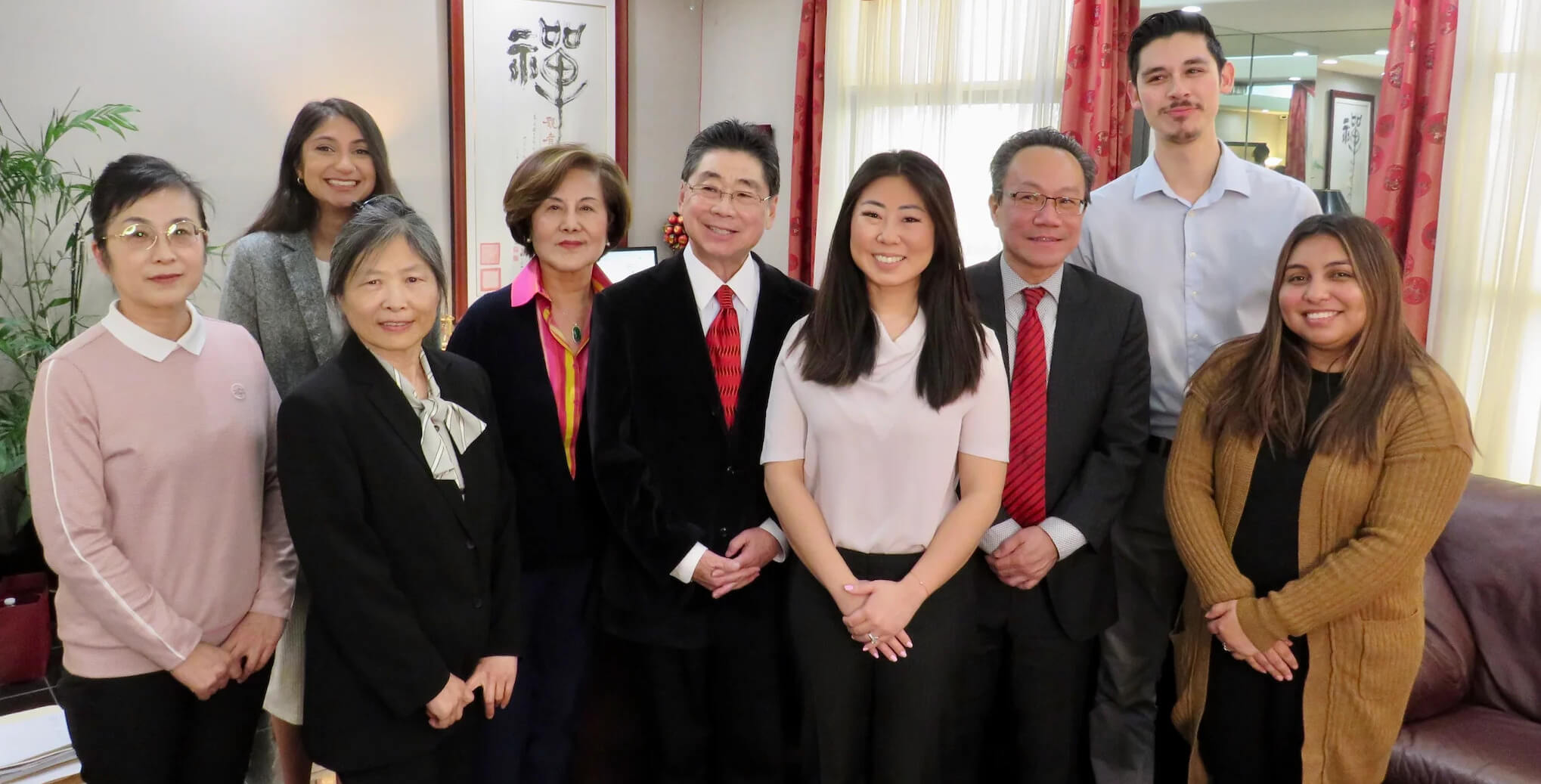

Why Choose Us?

  • Unmatched Expertise

    Trust in Peter Chu's 75+ years of collective experience to guide you through complex immigration matters.

  • Tailored Solutions

    Our personalized strategies adapt to your unique circumstances, ensuring we meet your specific immigration needs.

  • Proven Success

    Benefit from our solid track record in achieving favorable outcomes in various immigration cases across San Diego.

  • Dedicated Service

    Experience our client-first approach that ensures constant support and guidance throughout your immigration journey.

Cupertino's concentration of research institutions and tech employers — including over 60 companies with active R&D divisions filing employment-based visa petitions annually — makes it one of the highest-demand EB-1B markets in Northern California. For scientists, postdoctoral fellows, and corporate researchers across Cupertino, CA, the difference between a denied petition and approval often comes down to whether your evidence satisfied USCIS's 'outstanding' standard before submission. Law Office of Peter Darwin Chu has guided EB-1B petitioners through California immigration proceedings and knows this classification.

Book a Consultation

Law Office of Peter Darwin Chu is a California-licensed immigration law firm serving Cupertino residents with EB-1B outstanding researcher visa petitions — offering case assessments, evidence compilation, and USCIS filing support with no-obligation consultations available within one week. Our practice focuses exclusively on employment-based immigration, ensuring every EB-1B case receives specialized attention from counsel experienced in researcher classification standards.

EB-1B Attorney Cupertino Available Across Cupertino and Surrounding Areas

Law Office of Peter Darwin Chu represents EB-1B petitioners throughout Cupertino, CA, and Santa Clara County — including residents of zip codes 95014 and 95015. All California researchers with qualifying employment offers and documentation are eligible for consultation regardless of county, and we provide remote case preparation for clients across the state.

What Cupertino EB-1B Petitioners Can Access

EB-1B Outstanding Researcher Classification Guidance

The EB-1B category is reserved for researchers and professors recognized internationally for outstanding achievements in a specific academic field, employed by a university or private employer in a research capacity. Law Office of Peter Darwin Chu evaluates whether your publication record, citations, peer review service, and awards satisfy at least two of the six regulatory criteria under 8 CFR 203.11. We assess your eligibility before filing, compile supporting evidence, and draft the petition narrative that connects your achievements to the 'outstanding' standard. Cupertino researchers in computer science, biotech, and engineering benefit from counsel familiar with how USCIS evaluates technical publications and industry research roles. Eb-1b Visa cases require documentation that isolated achievements do not provide — we build that record with you.

Employer Compliance and Permanent Position Documentation

EB-1B petitions require proof that your employer is a qualified research institution or private entity with at least three full-time researchers, and that your position is tenure-track, tenured, or comparable permanent research employment. We work directly with Cupertino employers to draft compliant job offer letters, document the research department's structure, and ensure the Labor Condition Application (if applicable) aligns with the EB-1B petition. Misalignment between the job description and your claimed achievements is a leading denial reason — we prevent it through coordinated employer documentation review.

Evidence Compilation for International Recognition

USCIS officers evaluate EB-1B petitions by weighing whether your evidence demonstrates sustained national or international acclaim. Law Office of Peter Darwin Chu organizes citation reports, recommendation letters from independent experts, journal editorial board appointments, and evidence of original contributions to compile a persuasive evidentiary package. For Cupertino-based researchers, we coordinate with university technology transfer offices and corporate legal departments to obtain proprietary research documentation that satisfies USCIS requirements without violating confidentiality agreements. Get in touch to discuss your publication and citation profile.

Get clear, expert legal guidance tailored to your visa, green card, or citizenship needs.

Licensed California Immigration Counsel You Can Verify

Law Office of Peter Darwin Chu maintains active licensure with the State Bar of California and complies with all professional conduct standards governing immigration representation under California Business and Professions Code Section 6125. We carry required professional liability coverage and operate under attorney-client privilege protections that non-attorney 'visa consultants' cannot provide. Every EB-1B petition we file includes a completed Form G-28 Notice of Entry of Appearance, ensuring USCIS communicates directly with licensed counsel throughout your case. Cupertino researchers benefit from representation that satisfies both California Bar rules and federal immigration practice standards — verifiable credentials that protect your petition and your investment.

Inquire now to check if you qualify

What If My Research Is Primarily Corporate and Not Academic — Can I Still Qualify for EB-1B in Cupertino?

Yes, if your Cupertino employer is a private company with at least three full-time researchers and your position is permanent or indefinite, you qualify for EB-1B consideration even without a university affiliation. USCIS evaluates private-sector researchers under the same 'outstanding' standard but requires additional documentation proving the employer's research focus and your role's permanence. Law Office of Peter Darwin Chu works with Silicon Valley corporate legal teams to compile organizational charts, R&D budget documentation, and job descriptions that satisfy the regulatory permanence requirement while protecting proprietary information.

What If I Have Strong Citations But Few Traditional 'Awards' — Will My EB-1B Petition in Cupertino Succeed?

Citation volume alone does not satisfy the EB-1B standard — you must meet at least two of six regulatory criteria, and 'awards or prizes' is only one. Many Cupertino researchers qualify through a combination of authorship of scholarly articles, peer review service, and evidence of original contributions documented through patent filings or technology adoption. If your citations exceed field norms and your work has been implemented commercially or cited in subsequent patents, we can build a strong 'original contributions' argument even without formal awards. The key is demonstrating that your work influenced the field, not just that it was published.

What If My Employer Will Not Sponsor My Green Card Until After a Probationary Period — Can I File EB-1B in Cupertino Now?

No, the EB-1B petition requires a current permanent or indefinite job offer from your sponsoring employer, and USCIS will request a detailed offer letter as part of the filing. If your Cupertino employer has a policy of delaying green card sponsorship during probationary periods, you cannot file until that period ends and the formal offer is issued. However, you can begin evidence compilation and credential evaluation during the probationary phase so your petition is ready for immediate filing once the employer commits. Law Office of Peter Darwin Chu advises researchers on timing strategies that align employer sponsorship timelines with USCIS processing windows.

What If I Already Have an Approved PERM Labor Certification — Should I Still Pursue EB-1B in Cupertino?

If you qualify for both PERM-based EB-2 and EB-1B, filing the EB-1B petition offers a significant advantage: no labor certification is required, and you skip the 12–18 month PERM recruitment and audit process entirely. EB-1B also avoids per-country caps in many cases because it is current for most nationalities, while EB-2 India and China face multi-year backlogs. For Cupertino researchers already in PERM, we evaluate whether your evidence meets the higher EB-1B standard and whether dual filing makes strategic sense given your priority date and country of birth.

Comparing Your EB-1B Cupertino Representation Options

Cupertino EB-1B petitioners typically choose between three paths: filing pro se with employer HR support, hiring a general immigration attorney, or retaining specialized employment-based counsel. Each path carries distinct trade-offs in evidence quality, procedural compliance, and approval probability. Here's the honest answer: EB-1B petitions filed without attorney representation face denial rates exceeding 40% according to USCIS administrative data, primarily due to insufficient evidence of 'outstanding' achievement or failure to satisfy the permanence requirement. Generic immigration attorneys without EB-1B experience often submit petitions that meet the technical filing requirements but fail to persuasively argue why your achievements rise to the 'international recognition' standard — a narrative deficiency that results in Requests for Evidence (RFEs) or outright denials. Law Office of Peter Darwin Chu focuses exclusively on employment-based cases and applies the same evidentiary rigor to corporate researchers that university counsel apply to academic faculty.

ApproachEvidence QualityEmployer CoordinationCost TransparencyProfessional Assessment
Pro Se with HRMinimal legal review; evidence often incomplete or genericHR may lack EB-1B expertise; documentation gaps commonEmployer covers filing fees only; no legal protectionRisk: High denial rate, no RFE strategy, no privilege protection
General Immigration AttorneyCompetent filing; may lack specialized EB-1B citation analysisStandard employer letter review; limited research field fluencyFlat fee $3K–$5K; limited revision post-filingRisk: Meets filing standards but may lack persuasive 'outstanding' narrative
Specialized EB Counsel (Law Office of Peter Darwin Chu)Comprehensive citation analysis, expert letter coordination, field-specific evidence compilationDirect employer legal team collaboration; permanent position verificationTransparent fee structure; includes RFE response if issuedAdvantage: EB-1B-focused practice, higher approval rate, attorney-client privilege throughout
Visa Consultant (Unlicensed)No legal analysis; cannot advise on law; limited USCIS experienceNo employer coordination authority; operates outside legal frameworkAppears lower cost; hidden costs in delays and denialsRisk: Cannot provide legal advice, no bar oversight, no malpractice coverage

Get in touch

Frequently Asked Questions

Find answers to common questions about our services

  • USCIS processing times for EB-1B petitions filed from Cupertino currently average 6–10 months under regular processing, though premium processing (15-day adjudication) is available for an additional $2,805 fee. These timelines reflect California Service C

  • EB-1A requires you to demonstrate extraordinary ability and allows self-petitioning without employer sponsorship, while EB-1B requires employer sponsorship and a permanent research position but applies a slightly lower 'outstanding' standard focused speci

  • Yes, postdoctoral research experience is highly relevant evidence of your sustained contributions and is frequently cited in successful EB-1B petitions. However, your current or offered position must be permanent or indefinite — a postdoc appointment itse

  • A Request for Evidence (RFE) means USCIS requires additional documentation or clarification before adjudicating your case. Common EB-1B RFE topics include insufficient evidence of international recognition, unclear job permanence, or failure to demonstrat

  • No, EB-1B outstanding researcher classification is exempt from the PERM labor certification requirement that applies to most EB-2 and EB-3 employment-based green card petitions. This exemption saves 12–18 months of processing time and eliminates the recru

  • Yes, your spouse and unmarried children under 21 qualify as derivative beneficiaries under your approved EB-1B petition and can apply for adjustment of status or immigrant visas concurrently with your case. They receive the same priority date and do not r

  • USCIS adjudicators are generalists, not subject matter experts, which is why expert recommendation letters and detailed explanatory narratives are critical in EB-1B petitions involving specialized research fields. Law Office of Peter Darwin Chu drafts pet

  • Attorney fees for EB-1B petitions typically range from $5,000 to $10,000 depending on case complexity, evidence volume, and whether employer coordination is required. This fee covers petition drafting, evidence compilation, employer documentation review,

Need Personalized Immigration Guidance?

Law Office of Peter Darwin Chu provides EB-1B attorney services to Cupertino researchers through licensed California immigration counsel with employment-based specialization, offering case-specific evidence strategies and employer coordination to meet USCIS outstanding researcher standards.

Related Immigration Services for Cupertino Professionals

Cupertino residents pursuing other employment-based classifications can access specialized counsel for EB-1A Visa extraordinary ability petitions, EB-2 Visa advanced degree professional cases, and EB-1C Visa multinational manager transfers. For researchers and academics, our Eb-1b Visa Los Angeles and Eb-1b Visa Long Beach pages provide additional regional case insights. Law Office of Peter Darwin Chu also handles related non-immigrant classifications including O-1 Visa for individuals with extraordinary ability and H-1B Visa specialty occupation extensions for researchers maintaining status while awaiting EB-1B adjudication.

Speak With Us Today