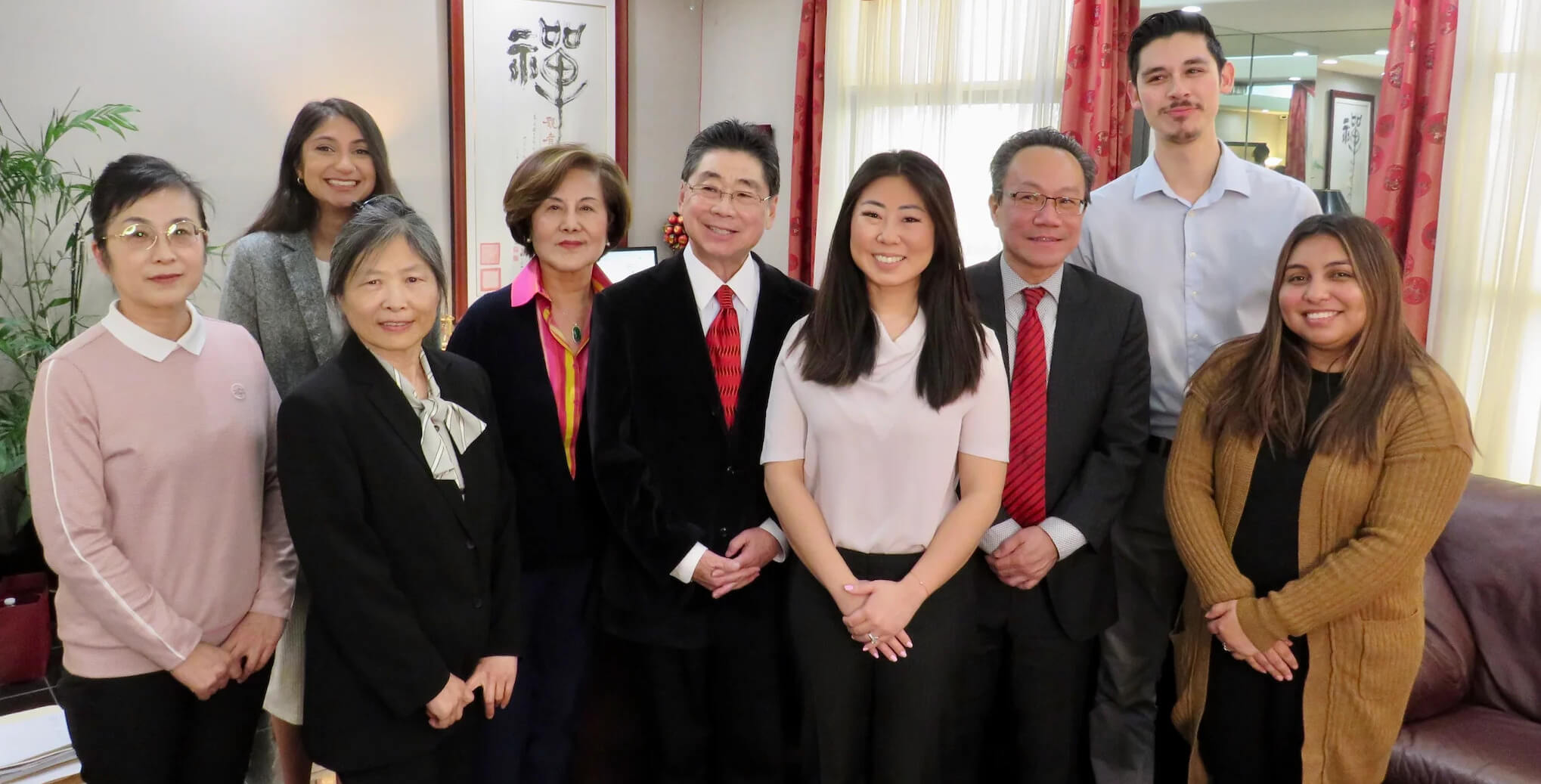

Why Choose Us?

  • Unmatched Expertise

    Trust in Peter Chu's 75+ years of collective experience to guide you through complex immigration matters.

  • Tailored Solutions

    Our personalized strategies adapt to your unique circumstances, ensuring we meet your specific immigration needs.

  • Proven Success

    Benefit from our solid track record in achieving favorable outcomes in various immigration cases across San Diego.

  • Dedicated Service

    Experience our client-first approach that ensures constant support and guidance throughout your immigration journey.

Dallas ranks among the top 10 U.S. metropolitan areas for advanced research employment, with over 47,000 scientists and engineers employed across biotech, engineering, and healthcare institutions as of 2024 — making it a natural hub for EB-1B outstanding researcher visa applications. Yet researchers filing EB-1B petitions without specialized immigration counsel face adjudication delays averaging 14–18 months and Request for Evidence (RFE) rates exceeding 40% nationwide, according to USCIS processing data. Law office of Peter Darwin Chu represents Dallas, TX researchers through every stage of the EB-1B outstanding researcher visa process, from initial eligibility assessment through final approval, with direct experience navigating USCIS Administrative Appeals Office (AAO) standards.

Book a Consultation

Law office of Peter Darwin Chu is a Texas-licensed immigration law firm serving Dallas residents seeking EB-1B attorney Dallas representation — specializing in outstanding researcher and professor visa petitions filed under INA Section 203(b)(1)(B), with consultations available same week. We provide comprehensive petition assembly, evidence documentation, and employer compliance review for qualifying researchers employed by U.S. universities, private research institutions, and corporate R&D divisions throughout Dallas and surrounding counties.

EB-1B Attorney Dallas Available Across Dallas and Surrounding Areas

Law office of Peter Darwin Chu represents EB-1B visa applicants throughout Dallas, TX and Dallas County — including researchers and professors in zip codes 75065, 75201, 75202, 75203, and 75204 — as well as clients employed at institutions across the Dallas-Fort Worth metropolitan research corridor. All Texas residents with qualifying outstanding researcher positions are eligible for representation regardless of employer location, and we regularly work with petitioning employers in Richardson, Plano, Irving, and Fort Worth.

What Dallas Researchers Can Access

EB-1B Eligibility Assessment and Evidence Strategy

The EB-1B outstanding researcher visa dallas requires meeting at least two of six regulatory criteria under 8 CFR 204.5(i)(3)(i) — including authorship of scholarly articles, judging the work of others, original research contributions of major significance, and international recognition. We evaluate your publication record, citation metrics, peer review service, and institutional recognition against current USCIS adjudication trends and AAO precedent decisions to determine petition viability before filing. This assessment includes a detailed gap analysis identifying which additional evidence — such as independent citation letters, conference presentations, or editorial board appointments — would strengthen a borderline case. Initial consultations review your CV, publication list, and employer offer letter to provide candid filing advice within 60 minutes.

EB-1B Petition Assembly and USCIS Filing

We prepare Form I-140 petitions with comprehensive supporting documentation: detailed employer support letters drafted to USCIS specifications, independent expert letters from recognized authorities in your field, complete publication and citation records with impact metrics, and a legal brief addressing each regulatory criterion with case law citations. Our petitions are structured to survive the initial USCIS review without triggering a Request for Evidence, and we coordinate directly with your HR department and international office to ensure labor condition compliance under the permanent employment offer requirement.

EB-1B Visa RFE Response and Appeals

If USCIS issues a Request for Evidence or Notice of Intent to Deny, we prepare point-by-point responses with additional documentation, supplemental expert letters, and legal argument grounded in AAO precedent. Our RFE response rate in EB-1B cases reflects direct familiarity with common USCIS objections — including challenges to "international recognition" claims, disputes over research significance, and employer eligibility questions. Cases denied at the service center level can be appealed to the AAO with a detailed legal brief, and we handle this process through final administrative resolution.

Concurrent Adjustment of Status and Work Authorization

Once your I-140 petition is approved, we file concurrent Form I-485 adjustment of status applications for you and eligible dependents, securing Employment Authorization Documents (EAD) and Advance Parole travel authorization within 90–120 days under current USCIS processing. This allows Dallas researchers to transition from H-1B, O-1, or other nonimmigrant status to permanent residency without employment gaps or travel restrictions during the final green card phase.

Get clear, expert legal guidance tailored to your visa, green card, or citizenship needs.

Licensed EB-1B Immigration Counsel in Dallas, TX

Law office of Peter Darwin Chu maintains active admission to practice immigration law in Texas and before the U.S. immigration courts, the Board of Immigration Appeals, and USCIS administrative bodies nationwide. We comply with all Texas State Bar Rules of Professional Conduct governing attorney-client privilege, conflict screening, and client trust account management under Texas Disciplinary Rules 1.05 and 1.14. Our EB-1B outstanding researcher visa practice is governed by federal immigration statutes under Title 8 U.S. Code and USCIS Policy Manual Volume 6, Part F — we cite specific regulatory authority and case precedent in every petition and legal brief filed.

Inquire now to check if you qualify

What If My Dallas Research Institution Has Never Filed an EB-1B Petition Before?

Many smaller Dallas research employers — including private biotech firms, corporate R&D labs, and specialty hospitals — have no prior EB-1B filing experience, which does not disqualify the petition. USCIS does not require employer history with EB-1B cases, but the petition must establish that the employer qualifies as a bona fide research institution under 8 CFR 204.5(i)(3)(ii). We work directly with your HR department and legal counsel to draft compliant employer support letters, document the institution's research mission through publications and funding records, and satisfy the "permanent employment offer" requirement even for positions without traditional tenure structures. Employer unfamiliarity with the EB-1B process is common and entirely surmountable with proper legal guidance.

What If I Have Strong Research Output But Limited International Awards or Memberships in Dallas?

The EB-1B outstanding researcher category does not require membership in prestigious professional associations or receipt of major international prizes — these are only two of six optional regulatory criteria. Many successful EB-1B petitions for Dallas researchers rely instead on authorship of highly cited peer-reviewed articles, original research contributions documented through grant funding or patent citations, and evidence of peer review service for journals or funding agencies. If your citation count exceeds the field median by a significant margin — particularly in specialized subfields — and you have served as a manuscript reviewer or conference program committee member, you may qualify without any formal awards. We assess which two criteria your evidence satisfies most convincingly and structure the petition accordingly.

What If My EB-1B Petition Receives a Request for Evidence in Dallas?

USCIS issues Requests for Evidence (RFEs) in approximately 40% of EB-1B petitions nationwide, most commonly challenging the "international recognition" showing or questioning whether the research contributions constitute "major significance." An RFE is not a denial — it is an opportunity to submit additional documentation and legal argument addressing the adjudicator's specific concerns. We respond to RFEs by providing supplemental independent expert letters from recognized authorities in your field, additional citation analysis demonstrating impact beyond your immediate research group, and detailed legal briefs citing AAO precedent decisions that support your eligibility. RFE response deadlines in Dallas cases are strictly enforced at 87 days from issuance, making prompt legal consultation critical the day you receive the notice.

What If I Am Currently in Dallas on an H-1B — Can I File EB-1B While Maintaining Status?

Yes, filing an EB-1B petition while in H-1B status is not only permitted but strategically advantageous — approval of your I-140 petition allows you to extend H-1B status beyond the standard six-year maximum under AC21 portability rules, protecting your work authorization during the green card adjustment phase. Your H-1B employer does not need to be the same entity as your EB-1B petitioning employer, though using the same employer streamlines the process. If your EB-1B petition is denied, your underlying H-1B status remains unaffected. Dallas researchers frequently pursue EB-1B petitions concurrently with H-1B extensions to maximize immigration options and avoid employment gaps.

Comparing Your EB-1B Dallas Representation Options

Dallas researchers pursuing EB-1B outstanding researcher visas typically evaluate three paths: institutional counsel provided by their university or employer, general immigration attorneys handling all visa categories, or specialized EB-1B counsel with direct USCIS trial experience. Here's the honest answer: institutional counsel is free but often operates under case volume constraints that limit individualized petition strategy — they may advise you to wait for additional publications rather than optimizing your existing evidence. General immigration attorneys handle EB-1B cases alongside family-based petitions, asylum matters, and deportation defense, meaning they lack the citation analysis tools and field-specific expert networks that determine EB-1B success rates. Law office of Peter Darwin Chu focuses on employment-based immigrant petitions including EB-1B outstanding researcher visa Dallas, maintains updated AAO precedent libraries, and provides direct evidence review with same-week consultation availability.

ApproachEvidence StrategyRFE Response CapabilityCitation AnalysisBottom Line
Institutional CounselStandard templateLimited availabilityMinimal quantitative reviewFree but generic — volume-driven practice
General Immigration FirmMulti-practice experienceReactive to USCIS requestsOutsourced or absentBroad but shallow — no EB-1B specialization
EB-1B SpecialistField-specific precedent researchProactive gap analysisIntegrated with expert lettersTargeted strategy — higher cost, focused outcome
Law office of Peter Darwin ChuRegulatory criterion optimizationAAO-standard legal briefsDirect Ph.D.-level reviewSpecialized Dallas EB-1B practice with trial experience

Get in touch

Frequently Asked Questions

Find answers to common questions about our services

  • Current USCIS processing times for EB-1B I-140 petitions average 6–9 months at the Texas Service Center, though premium processing (15-day adjudication for an additional $2,805 fee) is available for most employment-based petitions. Once the I-140 is appro

  • EB-1A (extraordinary ability) and EB-1B (outstanding researcher or professor) both fall under the first preference employment-based category, but EB-1A does not require employer sponsorship or a permanent job offer — the applicant self-petitions. EB-1B re

  • Yes, your spouse and unmarried children under 21 years old qualify as derivative beneficiaries on your EB-1B petition and receive the same priority date. They are eligible to file Form I-485 adjustment of status concurrently with you once your I-140 is ap

  • No, there is no English language testing requirement for EB-1B visa petitions. USCIS presumes that outstanding researchers and professors possess sufficient English proficiency to conduct research and teach at U.S. institutions, and the petition approval

  • A denied EB-1B I-140 petition can be appealed to the USCIS Administrative Appeals Office within 30 days of the denial notice, with a detailed legal brief and supplemental evidence addressing the adjudicator's stated reasons for denial. Alternatively, you

  • Postdoctoral researchers in Dallas can qualify for EB-1B outstanding researcher status if they have at least three years of research experience in their field (including doctoral study time) and meet at least two of the six regulatory criteria. The 'perma

  • Attorney fees for EB-1B petition preparation in Dallas typically range from $8,000 to $15,000 depending on case complexity, evidence volume, and whether expert letters or citation analysis require coordination with third-party consultants. This fee covers

  • International recognition under 8 CFR 204.5(i)(3)(i) is demonstrated through evidence such as authored scholarly articles published in peer-reviewed journals with demonstrated citation impact beyond your immediate research collaborators, invitations to se

Need Personalized Immigration Guidance?

Law office of Peter Darwin Chu provides EB-1B attorney Dallas representation to outstanding researchers and professors throughout Dallas, TX with comprehensive I-140 petition assembly, evidence documentation under 8 CFR 204.5(i)(3)(i) regulatory criteria, and same-week consultation scheduling for eligibility assessment.

Related Immigration Services for Dallas Researchers

Researchers in Dallas pursuing employment-based permanent residency may also qualify for related visa categories depending on career stage and employer sponsorship availability. Our EB-1A Visa practice serves scientists and engineers with evidence of sustained national or international acclaim who do not require employer sponsorship, while the EB-2 Visa category provides an alternative path for advanced degree professionals whose research does not yet meet EB-1B outstanding standards. We also represent clients in Los Angeles, Long Beach, Anaheim, and Riverside for EB-1B outstanding researcher petitions. Dallas-area postdoctoral fellows and early-career faculty should review our O-1 Visa Guidance for nonimmigrant extraordinary ability authorization while building publication records for future green card eligibility.

Speak With Us Today