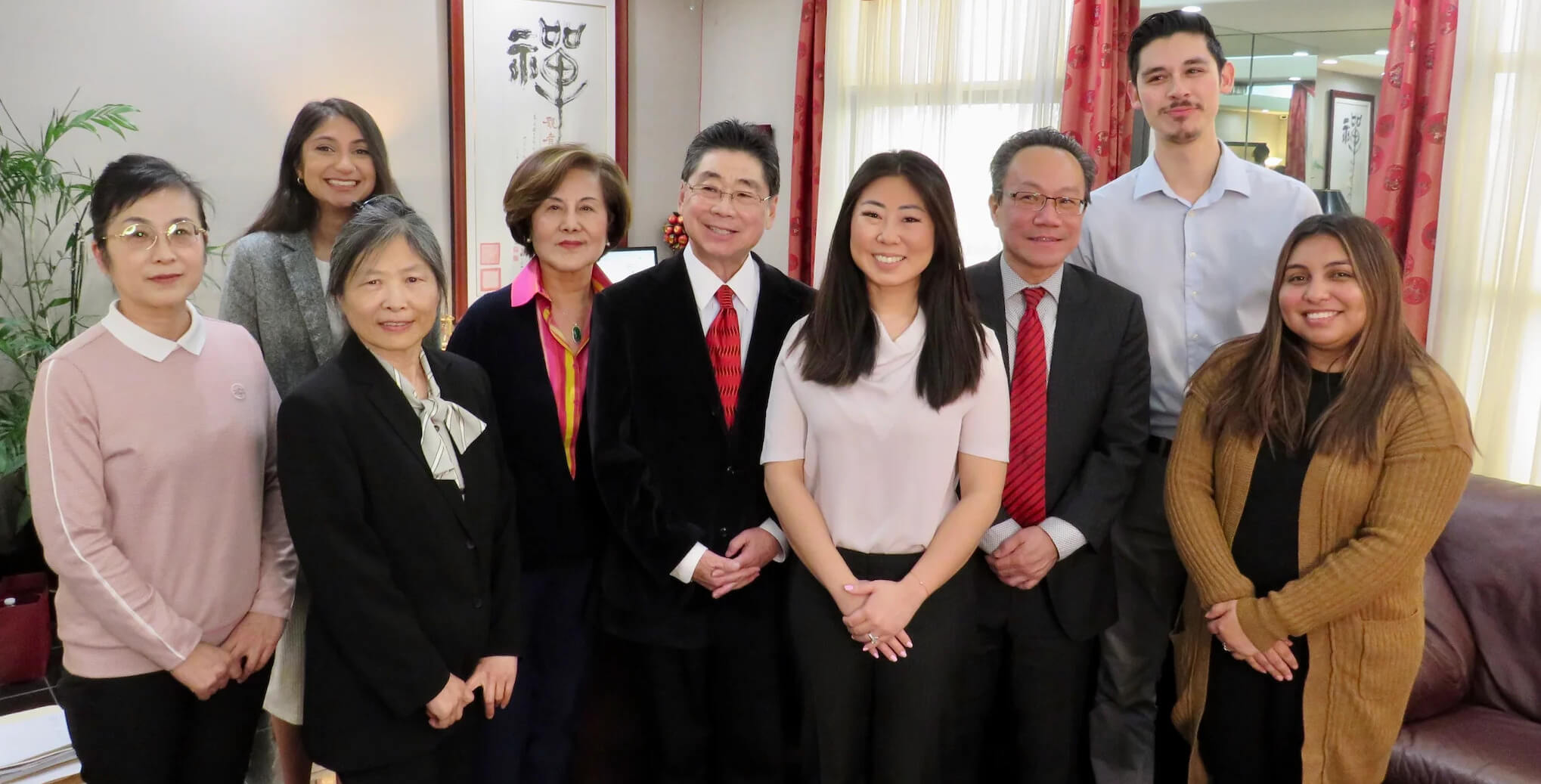

Why Choose Us?

  • Unmatched Expertise

    Trust in Peter Chu's 75+ years of collective experience to guide you through complex immigration matters.

  • Tailored Solutions

    Our personalized strategies adapt to your unique circumstances, ensuring we meet your specific immigration needs.

  • Proven Success

    Benefit from our solid track record in achieving favorable outcomes in various immigration cases across San Diego.

  • Dedicated Service

    Experience our client-first approach that ensures constant support and guidance throughout your immigration journey.

Dublin, OH is home to over 49,000 residents and hosts multiple research institutions and corporate R&D facilities, creating consistent demand for employment-based immigration pathways for advanced-degree professionals. For researchers seeking permanent residency through the EB-1B outstanding researcher visa Dublin pathway, the difference between approval and a Request for Evidence often comes down to whether your petition demonstrated international recognition through properly documented achievements before USCIS review. Law office of Peter Darwin Chu has prepared EB-1B petitions for researchers across Ohio and understands the evidentiary standards required under 8 CFR 204.5(i). We represent Dublin residents through every stage of the EB-1B process — from eligibility assessment to I-140 filing.

Book a Consultation

Law office of Peter Darwin Chu is an immigration law firm serving Dublin, OH residents with EB-1B outstanding researcher visa representation — offering case evaluations, petition preparation, and Response to RFE services with same-week consultation availability. We prepare petitions under the EB-1B classification for university researchers, corporate R&D scientists, and academic investigators demonstrating international recognition in their field.

EB-1B Attorney Dublin Available Across Dublin and Surrounding Areas

Law office of Peter Darwin Chu represents clients throughout Dublin and surrounding Franklin County communities — including Bridge Street District, Muirfield Village, and Historic Dublin (zip codes 43016, 43017) — as well as Columbus-area researchers at Ohio State University and Battelle Memorial Institute. All Ohio residents with qualifying EB-1B outstanding researcher credentials are eligible for representation regardless of county.

What Dublin Researchers Can Access

EB-1B Eligibility Assessment

We conduct substantive 60-minute evaluations of your research record against the two-prong EB-1B standard: international recognition in your academic field and at least three years of research experience. This assessment reviews your publication record, citation metrics, peer review service, and authorship contributions to determine whether your achievements meet the regulatory criteria under 8 USC 1153(b)(1)(B) before petition preparation begins. For Dublin residents working in corporate R&D or university settings, we identify documentation gaps early.

I-140 Petition Preparation

EB-1B petitions require employer sponsorship and must demonstrate that the offered position is in a research capacity. We prepare the I-140 Immigrant Petition for Alien Worker with supporting exhibits including letters from independent experts, citation reports, journal impact factor documentation, and a detailed statement explaining how your work constitutes outstanding achievement. USCIS adjudicators at the Nebraska or Texas Service Center expect specific evidence types — we structure petitions to match those expectations.

Response to Request for Evidence (RFE)

If USCIS issues an RFE questioning your international recognition or the permanence of the offered position, response deadlines are strict and the evidentiary bar is high. We prepare comprehensive RFE responses within the 30–90 day deadline, often securing approval after initial denial risk. For Dublin-area researchers, we coordinate directly with university counsel or corporate immigration teams when employer cooperation is required.

Get in touch

Get clear, expert legal guidance tailored to your visa, green card, or citizenship needs.

Why Dublin Researchers Choose Law Office of Peter Darwin Chu

Law office of Peter Darwin Chu operates under Ohio Rules of Professional Conduct and maintains all required state and local licenses and insurance for immigration law practice. Our firm prepares petitions in compliance with USCIS Policy Manual Volume 6, Part F, which governs EB-1B adjudication standards, and we cite controlling precedent decisions including Kazarian v. USCIS when crafting legal arguments. Every EB-1B petition includes a detailed cover letter, evidentiary index, and tab-organized exhibits designed for efficient USCIS review — not generic form templates.

Inquire now to check if you qualify

What If I Work for a Private Company in Dublin — Can I Still Qualify for EB-1B?

Yes, EB-1B outstanding researcher classification is available to both university and private-sector researchers, provided the employer can demonstrate the offered position is in a research capacity and the company employs at least three full-time researchers. In Dublin, corporate R&D facilities often qualify as eligible employers if they meet the regulatory definition of a research organization under 8 CFR 204.5(i)(3)(ii). The petition must include evidence of the company's research mission — such as patents filed, research publications produced by staff, or government research contracts held. Many Dublin technology and biotech employers meet this standard.

What If My Research Is in a Narrow Subfield — Will USCIS Understand Its Significance?

USCIS adjudicators are not subject-matter experts in your research area, which is why EB-1B petitions require letters from independent experts who can explain the significance and impact of your work to a non-specialist audience. For Dublin researchers in specialized fields — computational biology, materials science, or advanced manufacturing — we work with you to identify letter writers with credentials USCIS will respect and who can articulate why your contributions constitute international recognition. The letters must be detailed, specific to your achievements, and from authorities outside your immediate institution.

What If I Have Strong Citations but Limited Awards — Does That Disqualify Me?

No. EB-1B requires satisfaction of at least two of six regulatory criteria, and major awards is only one criterion. High citation counts, authorship of influential papers, peer review service for major journals, and membership in selective professional associations are equally valid evidence of international recognition. For Dublin researchers whose work is citation-heavy but award-light, we structure petitions around the scholarly articles and judging criteria — often the strongest evidence types for academic researchers. USCIS does not require awards if other criteria are robustly demonstrated.

What If My Employer Is Willing to Sponsor Me but Has Never Filed an EB-1B Before?

First-time EB-1B sponsors — common among smaller research companies and university departments in Dublin — require additional documentation to establish their eligibility as a qualifying employer. We prepare employer affidavits, organizational charts, and evidence of ongoing research activity to satisfy USCIS that the company meets the regulatory definition. Many Dublin employers assume the EB-1B is only for large universities; in fact, any employer with a documented research mission and at least three researchers can sponsor an EB-1B petition. We guide employers through the process from initial consultation to approval.

Choosing Between DIY EB-1B Filing, Generic Immigration Mills, and Specialized Representation

EB-1B petitions compete in the employment-based first preference category, where approval rates vary significantly based on petition quality. Dublin researchers often evaluate three paths: self-filing with employer HR support, using a high-volume immigration processing service, or retaining specialized counsel. Here's the honest answer: USCIS issues Requests for Evidence in approximately 40–50% of EB-1B cases according to recent adjudication data, and RFE response quality determines whether the case is approved or denied. Generic immigration services often use template language that does not adapt to your specific research achievements or address the weaknesses USCIS is likely to identify. Self-filed petitions frequently misapply the two-prong test or submit letters that fail to establish independent expert status.

ApproachPetition CustomizationRFE Risk MitigationExpert Letter StrategyProfessional Assessment
DIY with Employer HRGeneric templates, no legal analysisReactive only — RFE response often too lateNo guidance on letter content or writer selectionHigh RFE risk — approval depends on strength of raw credentials alone
High-Volume Immigration MillStandardized forms, minimal research-specific argumentTemplate RFE responses, rarely cite case lawForm letters from unvetted sourcesLowest cost but highest denial rate — treats all cases identically
Specialized EB-1B CounselDetailed legal brief tailored to your field and achievementsProactive structuring to preempt common RFE issuesCoordinated strategy with vetted independent expertsHighest approval rate — petition built around USCIS adjudication patterns and precedent decisions

The bottom line: EB-1B outstanding researcher petitions are won or lost on the strength of the legal argument and the quality of supporting evidence — not the credentials alone. For Dublin researchers, the difference between approval and denial is often whether your petition addressed the specific evidence gaps USCIS looks for before they issue an RFE.

Frequently Asked Questions

Find answers to common questions about our services

  • USCIS processing times for I-140 EB-1B petitions filed at the Nebraska or Texas Service Center range from 6 to 12 months under standard processing, though premium processing (15-day adjudication for an additional $2,500 fee) is available for most EB-1B ca

  • EB-1B requires employer sponsorship and at least three years of research experience, while EB-1A is self-petitioned and requires sustained national or international acclaim. For Dublin researchers, EB-1B is often more accessible because the evidentiary st

  • Yes. The three-year research experience requirement under 8 CFR 204.5(i)(3)(i) can be satisfied by research conducted anywhere in the world, including postdoctoral positions, university faculty roles, or corporate R&D work in your home country. For Dublin

  • The EB-1B offered position must be permanent or indefinite in duration — not a fixed-term postdoctoral appointment or grant-funded temporary role. In Dublin, this typically means tenure-track faculty positions, permanent research scientist roles, or corpo

  • Yes, but refiling requires addressing the specific deficiencies cited in the denial notice. If USCIS denies your EB-1B petition, you receive a written decision explaining which regulatory criteria were not satisfied and why the evidence was insufficient.

  • Yes. Your spouse and unmarried children under 21 are eligible for derivative E-14 status (for EB-1B beneficiaries) and can apply for adjustment of status or consular processing simultaneously with your I-140 approval. They receive green cards in the same

  • Attorney fees for EB-1B petition preparation typically range from $8,000 to $15,000 depending on case complexity, the amount of evidence requiring organization, and whether RFE response is needed. Government filing fees for the I-140 petition are $700 (pl

  • USCIS does not publish category-specific approval rates, but immigration practitioners estimate EB-1B approval rates range from 70% to 85% for well-prepared petitions with strong evidence of international recognition. Cases that receive RFEs have lower ap

Need Personalized Immigration Guidance?

Law office of Peter Darwin Chu provides EB-1B attorney Dublin services for Ohio researchers seeking outstanding researcher visa classification — with case evaluation, I-140 preparation, and RFE response services available through in-person or virtual consultation.

Related Immigration Services for Dublin Researchers

If you are evaluating alternative employment-based pathways, Law office of Peter Darwin Chu also represents Dublin clients in EB-1A Visa matters for individuals with extraordinary ability, EB-2 Visa petitions requiring labor certification, and O-1 Visa nonimmigrant classification for temporary research positions. Dublin-area researchers at corporate labs may also benefit from EB-1C Visa representation if transferring from a foreign affiliate in a managerial capacity. We also prepare EB-1B Visa petitions for researchers in Los Angeles, Long Beach, Anaheim, and Riverside — using the same evidence-based petition structure regardless of filing location. For immediate case assessment or to discuss your EB-1B eligibility based on your current research record and employer sponsorship, contact our office for a consultation.

Speak With Us Today