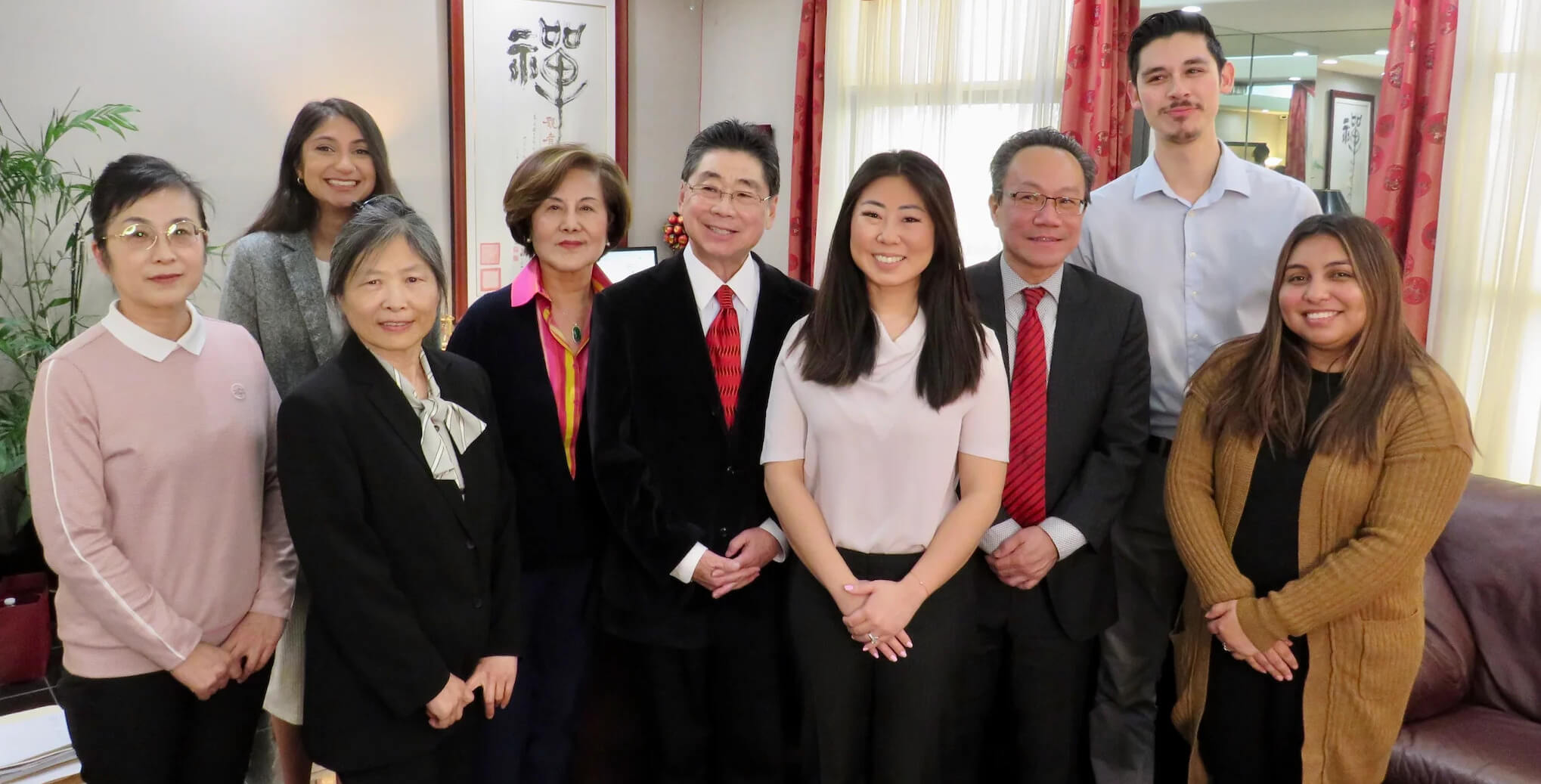

Why Choose Us?

  • Unmatched Expertise

    Trust in Peter Chu's 75+ years of collective experience to guide you through complex immigration matters.

  • Tailored Solutions

    Our personalized strategies adapt to your unique circumstances, ensuring we meet your specific immigration needs.

  • Proven Success

    Benefit from our solid track record in achieving favorable outcomes in various immigration cases across San Diego.

  • Dedicated Service

    Experience our client-first approach that ensures constant support and guidance throughout your immigration journey.

Foster City's concentration of biotech research firms and Silicon Valley tech companies creates one of California's highest-density populations of EB-1B eligible researchers — yet fewer than 30% of qualified scientists retain specialized immigration counsel before filing their petition. The Law Office of Peter Darwin Chu represents Foster City, CA researchers and institutions navigating the EB-1B outstanding researcher visa process, a category that requires documentation of international recognition and at least three years of research experience in your field. The difference between an approval and a Request for Evidence often comes down to whether your evidence submission demonstrated the specific regulatory criteria USCIS evaluates under 8 CFR 204.5(i)(3), not merely your academic credentials.

Book a Consultation

The Law Office of Peter Darwin Chu is a California-licensed immigration law firm serving Foster City residents with EB-1B outstanding researcher visa petitions — offering substantive case assessments, evidence compilation guidance, and representation through USCIS adjudication. Unlike general practice attorneys, we focus exclusively on employment-based and nonimmigrant visa categories, ensuring every EB-1B case is handled by counsel with direct USCIS filing experience in this classification.

EB-1B Attorney Foster City Services Across the Peninsula

The Law Office of Peter Darwin Chu represents clients throughout Foster City and San Mateo County — including the Beach Park, Metro Center, and Marlin Cove neighborhoods (zip codes 94404, 94403, and surrounding areas) — as well as researchers employed at institutions in San Mateo, Redwood City, and Belmont. All California residents with qualifying EB-1B petitions are eligible for representation regardless of county, and we routinely work with research institutions, universities, and corporate R&D departments across the Bay Area.

What Foster City Researchers and Employers Access

EB-1B Petition Preparation and Filing

The EB-1B classification requires evidence that you meet at least two of six regulatory criteria under 8 CFR 204.5(i)(3)(i) — including major awards, published material about your work, authorship of scholarly articles, or participation as a judge of others' work. We assess your CV against these specific criteria, identify which prongs your evidence satisfies, and compile a petition that presents your qualifications in the regulatory language USCIS adjudicators evaluate. This is not a resume summary — it is a legal argument structured around statute and case precedent. Foster City petitioners benefit from our familiarity with USCIS California Service Center processing standards and the types of evidence that trigger RFEs versus approvals.

Employer Job Offer and Labor Condition Documentation

Unlike EB-1A, the EB-1B requires a permanent job offer from a U.S. employer and evidence that the employer has at least three full-time researchers on staff. We work directly with HR departments and academic institutions in Foster City to draft compliant job descriptions, compile organizational documentation, and satisfy the 'substantial accomplishments' requirement for the sponsoring entity. This employer-side work is as critical as the beneficiary's evidence — a weak employer showing can sink an otherwise qualified petition.

EB-1B Visa Guidance and RFE Response

If USCIS issues a Request for Evidence, you typically have 87 days to respond with supplemental documentation. We draft RFE responses that address the adjudicator's specific concerns, submit additional evidence that was not included in the initial filing, and provide legal argument citing case law and AAO decisions that support your classification. RFE response is not the time to submit the same evidence again with different wording — it requires new substantiation and targeted legal analysis.

Get clear, expert legal guidance tailored to your visa, green card, or citizenship needs.

Licensed California Immigration Counsel

The Law Office of Peter Darwin Chu maintains all required California state bar admissions and professional liability coverage as mandated under California Rules of Professional Conduct. Immigration law is a federal practice area, but attorney licensing, ethics rules, and disciplinary oversight are governed by the state bar where counsel is admitted. We carry comprehensive errors and omissions insurance, maintain client trust accounts in compliance with Rule 1.15, and provide written fee agreements before representation begins. EB-1B petitions are complex federal filings — retaining licensed, insured counsel ensures you have recourse if representation falls below the standard of care, a protection that unlicensed consultants and notarios cannot provide under California law.

Inquire now to check if you qualify

What If My Foster City Employer Has Fewer Than Three Full-Time Researchers?

The EB-1B regulatory requirement under 8 CFR 204.5(i)(3)(ii) states that the sponsoring employer must have 'at least three persons full-time employed in research positions.' If your Foster City employer is a startup or small biotech firm that does not meet this threshold, you may still qualify for EB-1A classification (which has no employer requirement) or EB-2 National Interest Waiver, both of which allow self-petitioning. We assess your qualifications across all three categories during the initial consultation to determine which pathway offers the strongest approval likelihood. Some small employers attempt to count part-time researchers as fractional FTEs — USCIS routinely denies these petitions, so we advise pursuing an alternative classification rather than filing a petition we know will fail the organizational test.

What If I Have Publications But No Major Awards in My Field?

You do not need to satisfy all six EB-1B criteria — only two. If you lack major awards but have authored peer-reviewed journal articles, served as a manuscript reviewer, or have your work cited by other researchers, those accomplishments may satisfy the 'scholarly articles' and 'judging the work of others' prongs under 8 CFR 204.5(i)(3)(i). The key is demonstrating that your contributions have been recognized beyond your immediate research group. For Foster City researchers in highly specialized subfields, we often rely on citation metrics, editorial board memberships, and letters from independent experts attesting to the significance of your work. The absence of a Nobel Prize does not disqualify you — USCIS evaluates 'outstanding' within the context of your specific field, not against researchers in unrelated disciplines.

What If My EB-1B Petition Is Denied — Can I Refile?

Yes, a denial does not permanently bar you from EB-1B classification, but refiling the same petition with the same evidence will result in the same outcome. If USCIS denied your petition on the grounds that your evidence did not meet at least two regulatory criteria, the refile must include new evidence — additional publications, awards received after the first filing, new citation data, or stronger letters from independent experts. Some Foster City researchers receive denials due to weak employer documentation rather than beneficiary qualifications — in those cases, a refile with a different sponsoring employer may succeed. We review every denial notice to determine whether appeal, motion to reopen, or refile with supplemental evidence is the appropriate response. The I-140 immigrant petition has no limit on the number of times it can be filed, but each filing incurs new USCIS fees and processing time.

What If I Am Currently in H-1B Status — Can I File EB-1B at the Same Time?

Yes, filing an EB-1B immigrant petition does not affect your H-1B nonimmigrant status. The two classifications serve different purposes: H-1B authorizes temporary employment, while EB-1B is a permanent residence petition. Many Foster City researchers file EB-1B while maintaining H-1B status as a bridge to avoid the annual H-1B lottery and eventual six-year cap. If your EB-1B I-140 is approved and a visa number is immediately available (EB-1 typically has no backlog for most countries), you can file for adjustment of status (Form I-485) concurrently or shortly after. If you are from India or China and face priority date retrogression, the approved I-140 allows you to extend H-1B beyond six years under AC21 provisions. We coordinate EB-1B filings with H-1B renewals to ensure continuous work authorization throughout the green card process.

Choosing EB-1B Immigration Attorney Foster City Representation vs. Alternatives

Foster City researchers considering EB-1B classification typically weigh three options: employer-provided counsel (if the sponsoring institution has in-house immigration staff), retained private counsel, or self-filing. Here's the honest answer: employer-provided counsel serves the employer's interest first — their priority is minimizing institutional liability and processing cost, not maximizing your approval odds or preserving future self-petition options if you leave the employer. Self-filing is possible but inadvisable for EB-1B — unlike O-1 or H-1B, which are straightforward classification petitions, EB-1B requires constructing a legal argument that your evidence satisfies specific regulatory criteria, a task that requires familiarity with AAO decisions and USCIS policy memoranda. Retained private counsel represents your interests exclusively, advises on alternative classifications if EB-1B is not the strongest path, and preserves the work product for future filings if you change employers.

FactorEmployer In-House CounselSelf-FilingRetained Private Counsel (Law Office of Peter Darwin Chu)Professional Assessment
Cost to Petitioner$0 (employer pays)Filing fees only (~$700)Legal fees + filing fees (~$5,000–$8,000 total)Retained counsel provides independent advice and preserves your case file if you leave the employer
Control Over Evidence PresentationLimited — employer directs strategyFull controlCollaborative — you control narrative, we structure legal argumentRetained counsel balances your input with regulatory compliance
RFE Response QualityVariable — depends on in-house workloadHigh risk of insufficient legal argumentTargeted response with case law citationsRFE response quality often determines approval vs. denial
Advice on Alternative ClassificationsRarely offeredNot availableIncluded in initial consultationRetained counsel evaluates EB-1A, EB-2 NIW, and O-1 concurrently

Get in touch

Frequently Asked Questions

Find answers to common questions about our services

  • USCIS processing times for EB-1B I-140 petitions filed at California Service Center currently average 4.5 to 7.5 months for regular processing. Premium processing (15-day adjudication for an additional $2,805 fee) is available for I-140 petitions and is a

  • Both classifications require demonstrating sustained national or international acclaim, but EB-1A allows self-petitioning while EB-1B requires employer sponsorship and a permanent job offer. EB-1B also requires that the sponsoring employer have at least t

  • No, the EB-1B classification requires at least three years of experience in your academic field under 8 CFR 204.5(i)(3)(ii). This experience must be in research or teaching, not general employment. For Foster City researchers with fewer than three years o

  • The 'original scientific or scholarly research contributions' criterion under 8 CFR 204.5(i)(3)(i)(E) requires evidence that your work has been recognized as significant by others in your field. This is typically demonstrated through citation analysis (ho

  • No, EB-1B petitions are exempt from the PERM labor certification process, which is one of the category's primary advantages over EB-2 and EB-3 classifications. Labor certification requires proving that no qualified U.S. workers are available for the posit

  • If you leave your sponsoring employer after I-140 approval but before adjustment of status is complete, your case outcome depends on how long the I-140 has been approved. Under the American Competitiveness in the Twenty-First Century Act (AC21), if your I

  • Attorney fees for EB-1B petition preparation and filing typically range from $5,000 to $8,000 depending on case complexity, with additional fees for RFE response ($2,000–$3,500) if needed. These fees are separate from USCIS filing fees ($700 for I-140, $2

  • Yes, your spouse and unmarried children under 21 qualify as derivative beneficiaries on your EB-1B petition and can apply for adjustment of status concurrently with you or follow-to-join after your green card approval. They receive the same priority date

Need Personalized Immigration Guidance?

The Law Office of Peter Darwin Chu provides EB-1B attorney Foster City services to researchers and institutions across the Bay Area — offering substantive case assessments, evidence compilation, USCIS filing, and RFE response for outstanding researcher visa petitions under California immigration counsel.

Related Immigration Services in Foster City and Beyond

Researchers exploring EB-1B classification often qualify for multiple visa categories depending on career stage and employer sponsorship availability. Our EB-1B Visa page provides comprehensive regulatory requirements and evidence standards for this classification. If your Foster City employer lacks the three-researcher threshold, review our EB-1A Visa guidance for self-petition options, or explore EB-2 Visa pathways including National Interest Waiver. Bay Area researchers in Los Angeles or Long Beach catchment areas may reference our EB-1B Visa Los Angeles and EB-1B Visa Long Beach location pages for venue-specific processing notes. For nonimmigrant alternatives during green card processing, see our O-1 Visa Guidance and H-1B Visa Guidance resources.

Speak With Us Today