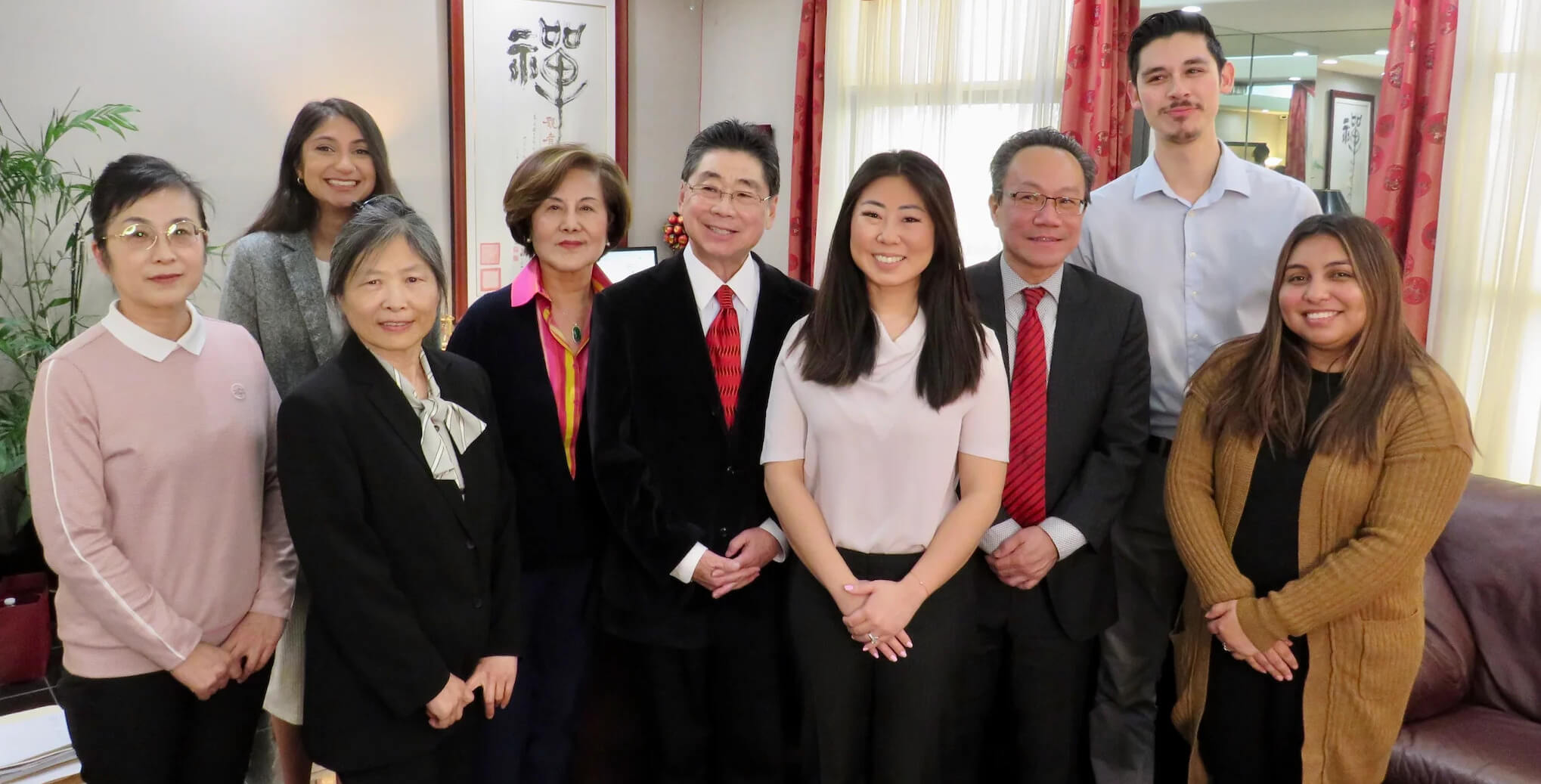

Why Choose Us?

  • Unmatched Expertise

    Trust in Peter Chu's 75+ years of collective experience to guide you through complex immigration matters.

  • Tailored Solutions

    Our personalized strategies adapt to your unique circumstances, ensuring we meet your specific immigration needs.

  • Proven Success

    Benefit from our solid track record in achieving favorable outcomes in various immigration cases across San Diego.

  • Dedicated Service

    Experience our client-first approach that ensures constant support and guidance throughout your immigration journey.

Hesperia, CA is home to over 99,000 residents and serves as a gateway community for professionals commuting to research institutions and universities throughout the Inland Empire and Los Angeles metro. For academics, postdoctoral researchers, and scientists seeking EB-1B outstanding researcher visa classification, the difference between a denied petition and approved permanent residency often comes down to how persuasively your evidence package demonstrates international recognition in your field. Law office of Peter Darwin Chu has guided researchers through EB-1B petitions filed with USCIS California Service Center, applying the specific evidentiary standards required under INA Section 203(b)(1)(B) and 8 CFR 204.5(i).

Book a Consultation

Law office of Peter Darwin Chu is a California-licensed immigration law firm serving Hesperia residents with EB-1B outstanding researcher visa petitions — offering case strategy consultations, evidence portfolio development, and USCIS petition filing for researchers, professors, and scientists. We prepare petitions under the EB-1B classification for individuals with at least three years of research experience and international recognition, filed directly with USCIS without requiring labor certification or employer sponsorship beyond a permanent research offer.

EB-1B Attorney Hesperia Available Across Hesperia and Surrounding Areas

Law office of Peter Darwin Chu represents clients throughout Hesperia, CA, including residents in zip codes 92340, 92344, and 92345. We serve researchers employed by California State University San Bernardino, Loma Linda University, and private research institutions across San Bernardino County, as well as postdoctoral fellows and scientists relocating to permanent research positions in the Inland Empire. All California residents with qualifying EB-1B cases are eligible for representation regardless of current employment location.

What Hesperia Researchers Can Access Through EB-1B Visa Classification

Outstanding Researcher Petition Preparation

The EB-1B classification requires evidence of international recognition in your academic field, demonstrated through at least two of six regulatory criteria: major prizes or awards, membership in associations requiring outstanding achievement, published material about your work, peer review of others' work, original contributions of major significance, or authorship of scholarly articles. We compile citation metrics, impact factor analysis, editorial board memberships, and expert recommendation letters that meet the evidentiary standard established in Kazarian v. USCIS and subsequent USCIS policy guidance. Initial case assessments typically cost $500–$800 and determine whether your publication record, citation count, and institutional affiliation support an approvable EB-1B petition before filing fees are incurred. Eb-1b Visa petitions require permanent research employment offers, distinguishing them from EB-1A extraordinary ability cases.

Labor Certification Exemption Strategy

Unlike EB-2 and EB-3 employment-based green cards, the EB-1B outstanding researcher classification does not require a PERM labor certification — eliminating the 12–18 month recruitment and prevailing wage determination process. This exemption allows researchers to file for permanent residency immediately upon receiving a qualifying permanent research offer from a university, research institution, or private employer with a documented history of research achievement. We prepare Form I-140 petitions with employer support letters, facility documentation, and funding verification that satisfy USCIS requirements under 8 CFR 204.5(i)(3). Hesperia residents working remotely for out-of-state institutions can file EB-1B petitions if the employer meets the regulatory definition and the position is permanent.

Priority Date and Adjustment of Status Filing

EB-1 visa categories (including EB-1B) are current for all countries of birth in 2026, meaning approved petitions establish immediate priority dates without years-long visa bulletin backlogs. Once USCIS approves your I-140 petition, you can file Form I-485 adjustment of status concurrently if physically present in the U.S., or process through consular immigrant visa procedures if abroad. We coordinate I-485 filings, work authorization (Form I-765), and advance parole travel documents (Form I-131) to maintain status continuity during the 8–14 month adjustment processing period. Get in touch to review your priority date eligibility and case timeline.

Get clear, expert legal guidance tailored to your visa, green card, or citizenship needs.

Licensed Immigration Counsel Serving Hesperia, CA

Law office of Peter Darwin Chu maintains California State Bar licensure and complies with all attorney advertising and professional conduct rules under California Rules of Professional Conduct Rule 1.0 and Rule 7.1. We carry required professional liability insurance and maintain IOLTA client trust accounts as mandated by California Business and Professions Code Section 6211. Every EB-1B petition is prepared by a licensed attorney — not a paralegal or document preparer — and we provide written fee agreements disclosing all costs, filing fees, and representation scope before engagement. Our immigration practice is limited to employment-based and family-based visa matters, ensuring focused expertise in USCIS adjudication standards and Administrative Appeals Office case law governing outstanding researcher classifications.

Inquire now to check if you qualify

What If My Citation Count Is Lower Than Other EB-1B Applicants in Hesperia?

Citation metrics are one component of EB-1B evidence but not a standalone requirement. USCIS evaluates the totality of evidence across all six regulatory criteria, and researchers in emerging fields, recent PhD graduates, or those in disciplines with smaller citation pools can qualify through editorial positions, peer review invitations, awards, or original contributions judged by expert letters. We conduct field-specific citation benchmarking — comparing your h-index and total citations to peers at your career stage and subfield — and build evidence packages emphasizing quality over quantity when raw citation counts are modest. A researcher with 200 citations but two international conference best paper awards and three journal editorial board positions may present a stronger EB-1B case than one with 800 citations but no other recognition.

What If I'm Currently on OPT or H-1B Status in Hesperia — Can I File EB-1B?

Yes, researchers on F-1 OPT, H-1B specialty occupation status, or J-1 exchange visitor status can file EB-1B petitions while maintaining nonimmigrant status, provided they have a qualifying permanent research employment offer and meet the three-year experience requirement. The EB-1B petition does not require the beneficiary to be in a specific visa status at filing, and you can file concurrently with adjustment of status (Form I-485) if your priority date is current and you are in valid status. OPT-based researchers often file EB-1B before H-1B cap-subject petitions to bypass lottery uncertainty. J-1 holders subject to the two-year home residency requirement must obtain a waiver or fulfill the requirement before adjusting status, though the I-140 petition can be filed without waiver completion.

What If My Employer in Hesperia Is a Private Company, Not a University?

Private employers qualify as EB-1B sponsors if they employ at least three full-time researchers and can document achievements in a specific academic field — typically through published research, patents, or industry recognition. The regulation at 8 CFR 204.5(i)(3)(iii) defines qualifying employers as universities, research institutions, or private employers with a 'documented history of achievement.' We prepare employer evidence packages including facility descriptions, prior research publications, patent portfolios, and staff qualifications that establish this history. Biotech firms, pharmaceutical research divisions, and engineering R&D departments in Hesperia and the Inland Empire commonly sponsor EB-1B petitions for senior researchers, though the burden of proving employer qualification is higher than for universities.

What If My Research Offer in Hesperia Is Contingent on Grant Funding?

USCIS requires EB-1B petitions to demonstrate a permanent research position, but permits offers contingent on continued grant funding or project renewal if the employer provides evidence of sustained funding history and commitment to permanent employment. The key distinction is between temporary project-based appointments (which do not qualify) and permanent positions with ongoing funding expectations. We work with university HR departments and research administrators to draft offer letters and supporting declarations that satisfy the permanency requirement even when funding derives from renewable grants. If your position is explicitly termed 'contingent' or 'temporary,' we may recommend deferring the EB-1B filing until a permanent offer is secured or consider alternative EB-2 NIW classification.

Why Hesperia Researchers Choose Specialized EB-1B Counsel Over General Immigration Firms

Researchers filing EB-1B petitions face a choice: work with a general immigration firm that handles all visa categories, retain a low-cost online document service, or engage an attorney with focused experience in academic and research-based employment petitions. General firms often lack the field-specific citation analysis, impact factor interpretation, and expert letter coordination that distinguish approvable EB-1B packages from borderline cases. Online services provide form preparation but no strategic assessment of which criteria your evidence satisfies or how to frame original contributions in your field.

Here's the honest answer: EB-1B petitions succeed or fail based on how persuasively you demonstrate international recognition — a standard that varies dramatically by academic discipline, career stage, and institutional context. A computer science researcher's citation benchmarks differ fundamentally from a theoretical mathematician's, and USCIS adjudicators apply field-specific norms when evaluating whether your record constitutes 'outstanding' achievement. Law office of Peter Darwin Chu conducts discipline-specific evidence audits before filing, identifying the two strongest regulatory criteria for your profile and building corroborating expert letters that cite peer comparisons and field standards. We do not file petitions that lack sufficient evidence, and we will tell you candidly if EB-2 NIW or delayed EB-1B filing is the stronger path.

ApproachEvidence StrategyCitation AnalysisExpert LettersBottom Line
General Immigration FirmStandard checklistRaw counts onlyTemplate requestsMay miss field-specific benchmarks that strengthen your case
Online Document ServiceForm completionNone providedDIY coordinationNo strategic assessment of approvability before filing
EB-1B Specialized CounselDiscipline-tailored criteria selectionH-index, impact factor, peer comparisonCoordinated narrative with employerMaximizes approval likelihood through field-aware evidence framing

Get in touch

Frequently Asked Questions

Find answers to common questions about our services

  • USCIS processing times for Form I-140 EB-1B petitions filed with California Service Center currently average 4.5–7.5 months under standard processing, though premium processing (Form I-907) guarantees 15-business-day adjudication for an additional $2,805

  • USCIS does not publish approval rates by subcategory or state, but EB-1B petitions overall have higher approval rates than EB-1A extraordinary ability cases due to the employer sponsorship requirement and more narrowly defined criteria. Denials most commo

  • Yes, your spouse and unmarried children under 21 qualify as derivative beneficiaries under EB-1B classification, receiving E-14 and E-15 immigrant visa status respectively. They can file adjustment of status (Form I-485) concurrently with yours or follow-

  • No, EB-1B outstanding researcher classification is exempt from PERM labor certification requirements under INA Section 203(b)(1), allowing immediate petition filing upon receiving a qualifying permanent research offer. This exemption eliminates the 12–18

  • Original contributions are evaluated based on how your research advanced the field, not merely that you published or conducted studies. USCIS expects evidence that your work influenced subsequent research, changed methodologies, led to practical applicati

  • EB-1B requires at least three years of research experience in the academic field, which can include predoctoral research conducted during your PhD program. Recent PhD graduates qualify if their doctoral research spanned at least three years and they can d

  • Denied I-140 petitions can be appealed to the USCIS Administrative Appeals Office within 30 days of the denial notice, or you can file a new petition with additional evidence addressing the denial reasons. Many denials result from correctable evidentiary

  • Attorney fees for EB-1B petition preparation typically range from $6,000 to $12,000 depending on case complexity, evidence volume, and whether premium processing or concurrent adjustment filing is included. This fee covers initial case assessment, criteri

Need Personalized Immigration Guidance?

Law office of Peter Darwin Chu provides EB-1B outstanding researcher visa representation for Hesperia, CA academics and scientists through evidence-based petition strategy, USCIS filing, and adjustment of status coordination — serving researchers with at least three years of experience and international recognition in their fields.

Related Immigration Services for Hesperia Researchers and Professionals

Researchers exploring employment-based green card options may also qualify for Eb-1a Visa extraordinary ability classification if they can demonstrate sustained national or international acclaim without requiring employer sponsorship, or Eb-2 Visa advanced degree professional classification with PERM labor certification. Scientists and academics in Los Angeles and surrounding regions can explore our Eb-1b Visa Los Angeles and Eb-1b Visa Long Beach location pages for venue-specific case insights. Postdoctoral fellows and early-career researchers may benefit from reviewing O-1 Visa Guidance for temporary nonimmigrant work authorization while building EB-1B eligibility, and university faculty should consider our H-1b Visa Guidance for initial employment authorization before transitioning to permanent residency.

Speak With Us Today