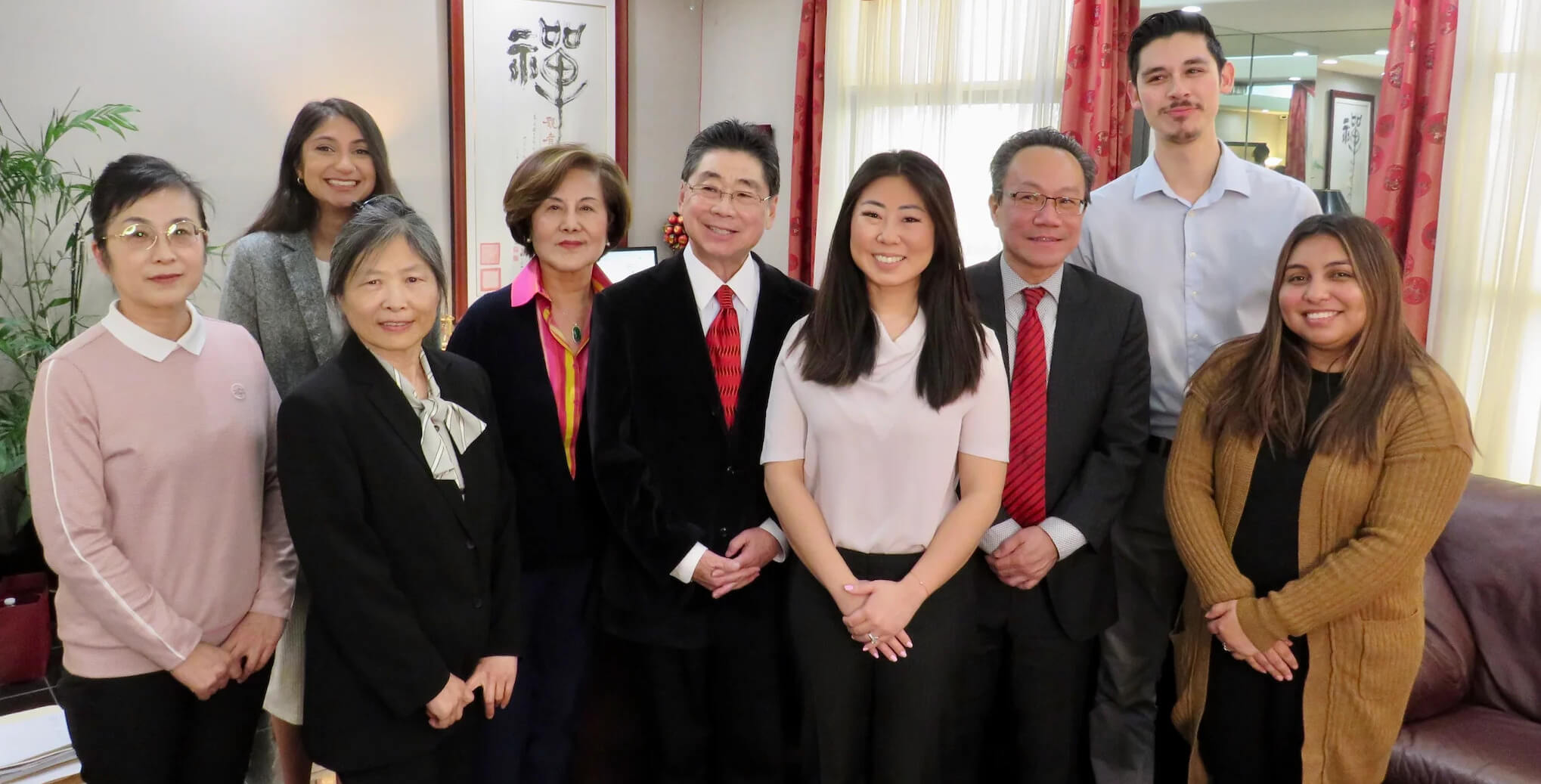

Why Choose Us?

  • Unmatched Expertise

    Trust in Peter Chu's 75+ years of collective experience to guide you through complex immigration matters.

  • Tailored Solutions

    Our personalized strategies adapt to your unique circumstances, ensuring we meet your specific immigration needs.

  • Proven Success

    Benefit from our solid track record in achieving favorable outcomes in various immigration cases across San Diego.

  • Dedicated Service

    Experience our client-first approach that ensures constant support and guidance throughout your immigration journey.

Indio, CA sits at the northern gateway to the Coachella Valley, home to over 89,000 residents and a growing research economy anchored by UC Desert Research Station and regional biomedical facilities. For academics and researchers pursuing EB-1B outstanding researcher visa classifications, the difference between a routine petition and an approval often depends on whether you worked with an immigration attorney who understands how USCIS evaluates scholarly contributions under the Kazarian two-step framework. Law office of Peter Darwin Chu has guided Indio-area researchers through the EB-1B process, from initial credential assessment to final adjudication, and we know this classification inside and out.

Book a Consultation

Law office of Peter Darwin Chu is a California-licensed immigration law firm serving Indio residents seeking EB-1B outstanding researcher visa representation — offering credential assessments, petition drafting, and USCIS response preparation with consultations available same week. We limit our practice to employment-based immigration, ensuring every EB-1B case receives focused attention from an attorney with direct USCIS adjudication experience in this classification.

EB-1B Attorney Indio Available Across Indio and Surrounding Areas

Law office of Peter Darwin Chu represents researchers and academics throughout Indio, CA — including Old Town Indio, Indian Palms, and Shadow Hills neighborhoods (zip codes 92201, 92202, 92203) — as well as faculty and postdoctoral researchers affiliated with institutions across the Coachella Valley. All California residents with qualifying research credentials are eligible for representation regardless of current visa status or county of residence.

What Indio Researchers Can Access

EB-1B Outstanding Researcher Credential Assessment

Before filing an EB-1B petition, we conduct a substantive credential review to determine whether your published research, citation metrics, peer review contributions, and institutional reputation meet the regulatory standard for 'outstanding' achievement under 8 CFR 204.5(i)(3)(i). This assessment includes a preliminary evaluation of whether you satisfy at least two of the six regulatory criteria — original scholarly contributions, authorship of scholarly articles, participation as a judge of others' work, or membership in associations requiring outstanding achievement. For Indio-area researchers affiliated with regional institutions or national laboratories, we analyze how USCIS evaluates non-traditional research settings and collaborative authorship structures. Initial assessments are completed within one week of your consultation and include a written recommendation on petition timing and evidentiary strategy.

EB-1B Petition Drafting and Filing

Once your credentials are confirmed to meet the regulatory threshold, we prepare the Form I-140 petition, employer support letter, and evidentiary exhibit package required for USCIS adjudication. The petition must demonstrate that you have at least three years of research experience, that the employer is offering a permanent research position, and that your contributions are recognized internationally as outstanding in your academic field. We draft detailed advisory opinions and recommendation letters from independent experts, compile citation analyses that contextualize your h-index and impact factor metrics within your field's norms, and prepare exhibit summaries that guide the adjudicating officer through complex technical research. EB-1B petitions prepared by our firm include comprehensive legal briefs that pre-emptively address common USCIS concerns about collaborative authorship, self-citation, and the distinction between 'outstanding' and merely 'above average' research contributions.

USCIS Request for Evidence (RFE) Response

If USCIS issues a Request for Evidence challenging your qualifications or the permanence of the job offer, we prepare a detailed response within the 87-day deadline. RFEs in EB-1B cases commonly question whether the applicant's citations are sufficient, whether the research position qualifies as permanent under 8 CFR 204.5(i)(3)(ii), or whether the evidence demonstrates international recognition rather than merely domestic visibility. We have successfully responded to RFEs by obtaining supplemental expert letters, compiling additional citation evidence from Google Scholar and Web of Science, and providing detailed regulatory analysis distinguishing the EB-1B standard from the higher EB-1A standard. Indio researchers working in emerging fields or interdisciplinary research areas benefit from our experience addressing USCIS skepticism about non-traditional scholarly output.

Get in touch

Get clear, expert legal guidance tailored to your visa, green card, or citizenship needs.

Licensed California Immigration Counsel

Law office of Peter Darwin Chu maintains active licensure with the California State Bar and operates in full compliance with California Rules of Professional Conduct Rule 1.15 governing client trust accounts and retainer agreements. We carry professional liability insurance as required under California Business and Professions Code Section 6068, and all case communications are protected by attorney-client privilege under California Evidence Code Section 954. Our firm provides written fee agreements before representation begins, and we do not charge consultation fees for initial EB-1B eligibility assessments. Every petition filed by our office includes a detailed case timeline, USCIS processing estimate, and contingency plan for potential RFEs or denials.

Inquire now to check if you qualify

What If My Research Position in Indio Is Grant-Funded — Does That Disqualify Me from EB-1B Classification?

No — grant-funded positions can qualify as permanent for EB-1B purposes if the employer demonstrates a track record of renewing similar positions and commits to offering you employment beyond the initial grant period. USCIS evaluates permanence based on the employer's intent and past practice, not the funding source. In Indio, researchers affiliated with federally funded projects or multi-year NIH grants frequently qualify if the institution provides a letter confirming its intention to retain you in a research capacity after the current grant cycle ends. We work with your employer to draft support letters that satisfy USCIS's permanence standard under 8 CFR 204.5(i)(3)(ii) even when the initial offer is tied to specific project funding.

What If I Have Strong Citation Metrics But Limited Independent Authorship — Can I Still Qualify for EB-1B in Indio?

Possibly — EB-1B petitions do not require first-author publications, but USCIS does scrutinize collaborative authorship to ensure your individual contributions are independently recognized. If your h-index and citation counts are strong but most publications list you as a middle author, we build the petition around other regulatory criteria such as peer review contributions, membership in selective academic societies, or evidence that other researchers cite your specific methodological innovations. For Indio-area researchers in team-based fields like genomics or particle physics, we provide detailed co-author declarations and citation analyses that isolate your individual impact from the broader research group's output.

What If USCIS Issues an RFE Questioning My International Recognition — How Do We Respond from Indio?

We respond by obtaining supplemental expert letters from scholars outside the United States who can attest to your work's global impact, compiling evidence of international conference invitations or collaborations, and providing citation data showing that your research is cited by institutions in multiple countries. USCIS RFEs on international recognition often arise when most of your citations come from domestic journals or co-authors at the same institution. We address this by demonstrating that your field's leading journals have international editorial boards, that your methods have been adopted by foreign research groups, or that your work is taught in graduate programs outside the U.S. Indio researchers can strengthen their response by identifying any international conference presentations, peer review assignments for foreign journals, or collaborative projects with overseas institutions.

What If I Am Currently on OPT in Indio — Can I File EB-1B Before My Work Authorization Expires?

Yes — you can file an EB-1B petition while on OPT, and approval of the I-140 does not require you to have a specific nonimmigrant status. However, transitioning from OPT to lawful permanent residence requires either an approved I-140 with an available priority date (which allows you to file Form I-485 for adjustment of status) or departure from the U.S. for consular processing. If your OPT is expiring soon, we evaluate whether you qualify for the STEM OPT extension, whether your employer can sponsor an H-1B as a bridge status, or whether you should plan for consular processing in your home country after I-140 approval. Indio-area researchers on OPT benefit from early EB-1B filing to establish a priority date and avoid gaps in work authorization.

Why Indio Researchers Choose Specialized EB-1B Counsel Over General Immigration Firms

Indio researchers evaluating immigration representation face a choice between general immigration practices that handle all visa categories and attorneys who limit their practice to employment-based petitions like EB-1B outstanding researcher visas. General firms process high volumes of family-based cases, asylum applications, and naturalization filings — categories that share no procedural overlap with the evidentiary and regulatory standards governing EB-1B adjudication. Specialized EB-1B counsel focuses exclusively on building petitions that satisfy the Kazarian two-step analysis, obtaining credible expert letters from scholars outside your institution, and responding to USCIS RFEs that challenge citation methodology or the permanence of research positions.

Here's the honest answer: the cost of an EB-1B attorney is often smaller than the cost of an RFE or denial caused by a petition that mischaracterized your research contributions or failed to pre-emptively address USCIS concerns about collaborative authorship. Researchers who file EB-1B petitions without legal representation — or with attorneys unfamiliar with how USCIS evaluates h-index metrics and impact factors — receive RFEs at significantly higher rates than those represented by immigration counsel with direct EB-1B adjudication experience.

ApproachCredential AssessmentCitation AnalysisRFE ResponseProfessional Assessment
DIY PetitionSelf-evaluated using outdated AAO decisionsRaw Google Scholar export with no field-specific contextGeneric response addressing surface-level questionsHigh risk of misapplying Kazarian standard
General Immigration FirmChecklist review with no field expertiseCitation count only, no percentile ranking or impact analysisTemplate RFE response with minimal customizationMay lack experience with academic credential evaluation
EB-1B Specialized CounselDetailed credential mapping to all six regulatory criteriaField-normalized h-index, impact factor context, independent citation analysisTailored response with supplemental expert letters and regulatory briefingDirect USCIS adjudication experience ensures compliance with current standards

Frequently Asked Questions

Find answers to common questions about our services

  • USCIS processing times for EB-1B petitions filed at the California Service Center currently average 6–9 months for standard processing and 15 business days if you request Premium Processing by paying the additional $2,805 fee. These timelines apply to the

  • EB-1A requires you to demonstrate extraordinary ability and does not require employer sponsorship, while EB-1B requires a permanent job offer from a U.S. employer and applies the lower 'outstanding' standard rather than 'extraordinary.' EB-1A petitions de

  • Yes, but only if the employer can demonstrate that the postdoctoral position is permanent or leads to a tenure-track faculty appointment under 8 CFR 204.5(i)(3)(ii). USCIS scrutinizes postdoc positions because they are typically grant-funded and time-limi

  • The strongest EB-1B petitions combine multiple forms of evidence across the six regulatory criteria: original scholarly contributions demonstrated through citation analysis and adoption of your methods by other research groups, authorship of peer-reviewed

  • Attorney fees for EB-1B petition preparation typically range from $8,000 to $15,000 depending on case complexity, the number of expert letters required, and whether USCIS issues an RFE. This fee covers credential assessment, petition drafting, employer su

  • If USCIS denies your EB-1B petition, you have three options: file a motion to reopen or reconsider with USCIS, file an appeal with the USCIS Administrative Appeals Office, or withdraw the petition and re-file with additional evidence addressing the denial

  • Yes — EB-1B approval grants you lawful permanent residence (a green card), which is the required first step toward U.S. citizenship. After holding a green card for five years (or three years if married to a U.S. citizen), you become eligible to apply for

  • Yes — EB-1B classification requires a permanent job offer from a U.S. employer, and the employer must file the Form I-140 petition on your behalf. You cannot self-petition for EB-1B status. The job offer must be for a permanent research position, meaning

Need Personalized Immigration Guidance?

Law office of Peter Darwin Chu provides EB-1B attorney services to Indio researchers through substantive credential assessments, petition drafting with expert letter coordination, and USCIS RFE response preparation — all delivered by California-licensed immigration counsel with direct employment-based petition experience.

Indio-area researchers evaluating other employment-based visa pathways may benefit from reviewing our guidance on EB-1A Visa for individuals with extraordinary ability who do not require employer sponsorship, EB-2 Visa for advanced degree professionals with PERM labor certification, and O-1 Visa for temporary nonimmigrant status based on extraordinary achievement. Faculty and postdoctoral researchers may also find value in our analysis of EB-1C Visa Law Office for multinational managers and H-1B Visa Guidance for specialty occupation employment. For researchers affiliated with institutions in neighboring Southern California communities, we offer parallel EB-1B representation in EB-1B Visa Los Angeles, EB-1B Visa Long Beach, EB-1B Visa Anaheim, and EB-1B Visa Riverside.

Speak With Us Today