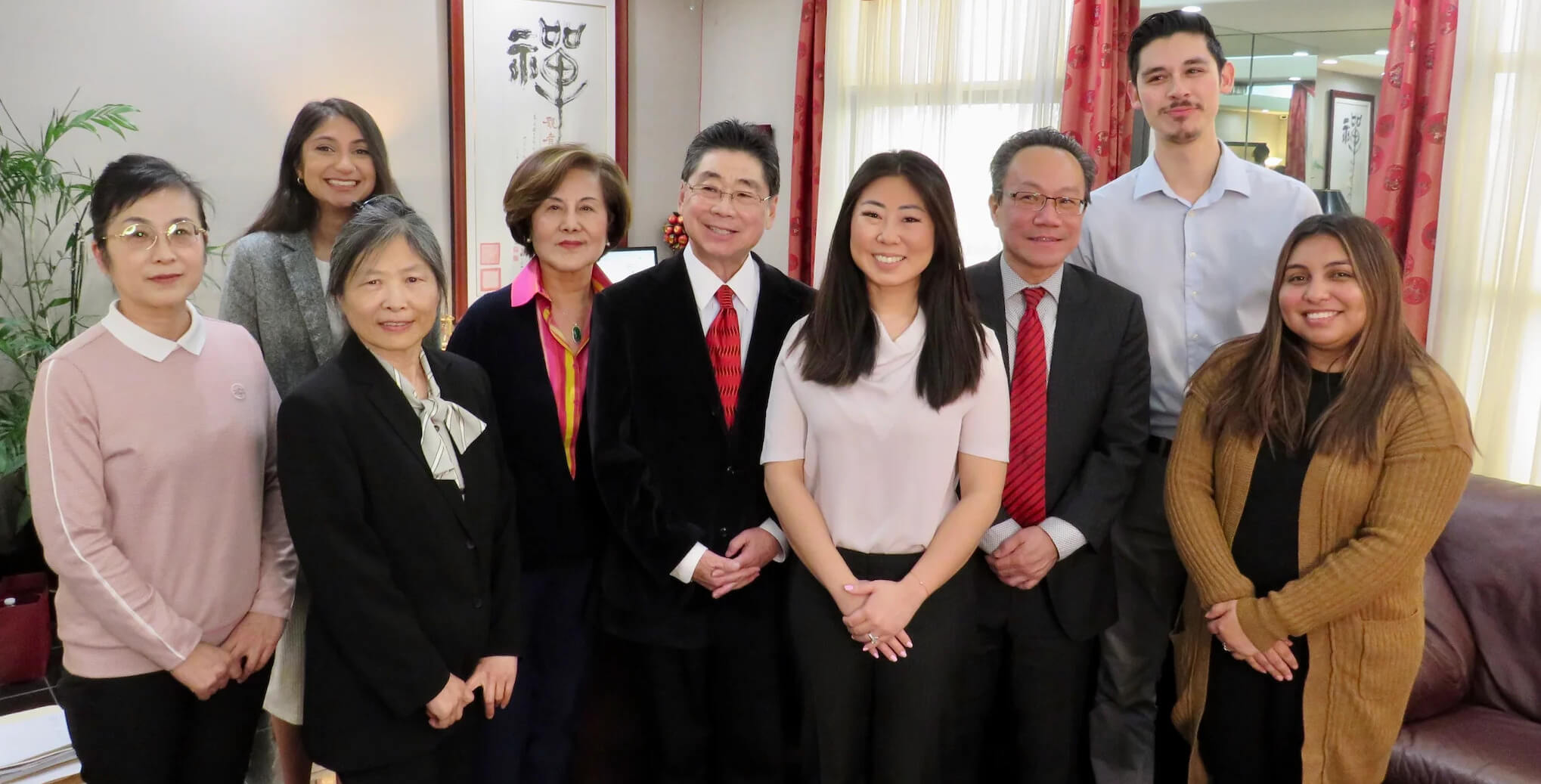

Why Choose Us?

  • Unmatched Expertise

    Trust in Peter Chu's 75+ years of collective experience to guide you through complex immigration matters.

  • Tailored Solutions

    Our personalized strategies adapt to your unique circumstances, ensuring we meet your specific immigration needs.

  • Proven Success

    Benefit from our solid track record in achieving favorable outcomes in various immigration cases across San Diego.

  • Dedicated Service

    Experience our client-first approach that ensures constant support and guidance throughout your immigration journey.

Livermore, CA is home to Lawrence Livermore National Laboratory, one of the nation's premier research institutions employing over 8,200 scientists and engineers — many of whom qualify for EB-1B outstanding researcher or professor visas but face USCIS adjudication timelines averaging 12–18 months without legal guidance. For researchers, postdoctoral fellows, and professors across Livermore seeking permanent residency through the EB-1B outstanding researcher visa livermore pathway, the difference between approval and a Request for Evidence often comes down to petition structure and documentation strategy prepared before filing. Law office of Peter Darwin Chu represents EB-1B candidates throughout Livermore and Alameda County, providing substantive case assessments and USCIS petition preparation for research professionals.

Book a Consultation

Law office of Peter Darwin Chu is a California-licensed immigration attorney serving Livermore residents seeking EB-1B outstanding researcher visa representation — providing petition preparation, evidence compilation, and USCIS response strategy with no upfront consultation fee for qualifying research professionals. We handle cases for scientists, professors, and postdoctoral researchers employed by universities, national laboratories, and private research institutions throughout Alameda County.

EB-1B Attorney Livermore Available Across Livermore and Surrounding Areas

Law office of Peter Darwin Chu represents EB-1B visa candidates throughout Livermore, CA, including residents in zip codes 94550 and 94551, covering downtown Livermore, South Livermore, and the Lawrence Livermore National Laboratory corridor. We serve research professionals employed by institutions across Alameda County, including those working at Sandia National Laboratories California campus, Stanford SLAC facilities accessible from Livermore, and UC Berkeley affiliated research centers.

What Livermore Researchers Can Access

EB-1B Outstanding Researcher Visa Petition Preparation

The EB-1B Visa requires demonstrating international recognition in your academic field through at least two of six regulatory criteria — including authorship of scholarly articles, peer review service, original contributions of major significance, and evidence of your work being cited by independent researchers. For Livermore-based scientists at Lawrence Livermore National Laboratory or Sandia, we structure petitions emphasizing your publication record in high-impact journals, citation metrics from Web of Science or Google Scholar, and letters from independent experts in your field who can attest to the significance of your research contributions. Initial case assessments are provided at no charge for researchers with at least three years of postdoctoral experience and a publication record meeting USCIS evidentiary standards.

Employer Permanent Job Offer Documentation

EB-1B petitions require a permanent or indefinite job offer from a qualifying U.S. employer — a university, private research institution, or comparable organization employing at least three full-time researchers. We work directly with human resources departments and research directors at Livermore employers to draft compliant offer letters, verify the employer's research infrastructure meets USCIS qualifying standards, and document that your position is tenure-track, research-focused, or otherwise meets the permanency requirement under 8 CFR 204.5(i)(3)(iii). Many Livermore national laboratory positions are structured as limited-term appointments; we assess whether your role qualifies or if reclassification is necessary before filing.

Response to USCIS Requests for Evidence

Approximately 35% of EB-1B petitions receive a Request for Evidence (RFE) asking for additional documentation of international recognition, clarification of the permanent job offer, or supplemental evidence that your contributions constitute original research of major significance. Law office of Peter Darwin Chu drafts RFE responses emphasizing additional citation evidence, independent expert letters, and regulatory interpretation that aligns your credentials with controlling precedent decisions from the Administrative Appeals Office. Response deadlines are typically 87 days from the RFE issuance date; we prioritize RFE cases to ensure timely, comprehensive responses that address every deficiency noted by the adjudicating officer.

Get in touch

Get clear, expert legal guidance tailored to your visa, green card, or citizenship needs.

Licensed California Immigration Representation

Law office of Peter Darwin Chu maintains all required California state bar licenses and professional liability coverage for immigration law representation. We comply fully with California Rules of Professional Conduct governing client communication, fee agreements, and confidentiality standards applicable to immigration matters. All EB-1B petitions are prepared in accordance with USCIS Policy Manual Volume 6, Part F, Chapter 4 governing outstanding researchers and professors, and 8 CFR 204.5(i) regulatory criteria. We provide written fee agreements disclosing total representation costs, case timelines, and client responsibilities before representation begins, as required under California State Bar ethics rules.

Inquire now to check if you qualify

What If I Am a Postdoctoral Researcher at Lawrence Livermore National Laboratory in Livermore — Do I Qualify for EB-1B?

Postdoctoral researchers at Lawrence Livermore National Laboratory may qualify for EB-1B if you have at least three years of postdoctoral research experience and can demonstrate international recognition through publications, citations, peer review service, or original contributions of major significance. The critical requirement is that your employer — the University of California or the Department of Energy — offers you a permanent or indefinite research position, not a limited-term postdoctoral appointment. Many national laboratory positions are structured as term appointments; we assess whether your current role meets USCIS permanency standards or if a job offer reclassification is necessary before filing your EB-1B petition in Livermore.

What If My Research Is Classified — Can I Still File an EB-1B Petition in Livermore?

Yes, researchers working on classified projects at Livermore national laboratories can file EB-1B petitions, but USCIS adjudicators cannot access classified materials to verify your contributions. We structure petitions emphasizing unclassified publications, publicly available citation metrics, conference presentations at unclassified forums, and expert letters from colleagues with appropriate clearances who can describe the significance of your research in general, unclassified terms. If your entire research portfolio is classified, EB-1B may not be the optimal visa category; we assess alternative pathways including EB-1A extraordinary ability or EB-2 National Interest Waiver during your initial consultation.

What If I Have Strong Citations but Few First-Author Publications — Will USCIS Approve My EB-1B Petition in Livermore?

USCIS evaluates the totality of your evidence under a preponderance standard — no single criterion is mandatory. Strong citation metrics (typically 200+ independent citations for physical sciences, 100+ for engineering fields) can compensate for a smaller number of first-author publications if you also demonstrate peer review service, membership in associations requiring outstanding achievements, or evidence that your collaborative research contributions were original and of major significance to the field. We compile citation reports from Web of Science, Google Scholar, and Scopus; draft detailed expert letters explaining your specific contributions to multi-author papers; and structure petitions that emphasize your citation impact relative to other researchers at your career stage. Many successful EB-1B petitions for Livermore national laboratory scientists are approved based on citation strength and collaborative research significance rather than first-author publication count alone.

What If My Employer Refuses to Sponsor My Green Card — Can I Self-Petition for EB-1B in Livermore?

No, EB-1B outstanding researcher petitions cannot be self-filed — they require a U.S. employer to file the I-140 petition on your behalf and offer you a permanent research position. If your current Livermore employer declines to sponsor your green card, your options are to seek employment with a different qualifying research institution willing to sponsor you, or pursue an EB-1A extraordinary ability petition (which allows self-petitioning) if your credentials meet the higher evidentiary standard required for EB-1A. During your consultation, we assess whether your research record supports an EB-1A self-petition or if transitioning to a sponsoring employer is the more viable pathway.

Why Livermore Researchers Choose Law Office of Peter Darwin Chu Over General Immigration Clinics

Researchers evaluating EB-1B representation in Livermore face three primary options: general immigration clinics offering flat-fee visa processing, solo practitioners with limited academic petition experience, or specialized immigration attorneys focused exclusively on employment-based visas for researchers and professionals. General clinics typically process high volumes of family-based and humanitarian cases; their staff may lack familiarity with USCIS adjudication standards specific to outstanding researcher petitions or the evidentiary nuances of demonstrating international recognition in scientific fields. Solo practitioners often provide personalized service but may not handle enough EB-1B cases annually to recognize emerging RFE patterns or optimal petition structures for national laboratory researchers.

Here's the honest answer: EB-1B petitions are won or lost based on how your evidence is framed relative to controlling regulatory criteria and Administrative Appeals Office precedent decisions. A petition that lists your publications and citations without explaining why they constitute international recognition — or that fails to distinguish your original contributions in multi-author collaborative research — will receive an RFE or denial regardless of your actual qualifications. Law office of Peter Darwin Chu structures every EB-1B petition with detailed legal arguments tied to 8 CFR 204.5(i)(3)(i) evidentiary criteria, expert letters drafted to address specific regulatory standards, and citation analysis benchmarked against researchers at your career stage in your field. We limit our practice to employment-based visas, ensuring every case benefits from current knowledge of USCIS policy shifts and adjudication trends specific to outstanding researcher petitions.

OptionEB-1B Case VolumeCitation AnalysisRFE Response ExperienceProfessional Assessment
General Immigration ClinicLow — primarily family casesBasic publication listLimited academic petition RFE experienceMay lack specialized EB-1B expertise
Solo PractitionerModerate — mixed practice areasStandard resume formatCase-by-case approachPersonalized but may lack benchmarking data
Law Office of Peter Darwin ChuHigh — employment visa focusWeb of Science + Scopus + field benchmarkingTracks AAO decisions + USCIS policy updatesSpecialized outstanding researcher representation

Get in touch

Frequently Asked Questions

Find answers to common questions about our services

  • USCIS California Service Center, which processes EB-1B petitions for Livermore residents, currently reports processing times of 12 to 18 months for I-140 outstanding researcher petitions under standard processing. Premium processing (15-day adjudication f

  • EB-1A extraordinary ability petitions require a higher evidentiary standard — you must demonstrate sustained national or international acclaim and be recognized as one of the small percentage who have risen to the top of your field. EB-1B outstanding rese

  • USCIS requires at least three years of experience in teaching or research in your academic field — experience gained during PhD study does not count toward this three-year requirement unless you held a formal teaching or research position beyond standard

  • A permanent job offer under EB-1B regulations means a position that is either tenure-track, indefinite in duration, or otherwise not limited by a specific term end date. Many positions at Lawrence Livermore National Laboratory and Sandia are structured as

  • USCIS does not specify minimum publication or citation counts — the standard is whether your body of work demonstrates international recognition in your field. As a practical benchmark, successful EB-1B petitions in physical sciences typically include 10

  • Once your EB-1B I-140 petition is approved, you gain several portability benefits under INA Section 204(j). If you change employers after your I-485 adjustment of status application has been pending for 180 days or more, you can port to a new employer in

  • If USCIS denies your EB-1B petition, you can file a motion to reopen or reconsider within 30 days, appeal to the Administrative Appeals Office within 30 days, or refile a new petition with additional evidence addressing the denial reasons. Denials typical

  • No, EB-1B outstanding researcher petitions are exempt from the PERM labor certification process required for EB-2 and EB-3 employment-based green cards. This exemption saves 12 to 18 months of processing time and eliminates the requirement that your emplo

Need Personalized Immigration Guidance?

Law office of Peter Darwin Chu provides EB-1B attorney livermore representation for outstanding researchers and professors in Livermore, CA, through substantive petition preparation, citation analysis, and USCIS adjudication strategy for scientists employed by national laboratories, universities, and private research institutions.

Law office of Peter Darwin Chu represents immigration visa candidates across California and nationwide. Livermore researchers may also benefit from our EB-1A Visa guidance for extraordinary ability self-petitions, EB-2 Visa assistance for advanced degree professionals, and O-1 Visa representation for researchers in nonimmigrant status. For researchers relocating from other California regions, we maintain active EB-1B Visa Los Angeles, EB-1B Visa Long Beach, EB-1B Visa Anaheim, and EB-1B Visa Riverside practices serving scientists at UC campuses, aerospace research centers, and biotech institutions. Researchers at Stanford, UC Berkeley, or SLAC National Accelerator Laboratory may find our northern California EB-1B representation particularly relevant.

Speak With Us Today