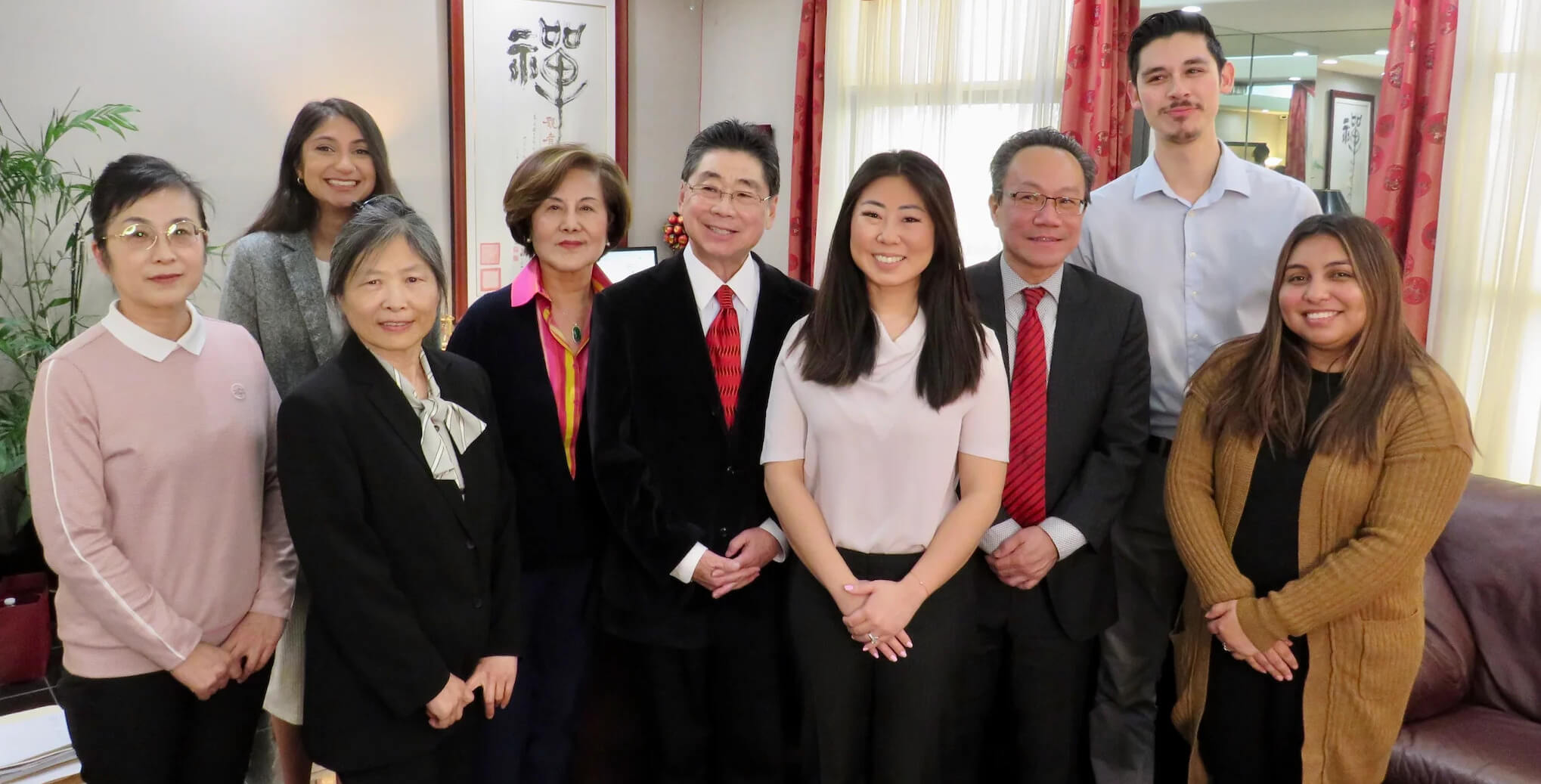

Why Choose Us?

  • Unmatched Expertise

    Trust in Peter Chu's 75+ years of collective experience to guide you through complex immigration matters.

  • Tailored Solutions

    Our personalized strategies adapt to your unique circumstances, ensuring we meet your specific immigration needs.

  • Proven Success

    Benefit from our solid track record in achieving favorable outcomes in various immigration cases across San Diego.

  • Dedicated Service

    Experience our client-first approach that ensures constant support and guidance throughout your immigration journey.

Philadelphia's position as a major academic and research hub — home to the University of Pennsylvania, Temple University, Drexel University, and numerous research institutions — generates significant demand for employment-based immigration counsel, with over 3,200 international researchers and faculty employed across the city's higher education sector in 2024. When an outstanding researcher or professor needs EB-1B outstanding researcher visa philadelphia representation, the difference between approval and a Request for Evidence often comes down to whether the petition was prepared by an attorney who understands USCIS Adjudicator's Field Manual standards for 'outstanding' versus merely 'competent' contributions. Law office of Peter Darwin Chu represents Philadelphia, PA researchers, professors, and institutions throughout the EB-1B petition process — from initial eligibility assessment through permanent residency approval.

Book a Consultation

Law office of Peter Darwin Chu is a Pennsylvania-licensed immigration law firm serving Philadelphia residents — providing EB-1B outstanding researcher and professor visa representation with no annual cap, no labor certification requirement, and direct path to permanent residency for qualifying academics. Our practice focuses exclusively on employment-based immigrant visas, ensuring every EB-1B petition reflects current USCIS policy memo standards and case law interpreting the 'international recognition' and 'outstanding' achievement criteria under INA § 203(b)(1)(B).

EB-1B Attorney Philadelphia Available Across Philadelphia and Surrounding Areas

Law office of Peter Darwin Chu represents clients throughout Philadelphia and the greater Pennsylvania region — including University City, Center City, and Old City (zip codes 17959, 19019, 19092, 19093, and 19099) — as well as researchers and institutions in Bucks, Montgomery, and Delaware counties. All Pennsylvania residents with qualifying academic research positions and institutions sponsoring EB-1B petitions are eligible for representation regardless of county. Our Philadelphia immigration attorney practice serves both petitioning employers and beneficiary researchers navigating the EB-1B outstanding researcher visa process in PA.

What Philadelphia Researchers and Institutions Can Access

EB-1B Eligibility Assessment and Documentation Strategy

We evaluate whether your research record meets the statutory 'outstanding' threshold under INA § 203(b)(1)(B) — analyzing publication citations, peer review roles, awards, and contributions to the field against the three-prong test established in Kazarian v. USCIS. Philadelphia researchers benefit from our institutional knowledge of how USCIS Philadelphia Field Office adjudicators interpret 'international recognition' for candidates from Ivy League versus regional universities. Initial consultations are substantive 60-minute assessments of your citation metrics, authorship positioning, and whether your permanent research position qualifies as 'offered' under 8 CFR § 204.5(i)(3)(iii) — not a brief screening call.

EB-1B Visa Petition Preparation and Filing

We prepare Form I-140 petitions with supporting evidence packages designed to survive the 'totality of the evidence' review standard — including expert opinion letters, citation reports with impact factor analysis, and documentation of your sustained contributions beyond your dissertation. Our Philadelphia EB-1B practice includes representation for both university-sponsored petitions and private research institution cases, with attention to how USCIS interprets 'permanent' research positions under the regulations.

Response to Requests for Evidence (RFE) and Appeals

When USCIS issues an RFE questioning whether your achievements are 'outstanding' or whether your position qualifies as permanent research, we prepare supplemental evidence briefs citing controlling case law — including Matter of Dhanasar standards for 'national or international acclaim' and how circuit court decisions in your jurisdiction interpret the regulatory criteria. Philadelphia-based researchers receive same-week response strategy consultations when RFEs arrive.

Get clear, expert legal guidance tailored to your visa, green card, or citizenship needs.

Licensed Immigration Representation in Philadelphia

Law office of Peter Darwin Chu maintains all required Pennsylvania state and local licenses and complies with American Immigration Lawyers Association (AILA) professional standards. Our practice is governed by Pennsylvania Rules of Professional Conduct and federal immigration representation requirements under 8 CFR § 292.1. Every EB-1B case is handled by a Pennsylvania-licensed attorney with direct experience in employment-based immigrant visa petitions filed with USCIS Philadelphia Field Office and the National Benefits Center. We carry professional liability coverage and maintain client trust accounts in compliance with Pennsylvania bar rules — ensuring your case documents and petition materials are handled under attorney-client privilege throughout the I-140 process.

Inquire now to check if you qualify

What If My University in Philadelphia Says I Don't Have Enough Citations for EB-1B?

Here's the reality: there is no bright-line citation threshold in the EB-1B regulations — USCIS evaluates the 'totality of the evidence' under 8 CFR § 204.5(i)(3)(i), not a citation count. A Philadelphia researcher with 150 citations in a niche field where typical citation counts are lower may demonstrate 'outstanding' achievement more persuasively than a candidate with 500 citations in a high-volume publication field. We analyze your citation metrics against your field's norms, prepare comparative citation reports, and secure expert opinion letters addressing why your contributions represent international recognition. University international offices often apply overly conservative eligibility screens — consulting an immigration attorney directly allows you to obtain an independent assessment before deciding whether to proceed.

What If My Research Position in Philadelphia Is Grant-Funded — Does That Disqualify Me for EB-1B?

Grant-funded positions do not automatically disqualify you, but USCIS scrutinizes whether the position is 'permanent' under 8 CFR § 204.5(i)(3)(iii) — defined as 'either tenured, tenure-track, or a term of indefinite or unlimited duration.' A postdoctoral fellowship or research scientist role funded by a 3-year grant typically does not meet this standard. However, if your Philadelphia institution has provided a commitment letter stating that your position will continue beyond the grant period or has designated your role as continuing indefinitely subject to funding availability, the position may qualify. We review your offer letter, employment contract, and institutional documentation to determine whether your role meets the regulatory definition before advising you to proceed with the petition.

What If I'm Already in Philadelphia on an H-1B — Can I File EB-1B Without Leaving?

Yes — EB-1B petitions are filed as adjustment of status applications if you are physically present in the United States in valid H-1B or another nonimmigrant status. You do not need to return to your home country for consular processing. Philadelphia researchers on H-1B visas benefit from the fact that EB-1B is not subject to annual caps or lottery systems — once your I-140 is approved, you can file Form I-485 (adjustment of status) immediately if you are from a country without visa retrogression. For researchers from countries with backlogged priority dates (India, China), you may need to wait for your priority date to become current, but you retain H-1B work authorization and can extend it indefinitely under the American Competitiveness in the Twenty-First Century Act (AC21) portability provisions.

What If USCIS Issues an RFE Questioning Whether My Research Contributions Are 'Outstanding' in Philadelphia?

RFEs challenging the 'outstanding' standard are common in EB-1B cases and are addressable with targeted supplemental evidence. USCIS adjudicators sometimes conflate 'outstanding' with 'extraordinary' (the EB-1A standard) or fail to recognize that contributions can be outstanding within a specialized subfield rather than the entire academic discipline. In response, we prepare briefs citing Matter of Price and Kazarian v. USCIS — demonstrating that your research meets the three regulatory criteria (sustained international acclaim, recognition for achievements, and a permanent research position) through additional expert letters, citation impact analysis comparing you to tenured faculty in your field, and documentation of how your work influenced subsequent studies. Philadelphia researchers typically receive RFE responses within 10–15 business days of our receiving the notice.

Why Choose an Immigration Attorney Over DIY EB-1B Filing in Philadelphia

Philadelphia researchers considering EB-1B petitions face three primary paths: filing the I-140 petition independently with university HR support, retaining a general practice attorney unfamiliar with immigration case law, or working with an immigration law firm focused on employment-based petitions. Each approach carries distinct trade-offs. Here's the honest answer: EB-1B petitions that fail do so not because the researcher lacks qualifications, but because the petition fails to frame those qualifications using the specific regulatory language and evidentiary standards USCIS adjudicators apply under 8 CFR § 204.5(i). A DIY petition prepared by a university HR office may include all required documents but fail to contextualize citation counts against field norms or address why a non-tenure-track position qualifies as 'permanent' under the regulation — gaps that trigger RFEs and denials. General practice attorneys unfamiliar with the Kazarian two-step analysis or how USCIS interprets 'sustained' acclaim frequently prepare petitions that satisfy Form I-140 instructions but not the substantive legal standards appellate courts have imposed.

ApproachRegulatory ExpertiseRFE Response CapabilityProfessional Assessment
DIY / University HRLimited — follows form instructionsReactive — addresses USCIS questions without legal argumentationRisk: Petition may meet filing requirements but fail substantive legal standards
General Practice AttorneyVariable — immigration may be 5% of practiceDependent on prior EB-1B experienceRisk: Lack of case law fluency in responses to 'outstanding' challenges
Immigration-Focused FirmSpecialized — current on policy memos and circuit precedentProactive — anticipates adjudicator concerns and preempts them in initial filingAdvantage: Higher first-submission approval rate and faster RFE resolution

Get in touch

Frequently Asked Questions

Find answers to common questions about our services

  • Processing timelines for EB-1B petitions filed by Philadelphia institutions vary by USCIS service center — currently ranging from 6 to 12 months for standard processing at the National Benefits Center or Texas Service Center. Premium processing (Form I-90

  • EB-1A (extraordinary ability) and EB-1B (outstanding researcher or professor) are both first-preference employment-based immigrant visa categories, but EB-1A does not require employer sponsorship or a permanent job offer — you petition for yourself. EB-1B

  • Yes — your spouse and unmarried children under 21 are eligible for derivative E-14 and E-15 immigrant visas under your approved EB-1B petition. They file adjustment of status (Form I-485) concurrently with yours or follow-to-join after your green card app

  • No — EB-1B petitions are exempt from the PERM labor certification requirement under INA § 203(b)(1). This exemption eliminates the 12–18 month labor market test that EB-2 and EB-3 petitions require, allowing Philadelphia institutions to file Form I-140 di

  • Under 8 CFR § 204.5(i)(3)(iii), a permanent position is defined as 'either tenured, tenure-track, or a term of indefinite or unlimited duration.' USCIS interprets this strictly — postdoctoral fellowships, grant-funded positions with fixed end dates, and v

  • The EB-1B regulation at 8 CFR § 204.5(i)(3)(i) requires at least two types of evidence from six regulatory categories: major prizes or awards, membership in associations requiring outstanding achievements, published material about your work in professiona

  • Changing employers after I-140 approval but before adjustment of status approval is possible under INA § 204(j) portability, but it requires the new position to be in the 'same or similar occupational classification' as the original EB-1B petition. If you

  • If USCIS denies your I-140, you have three options: file a motion to reconsider or reopen with the same service center (addressing the specific grounds for denial), appeal to the USCIS Administrative Appeals Office (AAO) within 30 days, or withdraw and re

Need Personalized Immigration Guidance?

Law office of Peter Darwin Chu provides EB-1B attorney Philadelphia services for outstanding researchers and professors seeking permanent residency — offering petition preparation, RFE response, and appeals representation with no annual cap delays and direct access to green card processing for qualifying academics in Pennsylvania.

Related Immigration Services for Philadelphia Researchers

Beyond EB-1B outstanding researcher petitions, Philadelphia academics and institutions may benefit from our representation in related employment-based visa categories — including EB-1A Visa for researchers demonstrating extraordinary ability independent of employer sponsorship, EB-2 Visa for advanced degree professionals seeking National Interest Waiver, and O-1 Visa for researchers in temporary nonimmigrant status. We also represent Philadelphia institutions filing H-1B Visa petitions for faculty and researchers in specialty occupations, J-1 Visa Attorney services for exchange visitors, and adjustment of status applications for researchers transitioning from nonimmigrant to permanent residency. For researchers exploring employment-based options beyond academia, review our guidance on EB-1C Visa Law Office for multinational managers and executives, EB-3 Visa for skilled workers, and EB-5 Visa for investor-based permanent residency pathways.

Speak With Us Today