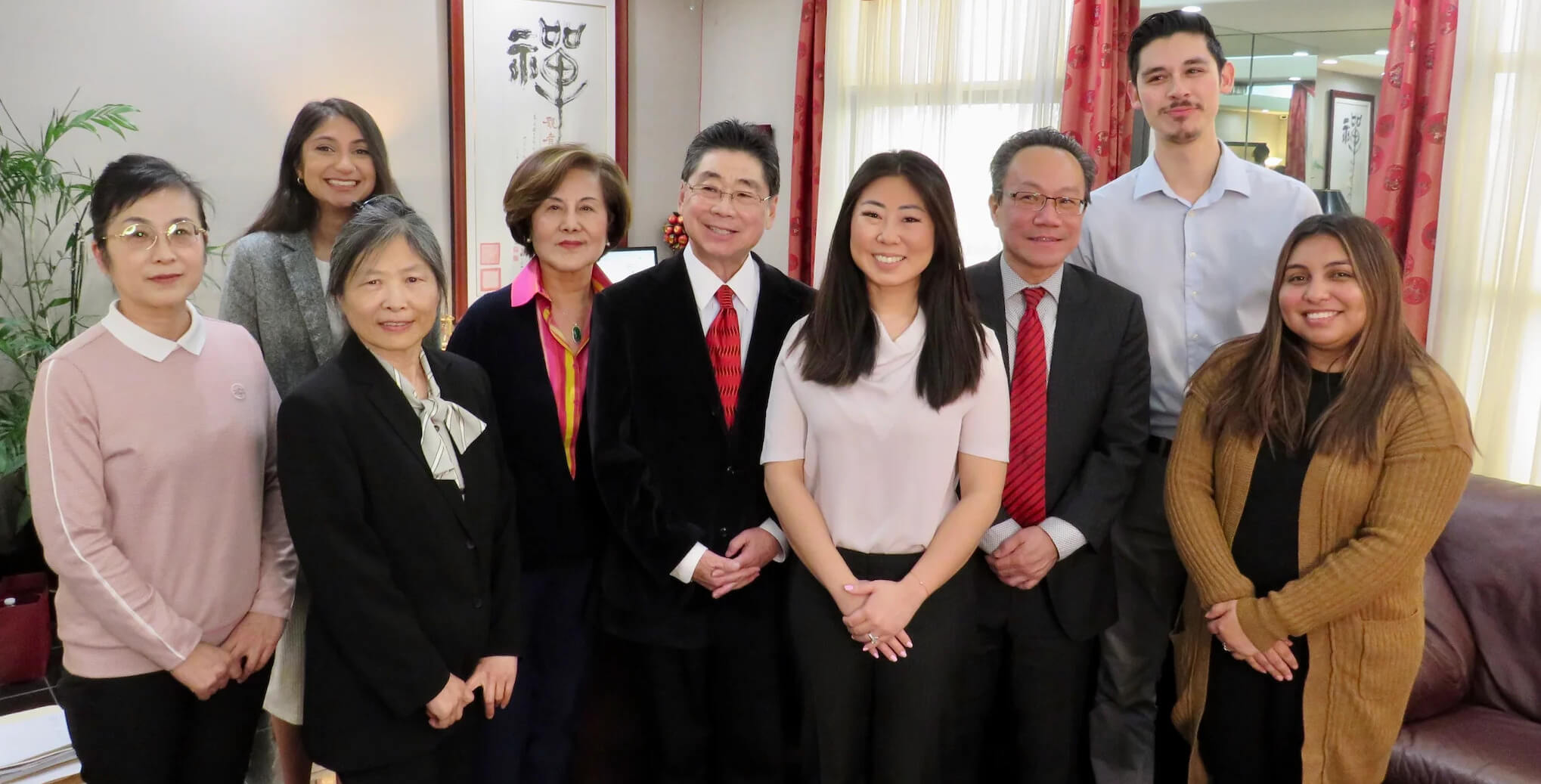

Why Choose Us?

  • Unmatched Expertise

    Trust in Peter Chu's 75+ years of collective experience to guide you through complex immigration matters.

  • Tailored Solutions

    Our personalized strategies adapt to your unique circumstances, ensuring we meet your specific immigration needs.

  • Proven Success

    Benefit from our solid track record in achieving favorable outcomes in various immigration cases across San Diego.

  • Dedicated Service

    Experience our client-first approach that ensures constant support and guidance throughout your immigration journey.

Phoenix's research sector employs over 18,000 professionals across biomedical institutes, aerospace labs, and university research facilities — yet fewer than 12% of qualifying outstanding researchers pursue EB-1B visa status despite meeting the statutory criteria. For Phoenix, AZ residents working in research roles at institutions like Banner Health Research Institute, ASU's Biodesign Institute, or private technology firms, the difference between a 6-year H-1B cycle and permanent residency often comes down to whether you had an eb-1b attorney phoenix reviewing your publication record and citation metrics before USCIS. Law office of Peter Darwin Chu has guided researchers through the EB-1B outstanding researcher classification process, ensuring every petition meets USCIS evidentiary standards.

Book a Consultation

Law office of Peter Darwin Chu is an Arizona-licensed immigration law firm serving Phoenix residents pursuing EB-1B outstanding researcher visa classification — offering case evaluations, petition preparation, and employer compliance guidance with consultations available within one week. We prepare EB-1B petitions that document international recognition through citations, peer review activity, and original scientific contributions as required under 8 CFR 204.5(i)(3)(i).

EB-1B Attorney Phoenix Available Across Phoenix and Surrounding Areas

Law office of Peter Darwin Chu represents researchers throughout Phoenix, AZ and Maricopa County — including professionals working in Central Phoenix, Tempe research corridors, and Scottsdale biotech zones (zip codes 85001, 85002, 85003, 85004, and 85005). We serve all Arizona residents with qualifying research employment at universities, private research institutions, and government laboratories regardless of county location.

What Phoenix Researchers Can Access

EB-1B Petition Preparation and Evidence Development

We prepare comprehensive EB-1B petitions documenting your sustained national or international acclaim through objective evidence required under USCIS policy: citation analysis demonstrating influence in your field, peer review service for scholarly journals or grant agencies, authorship of widely cited publications, and documentation of original scientific or scholarly contributions. Phoenix researchers benefit from our experience translating technical accomplishments into the evidentiary framework USCIS adjudicators require. We coordinate directly with your sponsoring employer to ensure the permanent job offer letter and institutional support documentation meet regulatory standards. This process typically requires 8–12 weeks from initial assessment to filing.

Outstanding Researcher Standard Assessment

Not every researcher with publications qualifies for EB-1B classification. We conduct substantive assessments of whether your record meets the "outstanding" threshold defined in immigration regulation — evaluating citation counts against field norms, the significance of journals where you've published, and the measurability of your original contributions. Our Phoenix EB-1B visa clients receive candid guidance on whether to proceed with an EB-1B petition, strengthen the record before filing, or pursue alternative employment-based classifications like EB-2 National Interest Waiver.

Employer Compliance and Job Offer Documentation

EB-1B petitions require a permanent job offer from a qualified U.S. employer — a university, private research institution, or comparable organization. We advise Phoenix employers on the specific job offer letter requirements, including documentation that the position is permanent (or tenure-track equivalent), that the researcher will continue working in the area of claimed expertise, and that the employer has at least three years of documented research achievements. Employer missteps in offer letter language are a leading cause of EB-1B denials that proper counsel prevents.

Get clear, expert legal guidance tailored to your visa, green card, or citizenship needs.

Licensed Arizona Immigration Practice

Law office of Peter Darwin Chu maintains all required Arizona state and local licenses and operates under the professional responsibility standards of the Arizona State Bar and American Immigration Lawyers Association (AILA) ethical guidelines. We carry professional liability coverage and maintain client trust accounts in compliance with Arizona Rules of Professional Conduct governing attorney-client relationships. Every EB-1B petition we file includes a written fee agreement disclosing the scope of representation, anticipated costs, and government filing fees before engagement begins.

Inquire now to check if you qualify

What If My Research Is in a Niche Field With Limited Citation Opportunities in Phoenix?

Here's the reality: USCIS does not compare your citations to researchers in unrelated fields — they compare you to others in your specific specialty. If you work in a narrow subfield where publication volumes are inherently lower, we present your citation metrics in context through expert opinion letters from established researchers in your discipline who can attest that your citation rate is exceptional relative to the field norm. Phoenix researchers in emerging areas like desert ecology, solar materials science, or regional epidemiology can qualify for EB-1B status when the petition properly contextualizes the citation data. The burden is on the petitioner to establish the comparison framework, not on USCIS to investigate it.

What If I Haven't Published as First Author — Can I Still Qualify for EB-1B in Phoenix?

Yes, though first-author publications strengthen any EB-1B petition. USCIS evaluates the significance of your contributions, not just authorship position. If you are a co-author on high-impact publications that have garnered substantial citations, and you can document your specific role in the research (through co-author declarations, lab protocols bearing your name, or grant applications listing you as key personnel), you may still meet the outstanding researcher standard. Phoenix-based researchers in collaborative fields like genomics, clinical trials, or physics often qualify despite shared authorship. We prepare petitions that isolate and highlight your individual contributions within team-based research.

What If My Employer Is a Private Company, Not a University — Does That Disqualify Me for EB-1B in Phoenix?

No. Private companies qualify as EB-1B sponsoring employers if they meet the statutory definition of a research institution: they must employ at least three full-time researchers and have documented achievements in research. Phoenix technology firms, pharmaceutical companies, and aerospace contractors regularly sponsor EB-1B petitions for their research staff. The burden is on the employer to prove they meet the threshold through organizational charts, research publications or patents bearing the company name, and evidence of at least three years of research activity. We assist employers in compiling this institutional evidence as part of the petition package.

What If I'm Currently on an H-1B — Can I File EB-1B Without Losing My Current Status in Phoenix?

Absolutely. Filing an EB-1B petition does not affect your current H-1B status, and you can continue working under H-1B authorization while the EB-1B is pending. If the EB-1B is approved and a visa number is immediately available (which is typical for EB-1 cases, as they are not subject to per-country caps in most years), you can file for adjustment of status to permanent residence without leaving Phoenix. Many of our clients maintain H-1B status throughout the EB-1B process and transition to lawful permanent resident status once the adjustment application is approved.

Why Phoenix Researchers Choose Law office of Peter Darwin Chu Over General Immigration Firms

Phoenix has no shortage of immigration attorneys, but most practices handle high-volume family-based petitions and citizenship applications rather than employment-based cases requiring technical expertise. Here's the honest answer: an EB-1B petition is not a form-filling exercise — it's a persuasive brief that must establish you meet a statutory standard through objective, third-party evidence. Generalist firms often treat EB-1B cases as they would H-1B petitions, submitting minimal documentation and generic recommendation letters that fail to address the "outstanding" threshold or the evidentiary criteria in USCIS policy. The result is either an RFE (Request for Evidence) that delays adjudication by 4–6 months or an outright denial that wastes the filing fee and the employer's sponsorship.

Get in touch

ApproachGeneral Immigration FirmDIY PetitionLaw office of Peter Darwin ChuProfessional Assessment (Bottom Line)
Citation AnalysisGeneric statement of total citationsSelf-reported counts without field contextField-normalized analysis with expert validationOnly contextualized citation data persuades adjudicators who lack subject-matter expertise
Evidence StrategySubmits whatever client providesGuesses at what's requiredTailored to specific regulatory criteria (peer review, authorship, contributions)EB-1B has six evidence categories — petition must address at least two with documentary proof
Employer CoordinationMinimal — assumes employer knows requirementsNone — employer left out entirelyDirect collaboration on job offer and institutional documentationEmployer documentation errors are the #1 preventable denial reason
Timeline TransparencyVague "several months" estimateNo understanding of USCIS processingHonest 8–12 week prep time, current processing estimates providedUnrealistic timelines lead to missed job start dates and visa gaps

Frequently Asked Questions

Find answers to common questions about our services

  • Petition preparation typically requires 8–12 weeks from the initial consultation to USCIS filing, depending on the complexity of your research record and the speed with which your employer provides institutional documentation. This timeline includes our e

  • Attorney fees for EB-1B petition preparation typically range from $8,000 to $15,000 depending on case complexity, the extent of evidence development required, and whether the employer needs guidance on institutional documentation. This fee covers the lega

  • Yes. If you are abroad, your U.S. employer files the EB-1B petition (Form I-140) on your behalf while you remain overseas. Once approved, you apply for an immigrant visa at a U.S. consulate in your home country through consular processing, then enter the

  • EB-1A (extraordinary ability) and EB-1B (outstanding researcher) are both first-preference employment-based immigrant visa categories, but they have distinct requirements. EB-1A does not require employer sponsorship or a job offer — you petition for yours

  • No. USCIS does not require a PhD for EB-1B classification, though most successful petitioners hold doctoral degrees because the 'outstanding researcher' standard is high. The regulation requires 'at least three years of experience in teaching or research'

  • If USCIS denies your EB-1B petition, you have several options. You can file a motion to reopen or reconsider if you believe USCIS made a legal or factual error in evaluating the evidence. Alternatively, you can file a new petition with additional evidence

  • USCIS does not specify a required number of recommendation letters for EB-1B petitions, but strong petitions typically include 4–6 letters from recognized experts in your field. At least half should be independent letters — from researchers or professors

  • Yes, though they are typically supporting evidence rather than primary evidence. USCIS evaluates EB-1B petitions based on at least two of six regulatory criteria, the most common being: authorship of scholarly articles, evidence that your work has been ci

Need Personalized Immigration Guidance?

Law office of Peter Darwin Chu provides eb-1b attorney phoenix services to outstanding researchers across Phoenix, AZ through comprehensive petition preparation, citation analysis, and employer compliance guidance — with case evaluations conducted within one week and transparent fee structures disclosed before engagement.

Researchers in Phoenix pursuing other employment-based visa classifications may benefit from reviewing our Eb-1a Visa guidance for extraordinary ability petitions, which do not require employer sponsorship, or our Eb-2 Visa resources for advanced degree professionals pursuing National Interest Waiver. Phoenix professionals on temporary status can explore our H-1b Visa Guidance for specialty occupation work authorization or consult our O-1 Visa Guidance page for researchers with extraordinary ability in sciences. Additional resources include Eb-1b Visa Los Angeles, Eb-1b Visa Long Beach, Eb-1b Visa Anaheim, and Eb-1b Visa for comprehensive EB-1B information.

Speak With Us Today