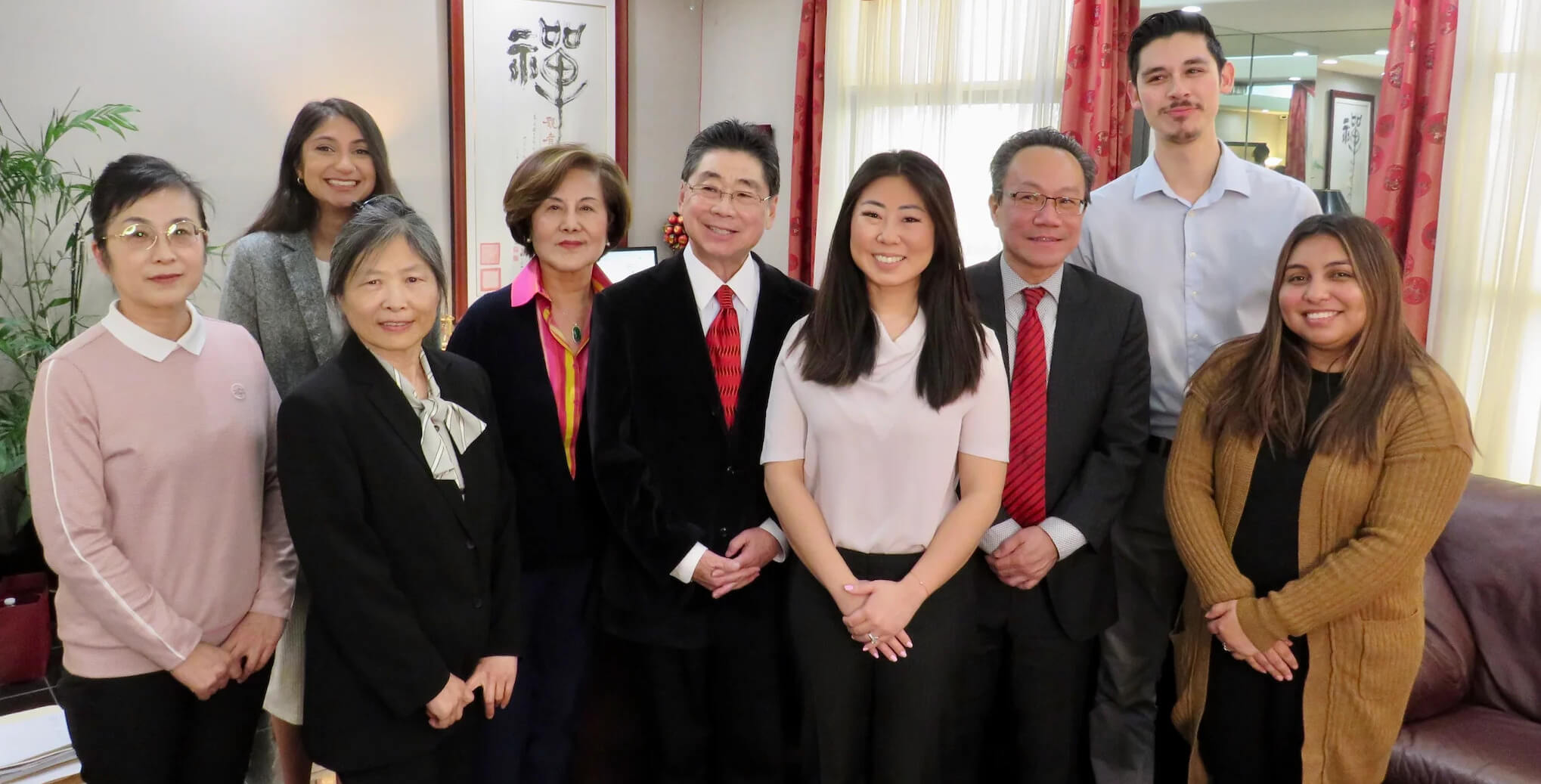

Why Choose Us?

  • Unmatched Expertise

    Trust in Peter Chu's 75+ years of collective experience to guide you through complex immigration matters.

  • Tailored Solutions

    Our personalized strategies adapt to your unique circumstances, ensuring we meet your specific immigration needs.

  • Proven Success

    Benefit from our solid track record in achieving favorable outcomes in various immigration cases across San Diego.

  • Dedicated Service

    Experience our client-first approach that ensures constant support and guidance throughout your immigration journey.

Pittsburgh's research institutions — including Carnegie Mellon University, the University of Pittsburgh, and UPMC — employ over 18,000 researchers across biotechnology, robotics, and medical science, making the region one of the nation's top destinations for international scholars seeking EB-1B outstanding researcher visa classification. Researchers and academic institutions in Pittsburgh, PA require specialized immigration counsel familiar with USCIS evidentiary standards for demonstrating international recognition in a specific academic field — standards that differ materially from EB-1A extraordinary ability petitions. Law office of Peter Darwin Chu represents Pittsburgh-based researchers, universities, and research institutions through every stage of the EB-1B petition process, from initial eligibility assessment through USCIS adjudication and permanent residency approval.

Book a Consultation

Law office of Peter Darwin Chu is a Pennsylvania-licensed immigration law firm serving Pittsburgh researchers and academic institutions with EB-1B outstanding researcher visa petitions — including eligibility analysis, evidence compilation, and USCIS petition filing with no priority date backlog. EB-1B classification allows researchers with at least three years of documented international recognition to apply for permanent residency through employer sponsorship without labor certification, making it the fastest employment-based green card pathway for qualifying academics.

EB-1B Attorney Pittsburgh Available Across Pittsburgh and Surrounding Areas

Law office of Peter Darwin Chu represents clients throughout Pittsburgh, PA and Allegheny County — including Oakland, Shadyside, Squirrel Hill, the North Side, and Downtown Pittsburgh (zip codes 15112, 15201, 15202, 15203, 15204) — as well as researchers employed by institutions across Western Pennsylvania. All Pennsylvania residents with qualifying EB-1B cases are eligible for representation regardless of county, and we regularly work with research institutions, universities, and medical centers statewide to prepare petitions for international scholars in tenure-track and permanent research positions.

What Pittsburgh Researchers and Academic Institutions Can Access

EB-1B Eligibility Assessment and Case Strategy

Not every researcher with international publications qualifies for EB-1B classification — USCIS requires evidence of sustained international recognition, not merely competence in a specialized field. Law office of Peter Darwin Chu conducts substantive eligibility assessments that evaluate your publication record, citation metrics, peer review history, and authorship contributions against the specific evidentiary criteria outlined in 8 CFR 204.5(i)(3)(i). Pittsburgh researchers benefit from counsel familiar with the distinction between 'outstanding' and 'extraordinary' thresholds and how adjudicators evaluate evidence in fields ranging from computer science to translational medicine. EB-1B Visa cases demand precision — we tell you honestly whether your record supports a petition before you invest in the process.

Evidence Compilation and Institutional Coordination

EB-1B petitions require employer sponsorship and a permanent job offer — meaning your university or research institution is the petitioner, not you individually. Law office of Peter Darwin Chu coordinates directly with Pittsburgh-area HR departments, sponsored programs offices, and department chairs to draft the required job offer letter, document the permanency of the position, and compile letters of recommendation from independent experts who can attest to your international recognition. We prepare detailed legal briefs that contextualize your citation metrics, editorial board memberships, and conference presentations within USCIS standards, ensuring the petition demonstrates sustained acclaim rather than routine academic productivity.

USCIS Petition Filing and Adjudication Management

EB-1B petitions filed through USCIS Service Centers in 2026 average 4–6 months for standard processing, with premium processing available for 15-day adjudication at an additional government fee. Law office of Peter Darwin Chu files Form I-140 petitions with comprehensive evidence indexes, detailed cover letters, and preemptive responses to common Requests for Evidence specific to your academic discipline. Pittsburgh researchers working under H-1B, O-1, or J-1 status receive coordinated advice on maintaining lawful status during adjudication and transitioning to permanent residency upon approval.

Get clear, expert legal guidance tailored to your visa, green card, or citizenship needs.

Licensed Pennsylvania Immigration Counsel You Can Trust

Law office of Peter Darwin Chu maintains active licensure with the Pennsylvania Bar and operates in full compliance with American Immigration Lawyers Association (AILA) standards and U.S. Department of Justice regulations governing immigration practice. EB-1B petitions are complex federal filings governed by the Immigration and Nationality Act Section 203(b)(1)(B) and adjudicated under standards published in the USCIS Policy Manual Volume 6, Part F — we ensure every petition adheres to current regulatory interpretation and case law. Pittsburgh researchers and academic institutions benefit from counsel familiar with Pennsylvania's research ecosystem, USCIS Nebraska and Texas Service Center adjudication patterns, and the evidentiary expectations specific to science, technology, engineering, and medical disciplines.

Inquire now to check if you qualify

What If I Have Strong Publications But Limited Citation Counts — Can I Still Qualify for EB-1B in Pittsburgh?

Citation metrics are persuasive evidence of international recognition but are not the sole determinant — USCIS evaluates the totality of your scholarly contributions. If your research appears in top-tier journals, you serve as a peer reviewer for competitive publications, or you hold editorial board positions, these factors can compensate for moderate citation counts, particularly in emerging or highly specialized fields. Pittsburgh researchers in niche disciplines benefit from legal briefs that contextualize citation benchmarks within your specific academic community and demonstrate sustained acclaim through alternative evidence such as invited lectureships, grant funding as principal investigator, or authorship of chapters in authoritative texts. The key question is whether your record demonstrates that you are recognized internationally as outstanding — not merely competent — in your area of expertise.

What If My Pittsburgh Employer Is Not Familiar With EB-1B Sponsorship — How Does the Process Work?

Many Pittsburgh research institutions sponsor EB-1B petitions for the first time and require guidance on employer obligations, which are less burdensome than PERM labor certification but still require specific documentation. Your employer must provide a permanent job offer letter specifying that the position is permanent or tenure-track (not postdoctoral or term-limited), describe the research duties in detail, and confirm they will continue to employ you in a research capacity upon green card approval. Law office of Peter Darwin Chu coordinates directly with your university's Office of Sponsored Programs or HR immigration coordinator to draft compliant offer letters, obtain institutional signatures, and explain the employer's limited financial obligation (primarily the USCIS filing fee, which ranges from $700–$1,000 depending on employer size). The institution does not undergo labor market testing, wage determination, or recruitment — making EB-1B significantly less complex than PERM-based green card sponsorship.

What If I Am Currently on a J-1 Visa With a Two-Year Home Residency Requirement — Can I Still Pursue EB-1B in Pittsburgh?

Yes, you can file an EB-1B petition while subject to the J-1 two-year home residency requirement — but you cannot adjust status to permanent residency in the United States until the requirement is satisfied or waived. Pittsburgh researchers in this situation typically pursue one of two paths: (1) file the EB-1B petition now to lock in your eligibility and priority date, then fulfill the two-year requirement abroad or obtain a waiver before adjusting status, or (2) apply for a J-1 waiver through the Conrad 30 program, interested government agency pathway, or hardship procedure before initiating the EB-1B process. Law office of Peter Darwin Chu evaluates your J-1 waiver eligibility as part of the initial EB-1B consultation and coordinates timing to ensure your green card petition proceeds without unnecessary delay once your requirement is resolved.

What If My Research Position in Pittsburgh Is Funded by a Grant That Expires — Does That Disqualify Me From EB-1B?

Grant-funded positions can support EB-1B petitions if the employer can demonstrate a reasonable expectation of continued employment beyond the current grant cycle — either through institutional bridge funding, tenure-track transition, or a history of renewed grant support. USCIS requires the job offer to be 'permanent' or 'indefinite,' which does not mean guaranteed lifetime employment but does mean the position is not inherently temporary or contingent on a single funding source. Pittsburgh researchers whose institutions provide letters confirming intent to retain them in a research capacity — citing departmental funding, endowment support, or institutional commitment to the research program — satisfy this requirement even when the current salary line is grant-supported. Law office of Peter Darwin Chu works with your employer to draft offer letters that address funding concerns preemptively and demonstrate the permanency of your role within the institution's research mission.

Why Pittsburgh Researchers Choose Specialized EB-1B Counsel Over General Immigration Firms

Pittsburgh-area researchers evaluating EB-1B representation face a choice between general immigration practitioners, large-volume green card mills, and attorneys with dedicated employment-based immigrant visa experience. General immigration firms may handle EB-1B petitions as occasional matters alongside family-based cases, asylum applications, and naturalization filings — resulting in less familiarity with the specific evidentiary standards for demonstrating international recognition in academic research. Large-volume firms process hundreds of cases monthly but often rely on paralegals to compile evidence and template legal briefs, missing opportunities to craft persuasive narratives tailored to your discipline's norms for citation metrics, publication venues, and peer recognition. Here's the honest answer: EB-1B petitions require counsel who understand both USCIS adjudication standards and the substance of academic scholarship — someone who can explain why your h-index matters in your field, why authorship order conventions differ across disciplines, and how to contextualize editorial board service when the journal is highly selective but not yet indexed in Web of Science. Law office of Peter Darwin Chu represents researchers, not visa applicants generically, and our case strategy reflects that focus.

FactorGeneral Immigration FirmHigh-Volume Green Card MillSpecialized EB-1B CounselProfessional Assessment
EB-1B Case VolumeOccasionalHigh volume, template-drivenFocused practice areaSpecialization reduces error and increases approval rates
Evidence EvaluationSurface reviewChecklist complianceDiscipline-specific analysisCounsel must understand academic norms to argue persuasively
Institutional CoordinationLimitedDelegated to clientDirect attorney involvementEmployer cooperation determines petition quality
Legal Brief QualityStandard templateMinimal narrativeCustomized argumentationUSCIS adjudicators respond to context, not bullet points

Get in touch

Frequently Asked Questions

Find answers to common questions about our services

  • EB-1B petition adjudication through USCIS Service Centers averages 4–6 months for standard processing in 2026, with premium processing available for 15-day decisions at an additional $2,805 government fee. Once the I-140 petition is approved, Pittsburgh r

  • EB-1A classification requires 'extraordinary ability' and allows self-petitioning without employer sponsorship, while EB-1B requires 'outstanding' achievement (a lower standard) but mandates employer sponsorship and a permanent job offer. Pittsburgh resea

  • Postdoctoral positions are typically term-limited appointments and do not satisfy the 'permanent job offer' requirement for EB-1B classification. However, if your Pittsburgh institution offers a tenure-track faculty appointment, permanent research scienti

  • USCIS requires at least two of the following six criteria: authorship of scholarly articles, judging the work of others (peer review), original contributions of major significance, participation in a display of work, membership in associations requiring o

  • Attorney fees for EB-1B petition preparation and filing in Pittsburgh typically range from $8,000 to $15,000 depending on case complexity, evidence volume, and whether the petition requires coordination with multiple institutional departments. This fee co

  • If USCIS denies your EB-1B petition, you receive a written decision explaining the deficiencies in your evidence or why your record did not satisfy the regulatory criteria. You have three options: (1) file a motion to reopen or reconsider with additional

  • Yes, EB-1B classification is available to researchers employed by private companies, not just universities — provided the employer has at least three full-time researchers and a documented history of research achievements. Pittsburgh-based pharmaceutical

  • No, EB-1B outstanding researcher classification is exempt from the PERM labor certification process, which requires employers to test the U.S. labor market and prove no qualified U.S. workers are available. This exemption makes EB-1B significantly faster

Need Personalized Immigration Guidance?

Law office of Peter Darwin Chu provides EB-1B attorney services to Pittsburgh researchers and Pennsylvania academic institutions through personalized petition strategy, employer coordination, and USCIS filing with expertise in outstanding researcher classification standards.

Related Immigration Services for Pittsburgh Researchers and Professionals

Pittsburgh-area researchers may also benefit from our EB-1A Visa representation for individuals with extraordinary ability who do not require employer sponsorship, EB-2 Visa services for advanced degree professionals pursuing PERM labor certification, and O-1 Visa counsel for temporary work authorization in research or academic roles. We represent clients across Los Angeles (EB-1B Visa Los Angeles), Long Beach (EB-1B Visa Long Beach), Anaheim (EB-1B Visa Anaheim), and Riverside (EB-1B Visa Riverside) for outstanding researcher petitions and employment-based immigration matters. For researchers transitioning from nonimmigrant status, our H-1B Visa and J-1 Visa Attorney services provide coordinated advice on maintaining lawful status during green card processing.

Speak With Us Today