
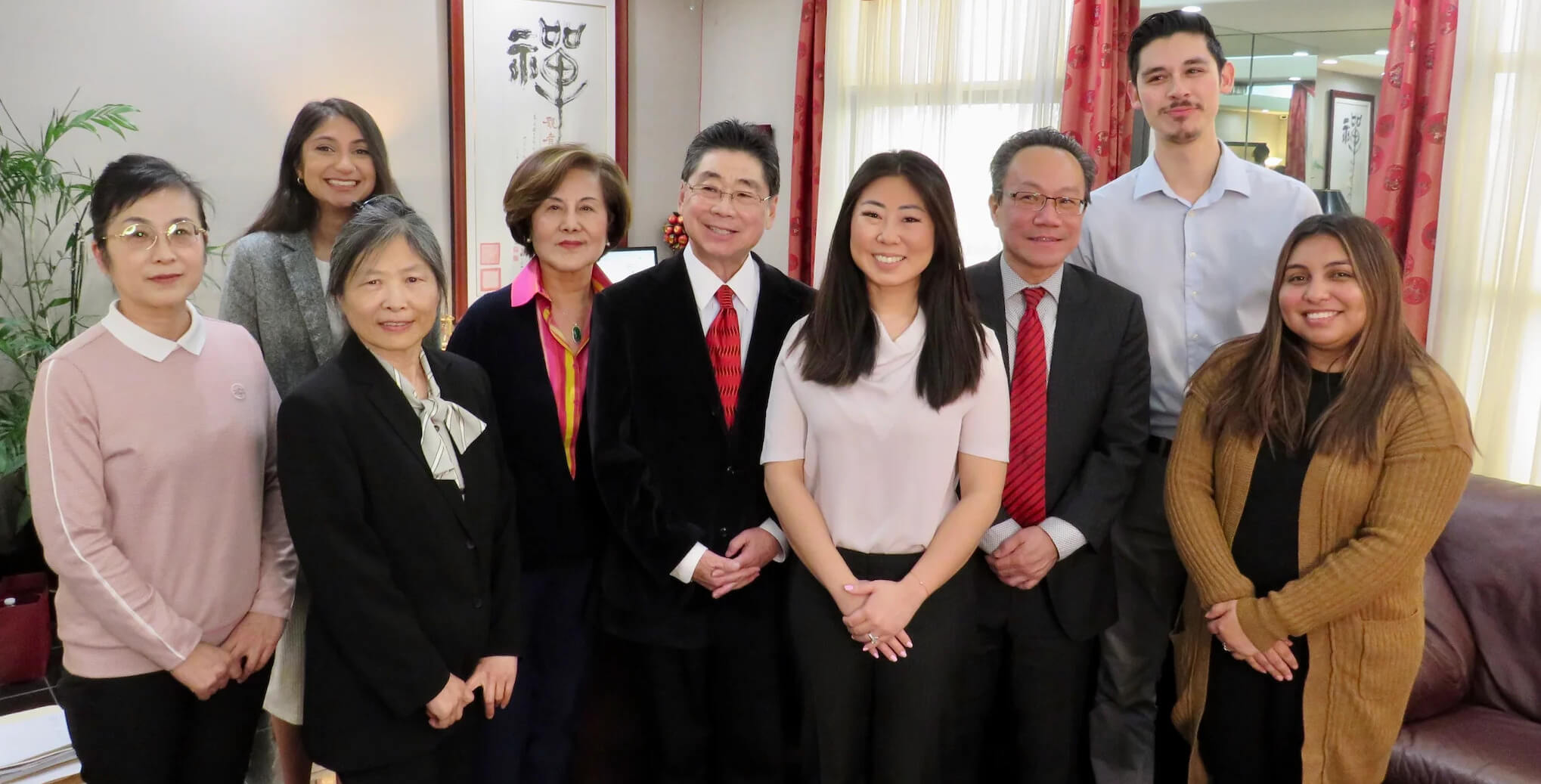
Why Choose Us?
-

Unmatched Expertise
Trust in Peter Chu's 75+ years of collective experience to guide you through complex immigration matters.
-

Tailored Solutions
Our personalized strategies adapt to your unique circumstances, ensuring we meet your specific immigration needs.
-

Proven Success
Benefit from our solid track record in achieving favorable outcomes in various immigration cases across San Diego.
-

Dedicated Service
Experience our client-first approach that ensures constant support and guidance throughout your immigration journey.


Get clear, expert legal guidance tailored to your visa, green card, or citizenship needs.

Inquire now to check if you qualify
Why Choose the Law Office of Peter Darwin Chu Over Other EB-1B Options
Researchers pursuing EB-1B petitions in Redwood City face three common paths: employer in-house counsel handling the case as part of a broader immigration portfolio, boutique immigration firms without deep EB-1B experience, or attorneys with specific expertise in employment-based preference categories for researchers. Here's the honest answer: in-house corporate counsel often lack bandwidth to craft the evidentiary narrative required for marginal EB-1B cases — they file strong cases well, but struggle when citation counts are borderline or employer documentation is thin. General immigration practices treat EB-1B as one of dozens of visa types, missing the field-specific judgment calls around citation benchmarks, journal impact factors, and how to frame computational versus experimental research contributions.
| Approach | Petition Quality | Employer Coordination | Professional Assessment |
|---|---|---|---|
| Corporate In-House Counsel | Template-driven; struggles with marginal cases | Limited; competes with other corporate priorities | Best for clear-cut cases with Fortune 500 employers; insufficient for borderline evidence profiles |
| General Immigration Firm | Lacks field-specific benchmarks for research impact | Minimal; treats employer as passive petitioner | Adequate for straightforward filings; weak on RFE responses requiring scientific context |
| EB-1B Focused Practice (Law Office of Peter Darwin Chu) | Evidence structured around field norms and case law; narrative addresses USCIS objections preemptively | Direct collaboration with HR and research leadership to document qualifying status | Required standard when citation metrics are below obvious thresholds or employer lacks clear research track record |
| DIY Filing | Frequently omits critical regulatory criteria or misframes evidence | None — researcher and employer navigate independently | High RFE risk; only viable for candidates with extraordinary metrics and large institutional employers with experienced HR |
The single largest driver of EB-1B success is whether the initial petition anticipates and addresses the adjudicator's predictable questions: Is this researcher's work cited outside their immediate research group? Does the employer genuinely conduct ongoing research, or is this a one-time project? Is the position structured as permanent, or does it terminate when the current grant expires? Petitions that answer these questions with documentary evidence in the initial filing avoid RFEs; those that do not face months of delay and risk denial.
Frequently Asked Questions
Find answers to common questions about our services
-
USCIS processing times for EB-1B I-140 petitions filed at the California Service Center currently average 4.5 to 7.5 months for regular processing. Premium processing (15-day adjudication) is available for an additional $2,805 fee and is frequently used b
-
USCIS does not publish a minimum citation threshold — the standard is 'international recognition' relative to your field. In computational biology and bioinformatics (common in Redwood City biotech), citation benchmarks vary widely by subfield: machine le
-
Yes — the EB-1B regulation requires a qualifying employer and a permanent research position, but does not mandate a specific work location. Many Redwood City biotech firms employ remote computational researchers, bioinformaticians, and data scientists who
-
EB-1B requires employer sponsorship, a permanent research position offer, and evidence meeting two out of six regulatory criteria focused on research contributions. EB-1A is a self-petition (no employer required) demanding evidence meeting three out of te
-
A denial triggers a 33-day window to file a motion to reopen, a motion to reconsider, or an appeal to the USCIS Administrative Appeals Office. Motions to reopen introduce new evidence not available at initial filing; motions to reconsider argue the decisi
-
No — EB-1B is exempt from PERM labor certification, which is a significant advantage over EB-2 and EB-3 categories. Labor certification requires the employer to test the U.S. labor market through recruitment, obtain a prevailing wage determination, and de
-
USCIS evaluates international recognition within your specific field — not against unrelated disciplines. If you work in a highly specialized therapeutic area, rare disease research, or emerging computational method with a small global research community,
-
Yes — once your I-140 EB-1B petition is approved and you file for adjustment of status (Form I-485), your spouse can simultaneously file I-485 and request an Employment Authorization Document. The EAD typically arrives 3 to 5 months after filing and grant
Need Personalized Immigration Guidance?

