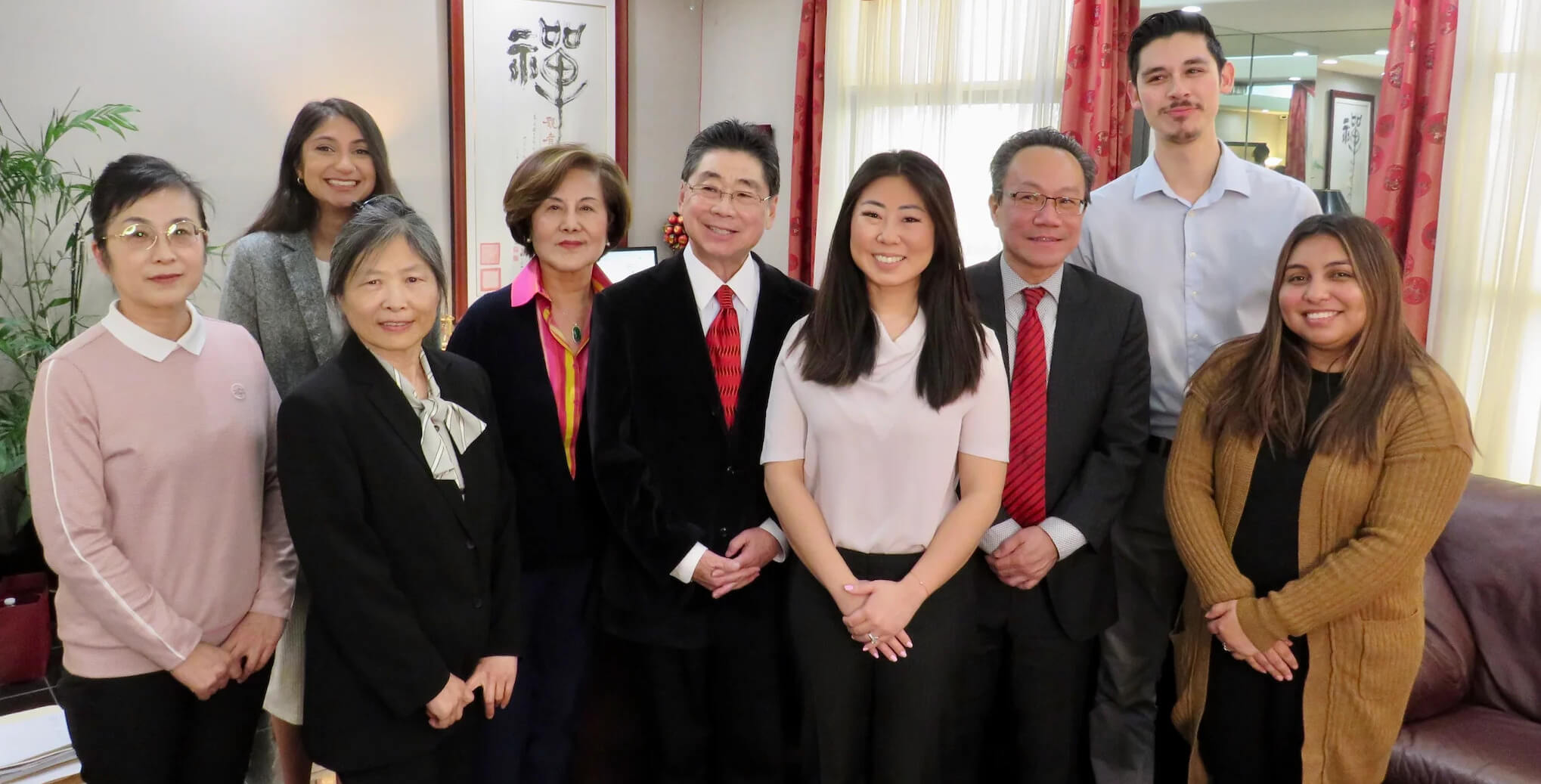

Why Choose Us?

  • Unmatched Expertise

    Trust in Peter Chu's 75+ years of collective experience to guide you through complex immigration matters.

  • Tailored Solutions

    Our personalized strategies adapt to your unique circumstances, ensuring we meet your specific immigration needs.

  • Proven Success

    Benefit from our solid track record in achieving favorable outcomes in various immigration cases across San Diego.

  • Dedicated Service

    Experience our client-first approach that ensures constant support and guidance throughout your immigration journey.

Santa Ana, CA is home to over 310,000 residents and serves as the county seat of Orange County — a region with one of the highest concentrations of research universities, biotech firms, and technology employers in Southern California. For research professionals seeking EB-1B outstanding researcher visa classification, the difference between approval and a Request for Evidence often comes down to how your petition frames institutional recognition, published work impact, and original scientific contribution under the specific standards of 8 CFR 204.5(i)(3)(i). Law office of Peter Darwin Chu has guided researchers, professors, and institutional sponsors through the EB-1B process across Orange County and understands the evidentiary standards USCIS applies to academic and private-sector research positions.

Book a Consultation

Law office of Peter Darwin Chu is a California-licensed immigration law firm serving Santa Ana residents with EB-1B outstanding researcher visa petitions — including petition drafting, employer sponsorship coordination, and evidence compilation for researchers in academic institutions and private research companies. We provide substantive case assessments that evaluate your publication record, citation metrics, and institutional support letters before filing, ensuring your petition meets the two-criterion minimum required under 8 CFR 204.5(i)(3)(i).

EB-1B Attorney Santa Ana Available Across Santa Ana and Surrounding Areas

Law office of Peter Darwin Chu represents EB-1B petitioners throughout Santa Ana, CA — including professionals in zip codes 92701, 92702, 92703, 92704, and 92705 — as well as researchers affiliated with institutions across Orange County. Whether your sponsoring employer is a university research center, a biotechnology laboratory, or a private-sector R&D division, all California residents and employees of qualifying research institutions are eligible for representation.

What Santa Ana EB-1B Petitioners Can Access

EB-1B Petition Drafting and Evidence Strategy

The EB-1B classification requires demonstrating international recognition for outstanding achievements in a specific academic field — proven through at least two of six regulatory criteria including authorship of scholarly articles, membership in associations requiring outstanding achievement, and evidence of original contributions of major significance. We compile your publication record, citation analysis, peer review documentation, and institutional letters into a structured legal brief that directly addresses each selected criterion under 8 CFR 204.5(i)(3)(i). Santa Ana researchers in fields ranging from biomedical engineering to computational chemistry benefit from counsel familiar with USCIS's evolving interpretation of 'outstanding' and 'international recognition' following recent Administrative Appeals Office precedent decisions.

EB-1B Visa Guidance

Our core EB-1B service includes full petition preparation, Labor Condition Application coordination with your employer, and response strategy for Requests for Evidence — particularly those challenging whether your contributions constitute 'major significance' or whether citation metrics demonstrate true international recognition. Consultations include an assessment of alternative visa classifications if your evidence profile better fits EB-1A extraordinary ability or EB-2 National Interest Waiver standards.

Employer Sponsorship Coordination and Institutional Letter Development

Unlike EB-1A, the EB-1B requires a U.S. employer offer of permanent employment in your field — which means coordinating with your university department, research lab, or corporate sponsor to draft a compliant job offer letter and institutional support statement. We work directly with HR departments and research directors to ensure letters address the regulatory requirements: permanent position, minimum three years of research experience, and international recognition in the academic field. Researchers transitioning from postdoctoral fellowships to tenure-track positions in Orange County institutions particularly benefit from proactive coordination before the job offer is finalized.

Get clear, expert legal guidance tailored to your visa, green card, or citizenship needs.

Licensed Immigration Counsel Serving Santa Ana Researchers

Law office of Peter Darwin Chu is licensed to practice immigration law in California and maintains compliance with all State Bar of California professional responsibility requirements governing client trust accounts, conflict screening, and immigration advertising disclosures. Our EB-1B practice is built on substantive case evaluation — every consultation includes a detailed review of your CV, publication list, and citation record before we recommend filing, ensuring we only advance petitions with genuine evidentiary support. We do not guarantee approvals — we guarantee honest assessment of whether your research record meets USCIS standards before you invest filing fees.

Inquire now to check if you qualify

What If My Research Institution in Santa Ana Is Private-Sector — Can I Still Qualify for EB-1B?

Yes — the EB-1B classification is available to researchers employed by private companies, not just universities. The regulatory requirement under 8 CFR 204.5(i)(2) is that the employer be a 'university or institution of higher education,' 'a private employer' with at least three full-time researchers and documented research achievements, or a 'department, division, or institute of a private employer' meeting the same standards. Many biotechnology firms, pharmaceutical research labs, and technology companies in Orange County qualify as sponsoring employers if they employ at least three full-time researchers and can document recognized research accomplishments. We evaluate your employer's eligibility as part of the initial case assessment.

What If I Have Strong Publications but Limited Citation Count — Will My EB-1B Petition in Santa Ana Succeed?

Citation metrics are persuasive evidence of international recognition, but they are not the only pathway to approval. USCIS evaluates EB-1B petitions holistically across the six regulatory criteria — you need to satisfy only two. If your citation count is modest, we structure the petition around alternative evidence: authorship of scholarly articles in high-impact journals, membership in selective professional associations, participation as a peer reviewer for major journals, or evidence that your work has been implemented or adopted by other researchers. Santa Ana petitioners in emerging fields or niche specialties often succeed by demonstrating depth of contribution rather than breadth of citations.

What If I Am Currently on an H-1B — Can I File EB-1B While Working in Santa Ana?

Yes — filing an EB-1B petition does not require you to change your current nonimmigrant status, and H-1B holders commonly file employment-based green card petitions while maintaining H-1B status. Because the EB-1B is an employment-based first preference category, it is not subject to the Department of Labor PERM labor certification process required for EB-2 and EB-3 petitions, which significantly shortens the timeline from petition to green card. Once your I-140 petition is approved, you can file for adjustment of status (Form I-485) immediately if you are from a country without visa bulletin retrogression, or wait for your priority date to become current if you are from India or China.

What If USCIS Issues a Request for Evidence on My Santa Ana EB-1B Petition — What Happens Next?

A Request for Evidence (RFE) is not a denial — it is an opportunity to supplement your petition with additional documentation addressing USCIS's specific concerns. Common RFE issues in EB-1B cases include insufficient evidence of international recognition, unclear demonstration of 'original contributions of major significance,' or questions about whether the employer qualifies as a research institution. We respond to RFEs by obtaining additional expert letters, compiling citation analyses, clarifying the job offer permanence, or reframing existing evidence to directly address the examiner's stated concerns. The response deadline is typically 87 days from the RFE issuance date, and a well-constructed response often results in approval without further inquiry.

Why Santa Ana Researchers Choose Law Office of Peter Darwin Chu Over Generic Immigration Mills

EB-1B petitions are not form-processing exercises — they are evidentiary arguments. When evaluating representation options, researchers compare three categories: high-volume immigration firms that treat EB-1B as a checklist, solo practitioners without experience in academic credential evaluation, and specialized counsel with substantive research visa experience. Here's the honest answer: generic immigration firms often misapply the 'outstanding' standard by submitting weak evidence packages that result in RFEs or denials, costing you months of processing time and requiring expensive supplemental filings. Law office of Peter Darwin Chu's EB-1B practice is built on case selectivity — we decline to file petitions that do not meet the evidentiary threshold, and we provide detailed pre-filing assessments of your publication impact, citation benchmarks, and institutional support quality before accepting representation.

Credential Review DepthHigh-Volume FirmsSolo PractitionersLaw Office of Peter Darwin ChuProfessional Assessment
Pre-filing CV and publication analysisTemplate checklistVariableDetailed criterion-by-criterion mappingWe evaluate your evidence before we quote a fee
Citation and impact metric evaluationRarely providedInconsistentComparative analysis within your subfieldWe benchmark your metrics against approved cases
Employer qualification assessmentAssumed compliantOften overlookedPrivate employer research documentation verifiedWe confirm your sponsor meets 8 CFR 204.5(i)(2)
RFE response strategyReactive supplementationCase-by-caseProactive evidence anticipation in initial filingWe file petitions designed to survive scrutiny

Get in touch

Frequently Asked Questions

Find answers to common questions about our services

  • Standard I-140 processing for EB-1B petitions currently averages 6–9 months at USCIS California Service Center, though premium processing (15-day adjudication) is available for an additional $2,805 fee as of 2026. Once the I-140 is approved, adjustment of

  • International recognition is demonstrated through evidence that your research achievements are known and valued by experts beyond your immediate institution or country. USCIS evaluates this through citation counts in peer-reviewed journals, invitations to

  • Yes, postdoctoral researchers frequently qualify for EB-1B classification if they meet the three-year research experience requirement and can demonstrate international recognition through publications and citations accumulated during their doctoral and po

  • No — the EB-1B classification is exempt from the Department of Labor PERM labor certification process required for EB-2 and EB-3 employment-based petitions. This exemption eliminates 12–18 months of processing time and the recruitment advertising requirem

  • Both EB-1A and EB-1B are first-preference employment-based categories for individuals with extraordinary or outstanding ability, but they differ in employer sponsorship and evidentiary standards. EB-1A requires no employer sponsor and demands evidence of

  • Yes — your spouse and unmarried children under 21 are eligible for derivative E-14 status (for EB-1B principal beneficiaries) and can be included in your adjustment of status application or follow-to-join after your immigrant visa is issued. Derivative be

  • Prepare a current CV, complete publication list with citation counts, copies of your five most-cited or highest-impact articles, documentation of any awards or honors, proof of professional association memberships, and any letters from colleagues or super

  • A denial can be appealed to the USCIS Administrative Appeals Office within 30 days, though appeals are rarely successful unless the denial was based on clear legal error rather than evidentiary insufficiency. More commonly, denied petitioners refile with

Need Personalized Immigration Guidance?

Law office of Peter Darwin Chu provides EB-1B outstanding researcher visa representation for Santa Ana researchers through substantive petition drafting, employer coordination, and evidence strategy grounded in current USCIS adjudication standards and Administrative Appeals Office precedent.

Related Immigration Services for Santa Ana Professionals

Researchers exploring employment-based immigration options may also qualify for EB-1A Visa extraordinary ability classification if they can demonstrate sustained national or international acclaim without employer sponsorship, or EB-2 Visa advanced degree professional classification if a National Interest Waiver is appropriate. For professionals currently in the United States on temporary status, our H-1B Visa Guidance and O-1 Visa Guidance pages address nonimmigrant pathways while employment-based petitions are pending. We also represent clients across Southern California — including EB-1B Visa Los Angeles, EB-1B Visa Long Beach, EB-1B Visa Anaheim, and EB-1B Visa Riverside.

Speak With Us Today