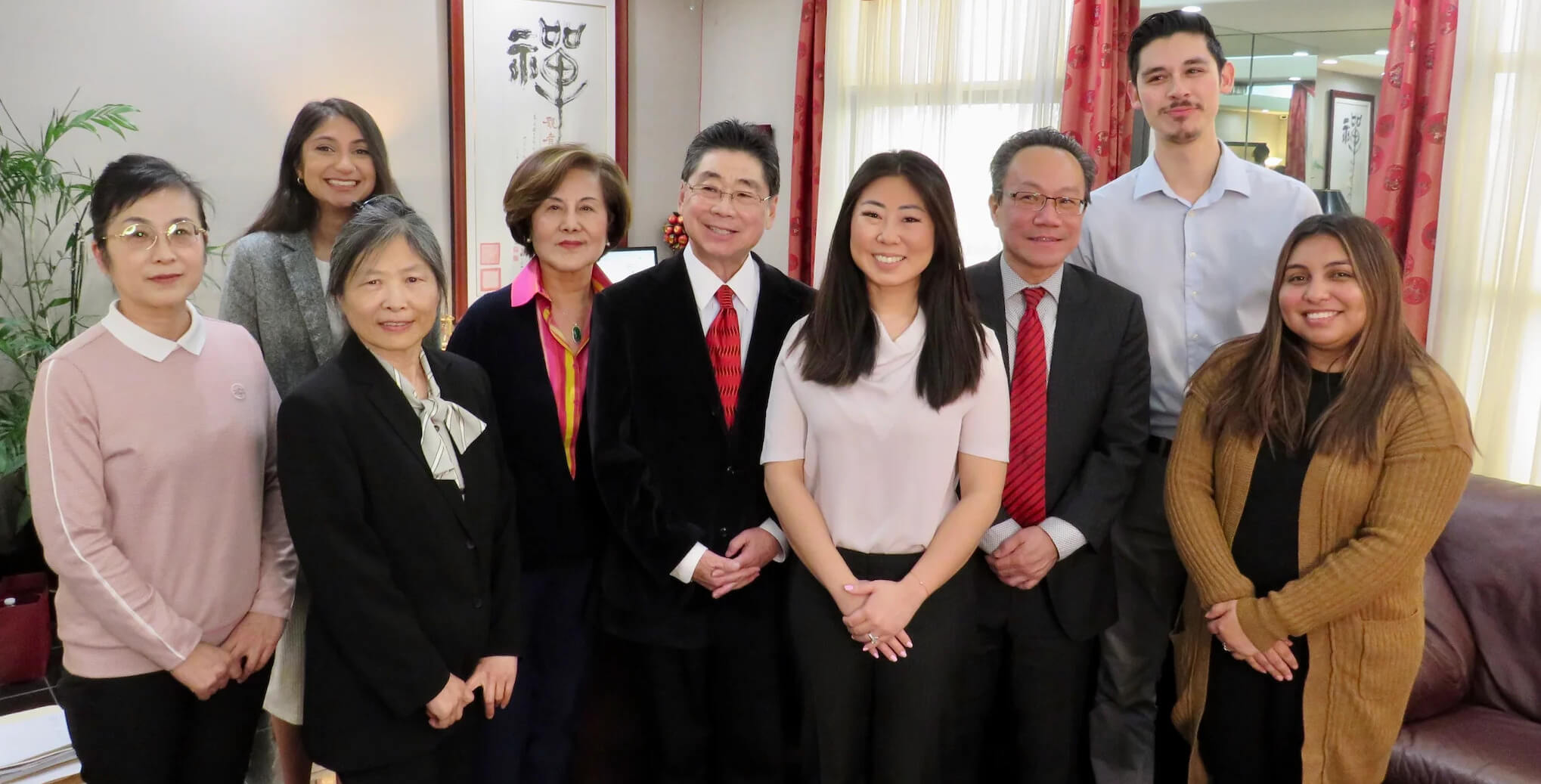

Why Choose Us?

  • Unmatched Expertise

    Trust in Peter Chu's 75+ years of collective experience to guide you through complex immigration matters.

  • Tailored Solutions

    Our personalized strategies adapt to your unique circumstances, ensuring we meet your specific immigration needs.

  • Proven Success

    Benefit from our solid track record in achieving favorable outcomes in various immigration cases across San Diego.

  • Dedicated Service

    Experience our client-first approach that ensures constant support and guidance throughout your immigration journey.

Anaheim, CA is home to over 350,000 residents and hosts more than 100 research institutions, biotech firms, and university-affiliated facilities where internationally trained researchers pursue permanent residency through the EB-1B outstanding researcher visa category. The EB-1B visa differs from all other employment-based green card categories in that it requires no Department of Labor PERM certification, but it demands extensive documentary proof of sustained international recognition in a specific academic field — a threshold that most applicants underestimate until after their first USCIS denial. Law Office of Peter Darwin Chu represents researchers, faculty members, and academic professionals across Anaheim in EB-1B petitions filed with USCIS California Service Center, leveraging 15+ years of immigration law practice focused exclusively on employment-based immigrant visas.

Book a Consultation

Law Office of Peter Darwin Chu is a California-licensed immigration law firm serving Anaheim residents with EB-1B outstanding researcher visa representation — providing petition preparation, evidence compilation, and federal USCIS filing for researchers in tenure-track or permanent research positions. The firm handles EB-1B cases across all major academic disciplines including life sciences, engineering, computer science, and social sciences, with consultation available within one business week of initial contact.

EB-1B Lawyer Anaheim Available Across Anaheim and Surrounding Areas

Law Office of Peter Darwin Chu represents EB-1B visa applicants throughout Anaheim, CA and Orange County — including residents and employees in the Platinum Triangle, Anaheim Hills, West Anaheim, and Downtown Anaheim neighborhoods (zip codes 92801, 92802, 92803, 92804, 92805). All consultations are conducted remotely via secure video conference, allowing researchers employed at university campuses, research hospitals, and private R&D facilities across Southern California to access EB-1B representation without geographic limitation.

What Anaheim Researchers Can Access

EB-1B Outstanding Researcher Visa Petition Preparation

The EB-1B visa classification requires proof of at least three years of research experience and international recognition as outstanding in a specific academic field — demonstrated through published research, citations, peer review activity, awards, and expert recommendation letters. Law Office of Peter Darwin Chu drafts the employer support letter, compiles published articles and citation metrics, and prepares the legal brief establishing that the offered position qualifies as either tenure-track faculty or a comparable permanent research role. The firm works directly with university HR departments, research institute administrators, and corporate R&D directors to ensure the petition meets all regulatory requirements under 8 CFR § 204.5(i). EB-1B petitions filed by the firm include comprehensive evidence indices, detailed CV analysis, and citation impact summaries formatted for USCIS adjudicators who lack subject-matter expertise in the researcher's field. Book a Consultation

EB-1B vs. EB-2 NIW Strategy Assessment

Many Anaheim researchers qualify for both EB-1B outstanding researcher classification and EB-2 National Interest Waiver (NIW) — two immigrant visa categories with different evidentiary standards and processing timelines. Eb-2 Visa requires proof that the applicant's work serves U.S. national interest and that waiving the labor certification requirement benefits the nation, while Eb-1b Visa focuses exclusively on sustained international recognition within a narrow academic discipline. Law Office of Peter Darwin Chu evaluates citation counts, publication venues, recommendation letter strength, and employment offer permanence to determine which classification offers the strongest approval probability — and whether dual filing is strategically advantageous.

USCIS Response to Request for Evidence (RFE) and Appeals

USCIS issues Requests for Evidence in approximately 30–40% of EB-1B petitions when the initial submission lacks sufficient proof of international recognition or when the offered position's permanence is unclear. The firm prepares RFE responses within the statutory 87-day deadline, adding supplemental evidence such as updated citation reports, additional recommendation letters from internationally recognized scholars, and detailed explanations of the permanent research position's duties and funding structure. For denied petitions, the firm evaluates appeal probability and assists with motions to reopen or reconsider filed with USCIS Administrative Appeals Office.

Get clear, expert legal guidance tailored to your visa, green card, or citizenship needs.

Licensed Federal Immigration Representation in California

Law Office of Peter Darwin Chu is authorized to practice immigration law before U.S. Citizenship and Immigration Services, the Executive Office for Immigration Review, and federal appellate courts under California State Bar admission and 8 CFR § 292.1 regulations governing representation before DHS. The firm maintains professional liability insurance as required under California Rules of Professional Conduct Rule 1.15 and adheres to confidentiality standards mandated by attorney-client privilege doctrine. All EB-1B petitions are filed electronically through USCIS ELIS or by mail to California Service Center with tracking confirmation, and clients receive copies of all filed documents and government correspondence within 48 hours of receipt.

Inquire now to check if you qualify

What If I'm a Postdoc — Do I Qualify for EB-1B in Anaheim?

Postdoctoral positions generally do not qualify for EB-1B classification because they are temporary training appointments rather than permanent research roles. The Immigration and Nationality Act defines the EB-1B category as requiring 'a permanent position' — interpreted by USCIS as either a tenured or tenure-track faculty appointment, or a research position with indefinite or permanent duration and no specified end date. Most postdoc offers are written as 1–3 year term appointments funded by specific grants, which USCIS treats as temporary even if renewable. If you are currently a postdoc in Anaheim considering an EB-1B petition, the firm evaluates whether your position can be restructured as a permanent research scientist role or whether Eb-2 Visa National Interest Waiver — which does not require a permanent job offer — is a more viable path.

What If My University Won't Sponsor an EB-1B Petition in Anaheim?

EB-1B petitions require employer sponsorship — the university, research institute, or corporation must file the I-140 petition as the petitioner, and you are the beneficiary. If your current Anaheim employer declines to sponsor, you have three options: negotiate sponsorship as part of a job offer at a new institution, pursue self-petitioned Eb-1a Visa extraordinary ability classification (which does not require employer sponsorship but has a higher evidentiary standard), or file an EB-2 NIW petition that requires no employer involvement. Law Office of Peter Darwin Chu assists researchers in evaluating whether their citation counts, awards, and peer review activity meet the EB-1A standard, which demands proof of sustained national or international acclaim rather than merely outstanding recognition within an academic field.

What If My Citations Are Primarily Self-Citations — Will USCIS Reject My EB-1B Petition in Anaheim?

USCIS adjudicators discount self-citations and co-author citations when evaluating the 'international recognition' prong of EB-1B eligibility, but they do not automatically reject petitions with high self-citation rates. The key is demonstrating that independent researchers — scholars with no collaborative or institutional affiliation with you — have cited your work in peer-reviewed publications. Law Office of Peter Darwin Chu prepares citation analysis summaries that separate independent citations from self-citations and co-author citations, and the firm includes Google Scholar or Web of Science reports annotated to show citation context. If your independent citation count is below 100, the firm strengthens the petition with additional evidence categories such as peer review service for high-impact journals, invited conference presentations, and recommendation letters from internationally recognized scholars who can attest to your influence on the field.

What If I Received My PhD Less Than Three Years Ago — Can I Still File EB-1B in Anaheim?

The EB-1B classification requires at least three years of research experience in the academic field — but that experience does not need to be post-PhD. USCIS counts doctoral research conducted as a PhD candidate, provided it was full-time and directly related to your field. If you completed your PhD in 2024 but began full-time doctoral research in 2020, you satisfy the three-year requirement in 2026. The firm documents this experience through official university enrollment records, research grant participation records, and detailed CV entries that specify research start dates and project descriptions. Recent PhD graduates in Anaheim are often stronger EB-1B candidates than they assume, particularly if their dissertation research resulted in multiple peer-reviewed publications and citation activity before degree conferral.

Why Anaheim Researchers Choose Specialized EB-1B Representation Over General Immigration Firms

Many Anaheim residents compare three options when pursuing EB-1B outstanding researcher classification: large-volume immigration firms that handle all visa categories, solo practitioners with general business immigration experience, and specialized employment-based immigrant visa counsel. Here's the honest answer: EB-1B petitions are the most evidence-intensive immigrant visa category — they require compilation of citation reports, publication impact analysis, and recommendation letters from scholars whose own credentials must be documented. General immigration firms treat EB-1B as a checkbox exercise, submitting petitions with minimal evidentiary development and high RFE rates. Law Office of Peter Darwin Chu limits its practice to employment-based immigrant and nonimmigrant visas, ensuring every EB-1B petition includes comprehensive citation analysis, detailed legal briefs addressing the permanence of the research position, and strategic evidence sequencing that anticipates USCIS objections before they are raised.

FactorGeneral Immigration FirmSolo PractitionerLaw Office of Peter Darwin ChuProfessional Assessment
EB-1B case volumeHigh volume, all visa typesLow volume, mixed practiceFocused employment-based visa practiceSpecialization reduces RFE probability
Citation analysisClient provides raw dataBasic Google Scholar reportAnnotated citation summaries with independent vs. self-citation breakdownEvidence presentation drives approval rates
Recommendation letter strategyTemplate letters, minimal guidanceClient manages letter solicitationFirm provides detailed letter outlines and reviews drafts before finalizationLetter quality is the single strongest evidence category
Position permanence documentationGeneric offer letterEmployer HR letterDetailed permanence brief citing funding structure, tenure policy, and comparable rolesUSCIS scrutinizes job offer permanence in 40%+ of EB-1B RFEs

Get in touch

Frequently Asked Questions

Find answers to common questions about our services

  • USCIS California Service Center currently processes EB-1B I-140 petitions in 6–10 months under regular processing, though timelines fluctuate based on caseload. Premium processing (15-day adjudication) is available for an additional $2,805 filing fee and

  • USCIS does not publish location-specific approval rates, but national EB-1B approval rates range from 70–85% depending on petition quality and evidence strength. Petitions that include fewer than three strong recommendation letters, citation counts below

  • Yes — your spouse and unmarried children under 21 are eligible for derivative E-14 immigrant visas based on your approved EB-1B I-140 petition. They file adjustment of status (Form I-485) concurrently with your application or follow-to-join after your gre

  • No — EB-1B outstanding researcher classification is exempt from the Department of Labor PERM labor certification process that applies to EB-2 and EB-3 employment-based green cards. This exemption eliminates 8–12 months of processing time and removes the r

  • If USCIS denies your EB-1B I-140 petition, you have three options: file a motion to reopen or reconsider with USCIS (must be filed within 30 days of the denial notice), file an appeal with the USCIS Administrative Appeals Office (must be filed within 30 d

  • EB-1B classification is employer-specific — the I-140 petition is filed by the sponsoring university, research institute, or corporation, and approval is tied to the permanent research position described in the petition. If you change employers after I-14

  • Attorney fees for EB-1B petition preparation range from $5,000–$12,000 depending on case complexity, evidence volume, and whether the petition requires response to a prior RFE or denial. Government filing fees (I-140 petition fee of $715, plus premium pro

  • USCIS regulations do not specify a minimum number of recommendation letters, but successful EB-1B petitions typically include 4–6 letters from independent experts — scholars who are internationally recognized in your field, have no collaborative or instit

Need Personalized Immigration Guidance?

Law Office of Peter Darwin Chu provides EB-1B outstanding researcher visa representation for Anaheim, CA residents through comprehensive petition preparation, citation impact analysis, and federal USCIS filing — with consultation available within one business week and all petitions filed with full evidence indices and legal briefs addressing international recognition and position permanence.

Researchers in Anaheim pursuing permanent residency may also explore related visa classifications including Eb-1a Visa for extraordinary ability (self-petitioned, no employer sponsorship required), Eb-2 Visa National Interest Waiver for those whose work serves U.S. national interest, and Eb-1c Visa for multinational executives transferring to U.S. operations. Faculty members on J-1 Visa exchange visitor status subject to two-year home residency requirements should evaluate waiver options before filing EB-1B petitions. The firm also represents clients in nearby Southern California regions including Eb-1b Visa Los Angeles, Eb-1b Visa Long Beach, and Eb-1b Visa Riverside for researchers employed at institutions across the greater Los Angeles metropolitan area. Additional information about evidence standards and petition timelines is available on the firm's Eb-1b Visa overview page.

Speak With Us Today