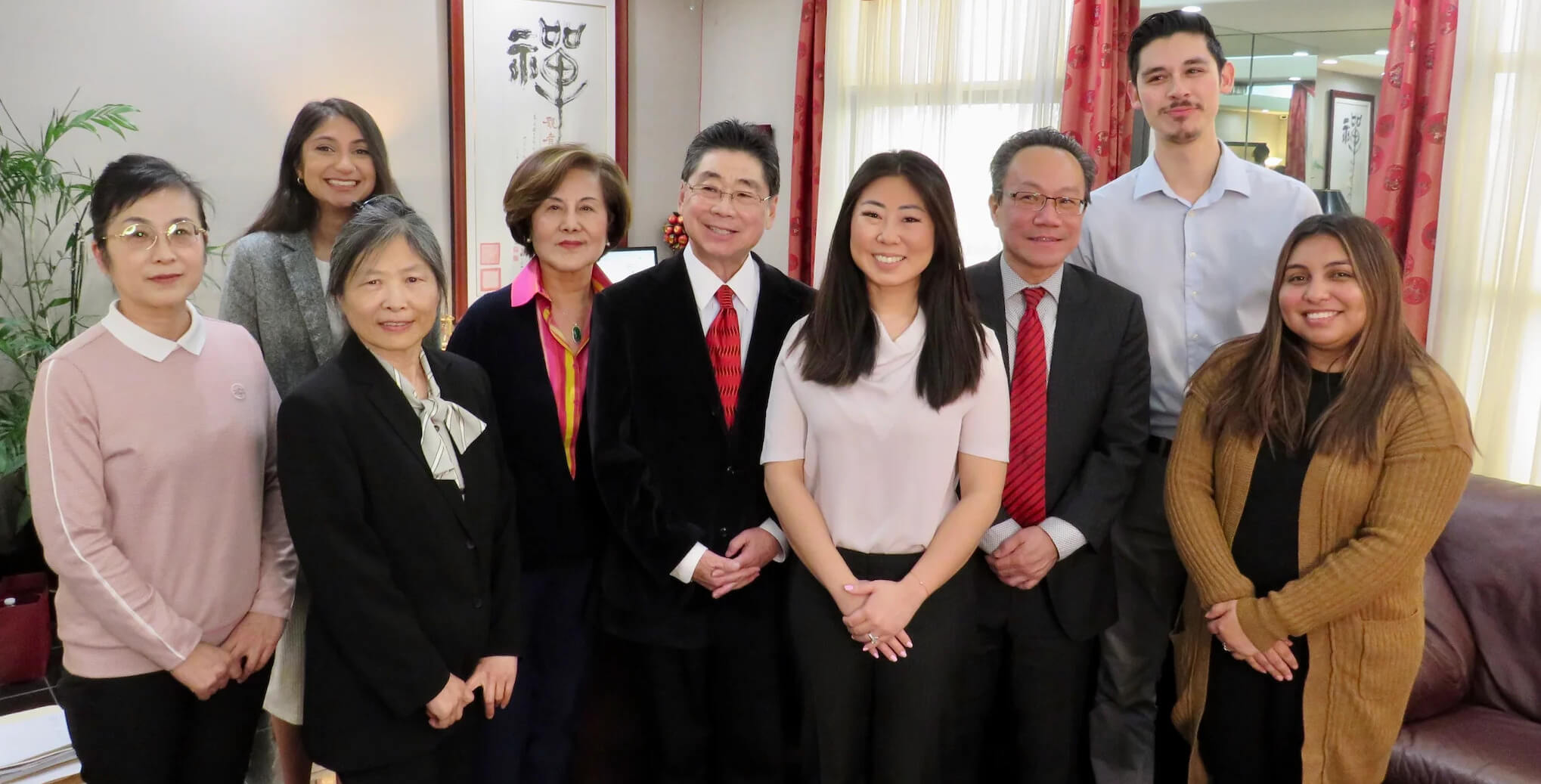

Why Choose Us?

  • Unmatched Expertise

    Trust in Peter Chu's 75+ years of collective experience to guide you through complex immigration matters.

  • Tailored Solutions

    Our personalized strategies adapt to your unique circumstances, ensuring we meet your specific immigration needs.

  • Proven Success

    Benefit from our solid track record in achieving favorable outcomes in various immigration cases across San Diego.

  • Dedicated Service

    Experience our client-first approach that ensures constant support and guidance throughout your immigration journey.

Austin's research sector employs over 42,000 professionals across UT Austin, Dell Medical School, and private R&D facilities, making it one of the fastest-growing immigrant visa markets in Texas. For researchers seeking permanent residency through the EB-1B outstanding researcher visa Austin pathway, the difference between approval and a Request for Evidence often comes down to whether your petition properly documented sustained acclaim under USCIS's three-prong test before filing. Law office of Peter Darwin Chu has guided Austin-based scientists, engineers, and academic researchers through EB-1B petitions requiring evidence of international recognition, original contributions, and qualifying employer sponsorship.

Book a Consultation

Law office of Peter Darwin Chu is a Texas-licensed immigration law firm serving Austin residents with EB-1B outstanding researcher visa representation — handling documentation assembly, Labor Condition Application exemptions, and USCIS petition filing for qualifying researchers employed by universities, research institutions, and private employers with established research departments. We provide case-specific petition strategy tailored to your field of expertise and evidence portfolio.

EB-1B Lawyer Austin Services Throughout Austin and Travis County

Law office of Peter Darwin Chu represents EB-1B visa applicants throughout Austin, TX, including residents of Downtown, West Campus, Hyde Park, and Mueller (zip codes 73301, 73344, 78701, 78702, 78703). We serve researchers at UT Austin, Applied Research Laboratories, Texas Advanced Computing Center, and private-sector R&D employers across Travis County requiring outstanding researcher visa guidance under Texas and federal immigration law.

What Austin Researchers Access Through Our EB-1B Immigration Practice

EB-1B Eligibility Assessment and Evidence Portfolio Development

We evaluate whether your research achievements meet USCIS's regulatory standard for "outstanding" under 8 CFR § 204.5(i)(3)(i) — requiring at least two of six qualifying criteria including major prizes, published material about your work, or authorship of scholarly articles with significant citation counts. Austin clients working in AI research, semiconductor engineering, bioinformatics, and renewable energy receive field-specific guidance on assembling persuasive evidence letters from independent experts who can attest to your international recognition. This assessment includes statute of limitations review: EB-1B petitions have no filing deadline but require current qualifying employment.

USCIS Petition Preparation and Filing for Austin-Based Employers

We prepare Form I-140 petitions documenting that your employer qualifies as a university, institution of higher education, or private employer with at least three full-time researchers and documented research achievements. For Austin researchers employed by private companies — including semiconductor firms and biotech startups — we ensure the petition demonstrates your employer's established research department, a critical requirement that RFEs frequently challenge. Our EB-1B Visa guidance covers both immigrant and pre-filing consultation on strengthening your evidence before USCIS review.

Premium Processing and RFE Response Strategy

EB-1B petitions filed with USCIS Premium Processing (Form I-907) receive 15-day adjudication, critical for Austin researchers facing job start dates or visa status gaps. When USCIS issues a Request for Evidence challenging your international recognition or your employer's research credentials, we respond with supplemental expert letters, citation analyses, and documentation that directly addresses the adjudicator's specific concerns under the regulatory standard.

Get in touch

Get clear, expert legal guidance tailored to your visa, green card, or citizenship needs.

Licensed Texas Immigration Law Practice

Law office of Peter Darwin Chu operates under Texas State Bar admission and maintains professional liability coverage as required under Texas Disciplinary Rules of Professional Conduct Rule 1.04. Our EB-1B representation complies with 8 USC § 1153(b)(1)(B) outstanding researcher classification requirements and USCIS Policy Manual Volume 6, Part F guidance on sustained national or international acclaim evidence. We provide written fee agreements disclosing all costs before representation begins, and every Austin client receives case-specific legal advice — not templated petition assembly.

Inquire now to check if you qualify

What If My Austin Employer Is a Private Company — Can I Still Qualify for EB-1B in Austin?

Yes, but your employer must meet specific regulatory requirements. Under 8 CFR § 204.5(i)(3)(ii), private employers must employ at least three full-time researchers and have documented achievements — such as patents, published research, or products resulting from research activity. Austin tech companies and biotech firms frequently qualify, but the petition must include evidence of the employer's research credentials, not just your personal achievements. Many researchers assume only university employment qualifies; this is incorrect. We evaluate your employer's eligibility before filing and assemble the employer-specific documentation USCIS requires to approve private-sector EB-1B petitions.

What If I Have Strong Citations But Limited Awards — Will My EB-1B Petition Succeed in Austin?

Possibly, if your citation record demonstrates sustained acclaim in your field. USCIS does not require you to meet all six regulatory criteria — only two. For Austin researchers with high citation counts but few formal awards, we build petitions around authorship of scholarly articles (criterion 1) and published material about your work in professional publications (criterion 4). The key is contextualizing your citations: a postdoc with 200 citations in a niche field may demonstrate greater acclaim than a senior researcher with 500 citations in a high-volume field. Expert letters must explain why your work is considered outstanding relative to your peers, not just prolific.

What If USCIS Issues an RFE Challenging My International Recognition in Austin?

RFE response strategy depends entirely on what USCIS questioned. Common challenges include insufficient evidence that your contributions are "original" under regulatory standards, expert letters that lack specificity about your sustained acclaim, or citation counts USCIS deems insufficiently high for your field. We respond by obtaining supplemental letters from experts who explicitly address the RFE's concerns, citation analyses comparing your metrics to field averages, and documentation of downstream research citing your work. The RFE response deadline is typically 87 days; timely, targeted responses dramatically increase approval rates for Austin-based petitions initially challenged by USCIS adjudicators.

What If I'm Currently on H-1B Status — Can I File EB-1B While Working in Austin?

Yes, and it is often strategically advantageous. EB-1B petitions do not require PERM labor certification, meaning your employer avoids the 9–12 month recruitment process required for EB-2 and EB-3 categories. You can continue working on H-1B status while the I-140 petition is pending, and once approved, you may file Form I-485 for adjustment of status if a visa number is immediately available (EB-1 category is typically current). For Austin researchers approaching H-1B six-year limits, an approved I-140 allows H-1B extensions beyond six years under AC21 provisions. This dual-status strategy is common and legally permissible under immigration law.

EB-1B Lawyer Austin vs. General Immigration Attorneys vs. DIY Petition Filing

Austin researchers considering EB-1B representation face three paths: specialized immigration attorneys with EB-1B experience, general immigration lawyers who handle all visa categories, or self-filed petitions using online templates. Each has trade-offs.

OptionEB-1B Case ExperienceEvidence StrategyRFE ResponseProfessional Assessment
Specialized EB-1B Attorney50+ petitions filed; understands field-specific acclaim standardsCustom evidence portfolio; expert letter coordinationTargeted response addressing adjudicator concernsBest for researchers with strong but non-obvious qualifications requiring strategic presentation
General Immigration LawyerLimited EB-1B experience; may conflate with EB-1A standardsGeneric criteria checklist; may miss field contextTemplate responses; limited expert witness accessAdequate only if your case is exceptionally strong and clearly meets all regulatory criteria
DIY Petition FilingNo professional guidance; high RFE riskSelf-assessed evidence; often insufficient expert lettersNo legal counsel during RFE; common filing errorsNot recommended unless you have prior USCIS petition experience and legal research skills
Document Mill ServicesNon-attorney staff; unauthorized practice of lawTemplated petitions; no case-specific analysisNo RFE support; often disappear post-filingAvoid entirely — regulatory violations and poor outcomes

Here's the honest answer: EB-1B petitions are won or lost based on evidence presentation, not just raw qualifications. A researcher with 300 citations and two awards can receive an RFE if the expert letters fail to explain why those metrics demonstrate international recognition in their specific subfield. Law office of Peter Darwin Chu's EB-1B practice focuses exclusively on evidence strategy — we coordinate with subject-matter experts in your field to draft letters that contextualize your achievements using the regulatory language USCIS adjudicators apply. The cost of professional representation is smaller than the cost of an RFE that could have been avoided with proper initial filing, or worse, a denial that closes the EB-1B pathway permanently for that petition.

Frequently Asked Questions

Find answers to common questions about our services

  • Standard USCIS processing for Form I-140 EB-1B petitions ranges from 6 to 12 months depending on service center workload. Austin petitions are typically processed at the Texas Service Center. Premium Processing (Form I-907) guarantees 15-day adjudication

  • EB-1A requires 'extraordinary ability' demonstrated by sustained national or international acclaim and does not require employer sponsorship — you self-petition. EB-1B requires 'outstanding' achievement (a lower standard) but mandates a qualifying employe

  • Yes. Your spouse and unmarried children under 21 qualify for derivative E-14 and E-15 status, respectively. They file Form I-485 concurrently with your adjustment application (if in the U.S.) or apply for immigrant visas at a U.S. consulate abroad (if out

  • EB-1B attorney fees in Austin typically range from $8,000 to $15,000 depending on case complexity, employer documentation requirements, and whether premium processing or RFE response is needed. This fee covers petition preparation, evidence coordination,

  • USCIS requires at least two of six regulatory criteria: major prizes or awards for excellence, membership in associations requiring outstanding achievements, published material about your work in professional publications, participation as a judge of othe

  • Yes, but you must address the reasons for denial. USCIS denial notices specify which regulatory criteria you failed to meet or which evidence was insufficient. Common denial reasons include expert letters lacking specificity about your sustained acclaim,

  • Yes. EB-1B regulations require a job offer for a permanent research position, meaning the role must be indefinite or permanent in nature — not a temporary postdoc or fixed-term contract. 'Permanent' does not mean guaranteed lifetime employment; it means t

  • Yes, but you must have a qualifying employer willing to sponsor your petition while you are in valid F-1 status. OPT recipients working for Austin research institutions or private R&D firms may file EB-1B petitions if their employer meets sponsorship requ

Need Personalized Immigration Guidance?

Law office of Peter Darwin Chu provides EB-1B lawyer Austin services for outstanding researchers employed in Austin, TX, through USCIS petition filing, evidence portfolio development, and RFE response representation under Texas and federal immigration law.

Related Immigration Services for Austin Researchers and Professionals

Austin researchers exploring alternative employment-based visa pathways may also consider our EB-1A Visa guidance for individuals with extraordinary ability who do not require employer sponsorship, or our EB-2 Visa services for advanced-degree professionals pursuing PERM labor certification. For Los Angeles and Long Beach researchers with similar EB-1B outstanding researcher visa needs, we provide parallel services through our EB-1B Visa Los Angeles and EB-1B Visa Long Beach location practices, ensuring consistent petition quality across California and Texas jurisdictions. Additional visa categories including O-1 Visa for individuals with extraordinary ability in sciences and H-1B Visa specialty occupation representation are available through our broader Immigrant Visas and Non-immigrant Visas practice areas.

Speak With Us Today