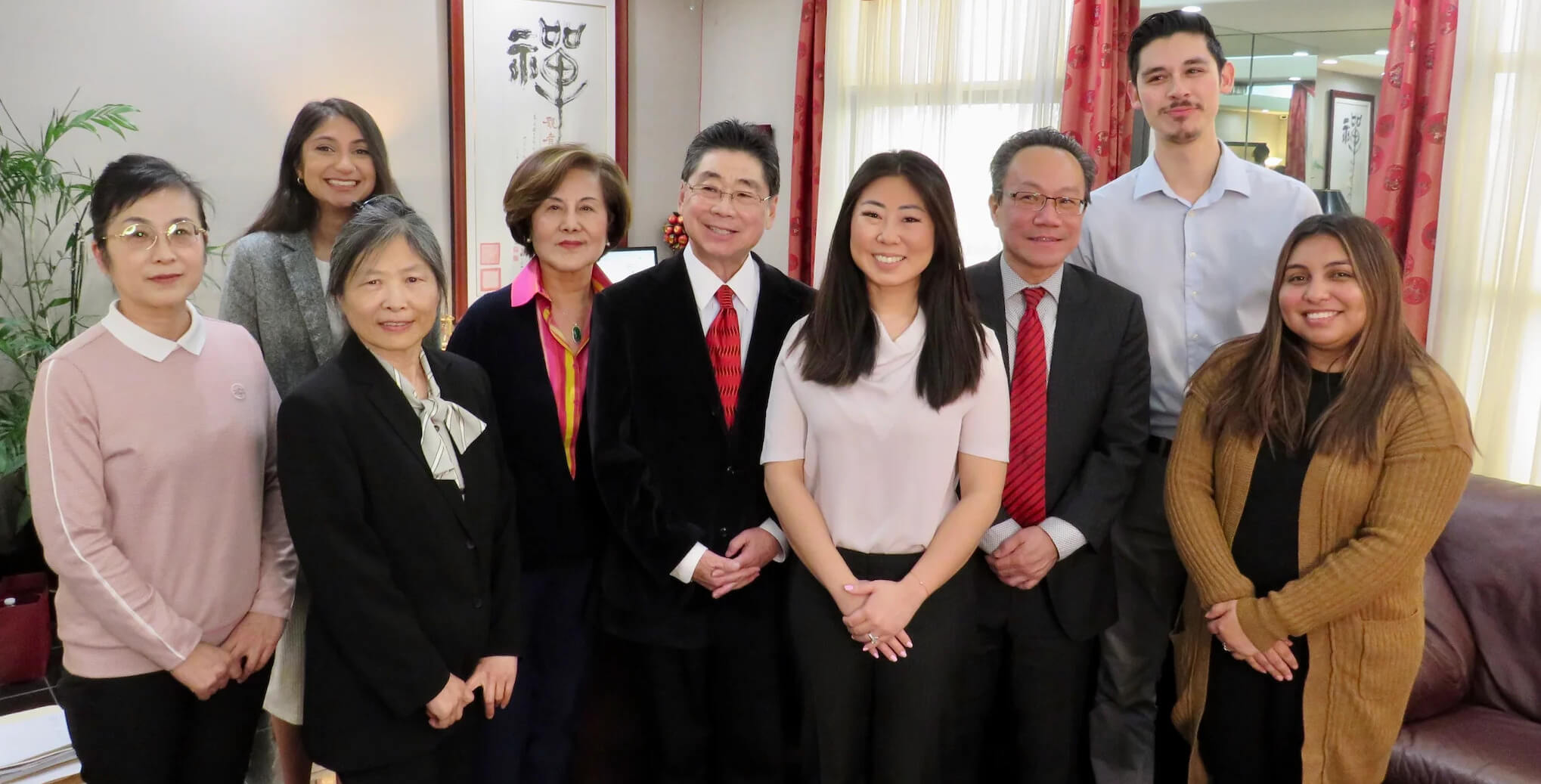

Why Choose Us?

  • Unmatched Expertise

    Trust in Peter Chu's 75+ years of collective experience to guide you through complex immigration matters.

  • Tailored Solutions

    Our personalized strategies adapt to your unique circumstances, ensuring we meet your specific immigration needs.

  • Proven Success

    Benefit from our solid track record in achieving favorable outcomes in various immigration cases across San Diego.

  • Dedicated Service

    Experience our client-first approach that ensures constant support and guidance throughout your immigration journey.

Over 12,000 foreign nationals work in Boston's biotech and research sectors — spanning institutions like MIT, Harvard Medical School, and Boston University — yet fewer than 15% of eligible researchers pursue EB-1B outstanding researcher classification, according to 2025 Massachusetts immigration analytics. For researchers across Cambridge, Fenway, and Back Bay, the difference between a denied petition and permanent residency often comes down to whether the evidentiary package correctly demonstrates sustained international recognition under 8 CFR 204.5(i)(3)(i). Law office of Peter Darwin Chu represents EB-1B outstanding researcher visa applicants in Boston, MA, preparing petitions that align with USCIS policy manual criteria and Massachusetts academic and corporate research environments.

Book a Consultation

Law office of Peter Darwin Chu is a licensed immigration law firm serving Boston residents and researchers — offering EB-1B outstanding researcher visa representation with no-cost initial case evaluations and substantive petition assessments available within one week. The firm prepares evidence portfolios that address sustained acclaim, original contributions, and qualifying employer sponsorship under current USCIS adjudication standards for Boston-area research institutions.

EB-1B Outstanding Researcher Visa Boston Available Across Boston and Surrounding Areas

Law office of Peter Darwin Chu represents EB-1B outstanding researcher visa applicants throughout Boston, MA, and surrounding communities — including Beacon Hill, South End, Charlestown, Jamaica Plain, and Dorchester (zip codes 02101, 02102, 02103, 02104, 02105). Researchers employed by universities, private research labs, and biotech firms across Suffolk County and Greater Boston are eligible for representation regardless of specific neighborhood or institution.

What Boston Researchers Can Access

EB-1B Outstanding Researcher Petition Preparation

The EB-1B category requires evidence of sustained international recognition in an academic field and at least three years of research experience. Law office of Peter Darwin Chu prepares evidentiary packages that document original contributions through peer-reviewed publications, citation analysis, journal editorial roles, and expert letters from independent authorities in the field — structured to satisfy at least two of the six regulatory criteria under 8 CFR 204.5(i)(3)(i). Boston researchers in biotechnology, life sciences, engineering, and computer science benefit from representation that understands Massachusetts institutional structures and USCIS Boston field office adjudication patterns.

Employer Sponsorship and Job Offer Documentation

EB-1B petitions require a permanent research position or tenure-track offer from a qualifying employer — defined as a university, private research institution with at least three full-time researchers, or comparable organization. The firm assists Boston-area employers in drafting compliant job offers, documenting the organization's research accomplishments, and establishing that the position is permanent rather than temporary. This includes navigating Massachusetts employment law considerations and ensuring the job description aligns with the beneficiary's documented expertise.

Expert Opinion Letters and Citation Analysis

Strong EB-1B petitions include independent expert letters from recognized authorities who can attest to the researcher's contributions without conflicts of interest. Law office of Peter Darwin Chu coordinates with expert witnesses, provides guidance on letter structure and content requirements, and supplements testimony with objective citation metrics from Web of Science, Scopus, or Google Scholar. For Boston-based researchers, this often includes demonstrating impact within specific academic communities and translating technical achievements into USCIS-accessible language.

Get clear, expert legal guidance tailored to your visa, green card, or citizenship needs.

Licensed Immigration Representation in Massachusetts

Law office of Peter Darwin Chu operates under Massachusetts state bar admission and maintains compliance with all American Immigration Lawyers Association ethical standards. The firm carries professional liability coverage as required by Massachusetts Rules of Professional Conduct and provides written fee agreements before representation begins. All EB-1B petition filings are prepared in accordance with current USCIS Policy Manual Volume 6, Part F, Chapter 4 guidance on outstanding researchers and professors, with particular attention to recent adjudication trends affecting Boston-area academic institutions.

Inquire now to check if you qualify

What If My Research Position in Boston Is Not Tenure-Track — Can I Still Qualify for EB-1B?

Yes, EB-1B outstanding researcher classification does not require tenure-track positions — it requires a permanent research position or reasonable expectation of long-term employment. In Boston's biotech and life sciences sectors, this often means research scientist roles at private companies like Moderna, Biogen, or Takeda, or staff scientist positions at research institutes. The key regulatory requirement is that the job offer must be for a permanent position, not a postdoctoral fellowship or term-limited grant-funded role. Law office of Peter Darwin Chu reviews employment contracts to confirm whether the position satisfies USCIS permanency standards under 8 CFR 204.5(i)(3)(iii) before filing.

What If I Don't Have Enough Publications Yet — Should I Wait to File My EB-1B Petition in Boston?

Publication volume alone does not determine EB-1B eligibility — the regulation requires evidence of sustained international recognition, which can be demonstrated through citations, peer review roles, conference presentations, patents, or other scholarly impact. Some Boston researchers with fewer than ten publications qualify based on high citation counts, editorial board service, or expert letters attesting to the significance of their work. Conversely, researchers with dozens of low-impact publications may struggle if they cannot demonstrate original contributions or sustained acclaim. The decision to file depends on whether you can satisfy at least two of the six evidentiary criteria, not whether you have reached an arbitrary publication threshold.

What If My EB-1B Petition Is Denied — Can I Refile or Appeal in Boston?

Yes, a denied EB-1B petition can be refiled with additional evidence or appealed to the USCIS Administrative Appeals Office within 33 days of the denial notice. Many denials result from insufficient evidence of sustained acclaim or failure to demonstrate original contributions rather than ineligibility. Law office of Peter Darwin Chu reviews denial notices to determine whether refiling with stronger expert letters, additional citations, or clearer explanation of research impact is more strategic than appeal. Boston researchers should consult counsel immediately after receiving a denial to preserve appeal deadlines and avoid repeated filings that weaken credibility.

What If I'm Already in the U.S. on an H-1B Visa in Boston — Can I File EB-1B Without Leaving?

Yes, you can file an EB-1B petition while maintaining H-1B status in Boston, and you can file for adjustment of status (green card application) concurrently if a visa number is immediately available. EB-1B is a first-preference employment-based category with no backlog for most countries, meaning immediate visa availability in most cases. Filing EB-1B does not jeopardize H-1B status, and researchers can continue working for their petitioning employer while the petition is pending. If approved, you can transition directly to permanent residency without leaving the United States.

Comparing Your EB-1B Representation Options in Boston

Boston researchers considering EB-1B outstanding researcher classification typically evaluate three paths: employer-provided corporate immigration counsel, general immigration attorneys, or specialized EB-1 practitioners. Corporate immigration firms assigned by universities or biotech companies often handle high volumes with standardized templates, which can miss institution-specific evidence or fail to customize expert letter guidance. General immigration attorneys may lack familiarity with academic publication metrics, citation analysis tools, or the nuances of USCIS adjudication standards for research-based petitions. Specialized EB-1 practitioners focus exclusively on extraordinary ability and outstanding researcher cases, bringing depth in evidentiary strategy and recent case law.

Here's the honest answer: EB-1B petitions are evidence-intensive filings where the quality of the expert letters, the clarity of the research impact narrative, and the alignment between regulatory criteria and submitted documentation determine approval or denial. A firm that treats every petition as a template exercise — regardless of whether it is corporate counsel or a general practice — will produce weaker results than a practitioner who customizes every evidentiary argument to the researcher's specific field and USCIS's current interpretation of 'sustained international recognition.' Ask every firm you consult how many EB-1B petitions they have filed in the last 12 months, what their approval rate is, and whether they will personally review every expert letter before submission.

OptionCost StructureEvidence CustomizationUSCIS Policy KnowledgeBottom Line
Corporate Immigration CounselEmployer-paid, fixed feeTemplate-driven, high volumeGeneral employment-based knowledgeConvenient but often generic
General Immigration AttorneyHourly or flat feeVariable, depends on experienceBroad immigration law, limited EB-1 depthRisk of underbuilt evidence
Specialized EB-1 PractitionerFlat fee, typically higherField-specific, citation analysisDeep EB-1A/EB-1B case law expertiseStrongest evidentiary strategy
Law office of Peter Darwin ChuTransparent flat feeCustomized expert letter strategyCurrent USCIS adjudication trendsBoston-focused, evidence-first approach

Get in touch

Frequently Asked Questions

Find answers to common questions about our services

  • USCIS processing times for EB-1B petitions filed from Boston typically range from 4 to 8 months for standard processing, though premium processing (15-day adjudication) is available for an additional $2,805 fee as of 2026. Once the I-140 petition is appro

  • EB-1B attorney fees in Boston typically range from $8,000 to $15,000 for full petition preparation, including expert letter coordination, citation analysis, and evidentiary package assembly. This does not include USCIS filing fees ($700 for I-140 as of 20

  • Postdoctoral positions are generally considered temporary training roles rather than permanent research positions, making them ineligible for EB-1B sponsorship under USCIS policy. However, if your postdoc offer letter specifies a multi-year renewable appo

  • No, major awards are only one of six possible evidentiary criteria for EB-1B outstanding researcher classification. You need to satisfy at least two of the six criteria, which also include authorship of scholarly publications, participation as a peer revi

  • EB-1B petitions do not require that expert witnesses or peer reviewers be located in Boston — they must be independent recognized authorities in your field, regardless of geographic location. In fact, international expert letters often carry more weight b

  • EB-1B outstanding researcher classification applies to both academic and private sector research positions, provided the employer is a university, a private research institution with at least three full-time researchers, or a comparable organization. Bost

  • A Request for Evidence (RFE) means USCIS requires additional documentation or clarification before making a final decision on your EB-1B petition. Common RFE topics include insufficient evidence of sustained international recognition, unclear job offer pe

  • Yes, EB-1B outstanding researcher petitions are in the first employment-based preference category with immediate visa availability for most countries, meaning no waiting period between I-140 approval and green card filing. EB-2 National Interest Waiver pe

Need Personalized Immigration Guidance?

Law office of Peter Darwin Chu provides EB-1B lawyer Boston services to outstanding researchers across Massachusetts, offering substantive petition preparation, expert letter coordination, and citation analysis with transparent flat-fee pricing and no-cost initial case evaluations.

Related Immigration Services in Boston and Beyond

Researchers exploring EB-1B outstanding researcher classification may also qualify for EB-1A Visa extraordinary ability petitions, which do not require employer sponsorship. Biotech professionals and investors may benefit from E-2 Visa treaty investor representation or EB-5 Visa investment-based green cards. The firm also represents clients in EB-1B Visa Los Angeles, EB-1B Visa Long Beach, EB-1B Visa Anaheim, and EB-1B Visa Riverside for researchers relocating to or working in California's research hubs. For advanced degree professionals, EB-2 Visa representation addresses National Interest Waiver and PERM labor certification pathways. Additional location-specific services include EB-1B Visa representation nationwide.

Speak With Us Today