
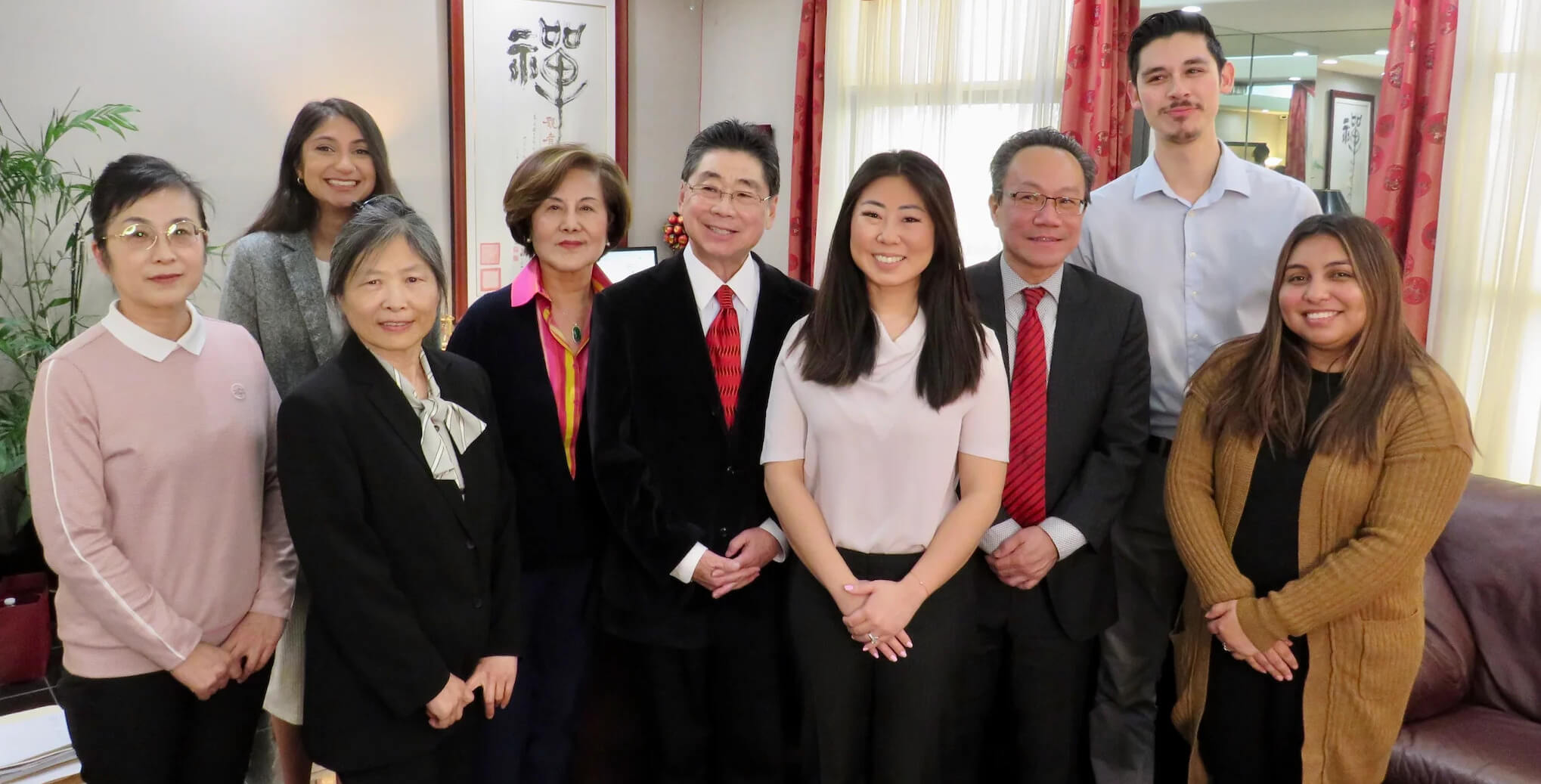
Why Choose Us?
-

Unmatched Expertise
Trust in Peter Chu's 75+ years of collective experience to guide you through complex immigration matters.
-

Tailored Solutions
Our personalized strategies adapt to your unique circumstances, ensuring we meet your specific immigration needs.
-

Proven Success
Benefit from our solid track record in achieving favorable outcomes in various immigration cases across San Diego.
-

Dedicated Service
Experience our client-first approach that ensures constant support and guidance throughout your immigration journey.


Get clear, expert legal guidance tailored to your visa, green card, or citizenship needs.

Inquire now to check if you qualify
Why Chino Researchers Choose Law Office of Peter Darwin Chu Over Other EB-1B Filing Options
EB-1B petitioners in Chino face three primary filing options: self-filing (pro se), using a general immigration attorney without EB-1B specialization, or retaining a firm with dedicated employment-based immigration experience. Here's the honest answer: self-filed EB-1B petitions have a significantly lower approval rate than attorney-represented cases, primarily because applicants misjudge which evidence satisfies USCIS criteria and which does not. A published article in a predatory journal does not carry the same weight as a peer-reviewed publication in a top-tier journal — but USCIS does not explain this in the I-140 instructions. General immigration attorneys who handle family-based cases, deportation defense, and naturalization often lack the technical fluency to evaluate citation impact, h-index benchmarks, or field-specific norms that determine whether your contributions qualify as 'major significance.' The Law Office of Peter Darwin Chu limits its practice to employment-based visas, ensuring every EB-1B case is evaluated against current USCIS policy manual guidance and recent Administrative Appeals Office (AAO) decisions.
| Filing Method | Evidence Quality Control | USCIS Policy Expertise | RFE Response Success Rate | Bottom Line |
|---|---|---|---|
| Self-Filing (Pro Se) | No external review — applicant selects own evidence | Limited to I-140 instructions | Low — most RFEs result in abandonment | High risk of denial due to incomplete evidence |
| General Immigration Attorney | Basic review — may not understand field-specific norms | Broad immigration knowledge, limited EB-1B depth | Moderate — generic responses | May succeed for strong cases, struggles with borderline applicants |
| Law Office of Peter Darwin Chu | Field-specific evidence curation with citation analysis | Dedicated employment-based practice with current policy manual | High — targeted supplemental evidence | Maximizes approval probability through regulatory precision |
Frequently Asked Questions
Find answers to common questions about our services
-
USCIS California Service Center, which processes EB-1B petitions for Chino residents, currently reports processing times of 8–12 months for I-140 immigrant petitions under the EB-1 category. Premium processing (Form I-907) is available for an additional $
-
USCIS does not publish approval rates by geographic location, but national EB-1 approval rates hover around 72–76% for I-140 petitions filed with attorney representation, according to USCIS data. Approval rates for self-filed EB-1B petitions are significa
-
Yes, you can file an EB-1B petition while in H-1B status in Chino. In fact, many researchers use H-1B status as a bridge while their EB-1B I-140 and adjustment of status applications are pending. H-1B status is dual-intent, meaning you can pursue permanen
-
No, the EB-1B category does not require PERM labor certification, which is one of its primary advantages over EB-2 and EB-3. PERM labor certification is a Department of Labor process that requires the employer to test the U.S. labor market and prove no qu
-
USCIS requires evidence satisfying at least two of six regulatory criteria to establish international recognition. The most commonly used criteria are authorship of scholarly articles in professional journals with international circulation, evidence that
-
Yes, your spouse and unmarried children under 21 are eligible for derivative EB-1 status and can be included in your adjustment of status application or apply for immigrant visas at a U.S. consulate abroad. Derivative beneficiaries receive the same priori
-
If your EB-1B I-140 petition is denied, you receive a written decision explaining the reasons for denial and advising you of your right to appeal to the USCIS Administrative Appeals Office (AAO) within 30 days. Alternatively, you can file a motion to reop
-
Attorney fees for EB-1B representation vary based on case complexity, but typically range from $6,000 to $12,000 for full-service representation including consultation, evidence assembly, legal brief preparation, USCIS filing, and one RFE response if need
Need Personalized Immigration Guidance?

