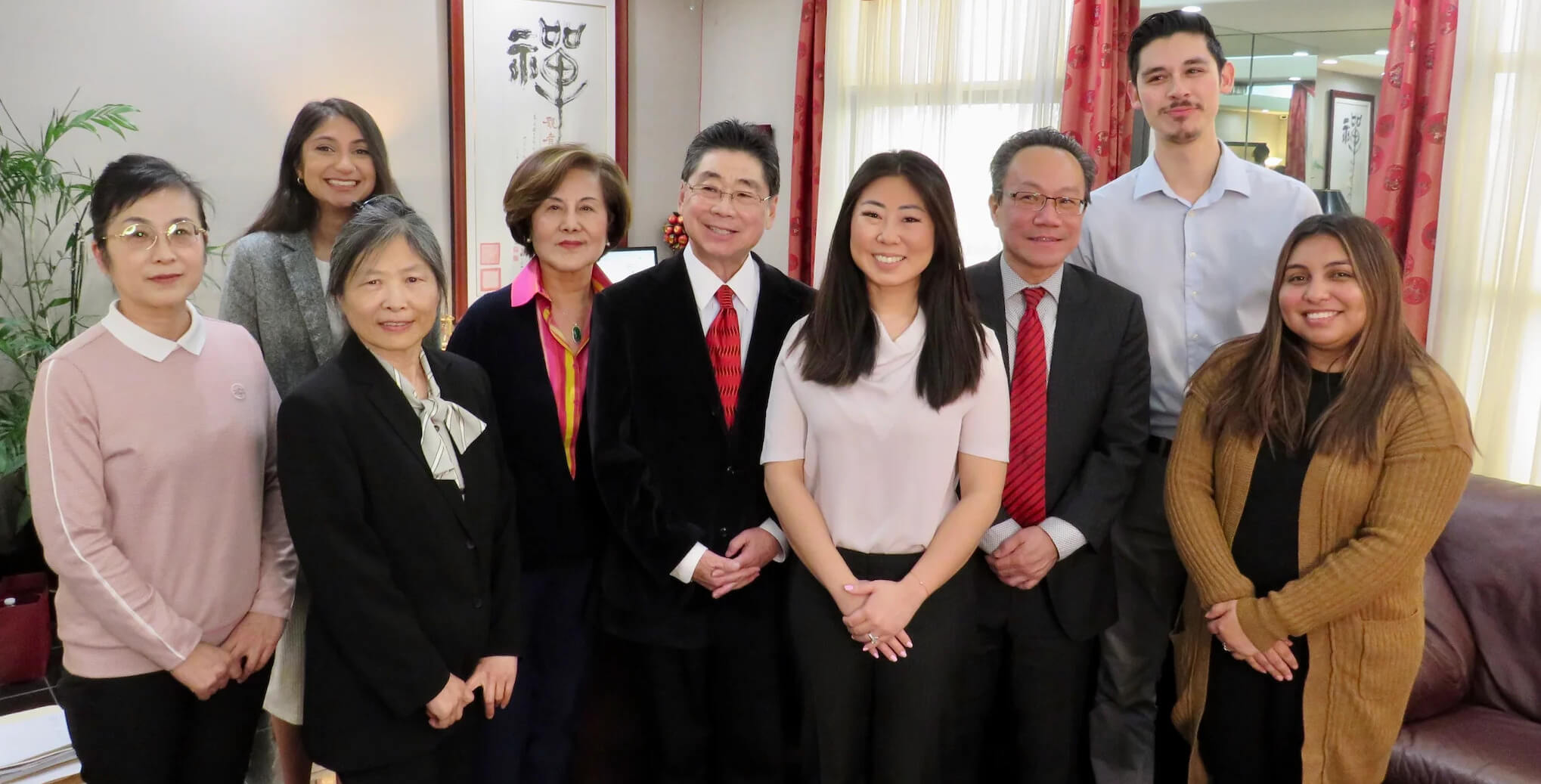

Why Choose Us?

  • Unmatched Expertise

    Trust in Peter Chu's 75+ years of collective experience to guide you through complex immigration matters.

  • Tailored Solutions

    Our personalized strategies adapt to your unique circumstances, ensuring we meet your specific immigration needs.

  • Proven Success

    Benefit from our solid track record in achieving favorable outcomes in various immigration cases across San Diego.

  • Dedicated Service

    Experience our client-first approach that ensures constant support and guidance throughout your immigration journey.

Corona, CA is home to over 160,000 residents and sits within 40 miles of major research institutions including UC Riverside and Cal State San Bernardino — yet fewer than 8% of eligible researchers in the Inland Empire pursue EB-1B outstanding researcher visas due to documentation complexity and misunderstanding of eligibility criteria. For Corona residents working in academic research, biotechnology, or private R&D facilities, the difference between a successful EB-1B petition and a Request for Evidence often comes down to whether an experienced immigration attorney structured the initial evidence submission. Law Office of Peter Darwin Chu has guided researchers through the EB-1B outstanding researcher visa process, ensuring petitions meet USCIS evidentiary standards before filing.

Book a Consultation

Law Office of Peter Darwin Chu is a California-licensed immigration law firm serving Corona residents seeking EB-1B outstanding researcher visa representation — offering case evaluations, evidence assembly, and petition filing with no upfront retainer for initial consultations. We specialize in translating academic publications, citation metrics, and peer review activity into USCIS-compliant evidence packages that satisfy the "outstanding" standard under 8 CFR 204.5(i)(3)(i).

EB-1B Outstanding Researcher Visa Services Across Corona and Riverside County

Law Office of Peter Darwin Chu represents researchers and academics throughout Corona, CA, including residents of South Corona, Eagle Glen, and Dos Lagos (zip codes 91718, 91719, 91720, 92118, 92178). All California residents with qualifying research credentials are eligible for representation regardless of county, and we handle cases for clients employed at universities, research hospitals, and private R&D facilities across the Inland Empire and Southern California.

What Corona Researchers Can Access

EB-1B Petition Preparation and Filing

We assemble comprehensive I-140 petitions demonstrating international recognition through published research, citation analysis, peer review documentation, and expert letters — structured to meet the "outstanding" threshold defined in 8 CFR 204.5(i)(3)(i). Corona clients receive detailed evidence checklists, citation report preparation guidance, and draft review before filing. Most EB-1B petitions require 4–6 weeks of evidence assembly and cost $8,000–$12,000 in legal fees depending on case complexity. Get in touch

Outstanding Researcher Eligibility Assessment

Not every published researcher qualifies for EB-1B classification. We conduct substantive eligibility reviews analyzing your publication history, citation metrics (h-index, total citations, journal impact factors), peer review activity, and whether your research contributions constitute "outstanding" achievement in your field. Corona researchers working in emerging fields — where citation benchmarks may be lower than established disciplines — benefit from comparative analysis against USCIS precedent decisions in similar specialties.

Response to Request for Evidence (RFE)

EB-1B petitions receive RFEs in approximately 30–40% of cases, most commonly challenging whether the evidence demonstrates "international recognition" or whether the offered position qualifies as permanent research employment. We draft comprehensive RFE responses addressing USCIS objections with supplemental expert letters, additional citation evidence, and legal argument grounded in Administrative Appeals Office (AAO) decisions. Corona clients facing RFEs typically have 30–90 days to respond depending on the USCIS service center processing the case.

Premium Processing and Case Status Monitoring

EB-1B petitions filed with Form I-907 Premium Processing receive adjudication within 15 calendar days, though not all USCIS service centers accept premium processing for all case types at all times. We monitor USCIS processing time bulletins and advise Corona clients when premium processing is strategically beneficial — typically when employment authorization or travel urgency exists. Standard processing for EB-1B petitions currently averages 6–9 months at most service centers.

Get clear, expert legal guidance tailored to your visa, green card, or citizenship needs.

Licensed California Immigration Representation

Law Office of Peter Darwin Chu maintains active membership with the State Bar of California and complies with all attorney practice standards under California Rules of Professional Conduct Rule 1.1 (competence) and Rule 1.4 (communication). We carry professional liability insurance as required for immigration practice and provide written fee agreements before representation begins, detailing scope of services, fee structure, and cost advancement policies. All EB-1B consultations include substantive case assessment — not sales calls — and we advise clients honestly when alternative visa categories (EB-2 NIW, O-1A) may provide better strategic outcomes based on their specific credentials.

Inquire now to check if you qualify

What If My Research Is in a Niche Field with Lower Citation Counts in Corona?

Citation benchmarks vary dramatically by discipline — a researcher in theoretical mathematics with 200 total citations may satisfy the "outstanding" standard while a biomedical researcher with 500 citations may not. USCIS adjudicators compare your metrics against others in your specific field, not across all sciences. Law Office of Peter Darwin Chu prepares comparative citation analyses showing where you rank within your specialty and includes expert letters from senior researchers in your discipline who can attest to the significance of your work. Corona researchers in emerging or interdisciplinary fields benefit from this contextual framing, as raw citation counts alone rarely tell the complete story.

What If I Have Multiple Research Positions — Which One Should I Use for My EB-1B Petition in Corona?

The EB-1B petition must be filed by the employer offering permanent research employment — you cannot self-petition. If you hold multiple positions (university faculty, hospital researcher, private R&D consultant), the petitioning employer must be the entity offering full-time permanent or indefinite research employment. Part-time or temporary positions do not qualify. Corona researchers with joint appointments or multiple affiliations should consult with an immigration attorney before determining which employer should file, as the wrong choice can result in denial if the position does not meet statutory requirements under INA 203(b)(1)(B).

What If My EB-1B Petition Is Denied — Can I Refile in Corona?

Yes, but refiling requires addressing the specific reasons for denial. USCIS denial notices cite the regulatory criteria you failed to satisfy — most commonly insufficient evidence of international recognition or that the offered position is not permanent research employment. Law Office of Peter Darwin Chu reviews denial notices with Corona clients to determine whether additional evidence can cure the deficiency or whether filing a motion to reopen or reconsider is more appropriate. In some cases, transitioning to EB-2 National Interest Waiver (NIW) may be strategically preferable if the denial centered on employer-specific issues rather than the researcher's qualifications.

What If I Am Currently on H-1B Status — Can I Apply for EB-1B Outstanding Researcher Visa While in Corona?

Absolutely. EB-1B petitions can be filed concurrently with H-1B status, and approval does not affect your current nonimmigrant status. Most Corona researchers maintain H-1B status while their EB-1B I-140 petition is pending, then file Form I-485 (adjustment of status) once the petition is approved and a visa number is available. Because EB-1 is a first-preference category, visa numbers are typically current with no backlog for most countries, allowing immediate adjustment filing once the I-140 is approved. This dual-status strategy provides employment authorization continuity and travel flexibility throughout the green card process.

Comparing Your EB-1B Representation Options in Corona

Corona researchers face three primary paths for EB-1B petition assistance: full-service immigration law firms specializing in employment-based cases, general practice immigration attorneys handling multiple visa types, or DIY petition filing using online templates and forums. Each approach carries distinct tradeoffs in cost, success rate, and risk exposure.

Here's the honest answer: EB-1B petitions are among the most evidence-intensive filings in employment-based immigration — a successful petition typically includes 200–400 pages of supporting documentation, expert letters from 3–5 internationally recognized researchers, and legal argument addressing how your credentials satisfy each regulatory criterion under 8 CFR 204.5(i)(3)(i). General practice immigration attorneys who handle 10–15 different visa categories rarely maintain current knowledge of AAO precedent decisions or recent RFE trends specific to EB-1B outstanding researcher cases. DIY filers save legal fees but risk denial due to insufficient evidence organization, missing regulatory citations, or failure to address comparative benchmarks within their field — and USCIS does not provide a second chance to submit evidence after denial unless you file a motion or start over.

ApproachTypical CostEvidence QualityRFE RateProfessional Assessment
Specialized EB-1B Firm$8,000–$12,000Comprehensive citation analysis, expert letters, field-specific benchmarking25–35% (industry baseline)Highest approval rate — worth the investment for researchers with strong but not obvious credentials
General Immigration Attorney$4,000–$7,000Basic petition with standard evidence; limited field expertise45–60% (higher due to generic approach)Moderate risk — may miss discipline-specific nuances that trigger RFEs
DIY Filing$0–$500 (filing fees only)Varies widely; often missing comparative analysis and regulatory citations60–75% (significantly elevated)High risk — USCIS denial is expensive to cure and may require starting over with attorney

Get in touch

Frequently Asked Questions

Find answers to common questions about our services

  • The EB-1B process timeline depends primarily on USCIS processing times and whether you file with premium processing. Standard I-140 petition processing currently averages 6–9 months at most service centers. With Form I-907 premium processing (when availab

  • EB-1B requires employer sponsorship and a permanent research position offer, while EB-1A allows self-petitioning without employer involvement. EB-1B focuses specifically on research achievements (publications, citations, peer review), whereas EB-1A covers

  • USCIS gives greater weight to peer-reviewed publications and citations from peer-reviewed sources, but preprints and non-peer-reviewed work can provide supplemental evidence of impact — particularly in fields like computer science, mathematics, or physics

  • USCIS does not specify a minimum publication count — the regulation requires evidence of international recognition, which can be demonstrated through publications, citations, peer review activity, awards, or other achievements. Some researchers with 15–20

  • If your employer withdraws the I-140 petition before approval, the petition is considered abandoned and USCIS will not adjudicate it. However, if the I-140 is already approved and your employer withdraws it, the approval generally remains valid under the

  • EB-1B requires a permanent or indefinite research position — not necessarily tenure-track, but the position cannot have a defined end date. Research positions funded by renewable grants generally qualify as long as the employer attests that the position i

  • EB-1B legal fees in Corona typically range from $8,000 to $12,000 depending on case complexity, the amount of evidence requiring organization, and whether the case involves an RFE or appeal. This fee covers petition drafting, evidence compilation guidance

  • EB-1B requires employer sponsorship and a permanent research position, while EB-2 NIW allows self-petitioning without an employer or labor certification. EB-1B has a higher evidentiary standard (outstanding vs. advanced degree plus exceptional ability), b

Need Personalized Immigration Guidance?

Law Office of Peter Darwin Chu provides EB-1B outstanding researcher visa representation for Corona, CA researchers through comprehensive petition preparation, evidence assembly, and RFE response services, ensuring every case meets USCIS evidentiary standards before filing.

Related Immigration Services for Corona Residents

Corona researchers and professionals may also benefit from our EB-1A Visa services for individuals with extraordinary ability, EB-2 Visa assistance for advanced degree professionals, and O-1 Visa representation for temporary employment in specialty fields. We also serve researchers in nearby communities through our EB-1B Visa Los Angeles, EB-1B Visa Anaheim, and EB-1B Visa Riverside location pages. For academics seeking permanent residence through alternative pathways, our EB-2 Visa Los Angeles and EB-3 Visa pages outline options for those who may not meet the outstanding researcher threshold. Learn more about our full range of Immigrant Visas and Our Law Firm approach to employment-based immigration representation.

Speak With Us Today