
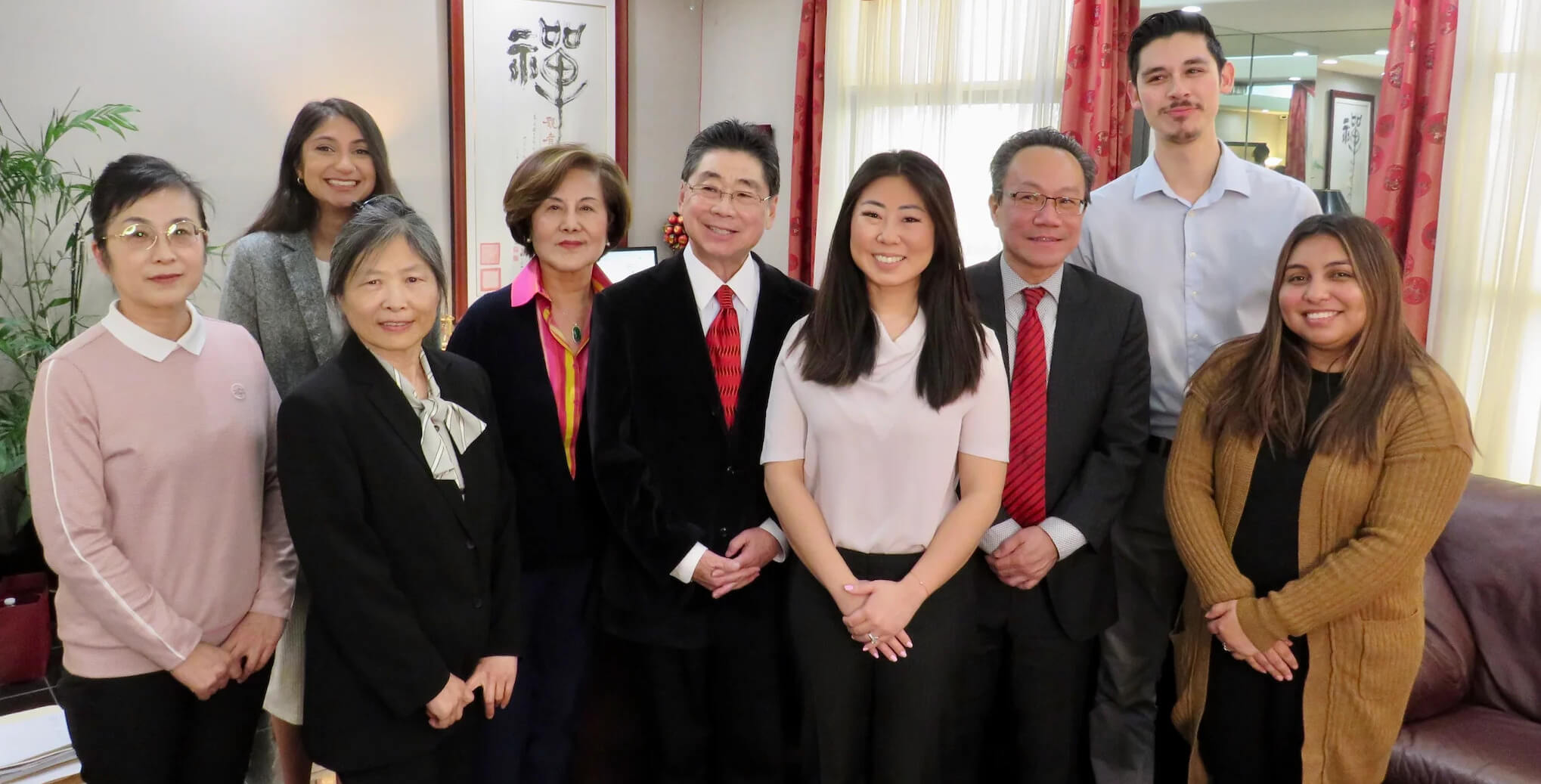
Why Choose Us?
-

Unmatched Expertise
Trust in Peter Chu's 75+ years of collective experience to guide you through complex immigration matters.
-

Tailored Solutions
Our personalized strategies adapt to your unique circumstances, ensuring we meet your specific immigration needs.
-

Proven Success
Benefit from our solid track record in achieving favorable outcomes in various immigration cases across San Diego.
-

Dedicated Service
Experience our client-first approach that ensures constant support and guidance throughout your immigration journey.


Get clear, expert legal guidance tailored to your visa, green card, or citizenship needs.

Inquire now to check if you qualify
Comparing EB-1B Outstanding Researcher Representation Options in Dallas
Dallas researchers pursuing permanent residency face three paths: filing EB-1B pro se, hiring a general immigration attorney, or engaging specialized employment-based immigration counsel. Here's the honest answer: USCIS adjudicators are federal employees trained to identify evidentiary gaps and regulatory non-compliance — they do not interpret ambiguous credentials in your favor. Pro se EB-1B filers who submit curriculum vitae and recommendation letters without regulatory cross-referencing to 8 CFR 204.5(i)(3)(i)'s six criteria see RFE rates above 60% based on published AAO statistics. General immigration attorneys who primarily handle family-based petitions or removal defense often lack familiarity with AAO precedent decisions governing 'major significance' and 'international recognition' standards in academic fields. Law office of Peter Darwin Chu limits its practice to employment-based nonimmigrant and immigrant visas, ensuring every EB-1B petition is drafted by counsel who has reviewed successful I-140 approvals in your specific research discipline and can cite controlling case law in legal briefs.
| Approach | Regulatory Citation Accuracy | Expert Letter Coordination | RFE Response Experience | Bottom Line |
|---|---|---|---|
| Pro Se Filing | Generic CV submission | No attorney guidance | First-time RFE response | High risk — 60%+ RFE rate, no legal recourse |
| General Immigration Firm | Surface-level compliance | Standard templates | Limited EB-1B caseload | Moderate risk — may miss field-specific nuances |
| Specialized EB Counsel | AAO precedent-aligned | Field-matched experts | Proven EB-1B track record | Lowest risk — regulatory precision, targeted evidence |
| Law Office of Peter Darwin Chu | 8 CFR + AAO case law | Co-authored with researchers | Dallas USCIS TSC experience | Professional assessment: EB-1B petitions succeed when evidence maps to regulatory language — not raw credential volume |
Frequently Asked Questions
Find answers to common questions about our services
-
Standard I-140 processing through USCIS Texas Service Center averages 4–6 months as of 2026, though times fluctuate based on caseload. Premium processing (Form I-907, $2,805 fee) guarantees a 15-business-day response — either approval, denial, or RFE. For
-
Law office of Peter Darwin Chu charges flat-fee representation for EB-1B petitions, typically $6,000–$9,000 depending on case complexity, number of expert letters required, and whether RFE response is anticipated. This fee covers petition drafting, expert
-
Yes, if your postdoc position is 'permanent or indefinite' as interpreted by USCIS. Most university postdoc appointments are fixed-term (2–3 years) and do not satisfy the 'permanent' job requirement under 8 CFR 204.5(i)(3)(ii). However, if your Dallas emp
-
You can appeal to the USCIS Administrative Appeals Office within 30 days (Form I-290B, $675 fee), file a motion to reopen or reconsider, or file a new I-140 petition with additional evidence. AAO appeals take 12–18 months and succeed only if USCIS committ
-
The regulation explicitly requires 'international recognition' under 8 CFR 204.5(i)(3)(i). USCIS interprets this to mean your work is recognized beyond U.S. borders — citations from non-U.S. researchers, publications in international journals, invitations
-
Yes, filing parallel EB-1B and EB-2 PERM petitions is a common risk-mitigation strategy for Dallas researchers whose credentials fall in the gray zone between 'outstanding' and 'merely excellent.' EB-1B does not require labor certification or prevailing w
-
Your employer must submit: (1) a permanent job offer letter specifying the research position, salary, and indefinite or permanent term; (2) evidence the employer is a qualifying organization under 8 CFR 204.5(i)(3)(ii) — for universities, accreditation do
-
EB-1B requires employer sponsorship and a permanent job offer; EB-1A does not — you can self-petition. EB-1B requires proof you are 'outstanding' in a specific academic area; EB-1A requires proof you are in the top 1–2% of your field nationally or interna
Need Personalized Immigration Guidance?

