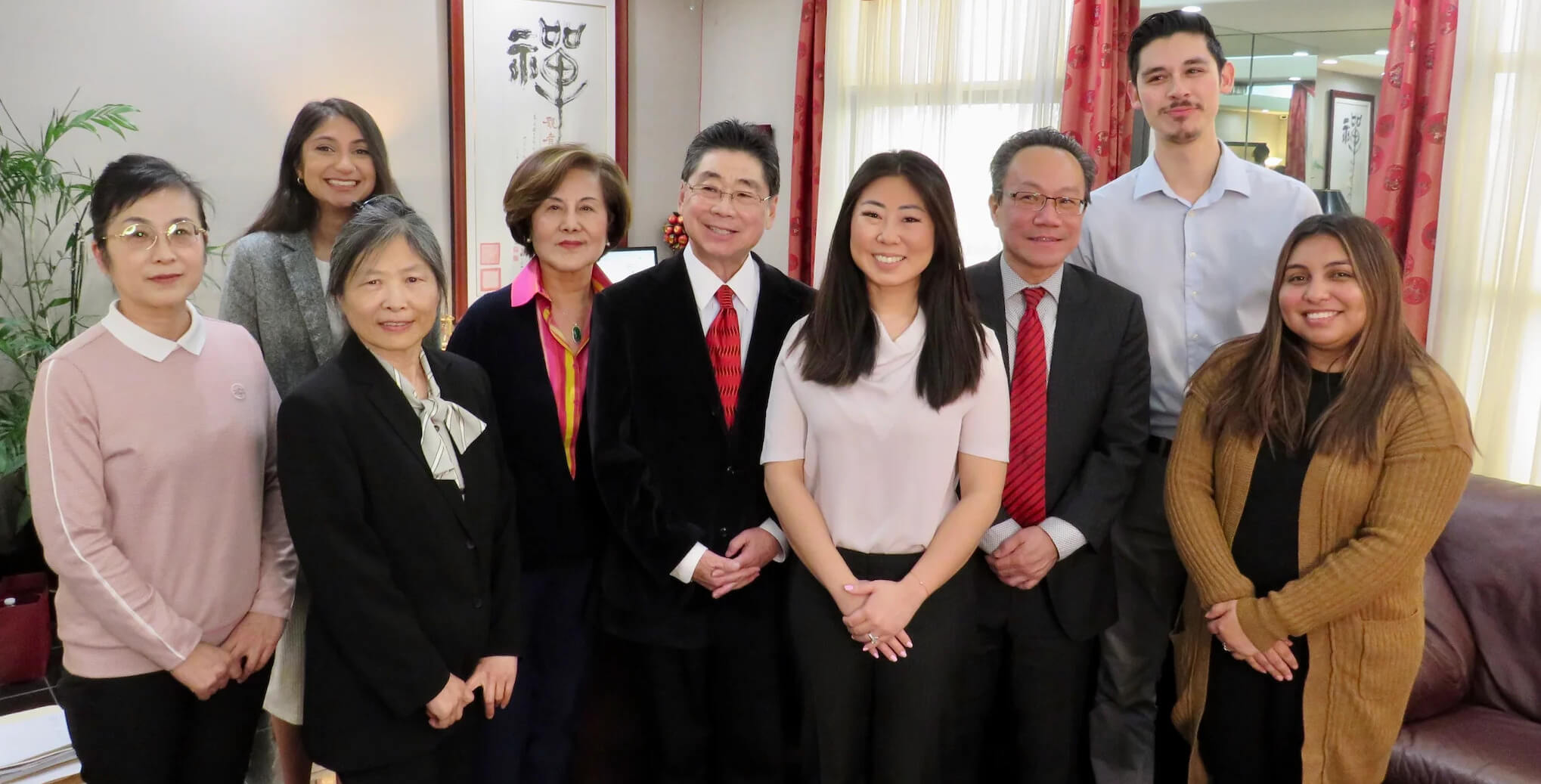

Why Choose Us?

  • Unmatched Expertise

    Trust in Peter Chu's 75+ years of collective experience to guide you through complex immigration matters.

  • Tailored Solutions

    Our personalized strategies adapt to your unique circumstances, ensuring we meet your specific immigration needs.

  • Proven Success

    Benefit from our solid track record in achieving favorable outcomes in various immigration cases across San Diego.

  • Dedicated Service

    Experience our client-first approach that ensures constant support and guidance throughout your immigration journey.

Davis, CA is home to UC Davis, one of the nation's leading research universities with over 1,200 active research faculty and an annual research expenditure exceeding $900 million — making it a primary hub for EB-1B outstanding researcher visa petitions in Northern California. For researchers, postdoctoral scholars, and academic professionals across Davis neighborhoods spanning zip codes 95616, 95617, and 96108, the difference between a successful EB-1B petition and a Request for Evidence often comes down to whether the evidence package properly documented international recognition under USCIS standards before filing. Law office of Peter Darwin Chu has represented researchers through the EB-1B outstanding researcher visa Davis process in California immigration courts and USCIS service centers, understanding both the academic merit requirements and the specific documentation standards California research institutions must meet.

Book a Consultation

Law office of Peter Darwin Chu is a California-licensed immigration law firm serving Davis residents seeking EB-1B outstanding researcher visa representation — providing USCIS petition preparation, evidence compilation, university sponsor coordination, and permanent residency processing with consultations available within one week. We handle EB-1B petitions for researchers at UC Davis, research institutions throughout Yolo County, and qualifying private sector research organizations across Northern California. Every petition includes comprehensive citation analysis, peer review documentation, and employer petition letter drafting tailored to USCIS evidence standards.

EB-1B Outstanding Researcher Visa Davis Services Available Across Davis and Surrounding Areas

Law office of Peter Darwin Chu represents EB-1B visa applicants throughout Davis, CA and surrounding Yolo County communities. We serve researchers and academic professionals in Old North Davis, West Davis, South Davis, and Downtown Davis across zip codes 95616, 95617, and 96108. All California residents with qualifying research positions and sponsoring employers are eligible for EB-1B representation regardless of county, with particular expertise serving UC Davis faculty, California State University researchers, and private research institution personnel throughout Northern California.

What Davis Researchers Can Access Through Our EB-1B Immigration Practice

EB-1B Outstanding Researcher Petition Preparation

The EB-1B classification requires demonstrating international recognition as outstanding in a specific academic field through at least two types of evidence among six regulatory criteria — including original research contributions, authorship of scholarly publications, participation as a peer reviewer, and membership in associations requiring outstanding achievement. Law office of Peter Darwin Chu conducts comprehensive evidence audits for Davis researchers, identifying which USCIS criteria your publication record, citation metrics, conference presentations, and professional recognitions satisfy. We prepare the I-140 immigrant petition, compile supporting documentation, draft detailed legal briefs addressing each regulatory criterion, and coordinate directly with UC Davis or your sponsoring institution's international office to ensure the employer petition letter meets USCIS permanent job offer requirements. For researchers transitioning from J-1 or H-1B status, we assess whether your current work satisfies the 'at least three years of experience' requirement and whether your employer qualifies as a university, institution of higher education, or private employer with a documented research department employing at least three full-time researchers.

EB-1B vs. EB-2 NIW Strategy Assessment

Many Davis researchers qualify for both EB-1B (outstanding researcher) and EB-2 National Interest Waiver pathways — but the strategic choice depends on your employer's willingness to sponsor, your citation profile strength, and current priority date backlogs. EB-1B requires employer sponsorship and a permanent job offer, while EB-2 NIW allows self-petitioning without employer involvement. We provide side-by-side eligibility analysis: if your research field has significant EB-2 retrogression (particularly for researchers born in China or India), EB-1B's current priority date advantage may justify securing institutional sponsorship. Conversely, if you're between positions or your institution cannot commit to permanent employment, EB-2 NIW provides filing flexibility. This comparative assessment is included in every initial consultation for Davis researchers exploring their permanent residency options.

University and Research Institution Employer Coordination

EB-1B petitions require substantial employer participation: the sponsoring institution must file the I-140 petition, provide a detailed permanent job offer letter specifying research duties, and demonstrate it meets USCIS definitions of a qualifying employer. Law office of Peter Darwin Chu coordinates directly with UC Davis Office of International Affairs, California State University system international offices, and private research institution HR departments to draft compliant employer letters, compile institutional documentation (such as evidence of ongoing research activity and full-time researcher employment), and ensure all USCIS filing fees and forms are properly executed. For researchers at institutions without dedicated immigration counsel, we provide the full employer coordination typically handled by university legal offices, ensuring your sponsoring department understands petition timelines, evidence requirements, and post-approval permanent residency processing steps.

Get in touch

Get clear, expert legal guidance tailored to your visa, green card, or citizenship needs.

Licensed California Immigration Representation and Professional Standards

Law office of Peter Darwin Chu operates under admission to the California State Bar and maintains professional liability coverage as required under California Rules of Professional Conduct Rule 1.15. Our EB-1B practice is governed by federal immigration law under the Immigration and Nationality Act Section 203(b)(1)(B) and USCIS Policy Manual Volume 6, Part F, Chapter 4 — Outstanding Professors and Researchers. We provide written representation agreements disclosing all fees, case costs, and refund policies before representation begins, ensuring transparency in what is often a multi-year permanent residency process. All client consultations include honest assessments of petition strength: if your citation profile or research recognition does not yet meet EB-1B evidence thresholds, we will advise you on timeline and recommend alternative pathways rather than file a petition likely to receive a Request for Evidence or denial.

Inquire now to check if you qualify

What If My UC Davis Department Will Sponsor Me But I Don't Have Enough Citations for EB-1B in Davis?

Citation counts alone do not determine EB-1B eligibility — USCIS evaluates international recognition through six regulatory criteria, only two of which must be satisfied. If your citation metrics are below field averages, we assess alternative evidence: original contributions to your field (documented through expert letters), authorship of scholarly articles in high-impact journals, peer review service for major publications, invited conference presentations, and memberships in selective professional associations. Many Davis researchers qualify through peer review evidence and expert letters attesting to research significance even when citation counts are modest. If two criteria cannot be strongly documented, EB-2 NIW may be the better pathway — it requires demonstrating your research has substantial merit and national importance, a different standard that may favor researchers with novel methodologies or early-stage citation profiles.

What If I'm a Postdoc at UC Davis — Do I Qualify for EB-1B in Davis?

Postdoctoral scholars can qualify for EB-1B if they meet the 'at least three years of experience in teaching or research' requirement and the sponsoring institution offers a permanent research position. The three-year requirement can be satisfied through combined doctoral training and postdoctoral research, but USCIS interprets 'experience' as time spent conducting independent research rather than coursework. The larger challenge is the permanent job offer: most UC Davis postdoc appointments are temporary training positions that do not satisfy EB-1B's requirement for a permanent or indefinite research role. If your department is willing to convert your postdoc to a continuing researcher appointment or offer a research scientist position, EB-1B becomes viable. Otherwise, EB-2 NIW — which requires no employer sponsorship — is typically the better path for Davis postdocs seeking permanent residency before securing faculty or staff positions.

What If My EB-1B Petition Is Approved — How Long Until I Receive My Green Card in Davis?

EB-1B petition approval (I-140 approval) is the first step in a two-stage process. If you are in the United States on valid nonimmigrant status, you file an I-485 Adjustment of Status application concurrently or after I-140 approval to receive your permanent resident card. Current USCIS processing times for I-485 applications filed in California range from 8 to 18 months depending on field office workload. If you are outside the United States when your I-140 is approved, you complete consular processing through the National Visa Center and a U.S. embassy interview, typically adding 3 to 6 months. EB-1 visas (including EB-1B) are current for all countries as of 2026, meaning no priority date backlog — you can file I-485 immediately upon I-140 approval. Total timeline from petition filing to green card receipt for Davis researchers typically ranges from 12 to 24 months depending on case complexity and USCIS processing speeds.

What If I'm Already on H-1B at UC Davis — Can I Still Apply for EB-1B in Davis?

Yes, H-1B status does not preclude EB-1B filing and is often the ideal staging status for outstanding researcher petitions. Your UC Davis H-1B sponsor can simultaneously sponsor your EB-1B I-140 petition without affecting your H-1B validity. Because EB-1B and H-1B both require employer sponsorship, institutions familiar with H-1B processing are generally well-positioned to handle EB-1B documentation. Filing EB-1B while on H-1B also provides important benefits: if your H-1B is approaching its six-year limit, an approved I-140 allows you to extend H-1B status in one-year or three-year increments under the American Competitiveness in the 21st Century Act while your I-485 is pending. We coordinate both petitions to ensure your employer letter, job duties, and wage attestations are consistent across filings and compliant with both Department of Labor LCA requirements (for H-1B) and USCIS permanent job offer standards (for EB-1B).

EB-1B Representation in Davis: Law Firm vs. DIY Petition vs. University Legal Office

Davis researchers pursuing EB-1B have three typical paths: hiring private immigration counsel, self-preparing the petition with university HR support, or relying entirely on the institution's legal office. Here's the honest answer: while UC Davis and other major California universities maintain international offices with immigration expertise, their support is typically administrative — they process the institutional paperwork, file the I-140, and ensure employer compliance — but they do not provide legal representation to the individual researcher. This means if USCIS issues a Request for Evidence questioning whether your publications demonstrate 'original contributions of major significance,' the university office will forward it to you but will not draft the legal response. Private immigration counsel provides that strategic layer: we review RFEs, draft substantive legal briefs, obtain supplemental expert letters, and represent you directly with USCIS if the petition is challenged.

| Approach | Evidence Compilation | RFE Response Drafting | Individual Legal Representation | Cost |
|---|---|---|---|
| Self-Prepared Petition | Researcher compiles citations, letters | No professional response — researcher drafts reply | None | $0 attorney fees, $700 USCIS filing fee |
| University Legal Office Only | Administrative support, basic document checklist | Limited — may provide templates but not case-specific argument | Represents institution, not individual | Typically no direct cost to researcher |
| Private Immigration Attorney | Comprehensive evidence audit, citation analysis, expert letter coordination | Full legal brief with regulatory citations and case law | Direct attorney-client relationship | $4,000–$8,000 depending on case complexity |
| Professional Assessment | DIY and university-only approaches work well for straightforward cases with strong publication records and no prior RFEs. Private counsel is essential when citation metrics are borderline, research field is interdisciplinary (making 'outstanding' harder to define), or prior petitions have been denied. |

The cost difference is real, but the value is most apparent when a petition encounters challenges: if your research contributions are questioned and you lack legal representation, the university will not step in to argue your case. For Davis researchers with strong institutional backing and unambiguous evidence, university-supported filing is often sufficient. For those with complex evidence profiles or prior immigration issues, private counsel provides the strategic representation that universities cannot.

Get in touch

Frequently Asked Questions

Find answers to common questions about our services

  • USCIS processing times for I-140 EB-1B petitions filed under California Service Center jurisdiction currently range from 4 to 8 months for standard processing, or 15 business days if premium processing is elected (additional $2,805 fee as of 2026). After

  • USCIS requires the sponsoring employer to offer a permanent or indefinite research position — not a temporary postdoctoral appointment or grant-funded role with a defined end date. For UC Davis and other California universities, this typically means a con

  • Yes, private sector researchers qualify for EB-1B if the employer meets USCIS requirements: the company must have a department, division, or institute engaged in research and must employ at least three full-time researchers in addition to the beneficiary.

  • EB-1B requires employer sponsorship, a permanent job offer, and at least three years of research experience — it is designed for researchers joining academic or research institutions. EB-1A requires no employer sponsorship or job offer and is self-petitio

  • UC Davis Office of International Affairs provides administrative support — they file the I-140, prepare institutional documentation, and ensure employer compliance — but they do not provide individual legal representation. If your petition is straightforw

  • Yes, an EB-1B denial does not permanently bar refiling, but the reason for denial determines your best path forward. If USCIS denied because evidence did not satisfy two regulatory criteria, you must either strengthen your publication record, obtain addit

  • Yes, your spouse and unmarried children under 21 qualify as derivative beneficiaries under EB-1B classification. They receive E-14 (spouse) and E-15 (children) immigrant visa categories and can apply for green cards concurrently with your I-485 Adjustment

  • Attorney fees for EB-1B representation in Davis typically range from $4,000 to $8,000 depending on case complexity, with straightforward university-sponsored cases at the lower end and complex private employer petitions at the higher end. These fees cover

Need Personalized Immigration Guidance?

Law office of Peter Darwin Chu provides EB-1B lawyer Davis services for outstanding researcher visa petitions throughout Davis, CA — including USCIS I-140 preparation, university sponsor coordination, RFE response drafting, and permanent residency processing with consultations available within one week and representation licensed under the California State Bar.

Related Immigration Services and Location Pages

For Davis researchers exploring alternative visa pathways, Law office of Peter Darwin Chu also handles EB-1A Visa petitions for individuals with extraordinary ability who do not require employer sponsorship, EB-2 Visa National Interest Waiver cases for researchers able to self-petition, and O-1 Visa Guidance for temporary work authorization in research or academic fields. We represent clients throughout Northern California, including researchers in nearby university communities — see our EB-1B Visa Los Angeles and EB-1B Visa Long Beach pages for Southern California coverage. For clients currently on nonimmigrant status seeking pathway guidance, our Immigrant Visas practice overview details all employment-based permanent residency categories.

Speak With Us Today