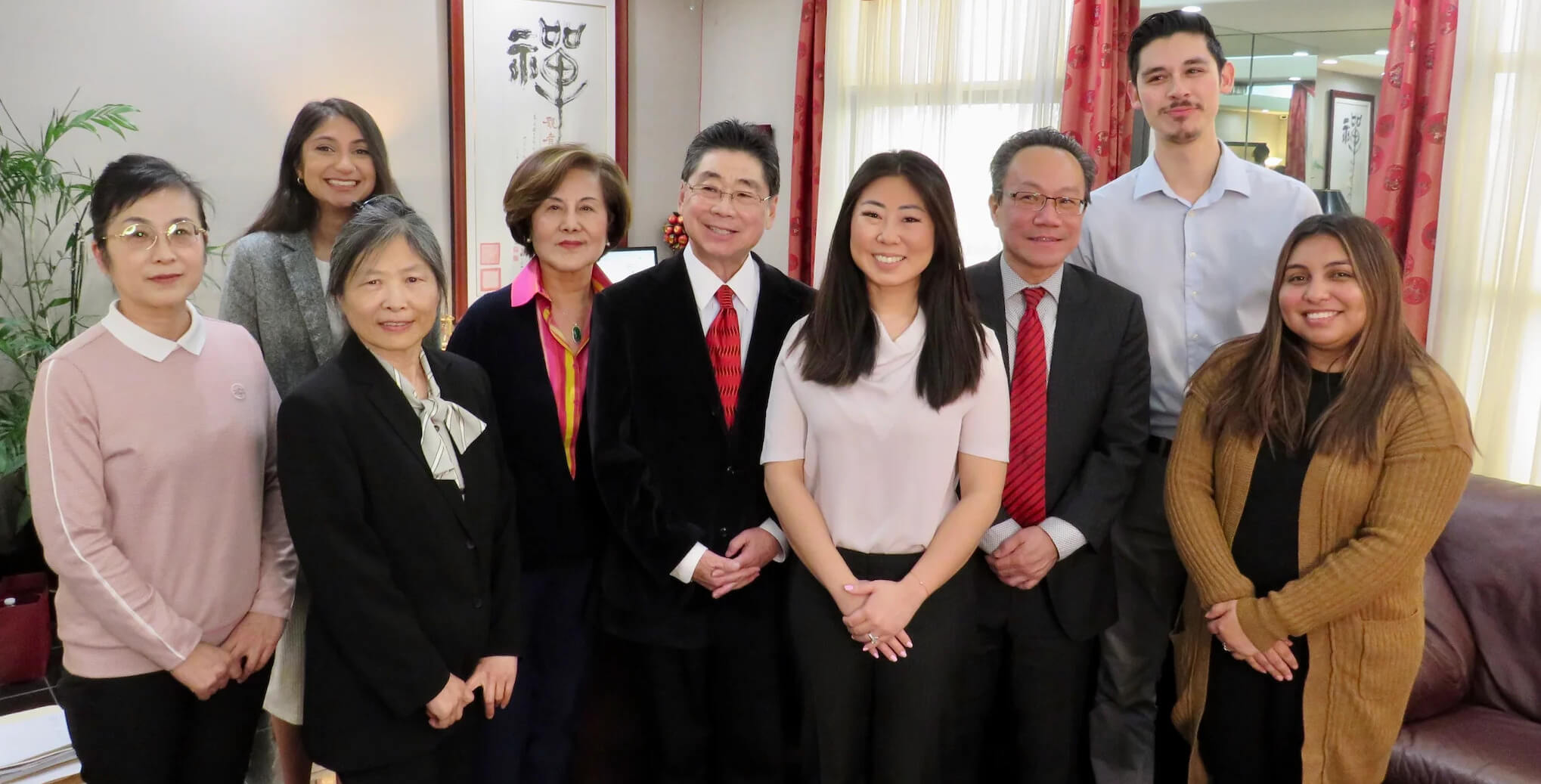

Why Choose Us?

  • Unmatched Expertise

    Trust in Peter Chu's 75+ years of collective experience to guide you through complex immigration matters.

  • Tailored Solutions

    Our personalized strategies adapt to your unique circumstances, ensuring we meet your specific immigration needs.

  • Proven Success

    Benefit from our solid track record in achieving favorable outcomes in various immigration cases across San Diego.

  • Dedicated Service

    Experience our client-first approach that ensures constant support and guidance throughout your immigration journey.

Detroit's automotive and engineering research sector—home to over 300 corporate R&D facilities and university labs—generates substantial EB-1B outstanding researcher visa demand, yet fewer than 18% of self-filed petitions meet the "sustained national or international acclaim" evidence standard on first submission, according to USCIS Administrative Appeals Office data. For researchers across Detroit, MI—from Wayne State University labs to General Motors Technical Center—the difference between approval and Request for Evidence (RFE) often comes down to whether your petition architect understood the three-prong evidence framework before assembling your documentation. Law Office of Peter Darwin Chu has prepared EB-1B petitions for Detroit-based researchers and knows this classification.

Book a Consultation

Law Office of Peter Darwin Chu is a Michigan-licensed immigration law firm serving Detroit residents—providing EB-1B outstanding researcher visa representation with no lottery requirement, priority date advantages over EB-2, and substantive case evaluations available within one week. We prepare petitions under the Immigration and Nationality Act Section 203(b)(1)(B) framework, requiring evidence of international recognition, at least three years of research experience, and a permanent research position offer.

EB-1B Lawyer Detroit Available Across Detroit and Surrounding Areas

Law Office of Peter Darwin Chu represents EB-1B outstanding researcher visa applicants throughout Detroit, MI and Wayne County—including Midtown, Downtown, Corktown, and Greater Detroit neighborhoods in zip codes 48201, 48202, 48204, 48205, and 48206. All Michigan residents with qualifying research credentials and employment offers are eligible for representation regardless of county or research institution location.

What Detroit Researchers Can Access

EB-1B Petition Preparation with Three-Prong Evidence Assembly

The EB-1B classification requires proof in three areas: (1) international recognition for outstanding achievements in your academic field, (2) at least three years of teaching or research experience in that field, and (3) entry into the United States to pursue tenure or tenure-track teaching or a comparable research position. Law Office of Peter Darwin Chu structures petitions to satisfy all three prongs simultaneously—compiling citation metrics, peer review documentation, recommendation letters from independent experts, and employment verification letters that specify the permanent nature of the research role. Detroit researchers benefit from our pre-filing RFE risk assessment, which identifies weak evidence categories before USCIS adjudication begins.

Priority Date and Processing Advantages Over EB-2 NIW

EB-1B petitions provide two strategic advantages for Detroit-based researchers: (1) no PERM labor certification requirement, eliminating 12–18 months of DOL processing, and (2) EB-1 priority dates that are typically current or near-current, while EB-2 India and China face multi-year backlogs. For researchers employed by Michigan universities or corporate R&D facilities, this classification accelerates the path to permanent residency by 2–4 years compared to EB-2 National Interest Waiver alternatives. We advise clients on concurrent I-140/I-485 filing eligibility when priority dates are current.

Post-Approval I-485 Strategy and Employer Portability

Once your EB-1B I-140 is approved and your priority date is current, you may file Form I-485 to adjust status to permanent resident. Law Office of Peter Darwin Chu coordinates I-485 preparation, including medical examination scheduling, travel document applications (Advance Parole), and work authorization (EAD) filings. Under AC21 portability provisions, researchers who have I-485 pending for more than 180 days may change employers to a similar research position without jeopardizing their green card application—a critical protection for Detroit researchers navigating competitive academic and corporate hiring markets.

Get clear, expert legal guidance tailored to your visa, green card, or citizenship needs.

Licensed Michigan Immigration Practice with USCIS Compliance Standards

Law Office of Peter Darwin Chu maintains all required Michigan state bar licenses and professional liability coverage, operating under American Immigration Lawyers Association (AILA) ethical standards and USCIS filing protocols. Every EB-1B petition we prepare includes Form G-28 Notice of Entry of Appearance, complete evidentiary indices, and compliance with 8 CFR 204.5(i) regulatory requirements governing outstanding researcher classifications. Detroit clients receive transparent fee agreements specifying petition preparation costs, government filing fees ($700 I-140 base fee, $2,805 premium processing if elected), and cost structures for RFE responses or appeals—before representation begins.

Inquire now to check if you qualify

What If My Research Institution in Detroit Does Not Offer Tenure-Track Positions?

The EB-1B classification does not require tenure-track employment—it requires a "permanent" research position, which USCIS defines as either tenure or tenure-track, or a position with no fixed end date. Corporate research roles, national laboratory positions, and non-tenure university research scientist appointments qualify if the employer letter confirms the role is indefinite and not term-limited. Law Office of Peter Darwin Chu drafts employer letters that satisfy 8 CFR 204.5(i)(3)(iii) permanency requirements for Detroit researchers in both academic and private-sector settings.

What If I Have Fewer Than 100 Citations—Can I Still Qualify for EB-1B in Detroit?

USCIS does not impose a numerical citation threshold for EB-1B classification—citation metrics are one form of evidence among ten possible categories, and you need to satisfy at least two. Researchers with fewer than 100 citations can demonstrate international recognition through other evidence: peer review service for top-tier journals, membership in associations requiring outstanding achievements, original contributions of major significance to the field, or authorship of scholarly articles in high-impact publications. Law Office of Peter Darwin Chu structures petitions for Detroit researchers by identifying your two strongest evidence categories and building multi-layered proof within each.

What If I Receive an RFE on My EB-1B Petition Filed from Detroit?

Requests for Evidence (RFE) on EB-1B petitions typically challenge one of three areas: insufficient proof of international recognition, unclear permanency of the research position, or lack of independent expert letters confirming your contributions. RFE response deadlines are strict—typically 87 days from issuance—and require submission of new evidence, not restatement of original arguments. Law Office of Peter Darwin Chu prepares RFE responses for Detroit researchers by commissioning additional expert letters, obtaining supplemental citation reports, securing clarified employer letters, and drafting point-by-point legal briefs addressing each USCIS concern under the preponderance of evidence standard.

What If My Employer in Detroit Will Not Sponsor My Green Card—Can I Self-Petition EB-1B?

No—the EB-1B outstanding researcher classification requires employer sponsorship because it is predicated on a permanent research position offer. Unlike EB-1A extraordinary ability, which permits self-petitioning, EB-1B petitions must be filed by the employing university, research institution, or private employer. Detroit researchers whose employers decline sponsorship should evaluate EB-1A or EB-2 National Interest Waiver classifications, both of which allow self-filing. Law Office of Peter Darwin Chu conducts eligibility assessments across all three employment-based first and second preference categories to identify your strongest path.

Comparing EB-1B Outstanding Researcher Representation Options in Detroit

Detroit researchers pursuing EB-1B classification face three primary representation paths: (1) self-filing with DIY petition software, (2) engagement of a general practice immigration attorney, or (3) retention of counsel with specific EB-1 petition experience. Here's the honest answer: EB-1B petitions are evidence-intensive—USCIS adjudicators expect legal briefs citing precedent decisions (Matter of Dhanasar, Matter of Chawathe), comparative citation analysis, and expert letters from researchers outside your institution who can attest to your independent reputation. Software cannot draft this level of argumentation, and general immigration practitioners who primarily handle family-based cases or H-1B extensions lack the technical research background to evaluate whether your Nature publication carries more evidentiary weight than your conference proceedings. Law Office of Peter Darwin Chu structures every EB-1B petition as a legal brief, not a form package.

ApproachEvidence StrategyRFE Risk ManagementProfessional Assessment
DIY SoftwareTemplate checklists with no field-specific analysisGeneric form responses with no legal argumentHigh risk—no legal review of evidence sufficiency
General Immigration AttorneyStandard petition format without citation analysisLimited RFE response capability on technical research issuesModerate risk—lacks EB-1 specialization
EB-1 SpecialistField-specific evidence hierarchy with expert letter coordinationPrecedent-based RFE responses citing AAO decisionsStrongest position—petition structured as legal brief

Get in touch

Frequently Asked Questions

Find answers to common questions about our services

  • Standard I-140 processing for EB-1B petitions averages 4–6 months at USCIS Texas or Nebraska Service Centers, though premium processing ($2,805 additional fee) guarantees 15-calendar-day adjudication. Once your I-140 is approved and your priority date is

  • EB-1A extraordinary ability classification permits self-petitioning and requires evidence of sustained national or international acclaim at the very top of your field, demonstrated through a one-time major award or three of ten alternative evidence catego

  • Yes—EB-1B I-140 petition approval does not violate J-1 two-year home residency requirements because I-140 approval does not confer immigration status. However, you cannot adjust status to permanent resident (file I-485) until you either fulfill the two-ye

  • Law Office of Peter Darwin Chu prioritizes evidence in this hierarchy for Detroit EB-1B petitions: (1) independent expert letters from researchers at peer institutions confirming your international reputation, (2) objective citation metrics with field-spe

  • EB-1B attorney fees in Detroit typically range from $8,000 to $15,000 for full petition preparation, including legal research, evidence analysis, expert letter coordination, employer letter drafting, and I-140 filing. This fee is separate from government

  • Grant-funded research positions can qualify as 'permanent' for EB-1B purposes if the employer letter confirms the position is not term-limited to the grant period and the institution commits to continuing the role beyond grant expiration. USCIS scrutinize

  • EB-1B outstanding researcher classification explicitly includes private-sector research employers—USCIS requires only that the employer have at least three full-time researchers and documented achievements in the field. Detroit-based corporate researchers

  • Approved I-140 petitions remain valid even if you change employers, but your ability to adjust status depends on whether you have a pending I-485. If your I-485 has been pending for more than 180 days and your new job is in the same or similar occupationa

Need Personalized Immigration Guidance?

Law Office of Peter Darwin Chu provides EB-1B lawyer Detroit services with USCIS-compliant petition preparation, priority date advantage over EB-2, and substantive case review for Michigan researchers pursuing outstanding researcher classification under INA 203(b)(1)(B).

Detroit researchers evaluating multiple green card pathways benefit from comparing EB-1B outstanding researcher classification against related options. Our EB-1A Visa page details the extraordinary ability self-petition alternative for researchers with stronger independent recognition profiles, while our EB-1C Visa Law Office resource addresses multinational manager transfers for researchers in corporate R&D settings. Detroit clients pursuing concurrent strategies should review our EB-2 Visa guidance for National Interest Waiver comparison. Additional context on employment-based immigrant visas appears on our Immigrant Visas overview page, and our EB-1B Visa national resource provides comprehensive regulatory analysis. Law Office of Peter Darwin Chu also assists with EB-3 Visa cases for researchers who do not yet meet EB-1 standards.

Speak With Us Today