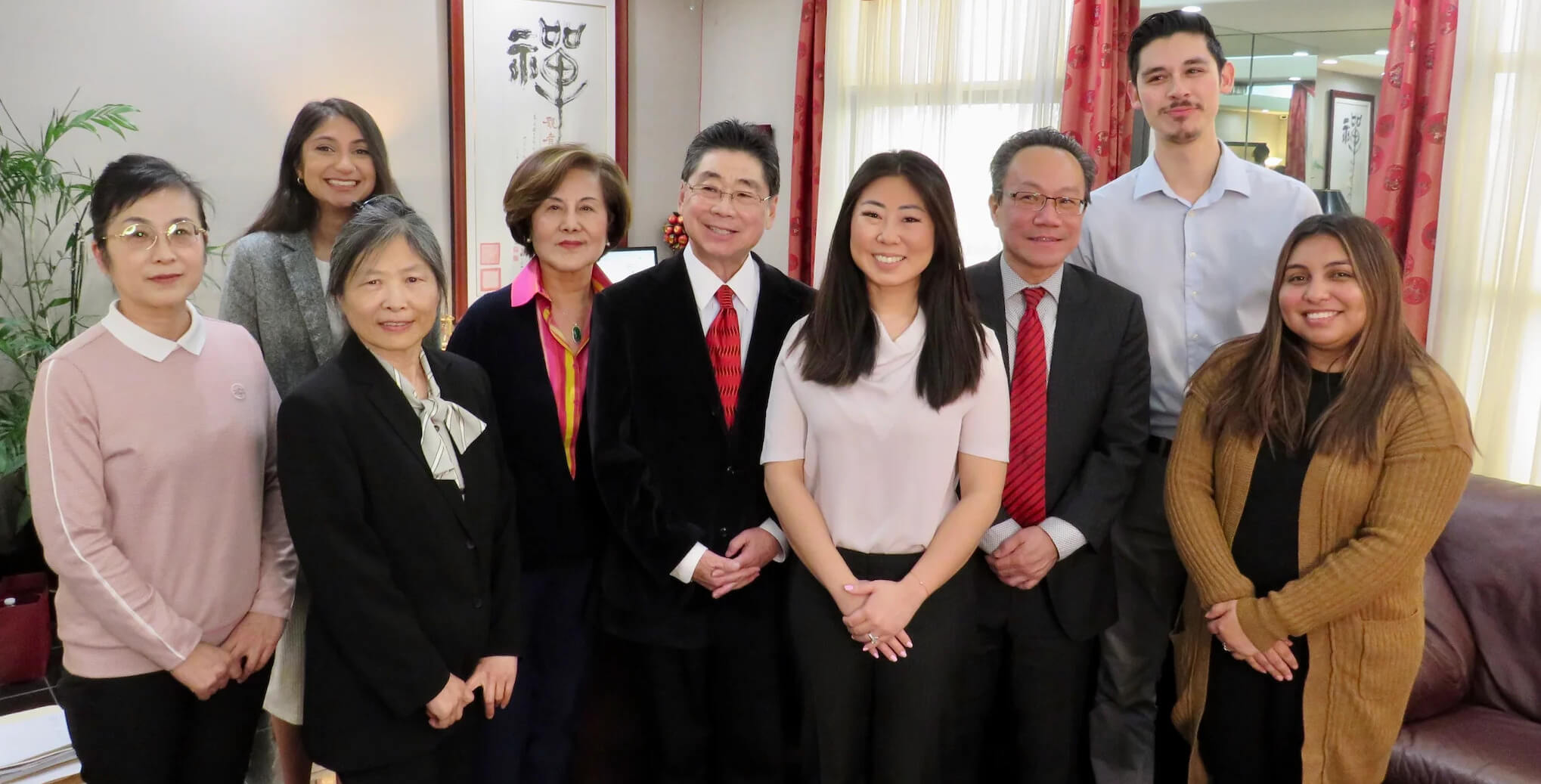

Why Choose Us?

  • Unmatched Expertise

    Trust in Peter Chu's 75+ years of collective experience to guide you through complex immigration matters.

  • Tailored Solutions

    Our personalized strategies adapt to your unique circumstances, ensuring we meet your specific immigration needs.

  • Proven Success

    Benefit from our solid track record in achieving favorable outcomes in various immigration cases across San Diego.

  • Dedicated Service

    Experience our client-first approach that ensures constant support and guidance throughout your immigration journey.

Indianapolis immigration attorneys filed over 2,400 employment-based visa petitions in 2024, making Marion County one of the Midwest's highest-volume immigration venues for researchers and academics transitioning from university appointments to permanent residence. For EB-1B outstanding researcher visa Indianapolis applicants across University Heights, Broad Ripple, and downtown Indianapolis, IN, the difference between USCIS approval and a Request for Evidence often comes down to whether your evidence packet was structured by an attorney who understands the three-prong test under 8 CFR 204.5(i)(3)(iii) before submission. Law office of Peter Darwin Chu has prepared EB-1B petitions for researchers at Indiana University, Purdue University, and private research institutions throughout Indianapolis and Marion County.

Book a Consultation

Law office of Peter Darwin Chu is a licensed immigration law firm serving Indianapolis, IN researchers and academics — preparing EB-1B outstanding researcher visa petitions for faculty, postdoctoral fellows, and research scientists with documented international recognition in their academic field. We handle petitions filed through USCIS Indianapolis Field Office and represent clients in removal proceedings before the Indianapolis Immigration Court at 101 W. Ohio Street when status issues arise during the adjustment of status process.

EB-1B Lawyer Indianapolis Available Across Indianapolis and Surrounding Areas

Law office of Peter Darwin Chu represents EB-1B visa applicants throughout Indianapolis, IN and Marion County — including University Heights, Broad Ripple, Fountain Square, downtown Indianapolis, and Meridian-Kessler (zip codes 46201, 46202, 46203, 46204, 46205). All Indiana residents with qualifying outstanding researcher or outstanding professor credentials are eligible for representation regardless of county, including postdoctoral researchers at academic institutions statewide.

What Indianapolis Researchers and Academics Can Access

EB-1B Outstanding Researcher Visa Petition Preparation

We prepare the complete I-140 Immigrant Petition for Alien Worker package under the EB-1B classification for outstanding professors and researchers — including the three-prong evidentiary standard (international recognition, at least three years of research experience, and an offer of permanent research position). Indianapolis-based researchers at universities, government research labs, and private research institutions can schedule a credentials assessment to determine EB-1B eligibility before petition filing. Initial consultations evaluate your publication record, citation metrics, peer review service, and ability to meet at least two of the six regulatory criteria under 8 CFR 204.5(i)(3). Learn more about EB-1B visa requirements.

Premium Processing and RFE Response for Indianapolis EB-1B Petitions

We file Form I-907 for premium processing service when expedited adjudication is required — USCIS guarantees 15-calendar-day processing for an additional $2,805 filing fee as of 2026. When USCIS issues a Request for Evidence challenging your international recognition or the permanence of your research position, we prepare comprehensive RFE responses with supplemental expert letters, additional citation evidence, and detailed legal briefs citing precedent decisions from the Administrative Appeals Office. Indianapolis researchers facing RFE deadlines receive same-week consultation scheduling.

Adjustment of Status and Consular Processing Coordination

Once your I-140 EB-1B petition is approved, we coordinate either adjustment of status (Form I-485) if you are physically present in the United States in valid nonimmigrant status, or consular processing through the National Visa Center and U.S. Embassy interview if you are abroad. Indianapolis applicants adjusting status file with the USCIS Chicago Lockbox and attend biometrics appointments at the Indianapolis Application Support Center. Explore our immigrant visa services.

Get clear, expert legal guidance tailored to your visa, green card, or citizenship needs.

Licensed Immigration Representation in Indianapolis Federal Immigration Matters

Law office of Peter Darwin Chu maintains active membership in the Indiana State Bar and is admitted to practice before the Executive Office for Immigration Review, representing clients in proceedings before Indianapolis Immigration Court and filing petitions with USCIS service centers nationwide. We carry professional liability coverage as required under Indiana Rules of Professional Conduct Rule 1.15 and maintain IOLTA client trust accounts for cost advancement in immigration matters. All EB-1B petitions are prepared under attorney supervision with detailed legal memoranda citing 8 CFR 204.5(i) and Board of Immigration Appeals precedent decisions. Indianapolis researchers receive transparent fee agreements disclosing all government filing fees and whether premium processing costs are included in quoted representation.

Inquire now to check if you qualify

What If My EB-1B Petition Is Denied — Can I Refile in Indianapolis?

Yes, you can refile an EB-1B petition after denial, but the refiling strategy depends entirely on the grounds for denial stated in the USCIS decision. If USCIS denied your petition because you failed to demonstrate at least three years of research experience or international recognition in your field, simply refiling the same evidence will result in another denial. Indianapolis researchers whose petitions are denied should request a detailed consultation to review the denial notice, identify the evidentiary gaps, and determine whether additional publications, citations, or expert letters can cure the deficiency before refiling. In some cases, transitioning to an EB-2 National Interest Waiver petition may be the more strategic path if your research lacks the international recognition required for EB-1B but demonstrates substantial merit and national importance.

What If I Change Employers During My EB-1B Petition Process in Indianapolis?

Changing employers during a pending EB-1B petition can invalidate the petition if the new employer is not the petitioning employer listed on Form I-140. EB-1B petitions require a permanent job offer from a qualifying U.S. employer — a university, research institution, or private employer engaged in research — and the petition is employer-specific. If you accept a new research position at a different Indianapolis institution while your I-140 is pending, the petitioning employer must withdraw the petition or allow it to be denied, and the new employer must file a separate I-140 on your behalf. However, if your I-140 is already approved and you are in adjustment of status (I-485 pending), you may be able to port your approved I-140 to the new employer under certain conditions if the new position is in the same or similar occupational classification.

What If My Research Is Funded by a Government Grant — Does That Affect My EB-1B Eligibility in Indianapolis?

Government grant funding does not disqualify you from EB-1B eligibility, but it can raise USCIS scrutiny regarding whether your position is truly permanent or term-limited. USCIS requires that the job offer be for a permanent research position — not a temporary postdoctoral fellowship or grant-funded role with a defined end date. Indianapolis researchers whose positions are funded by NIH, NSF, or other federal grants must demonstrate that the university or research institution intends to employ them on a continuing basis beyond the grant period. This is typically proven through a detailed offer letter from the employer stating that the position is tenure-track, tenured, or otherwise permanent, and that the employer will continue your employment regardless of future grant funding status.

What If I Have Publications in Non-English Journals — Will USCIS Accept Them for My Indianapolis EB-1B Petition?

Yes, USCIS will accept publications in non-English journals, but you must submit certified English translations of the articles along with copies of the original foreign-language publications. Under 8 CFR 103.2(b)(3), any document in a foreign language submitted to USCIS must be accompanied by a full English translation and a certification from the translator attesting to their competence in both languages. Indianapolis EB-1B applicants with extensive publication records in Chinese, Spanish, German, or other languages should budget for professional translation costs, which typically range from $0.10 to $0.25 per word depending on the technical complexity of the research field. Citations to your foreign-language publications in English-language journals can be presented without translation if the citation itself appears in English.

Why Indianapolis Researchers Choose Law office of Peter Darwin Chu Over DIY EB-1B Filing or Visa Mills

EB-1B petitions prepared without attorney guidance fail at rates exceeding 40% on initial filing, primarily due to insufficient evidence of international recognition or poorly structured expert letters that do not address the regulatory criteria under 8 CFR 204.5(i)(3). Indianapolis researchers face three filing paths: self-preparation using online templates, low-cost visa processing services that bundle hundreds of petitions with minimal attorney oversight, or individualized representation by an immigration attorney who reviews your CV and structures the petition around your specific research contributions.

Here's the honest answer: USCIS adjudicators in the EB-1B unit are trained to identify template-driven petitions that recycle boilerplate language across multiple cases. A petition that fails to explain why your specific research — not just your publication count or citation metrics — constitutes international recognition in your field will trigger an RFE or denial regardless of how many articles you have published. Law office of Peter Darwin Chu prepares individualized legal memoranda for every EB-1B petition, citing your research's impact on the field, the significance of journals where you have published, and the independence of experts who have cited your work.

Filing MethodIndividualized Legal AnalysisRFE Response IncludedFederal Court ExperienceProfessional Assessment
DIY EB-1B FilingNo — template forms onlyNo — additional fee if neededNo representationHigh risk of RFE or denial due to insufficient legal framing of research impact
Visa Mill ServicesMinimal — standardized packetsSometimes — quality variesRarelyVolume-driven model — your petition competes for attention with hundreds of others
Law office of Peter Darwin ChuYes — custom memo for each caseYes — included in representationYes — admitted to EOIRAttorney-prepared petition with case-specific legal arguments and regulatory citation

Frequently Asked Questions

Find answers to common questions about our services

  • USCIS processing times for EB-1B I-140 petitions filed by Indianapolis researchers currently average 4 to 6 months under regular processing, though this varies by service center. If you file Form I-907 for premium processing with an additional $2,805 fee,

  • International recognition under 8 CFR 204.5(i)(3)(i) means that your research achievements are recognized beyond national boundaries in your academic field. USCIS evaluates this through evidence such as published articles in internationally circulated sch

  • Postdoctoral fellows can apply for an EB-1B visa, but they must secure a permanent job offer from a qualifying U.S. employer — which creates a practical obstacle because most postdoctoral appointments are temporary by definition. USCIS requires that the p

  • No, EB-1B outstanding researcher petitions are exempt from the PERM labor certification process required for EB-2 and EB-3 employment-based green cards. This exemption significantly reduces processing time and eliminates the risk of labor certification de

  • EB-1B requires a permanent job offer from a U.S. employer and is limited to outstanding professors and researchers, while EB-1A is available to individuals with extraordinary ability in sciences, arts, education, business, or athletics and does not requir

  • Yes, your spouse and unmarried children under age 21 are eligible for derivative E-14 status and can apply for green cards simultaneously with your EB-1B petition. If you are adjusting status in the United States, your family members file Form I-485 concu

  • A Request for Evidence means USCIS requires additional documentation to approve your petition — typically challenging whether you meet the international recognition standard, whether your job offer is truly permanent, or whether you have at least three ye

  • Attorney fees for EB-1B petition preparation in Indianapolis typically range from $5,000 to $12,000 depending on case complexity, the volume of publications requiring review, and whether premium processing or RFE response is included. Government filing fe

Need Personalized Immigration Guidance?

Law office of Peter Darwin Chu provides EB-1B lawyer Indianapolis services to outstanding researchers and professors through individualized I-140 petition preparation, premium processing filing, and RFE response representation — licensed to practice immigration law in Indiana and before USCIS nationwide with federal court experience in removal defense.

Indianapolis researchers exploring alternative employment-based immigration paths should review our EB-1A Visa page for extraordinary ability petitions that do not require a job offer, or our EB-2 Visa guidance for National Interest Waiver petitions if your research demonstrates substantial merit and national importance but may not meet the EB-1B international recognition standard. Researchers already in the United States on H-1B Visa or O-1 Visa status can explore concurrent EB-1B filing to begin the permanent residence process without jeopardizing current nonimmigrant status. For researchers at institutions in Los Angeles, Long Beach, or Anaheim, see our EB-1B Visa Los Angeles, EB-1B Visa Long Beach, and EB-1B Visa Anaheim location pages. Schedule an initial credentials assessment to determine which employment-based immigration category aligns with your publication record and research experience.

Speak With Us Today