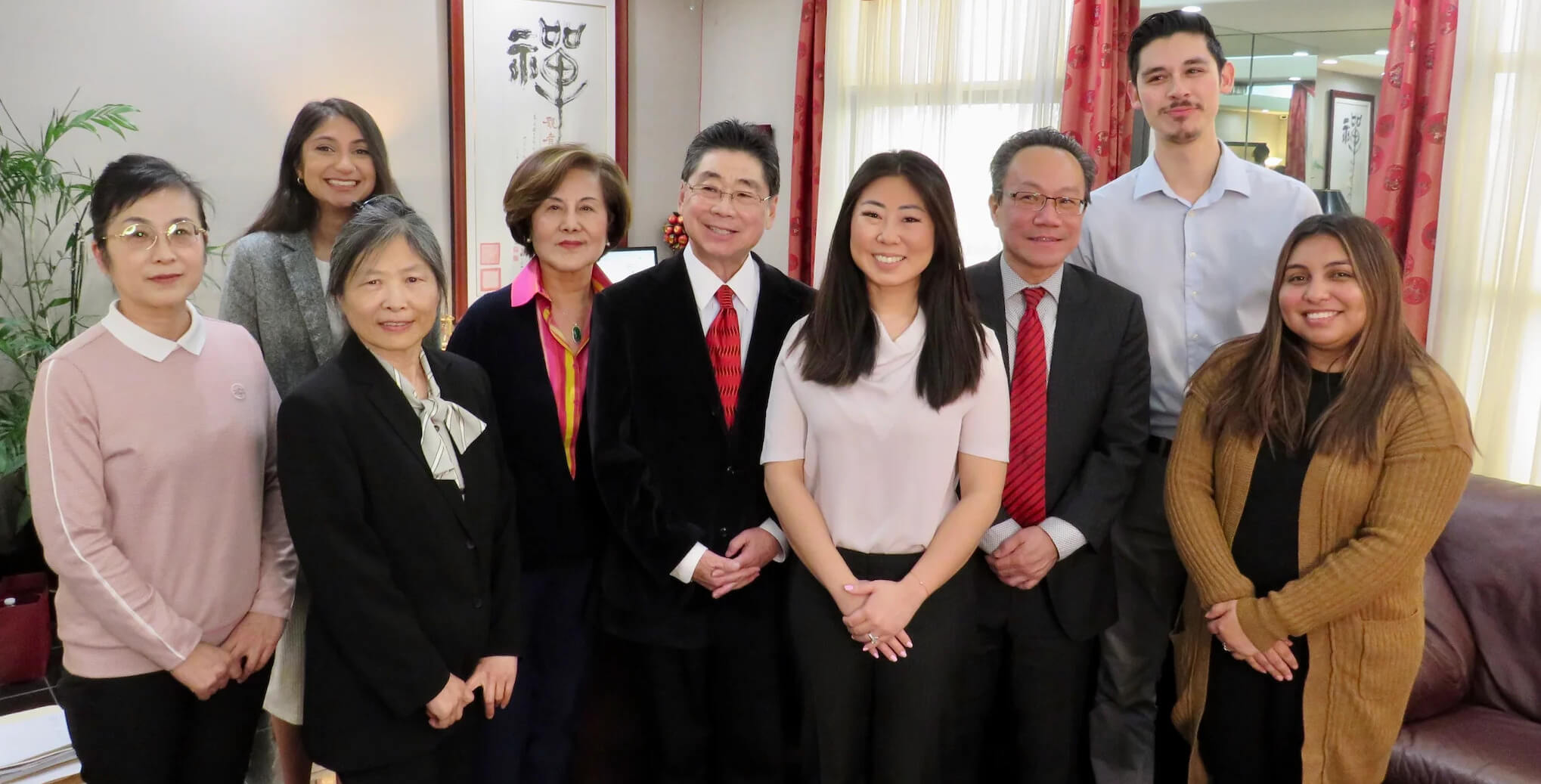

Why Choose Us?

  • Unmatched Expertise

    Trust in Peter Chu's 75+ years of collective experience to guide you through complex immigration matters.

  • Tailored Solutions

    Our personalized strategies adapt to your unique circumstances, ensuring we meet your specific immigration needs.

  • Proven Success

    Benefit from our solid track record in achieving favorable outcomes in various immigration cases across San Diego.

  • Dedicated Service

    Experience our client-first approach that ensures constant support and guidance throughout your immigration journey.

Indio, CA sits at the heart of the Coachella Valley, home to over 90,000 residents and a growing research sector spanning agricultural innovation, renewable energy projects, and medical research facilities — all industries that regularly sponsor EB-1B outstanding researcher and professor visa petitions. For Indio professionals seeking permanent residency through the EB-1B outstanding researcher visa, the difference between approval and a Request for Evidence often comes down to petition architecture: how the evidence is framed, which citations are emphasized, and whether the supporting letters meet USCIS evidentiary standards. Law office of Peter Darwin Chu has guided researchers, professors, and scientists through the EB-1B process in Indio and throughout California, building petitions that withstand scrutiny at the California Service Center.

Book a Consultation

Law office of Peter Darwin Chu is a California-licensed immigration law firm serving Indio residents with EB-1B outstanding researcher visa representation — providing petition preparation, evidence review, and RFE response with same-week consultations available. Our practice focuses exclusively on employment-based immigration, ensuring every EB-1B case is handled by an attorney with direct USCIS petition experience in California.

EB-1B Lawyer Indio Services Available Across Indio and Surrounding Areas

Law office of Peter Darwin Chu represents clients throughout Indio, CA — including residents in zip codes 92201, 92202, and 92203 — as well as professionals working at research institutions across the Coachella Valley. All California residents with qualifying outstanding researcher or professor credentials are eligible for EB-1B representation regardless of county, and we conduct consultations by video conference for clients who prefer remote meetings.

What Indio EB-1B Visa Applicants Can Access

EB-1B Petition Preparation and Filing

We prepare complete I-140 petitions for outstanding researchers and professors under the EB-1B classification, including the 10-page petition letter, evidence exhibits organized by regulatory criterion, and all USCIS forms required for filing. Every petition addresses the three mandatory EB-1B requirements — international recognition for outstanding achievements in a specific academic field, at least three years of experience in teaching or research, and a qualifying permanent research position offer — with documentation mapped to 8 CFR 204.5(i)(3)(i). Indio clients receive a draft petition for review before filing, and we coordinate directly with sponsoring employers to ensure the job offer letter meets USCIS permanency requirements. Petition preparation typically spans 4–6 weeks depending on evidence volume.

EB-1B Visa Evidence Strategy and Citation Analysis

The EB-1B classification requires proof of at least two of six regulatory criteria — including authorship of scholarly publications, judging the work of others, original scientific or scholarly contributions, and membership in associations requiring outstanding achievements. We conduct a pre-filing evidence audit to identify which criteria your record satisfies, analyze citation metrics (Google Scholar h-index, total citations, and citation trajectory), and advise on whether additional evidence — such as peer review assignments or conference presentations — should be secured before filing. For Indio researchers whose citation counts fall below typical approval thresholds, we frame contributions through alternative evidence such as adoption of your methodology by other labs, patents citing your work, or media coverage of your research findings.

Request for Evidence (RFE) Response

Approximately 20–30% of EB-1B petitions receive Requests for Evidence from USCIS, most commonly challenging whether the evidence establishes international recognition or whether the research position qualifies as permanent under the regulatory definition. We respond to RFEs by introducing supplemental evidence — updated citation reports, additional expert letters, or employer clarifications — and by reframing the original evidence to directly address the officer's concerns. RFE response deadlines are strictly enforced (typically 87 days from the RFE issue date), and missing the deadline results in automatic denial, making immediate attorney engagement critical.

Get clear, expert legal guidance tailored to your visa, green card, or citizenship needs.

Licensed California Immigration Representation in Indio

Law office of Peter Darwin Chu maintains active licensure with the State Bar of California and is authorized to practice immigration law before USCIS, the Board of Immigration Appeals, and federal immigration courts. Our practice carries professional liability insurance as required under California Rules of Professional Conduct Rule 1.15, and every EB-1B petition undergoes internal quality review before filing to verify regulatory compliance. We provide written fee agreements that itemize petition preparation costs, government filing fees (currently $700 for Form I-140 plus $2,805 for premium processing if elected), and the scope of representation — before any engagement begins.

Inquire now to check if you qualify

What If My Research Position in Indio Is Grant-Funded — Does That Disqualify Me from EB-1B?

Grant-funded positions can qualify for EB-1B if the employer can demonstrate the position is permanent or indefinite in duration, even if funding is temporary. USCIS requires a letter from the employer confirming the position will continue beyond the grant period, either through renewal of the grant or through institutional funding. Many Indio research institutions and universities structure EB-1B-eligible positions this way. If your grant has a fixed end date and the employer cannot commit to continuing the position, the EB-1B may not be viable, but alternative classifications like EB-2 National Interest Waiver may still be available.

What If I Don't Have Enough Citations Yet — Should I Wait to File My EB-1B in Indio?

Citation volume is one evidentiary criterion, but it is not the only pathway to EB-1B approval. If your record includes strong evidence in other areas — such as serving as a peer reviewer for top-tier journals, receiving competitive research grants, or authoring publications in high-impact journals — you may qualify even with modest citation counts. We evaluate your full evidentiary profile during the consultation and advise whether your current record supports filing or whether delaying 6–12 months to accumulate additional citations would materially improve approval odds. For Indio researchers early in their careers, the EB-2 NIW may be a stronger initial strategy.

What If USCIS Issues an RFE Questioning Whether My Indio Position Is Truly Permanent?

Permanency RFEs are common when the job offer letter does not explicitly state that the position is indefinite or permanent, or when the position is grant-funded. We respond by securing a supplemental letter from the employer that clarifies the permanent nature of the position, references institutional policies on tenure-track or research faculty appointments, and confirms the position exists beyond the current grant cycle. In some cases, we also provide comparative evidence showing that similar positions at peer institutions are treated as permanent for immigration purposes. Addressing permanency concerns requires employer cooperation, and responses are most effective when filed within 30 days of the RFE.

What If My EB-1B Outstanding Researcher Petition Is Denied — Can I Refile in Indio?

Yes, you can refile an EB-1B petition after denial, but refiling without addressing the denial grounds rarely succeeds. We review the denial notice to identify the specific evidentiary deficiencies USCIS cited — whether related to international recognition, the permanency of the position, or insufficient documentation of qualifying criteria — and advise whether additional evidence can cure those deficiencies. If the denial is based on a misinterpretation of the evidence, we may recommend filing a motion to reopen or reconsider before pursuing a new petition. For Indio applicants whose EB-1B petitions are denied, we also evaluate whether EB-2 National Interest Waiver or EB-1A Extraordinary Ability classifications may offer stronger approval prospects given your current credentials.

Why Indio Researchers Choose Law Office of Peter Darwin Chu Over Other EB-1B Options

Indio professionals seeking EB-1B representation have three main options: large immigration firms that handle high petition volume with junior associates, boutique firms specializing in academic and research immigration, and general practice attorneys who handle immigration matters alongside other legal work. Here's the honest answer: large-volume firms often treat EB-1B petitions as templated work product, recycling generic petition language across multiple cases without tailoring the evidence narrative to your specific research contributions — a strategy that works for straightforward approvals but collapses under scrutiny when USCIS issues an RFE. Law office of Peter Darwin Chu focuses exclusively on employment-based immigration, ensuring every petition is drafted by an attorney who understands the regulatory standards, the current adjudication trends at the California Service Center, and how to frame scientific contributions in language that satisfies USCIS evidentiary burdens.

Comparison FactorLarge Immigration FirmsGeneral Practice AttorneysLaw Office of Peter Darwin ChuProfessional Assessment
EB-1B Petition DraftingTemplated language, high associate turnoverLimited EB-1B experience, generic petitionsCustom petition narrative tailored to your evidence profileOnly custom narratives withstand RFE scrutiny
Citation AnalysisBasic metrics reviewOften skipped or outsourcedGoogle Scholar h-index, citation trajectory, field benchmarkingCitation framing determines petition strength
Employer CoordinationMinimal direct contactInconsistent follow-upDirect collaboration on job offer and permanency documentationEmployer clarity is mandatory for approval
Premium Processing StrategyAutomatically recommendedRarely discussedAdvised only when timeline justifies $2,805 feePremium processing does not improve approval odds

Get in touch

Frequently Asked Questions

Find answers to common questions about our services

  • Without premium processing, EB-1B petitions filed at the California Service Center currently average 6–10 months from filing to decision, though processing times fluctuate based on USCIS workload. Premium processing guarantees a decision within 15 busines

  • USCIS defines a permanent position as one that is either indefinite in duration or tenure-track, and the employer must confirm the position will not terminate after a specific project or grant cycle ends. For Indio research institutions, this typically in

  • Yes, H-1B visa holders are eligible to file EB-1B petitions, and the EB-1B does not require labor certification, making it faster than EB-2 or EB-3 classifications. Filing an EB-1B while on H-1B status does not jeopardize your current visa, and if your I-

  • Yes, the EB-1B classification requires a permanent or indefinite job offer from a qualifying U.S. employer — either a university, institution of higher education, or private employer engaged in research with at least three full-time researchers on staff.

  • USCIS requires evidence of international recognition for outstanding achievements in your specific academic field, demonstrated through at least two of six regulatory criteria: authorship of scholarly articles, participation as a judge of the work of othe

  • Yes, the EB-1B three-year experience requirement can be satisfied through teaching, research, or a combination of both, as long as the experience is in your academic field. For Indio applicants, this includes teaching roles at universities or colleges (ad

  • No, denial of an I-140 EB-1B petition does not affect your current nonimmigrant visa status (H-1B, O-1, J-1, etc.), and you can continue working under that status if it remains valid. You have several options after denial: file a motion to reopen or recon

  • Attorney fees for EB-1B petition preparation typically range from $5,000 to $10,000 depending on case complexity, the volume of evidence requiring review, and whether the petition involves coordinating with multiple co-authors or institutional administrat

Need Personalized Immigration Guidance?

Law office of Peter Darwin Chu provides EB-1B lawyer services in Indio, CA with petition preparation, evidence strategy, and RFE response — delivered through licensed California immigration attorneys with direct USCIS petition experience.

Related Immigration Services for Indio Professionals

Indio researchers and professors may also benefit from our related immigration services, including EB-1A Visa representation for extraordinary ability applicants, EB-2 Visa assistance for advanced degree professionals, and O-1 Visa guidance for nonimmigrant extraordinary ability cases. For professionals already in the United States on temporary visas, our H-1B Visa extension and transfer services ensure lawful status continuity during the EB-1B process. We also represent Indio clients pursuing EB-1B Visa Los Angeles and EB-1B Visa Anaheim representation in neighboring Southern California jurisdictions.

Speak With Us Today