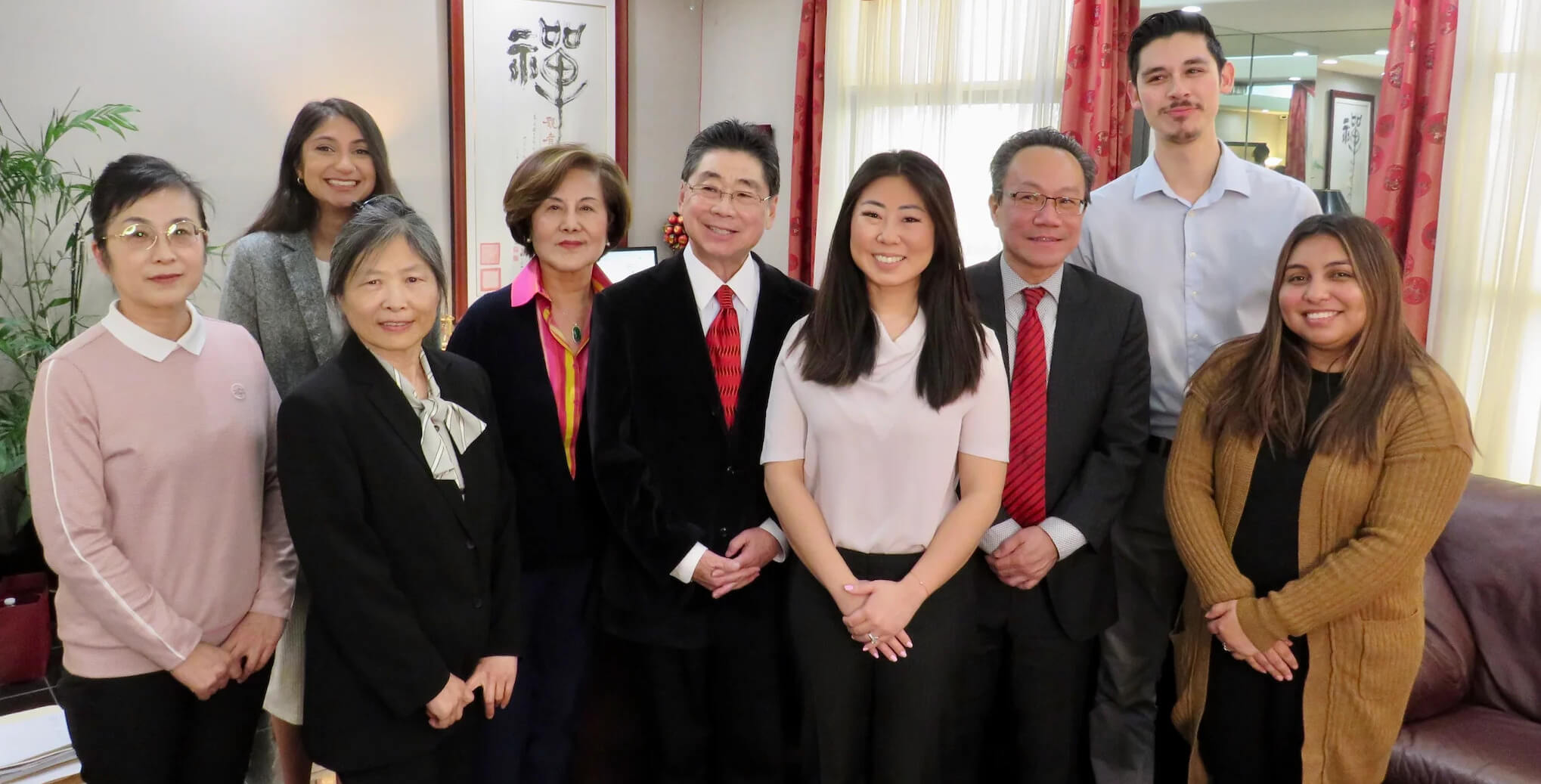

Why Choose Us?

  • Unmatched Expertise

    Trust in Peter Chu's 75+ years of collective experience to guide you through complex immigration matters.

  • Tailored Solutions

    Our personalized strategies adapt to your unique circumstances, ensuring we meet your specific immigration needs.

  • Proven Success

    Benefit from our solid track record in achieving favorable outcomes in various immigration cases across San Diego.

  • Dedicated Service

    Experience our client-first approach that ensures constant support and guidance throughout your immigration journey.

Livermore, CA is home to Lawrence Livermore National Laboratory, one of the nation's premier federally funded research and development centers, employing over 6,800 researchers and scientists — making it one of the highest concentrations of STEM professionals in the Bay Area and a natural hub for EB-1B outstanding researcher visa filings. For Livermore researchers seeking permanent residency through employment-based immigration, the difference between an approved petition and a Request for Evidence often comes down to whether your employer's job offer and your academic record were structured to meet the specific evidentiary criteria under INA Section 203(b)(1)(B) before submission. Law Office of Peter Darwin Chu represents Livermore-based researchers and their sponsoring institutions in EB-1B outstanding researcher visa petitions filed with USCIS California Service Center.

Book a Consultation

Law Office of Peter Darwin Chu is a California-licensed immigration law firm representing Livermore residents in EB-1B outstanding researcher visa petitions — with consultation available same week and representation covering I-140 petition preparation, evidence compilation, and USCIS correspondence. We serve researchers employed by universities, national laboratories, and private research institutions throughout the Bay Area who qualify under the two-prong EB-1B test: international recognition for outstanding achievements in a specific academic field, and a permanent research position offer.

EB-1B Lawyer Livermore Available Across Livermore and Surrounding Areas

Law Office of Peter Darwin Chu represents clients throughout Livermore, CA and surrounding Alameda County communities — including downtown Livermore near Lawrence Livermore National Laboratory, South Livermore residential areas, and East Avenue neighborhoods in zip codes 94550 and 94551. We serve researchers and academic professionals employed by institutions across the Tri-Valley region, including Pleasanton, Dublin, and San Ramon, as well as Bay Area universities and federally funded research centers requiring EB-1B outstanding researcher visa representation.

What Livermore Researchers Can Access

EB-1B Outstanding Researcher Visa Petition Preparation

We prepare Form I-140 Immigrant Petition for Alien Worker under the EB-1B outstanding researcher classification, compiling evidence that satisfies at least two of the six regulatory criteria under 8 CFR 204.5(i)(3)(i): major prizes or awards, membership in associations requiring outstanding achievements, published material about your work in professional publications, participation as a judge of others' work, original scientific or scholarly research contributions, and authorship of scholarly articles. Livermore researchers employed by Lawrence Livermore National Laboratory, Sandia National Laboratories, or UC Berkeley satellite facilities benefit from institutional support letters that we structure to meet USCIS evidentiary standards. Our representation includes drafting the employer's permanent job offer letter to satisfy the 'permanent research position' prong, ensuring it specifies indefinite duration and primary research duties as required under Matter of Lee.

EB-1B Visa Documentation and Evidence Strategy

EB-1B petitions require more than a strong CV — they require strategic evidence presentation that demonstrates international recognition in a specific academic field. We work with Livermore researchers to identify which of the six regulatory criteria your record satisfies most strongly, obtain detailed reference letters from independent experts in your field who can attest to the significance of your contributions, and structure your publication record to highlight citation counts, journal impact factors, and adoption of your research methodologies by other scholars. For researchers with patents, we document commercialization or licensing activity that demonstrates real-world impact beyond academic publication.

Premium Processing and USCIS Correspondence

EB-1B petitions filed with California Service Center currently process in 8–12 months under standard processing, or 15 business days under Premium Processing Service (Form I-907, additional $2,805 fee as of 2026). We prepare Requests for Evidence responses when USCIS questions the permanence of the job offer, the specificity of your acclaim, or whether your achievements rise to 'outstanding' under the statutory standard. Livermore researchers benefit from our experience responding to RFEs in cases involving early-career scientists, interdisciplinary research that doesn't fit traditional academic categories, and job offers from private research institutions that USCIS may not immediately recognize as qualifying employers.

Get clear, expert legal guidance tailored to your visa, green card, or citizenship needs.

Licensed California Immigration Representation

Law Office of Peter Darwin Chu is licensed to practice immigration law in California and maintains compliance with all State Bar of California Rules of Professional Conduct governing attorney-client communications, conflict screening, and trust account management. We carry professional liability insurance as required under California Business and Professions Code Section 6140.5 and provide written fee agreements before representation begins. Our EB-1B representation is governed by the ethical standards established in 8 CFR Part 1003 Appendix A (Standards for Professional Conduct) and we do not guarantee petition approval — USCIS adjudication is discretionary and depends on evidence quality, regulatory interpretation, and individual officer review.

Inquire now to check if you qualify

What If My Livermore Employer Is a Private Research Company — Does That Disqualify Me from EB-1B?

No — EB-1B classification is available to researchers employed by universities, private research institutions, and certain government research facilities, provided the employer can demonstrate a history of documented achievements in research. In Livermore, private biotech firms, national laboratory contractors, and applied research companies qualify if they can provide evidence of prior research accomplishments such as published studies, patents, or funded projects. The employer's job offer must specify that the position is permanent (indefinite duration, not project-based or grant-funded with a defined end date) and that your primary duty will be conducting research, not teaching, administration, or product development. USCIS applies heightened scrutiny to private employer petitions compared to university petitions, so documentation of the employer's research track record is critical.

What If I Have Only Three Years of Postdoctoral Experience — Is That Enough for EB-1B in Livermore?

The EB-1B regulation requires at least three years of experience in teaching or research in the academic field, so you meet the minimum threshold. However, USCIS increasingly interprets 'outstanding' to require more than minimal qualifications — particularly for early-career researchers without major awards or extensive independent citation records. Livermore researchers with three years of experience strengthen their petitions by documenting: first-author publications in high-impact journals, invitation to peer-review manuscripts or serve on conference program committees, adoption of your methodologies by other research groups, and independent citations (not self-citations or co-author citations). If your record is primarily collaborative work with senior PIs, we structure reference letters to isolate your individual contributions and intellectual leadership within those projects.

What If USCIS Issues an RFE Questioning Whether My Research Position in Livermore Is Truly Permanent?

This is the most common EB-1B RFE category, particularly for researchers employed under federal contracts, grant-funded positions, or private industry R&D roles. USCIS examines whether the job offer is indefinite or contingent on continued funding, project completion, or contract renewal. In Livermore, Lawrence Livermore National Laboratory employees often face this scrutiny because LLNL operates under a management contract with the Department of Energy. We respond by obtaining a detailed employer letter clarifying that while the contract is periodically renewed, your position is classified as career indefinite under the lab's personnel system, you are not assigned to a single project with a defined end date, and the lab has a documented history of continuous research operations spanning decades. For private employers, we provide evidence of the company's capitalization, revenue stability, and long-term research roadmap to demonstrate the position's permanence independent of any single funding source.

What If I Am Already in the U.S. on an H-1B Visa Working in Livermore — Can I File EB-1B While Maintaining H-1B Status?

Yes — filing an EB-1B I-140 petition does not affect your H-1B status and does not require you to change employers or stop working. The EB-1B petition is filed by your employer (the petitioner) with you as the beneficiary, and approval grants you an approved immigrant visa petition but does not by itself change your status to permanent resident. After I-140 approval, you file Form I-485 Application to Register Permanent Residence (adjustment of status) if you are in the U.S., or proceed through consular processing if abroad. H-1B holders in Livermore benefit from AC21 portability provisions: if your I-485 has been pending for 180 days or more, you can change employers without affecting your green card application, provided the new role is in the same or similar occupational classification.

Why Livermore Researchers Choose Law Office of Peter Darwin Chu Over General Immigration Clinics or DIY Filing

EB-1B petitions are unique among employment-based green card categories because they do not require labor certification (PERM) and adjudication depends entirely on the quality and presentation of evidence — not just its existence. Here's the honest answer: researchers who attempt to file EB-1B petitions without legal representation — or with representation from general immigration practitioners who handle all visa categories — face denial rates significantly higher than those represented by attorneys who specialize in academic and research-based immigration. The difference is not just familiarity with the regulation — it is understanding how USCIS officers trained in the specific EB-1 standards interpret evidence hierarchies, what constitutes 'original contribution of major significance,' and how to structure reference letters that address the Kazarian two-step analysis (threshold evidence, then final merits determination) mandated by the Ninth Circuit.

| Approach | Evidence Strategy | Reference Letter Quality | RFE Response Experience | Bottom Line |
|---|---|---|---|
| DIY Filing | Submits CV and publications without narrative context | Generic letters from co-authors or advisors | No experience — often results in abandonment | High risk of denial or RFE — not recommended for researchers without prior successful EB-1 filings |
| General Immigration Clinic | Standard I-140 template applied to all EB categories | Letters drafted by petitioner without legal review | Limited — treats RFE as form response | May succeed for clear-cut cases but lacks depth for borderline qualifications |
| EB-1 Specialist Counsel | Targets strongest 2-3 criteria with detailed evidentiary exhibits | Independent expert letters structured to Kazarian standard | Extensive — addresses specific officer concerns with case law | Highest approval rate — essential for early-career researchers or private employer petitions |

Get in touch

Frequently Asked Questions

Find answers to common questions about our services

  • EB-1B petitions filed with USCIS California Service Center currently process in 8–12 months under standard processing as of 2026. Researchers and employers can request Premium Processing Service by filing Form I-907 with an additional $2,805 fee, which gu

  • Attorney fees for EB-1B representation typically range from $8,000 to $15,000 depending on case complexity, with higher fees for cases involving early-career researchers, private employer petitions, or anticipated RFEs. This fee covers I-140 petition prep

  • Yes, but your employer must file the I-140 petition and the job offer must specify that your research position is based at the petitioning institution or one of its satellite facilities. If you physically reside in Livermore while employed by a university

  • EB-1A (extraordinary ability) and EB-1B (outstanding researcher) are both first-preference employment-based green card categories, but differ in petitioner, standard of evidence, and qualifying criteria. EB-1A allows self-petitioning without employer spon

  • A permanent research position is one that is indefinite in duration, not contingent on completion of a specific project or continued availability of grant funding, and where the primary duty is conducting research rather than teaching or administrative wo

  • Yes — your spouse and unmarried children under 21 qualify as derivative beneficiaries under EB-1B classification and can apply for permanent residence simultaneously with your I-485 application or follow-to-join later. Each derivative applicant files a se

  • Denial of an I-140 EB-1B petition does not affect your underlying H-1B nonimmigrant status — you can continue working for your sponsoring employer under H-1B as long as that status remains valid. You have three options after denial: file a motion to reope

  • No — the EB-1B regulation requires 'at least 3 years of experience in teaching or research in the academic field' but does not mandate a PhD. However, USCIS applies a higher evidentiary standard to researchers without doctoral degrees, requiring stronger

Need Personalized Immigration Guidance?

Law Office of Peter Darwin Chu provides EB-1B lawyer services in Livermore, CA with same-week consultations, I-140 petition preparation for outstanding researchers, and representation before USCIS California Service Center through all stages of adjudication including RFE response and appeal.

Related Immigration Services for Livermore Professionals

Researchers exploring employment-based immigration options beyond EB-1B may qualify for related visa categories depending on their career stage and sponsorship availability. Our firm also represents Livermore clients in EB-1A Visa petitions for researchers with extraordinary ability who qualify for self-petitioning without employer sponsorship, EB-2 Visa cases requiring labor certification (PERM), and O-1 Visa nonimmigrant petitions for researchers and scientists with extraordinary ability in sciences. For Livermore professionals employed in technology and engineering roles, we handle H-1B Visa specialty occupation petitions and L-1A Visa intracompany transferee cases. Location-specific representation is available for researchers throughout the Bay Area, including EB-1B Visa Los Angeles, EB-1B Visa Long Beach, EB-1B Visa Anaheim, and EB-1B Visa Riverside.

Speak With Us Today