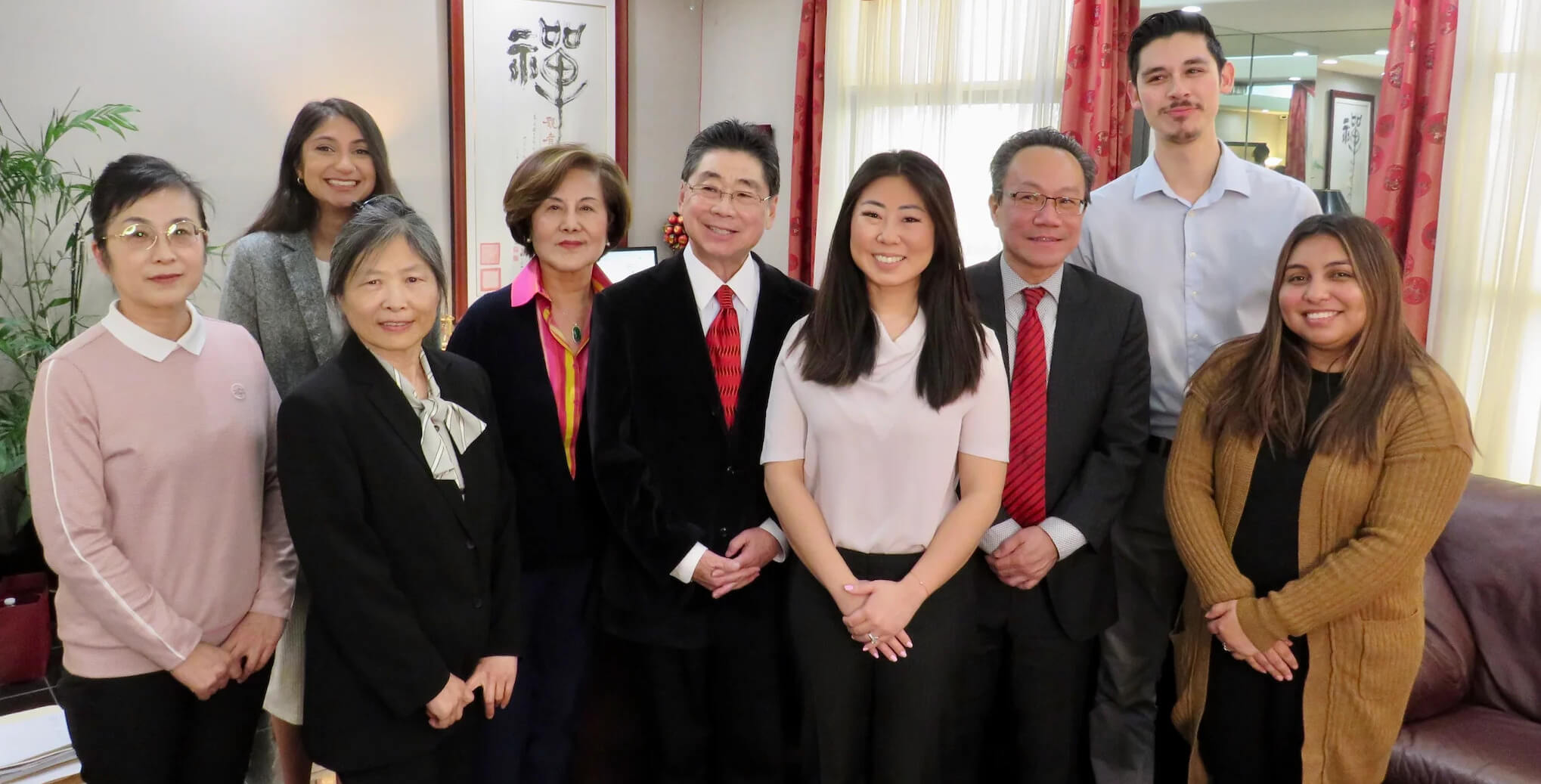

Why Choose Us?

  • Unmatched Expertise

    Trust in Peter Chu's 75+ years of collective experience to guide you through complex immigration matters.

  • Tailored Solutions

    Our personalized strategies adapt to your unique circumstances, ensuring we meet your specific immigration needs.

  • Proven Success

    Benefit from our solid track record in achieving favorable outcomes in various immigration cases across San Diego.

  • Dedicated Service

    Experience our client-first approach that ensures constant support and guidance throughout your immigration journey.

Miami's research institutions — including the University of Miami Miller School of Medicine, Miami Project to Cure Paralysis, and Sylvester Comprehensive Cancer Center — employ over 3,200 research faculty and postdoctoral fellows, making it one of the densest EB-1B outstanding researcher visa markets in the southeastern United States. For Miami, FL researchers seeking permanent residency through an employer-sponsored petition, the difference between a Request for Evidence and an immediate approval often comes down to whether your petition attorney understands what constitutes "international recognition" under USCIS standards for your specific field. Law office of Peter Darwin Chu has guided researchers through the EB-1B outstanding researcher visa Miami process across biomedical, engineering, and computational science disciplines filed with U.S. Citizenship and Immigration Services.

Book a Consultation

Law office of Peter Darwin Chu is a Florida-licensed immigration law firm serving Miami researchers pursuing EB-1B outstanding researcher petitions — offering case evaluations, evidence documentation strategy, and petition filing with no application unless you meet USCIS evidentiary standards. EB-1B petitions require proof of at least two years of research experience and international recognition in your academic field, documented through independent citation analysis, editorial appointments, peer review invitations, and letters from research leaders who have not collaborated with you. Miami researchers benefit from proximity to major research employers eligible to sponsor EB-1B petitions under the permanent job offer requirement.

EB-1B Lawyer Miami Available Across Miami and Surrounding Areas

Law office of Peter Darwin Chu represents researchers and academic professionals throughout Miami, FL and Miami-Dade County — including Downtown Miami (33101, 33102), Brickell (33107), South Beach (33109), and Bay Harbor Islands (33110) — as well as researchers employed at institutions in Coral Gables, Kendall, and Aventura. All Florida residents with qualifying EB-1B outstanding researcher visa Miami employer sponsorship are eligible for representation regardless of research field or postdoctoral stage.

What Miami Researchers Can Access

EB-1B Petition Eligibility Assessment

Before filing, we conduct a substantive review of your curriculum vitae, publication record, citation metrics, and evidence of international recognition to determine whether your profile meets USCIS's two-pronged test for outstanding researcher status. Miami immigration lawyer Miami consultations include independent citation verification using Scopus and Web of Science, review of your employer's permanent job offer letter for regulatory compliance, and a written assessment of which of the six regulatory criteria your evidence satisfies. Most assessments are completed within 5–7 business days of receiving your CV and publication list.

Evidence Documentation and Petition Drafting

For approved cases, we prepare Form I-140 Immigrant Petition for Alien Workers with a legal brief analyzing how your evidence satisfies at least two of the six EB-1B criteria: authorship of scholarly articles, participation as a judge of others' work, original research contributions, or membership in associations requiring outstanding achievement. We coordinate with your research institution's HR department to secure compliant permanent job offer documentation and draft reference letters from independent experts who can attest to your international recognition without co-authorship bias.

EB-1B Visa Premium Processing and RFE Response

When timeline matters, we file petitions with USCIS Premium Processing Service for 15-calendar-day adjudication. If your petition receives a Request for Evidence, we respond with supplemental documentation — additional citation analysis, clarification of your employer's research capacity, or expert declarations addressing the specific evidentiary gaps identified by the examining officer.

Get in touch

Get clear, expert legal guidance tailored to your visa, green card, or citizenship needs.

Licensed Immigration Representation in Florida

Law office of Peter Darwin Chu maintains all required Florida state and federal licensing for immigration law practice and adheres to American Immigration Lawyers Association (AILA) professional standards. We carry professional liability insurance and operate under U.S. Department of Justice Executive Office for Immigration Review (EOIR) ethical guidelines governing attorney-client privilege, conflict-of-interest disclosure, and fee transparency. Every EB-1B petition is prepared by a Florida-licensed attorney — not a paralegal or visa consultant — and every client receives a written representation agreement before we begin work, as required under Florida Bar Rules of Professional Conduct governing immigration practice.

Inquire now to check if you qualify

What If My Miami Employer Withdrew My EB-1B Sponsorship After Filing?

If your sponsoring employer withdraws the I-140 petition after filing but before approval, USCIS will deny the petition — the employer is the petitioner, not you. However, if the I-140 was approved and then revoked due to employer withdrawal, you retain the priority date for future employment-based petitions if the approval was in place for at least 180 days. In Miami's research employment market, job changes during the green card process are common — we advise clients to secure written commitments from new employers before resignation and to file portability-protected I-485 adjustment applications as soon as current priority dates allow.

What If I Have Two Years of Research Experience But No Independent Citation Record in Miami?

USCIS interprets "international recognition" as evidence that researchers outside your immediate collaboration network cite, reference, or build upon your work. A researcher with 50 publications but only 30 total citations — most from co-authors — will struggle to meet the outstanding researcher standard. In Miami EB-1B cases, we use Web of Science citation reports to identify independent citers, document how many citing authors have no institutional or co-authorship connection to you, and present citation velocity (year-over-year growth) as evidence of emerging recognition. If your independent citation count is below 100, we typically recommend EB-2 National Interest Waiver as a stronger pathway.

What If My Miami Research Institution Is a Private Company, Not a University?

EB-1B petitions require the sponsoring employer to be a university, institution of higher education, or private employer engaged in research with at least three full-time researchers. Private research companies in Miami — including biotech firms, pharmaceutical developers, and contract research organizations — qualify if they document an established research department, not just product development. We verify eligibility by reviewing your employer's organizational chart, research publication output, and evidence of at least three researchers employed in similar roles before filing the I-140.

What If I Already Have an Approved EB-2 PERM and Want to Upgrade to EB-1B in Miami?

You can file an EB-1B petition while an EB-2 PERM-based I-140 is pending or approved — the petitions are independent. EB-1B typically processes faster because it does not require Department of Labor PERM labor certification, which alone adds 12–18 months to EB-2 timelines. If your EB-1B is approved first, you gain immediate priority date retention and can file I-485 adjustment of status as soon as your priority date is current, bypassing the PERM process entirely. For Miami researchers, this dual-filing strategy is common when citation records strengthen significantly post-PERM filing.

Choosing an EB-1B Immigration Lawyer vs. DIY Petition or Generic Immigration Firm

Miami researchers pursuing EB-1B petitions face three pathways: self-filing, retaining a general immigration attorney, or working with a lawyer experienced in academic and research-based employment petitions. Self-filing is technically permissible — USCIS does not require attorney representation — but outstanding researcher petitions carry a 40–50% Request for Evidence rate nationally, and RFE responses filed without legal analysis of the evidentiary standard frequently result in denial. Generic immigration firms that primarily handle family-based petitions or H-1B filings often misunderstand what constitutes "original contribution" under EB-1B standards and submit petitions with insufficient independent expert letters or citation documentation.

Here's the honest answer: EB-1B is not an entry-level visa category — it is designed for researchers at the top of their field, and USCIS adjudicators apply subjective judgment when evaluating whether your evidence demonstrates international recognition. A petition that lists your publication count but does not analyze citation patterns, explain why your work is cited by independent labs, or address how your research departs from your doctoral advisor's agenda will receive an RFE or denial regardless of your objective credentials. Law office of Peter Darwin Chu limits its practice to employment-based immigrant petitions — we do not handle tourist visas, family sponsorships, or deportation defense — ensuring every case is handled by an attorney who has filed EB-1B petitions with USCIS and understands how officers apply the six-criteria framework.

ApproachTimelineEvidentiary StandardRFE RiskProfessional Assessment
Self-Filing6–9 monthsApplicant interprets criteriaHigh (45–50%)Appropriate only if you have prior I-140 filing experience and independent legal training
General Immigration Attorney6–10 monthsGeneric template petitionsModerate (30–40%)Risk of under-documented petitions and missed criteria
EB-1B-Focused Counsel4–7 months (Premium Processing available)Tailored citation analysis and expert lettersLow (15–20%)Highest approval rate — petition built to USCIS evidentiary standard from initial filing

Frequently Asked Questions

Find answers to common questions about our services

  • Standard I-140 processing for EB-1B petitions averages 6–9 months at USCIS service centers, though timelines vary by center workload. Miami-based petitions are typically filed with the USCIS Texas Service Center or National Benefits Center. Premium Proces

  • EB-1A extraordinary ability petitions do not require employer sponsorship — you self-petition — but require evidence of sustained national or international acclaim at the very top of your field. EB-1B outstanding researcher petitions require employer spon

  • Yes — EB-1B petition filing is not restricted by your current nonimmigrant status, including J-1 visas subject to the two-year foreign residency requirement under Section 212(e). However, you cannot adjust status to permanent resident (file I-485) until t

  • Attorney fees for EB-1B petition preparation typically range from $5,000 to $12,000 depending on case complexity, number of reference letters required, and whether Premium Processing or RFE response is included. USCIS filing fees for Form I-140 are $700 (

  • Yes — a denied I-140 does not bar you from refiling with additional evidence or under a different visa category. Common reasons for EB-1B denial include insufficient independent citations, weak reference letters from collaborators rather than independent

  • No — EB-1B petitions are exempt from the Department of Labor PERM labor certification process, which is required for EB-2 and EB-3 employment-based green cards. This exemption eliminates 12–18 months of processing time and removes the requirement to prove

  • Only if the job offer is for a permanent research position, not the continuation of your postdoctoral fellowship. USCIS requires the EB-1B position to be permanent or indefinite — typically a research scientist, assistant professor, or staff researcher ro

  • USCIS regulations require you to meet at least two of six criteria: (1) receipt of major prizes or awards for outstanding achievement, (2) membership in associations requiring outstanding achievements, (3) published material in professional publications w

Need Personalized Immigration Guidance?

Law office of Peter Darwin Chu provides EB-1B lawyer Miami services to outstanding researchers and academics across Florida — offering petition eligibility assessments, evidence documentation, and I-140 filing with optional Premium Processing for faster adjudication.

Related Immigration Services and Location Pages

Researchers exploring employment-based immigration options may also benefit from reviewing our EB-1A Visa page, which covers the extraordinary ability category for individuals who do not require employer sponsorship, or our EB-2 Visa page for those pursuing National Interest Waiver petitions. For researchers in Southern California, we also serve clients through our EB-1B Visa Los Angeles, EB-1B Visa Long Beach, EB-1B Visa Anaheim, and EB-1B Visa Riverside location pages. Clients employed at academic or research institutions may also explore our O-1 Visa Guidance for nonimmigrant extraordinary ability options, or visit our general Immigrant Visas overview.

Speak With Us Today