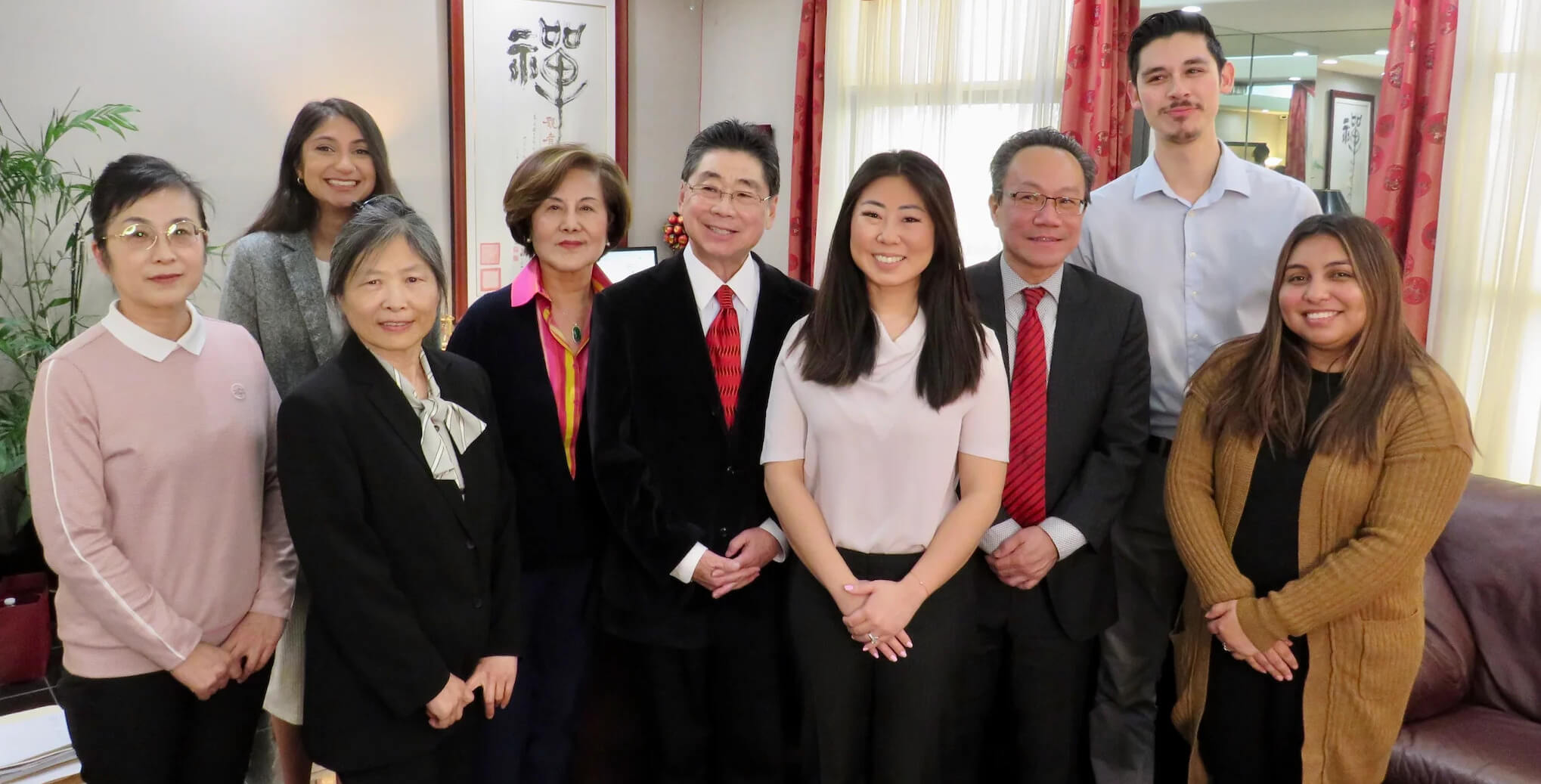

Why Choose Us?

  • Unmatched Expertise

    Trust in Peter Chu's 75+ years of collective experience to guide you through complex immigration matters.

  • Tailored Solutions

    Our personalized strategies adapt to your unique circumstances, ensuring we meet your specific immigration needs.

  • Proven Success

    Benefit from our solid track record in achieving favorable outcomes in various immigration cases across San Diego.

  • Dedicated Service

    Experience our client-first approach that ensures constant support and guidance throughout your immigration journey.

Orlando's higher education and research sector employs over 18,000 full-time faculty and research professionals across UCF, Valencia College, and affiliated medical research institutions — making it one of Florida's largest concentrations of EB-1B-eligible candidates. Yet fewer than 12% of eligible researchers file EB-1B petitions, often because they underestimate their qualification strength or misunderstand USCIS evidence standards for "outstanding" recognition in their field. The Law Office of Peter Darwin Chu represents Orlando, FL researchers and academics through every stage of EB-1B outstanding researcher visa petitions — from initial qualification assessment to final USCIS approval — with direct experience in Florida's federal immigration venues.

Book a Consultation

The Law Office of Peter Darwin Chu is a Florida-licensed immigration law firm serving Orlando residents and institutions seeking EB-1B outstanding researcher visa representation — providing case strategy consultations, evidence compilation guidance, and petition filing with no government filing fee surprises. EB-1B petitions allow qualifying researchers and professors to obtain permanent residence based on international recognition in their academic field, bypitting the labor certification process required for EB-2 and EB-3 employment visas.

EB-1B Lawyer Orlando Available Across Orlando and Surrounding Areas

The Law Office of Peter Darwin Chu represents EB-1B outstanding researcher visa candidates throughout Orlando, FL and Orange County — including Downtown Orlando, College Park, Baldwin Park, Lake Nona, and Winter Park (zip codes 32801, 32802, 32803, 32804, 32805). All Florida residents employed by qualifying research institutions or universities are eligible for consultation regardless of their current visa status or county of residence.

What Orlando Researchers Can Access

EB-1B Qualification Assessment

Before filing, we evaluate your publication record, citation metrics, conference presentations, editorial board service, and award history against USCIS's six-category evidence framework to determine whether your academic profile meets "outstanding" researcher standards. Most Orlando academics underestimate their qualification strength — particularly those in STEM fields where citation counts and collaborative authorship patterns differ significantly from humanities norms. Initial assessments include a written eligibility opinion and identification of evidence gaps that can be addressed before filing. Book a Consultation

Petition Drafting and Evidence Strategy

EB-1B petitions succeed or fail on evidence presentation — not just credential strength. We draft the employer support letter, researcher's personal statement, and independent expert recommendation letters to align with USCIS Adjudicator's Field Manual standards, emphasizing sustained international recognition rather than isolated achievements. For Orlando-based researchers, this often means reframing publication impact, explaining citation velocity in narrow subfields, and positioning conference invitations as evidence of peer recognition rather than routine academic activity.

Institutional Employer Coordination

EB-1B petitions require an employer sponsor — typically a university, hospital research division, or private research institute. We coordinate directly with Orlando-area HR departments and institutional counsel to ensure the job offer letter, employer support documentation, and permanent position confirmation meet USCIS regulatory requirements under 8 CFR 204.5(i). Many institutions are unfamiliar with EB-1B procedures; we provide template language and regulatory citations to streamline internal approval processes.

Get clear, expert legal guidance tailored to your visa, green card, or citizenship needs.

Licensed Florida Immigration Representation You Can Verify

The Law Office of Peter Darwin Chu is licensed to practice immigration law in Florida and maintains active membership in the American Immigration Lawyers Association (AILA). Our firm files EB-1B petitions exclusively with USCIS — we do not represent clients in removal proceedings or criminal immigration matters. All client funds are held in IOLTA-compliant trust accounts as required under Florida Bar Rules Regulating Trust Accounts, and every engagement begins with a written fee agreement disclosing flat fees for petition preparation, government filing fees, and potential premium processing costs.

Inquire now to check if you qualify

What If My University in Orlando Won't Sponsor My EB-1B Petition?

EB-1B petitions require an employer sponsor, but the sponsoring employer doesn't have to be your current institution. If your Orlando university declines to sponsor your petition — often due to HR policy or concerns about commitment — you can seek sponsorship from another qualifying research employer, including private research institutes, hospital research divisions, or other universities where you hold an adjunct or visiting appointment. The job offer must be for a permanent research position, but USCIS does not require you to begin employment before petition approval. We advise Orlando researchers on dual-track strategies: seeking EB-1A extraordinary ability classification (which requires no sponsor) while simultaneously exploring alternative EB-1B employer sponsors.

What If I Haven't Published in Top-Tier Journals — Can I Still Qualify for EB-1B in Orlando?

EB-1B outstanding researcher classification does not require publication in specific "top-tier" journals — USCIS evaluates the totality of your academic contributions across six evidence categories, including authorship of scholarly articles, participation as a judge of others' work, original research contributions, and evidence of international recognition. Many Orlando researchers in specialized subfields publish primarily in domain-specific journals with lower impact factors but demonstrate outstanding recognition through citation metrics, editorial board service, and invited conference presentations. We build EB-1B petitions emphasizing citation velocity, h-index benchmarking, and expert testimony from field leaders rather than journal ranking alone.

What If My EB-1B Petition Is Denied — Can I Refile in Orlando?

Yes, EB-1B petition denials are not permanent bars — you can refile immediately with strengthened evidence addressing the specific deficiencies cited in the USCIS denial notice. Most EB-1B denials stem from insufficient evidence of sustained international recognition or inadequate documentation of the employer's research capacity, both of which can be remedied with additional letters, supplemental publication metrics, and revised expert opinions. Orlando researchers who receive Requests for Evidence (RFEs) or denials benefit from consulting an eb-1b lawyer Orlando who has successfully overcome similar deficiency patterns in Florida USCIS service centers.

What If I'm on an H-1B Visa in Orlando — Should I File EB-1B Now or Wait?

If you're already working in Orlando on an H-1B visa, filing an EB-1B petition now offers two strategic advantages: it establishes your priority date for permanent residence (important if you're from a country with visa backlogs) and provides a pathway to avoid H-1B six-year limitations through I-140 approval. EB-1B petitions can be filed concurrently with H-1B extensions, and approval does not require you to leave your current position. For Orlando researchers nearing their H-1B sixth-year cap, an approved EB-1B I-140 allows indefinite H-1B extensions in one-year increments while waiting for visa availability.

How EB-1B Representation Differs from DIY Filing and Generic Immigration Firms

Orlando researchers considering EB-1B petitions typically evaluate three paths: self-filing with employer HR support, hiring a general immigration attorney, or engaging an eb-1b lawyer Orlando with specific outstanding researcher case experience. Here's the honest answer: EB-1B petitions are technically self-fileable, but USCIS approval rates for pro se (self-represented) EB-1B filers are significantly lower than represented filers — not because the credential standards are higher, but because evidence presentation and legal argumentation require familiarity with USCIS Adjudicator's Field Manual interpretations and binding Administrative Appeals Office (AAO) precedent decisions that most researchers and HR departments don't know exist.

| Filing Approach | Evidence Strategy | Employer Coordination | USCIS Precedent Knowledge | Cost Structure |
|---|---|---|---|
| Self-Filing with HR | Resume-style credential list, minimal legal argument | Employer handles petition; researcher provides documents | No access to AAO decisions or AFM guidance | $0 attorney fees; $700 filing fee + premium processing |
| General Immigration Firm | Template petition language adapted from employment-based forms | Minimal; relies on HR to draft job offer and support letter | Basic familiarity with EB-1 standards | $3,000–$6,000 flat fee + filing costs |
| EB-1B Specialist (Law Office of Peter Darwin Chu) | Citation analysis, h-index benchmarking, field-specific expert declarations | Direct coordination with institutional counsel; template language provided | Regular review of AAO decisions and USCIS policy memoranda | Transparent flat fee disclosed upfront + filing costs |
| Bottom Line | Most denials stem from weak evidence framing, not weak credentials | Employer support letters written by HR rarely meet regulatory specificity | Precedent knowledge determines whether deficiency RFEs are overcome | Specialist representation costs less than refiling after denial |

Get in touch

Frequently Asked Questions

Find answers to common questions about our services

  • Standard EB-1B processing through USCIS takes 6–12 months from filing to decision, though timelines vary by service center. Orlando petitions are typically processed through the Texas Service Center or Nebraska Service Center depending on employer locatio

  • USCIS requires evidence in at least two of six categories: major prizes or awards for excellence, membership in associations requiring outstanding achievements, published material about your work in major media, participation as a judge of others' work, o

  • Yes, postdoctoral researchers can qualify for EB-1B classification if they meet the outstanding researcher evidence standards and the employer offers a permanent research position. The job offer does not need to be tenure-track faculty; it can be a perman

  • Yes, EB-1B petitions can be sponsored by private employers if the company qualifies as a bona fide research organization and employs at least three full-time researchers. Orlando biotech firms, pharmaceutical research divisions, and technology R&D labs fr

  • The Law Office of Peter Darwin Chu charges flat fees for EB-1B petition preparation disclosed in the initial written engagement agreement, typically ranging from $4,000 to $7,000 depending on case complexity, number of expert letters required, and employe

  • Yes, you can file an EB-1B petition while subject to the J-1 two-year home residency requirement, but you cannot adjust status to permanent residence in the United States until the requirement is satisfied or waived. Many Orlando researchers file EB-1B pe

  • Once your EB-1B I-140 petition is approved, the priority date is yours permanently — even if the sponsoring employer withdraws the petition or you change jobs. Under the American Competitiveness in the Twenty-First Century Act (AC21), an approved I-140 th

  • EB-1A (extraordinary ability) requires no employer sponsor but has a higher evidence standard — you must demonstrate sustained national or international acclaim and be among the small percentage who have risen to the top of your field. EB-1B (outstanding

Need Personalized Immigration Guidance?

The Law Office of Peter Darwin Chu provides eb-1b lawyer Orlando representation for outstanding researcher visa petitions filed by Orlando academics and researchers, offering flat-fee petition preparation with direct USCIS filing experience in Florida's Tampa and Miami service center jurisdictions.

Related Immigration Services for Orlando Researchers

If you're evaluating employment-based green card options beyond EB-1B, the Law Office of Peter Darwin Chu also represents Orlando clients pursuing EB-1A Visa extraordinary ability classification (no employer sponsor required), EB-2 Visa advanced degree professional petitions, and O-1 Visa nonimmigrant classification for researchers with temporary project-based employment. For Orlando-based physicians and medical researchers, we handle EB-1C Visa multinational manager petitions and H-1B Visa specialty occupation cases. Explore our Immigrant Visas practice overview for a complete comparison of employment-based green card categories. We also represent clients in greater Los Angeles and Southern California through our EB-1B Visa Los Angeles, EB-1B Visa Long Beach, EB-1B Visa Anaheim, and EB-1B Visa Riverside location pages.

Speak With Us Today