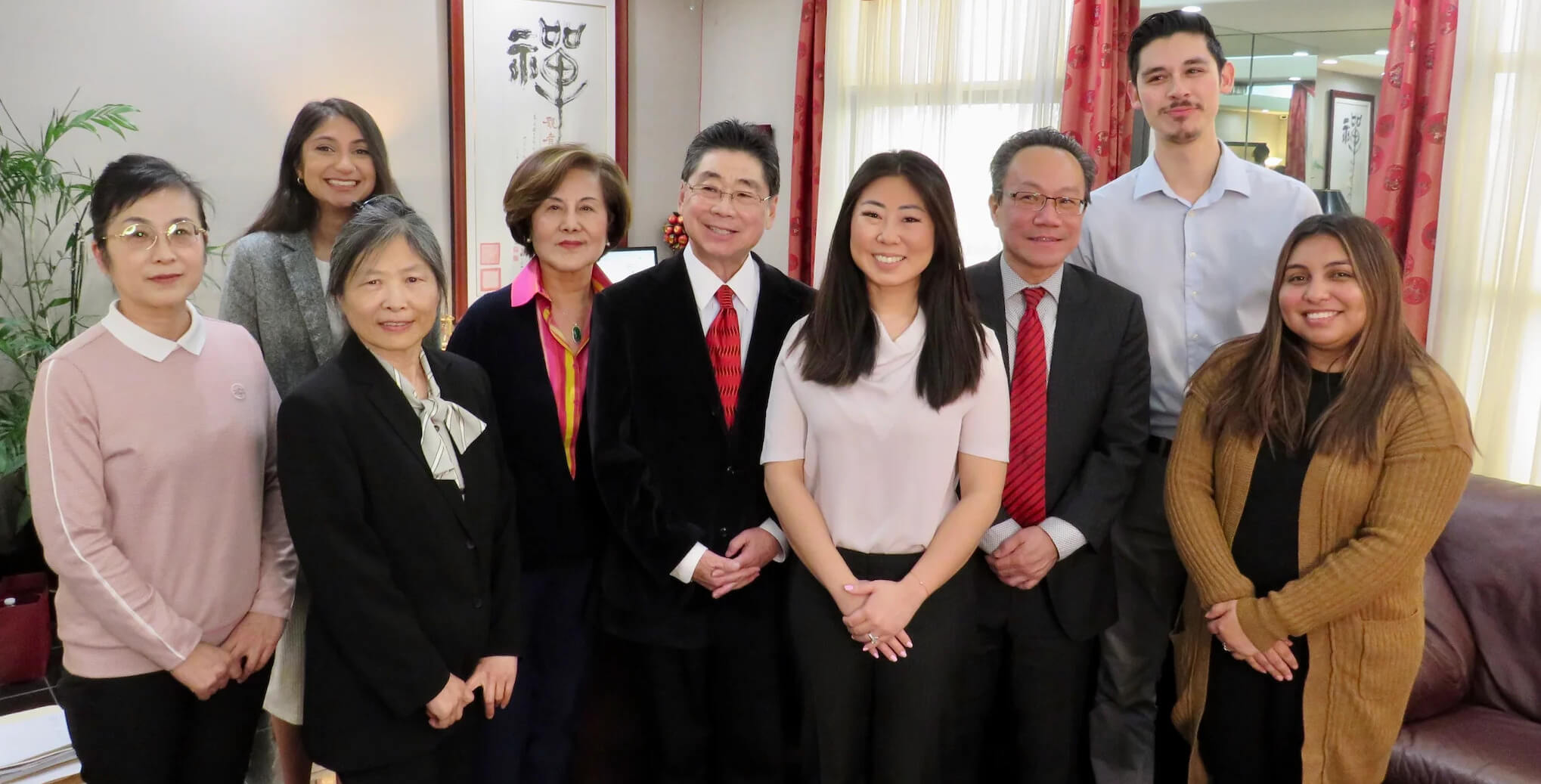

Why Choose Us?

  • Unmatched Expertise

    Trust in Peter Chu's 75+ years of collective experience to guide you through complex immigration matters.

  • Tailored Solutions

    Our personalized strategies adapt to your unique circumstances, ensuring we meet your specific immigration needs.

  • Proven Success

    Benefit from our solid track record in achieving favorable outcomes in various immigration cases across San Diego.

  • Dedicated Service

    Experience our client-first approach that ensures constant support and guidance throughout your immigration journey.

Over 3,200 researchers and academics work within Pasadena's scientific institutions — including Caltech, NASA's Jet Propulsion Laboratory, and private research facilities — many of whom qualify for EB-1B outstanding researcher visa status but never pursue it due to confusion about the petition requirements. For researchers across Pasadena, CA, the difference between a denied EB-1B petition and approval often comes down to whether the documentation package met the 'sustained acclaim' evidentiary standard before USCIS review. The Law Office of Peter Darwin Chu has guided dozens of outstanding researchers through successful EB-1B petitions filed in California and knows exactly what adjudicators expect to see.

Book a Consultation

The Law Office of Peter Darwin Chu is a California-licensed immigration law firm serving Pasadena residents pursuing EB-1B outstanding researcher visa petitions — offering substantive case assessments, evidence compilation strategy, and representation through USCIS adjudication with no application filed until the evidentiary record meets the regulatory standard. Unlike general practice attorneys, we focus exclusively on employment-based immigration categories including EB-1B cases.

EB-1B Lawyer Pasadena Available Across Pasadena and Surrounding Areas

The Law Office of Peter Darwin Chu represents researchers and academics throughout Pasadena and the San Gabriel Valley — including residents of South Pasadena, Altadena, San Marino, and East Pasadena neighborhoods across zip codes 91030, 91031, 91050, 91051, and 91101. All California residents with qualifying EB-1B outstanding researcher credentials are eligible for representation regardless of county, and we handle cases for petitioners employed by universities, government research agencies, and private sector research institutions statewide.

What Pasadena Researchers Can Access

EB-1B Outstanding Researcher Petition Preparation

The EB-1B category requires evidence of 'sustained acclaim' in your academic field demonstrated through at least two regulatory criteria from USCIS's six-factor test — including original contributions, published material, participation as a judge of others' work, or scholarly articles. We assess your CV against these specific regulatory standards before filing and identify which criteria your existing record satisfies. Pasadena-area researchers benefit from proximity to institutions producing high-quality recommendation letters and collaborative publications. Initial consultations include a preliminary eligibility assessment and documentation roadmap. Learn more about our EB-1B visa services.

Evidence Compilation and Expert Letter Strategy

Most denied EB-1B petitions fail not because the researcher lacks qualification, but because the evidence package didn't translate academic accomplishments into the specific regulatory language USCIS adjudicators apply. We work directly with your recommenders to ensure letters address the 'outstanding' standard explicitly, structure citation evidence to demonstrate 'sustained acclaim,' and compile published material excerpts that highlight original contributions rather than routine research. For Pasadena researchers at Caltech or JPL, we leverage institutional reputation strategically while ensuring the petition rests on your individual merit.

Premium Processing and RFE Response

When filing timeline matters, USCIS Premium Processing ($2,805 as of 2026) guarantees a 15-business-day adjudication decision. If USCIS issues a Request for Evidence, we respond with supplemental documentation and legal argument addressing the specific deficiency identified. Pasadena-area researchers often receive RFEs requesting additional evidence of 'original contributions' or clarification of the employer's research capacity — both of which we address with targeted evidence rather than generic resubmission.

Get clear, expert legal guidance tailored to your visa, green card, or citizenship needs.

Licensed California Immigration Representation

The Law Office of Peter Darwin Chu maintains active admission with the California State Bar and is authorized to practice immigration law before USCIS, the Board of Immigration Appeals, and federal immigration courts throughout California. Every EB-1B petition we file undergoes multi-stage review to ensure compliance with Immigration and Nationality Act Section 203(b)(1)(B) requirements and current USCIS Policy Manual guidance on outstanding researcher petitions. We carry professional liability coverage as required under California Rules of Professional Conduct and provide clients with written fee agreements disclosing all costs before representation begins. Pasadena researchers benefit from working with counsel who understand both the immigration regulatory framework and the academic research environment that produces qualifying evidence.

Inquire now to check if you qualify

What If My EB-1B Petition Is Denied — Can I Refile in Pasadena?

Yes, you can refile an EB-1B petition after denial, and many researchers do so successfully with strengthened evidence packages. USCIS denial notices specify the exact regulatory criteria your petition failed to satisfy — typically 'sustained acclaim' or 'original contributions' — and the new petition must directly address those deficiencies. For Pasadena researchers, the time between denial and refiling is often used to publish additional papers, secure new recommendation letters emphasizing the specific regulatory language USCIS requires, or document additional citations demonstrating impact. Refiling does not require leaving the United States if you maintain valid nonimmigrant status, and Premium Processing remains available.

What If I Am Currently on an H-1B Visa — Can I Pursue EB-1B in Pasadena?

Yes, H-1B visa holders are among the most common EB-1B petitioners, and filing an EB-1B petition does not affect your H-1B status. The EB-1B is an immigrant visa petition (green card track), while H-1B is nonimmigrant status, and both can exist simultaneously. Pasadena researchers on H-1B often file EB-1B petitions to bypass the years-long EB-2 NIW queue and secure permanent residence faster. Your employer must sponsor the EB-1B petition and agree to employ you permanently in a research capacity, which most universities and research institutions routinely do for qualified researchers. If your H-1B is nearing its six-year maximum, an approved EB-1B I-140 petition allows extensions beyond six years while awaiting green card processing.

What If My Employer in Pasadena Does Not Want to Sponsor an EB-1B Petition?

If your current employer will not sponsor an EB-1B petition, you have two primary options: secure a job offer from a different qualifying employer willing to sponsor, or pursue the EB-1A extraordinary ability category, which does not require employer sponsorship. The EB-1B requires a permanent job offer from a university, government research agency, or private employer with a demonstrated history of research achievements, and the employer must file the I-140 petition. Pasadena researchers at institutions like Caltech or JPL rarely encounter sponsorship resistance, as these organizations routinely sponsor EB-1B petitions for qualifying faculty and research staff. If your employer declines, consult with an immigration attorney to assess whether you meet the higher EB-1A standard, which allows self-petitioning.

What If I Have Not Published Enough Papers — Can I Still Qualify for EB-1B in Pasadena?

The EB-1B outstanding researcher visa does not have a minimum publication count — USCIS evaluates the totality of your evidence across six regulatory criteria, and you must satisfy at least two. If your publication record is limited, you may still qualify through evidence of original contributions (demonstrated by citations, adoption of your methods, or expert letters), participation as a peer reviewer, or membership in associations requiring outstanding achievement. Pasadena researchers in emerging fields or applied research roles often qualify with fewer publications but stronger evidence of impact. We assess your full record — including patents, presentations, media coverage, and awards — to determine the strongest evidentiary path before advising on filing.

Why Pasadena Researchers Choose Specialized EB-1B Counsel Over General Immigration Attorneys

Not all immigration attorneys understand the EB-1B outstanding researcher category equally. General practice immigration firms handle dozens of visa types — family-based petitions, removal defense, asylum — and may file only a handful of EB-1B cases annually. Specialized employment-based immigration counsel focuses exclusively on categories like EB-1B, EB-1A, and EB-2 NIW, developing institutional knowledge of what adjudicators expect and how to structure evidence packages for success.

Here's the honest answer: the regulatory standard for 'sustained acclaim' in EB-1B petitions is subjective, and adjudicators apply it inconsistently across service centers. An attorney who has filed 50+ EB-1B petitions knows which evidence types USCIS values most, how to preempt common RFE triggers, and when Premium Processing will accelerate approval versus invite heightened scrutiny. Pasadena researchers benefit from counsel who regularly work with Caltech faculty, JPL scientists, and academic researchers — because we understand how to translate your CV into the specific regulatory language USCIS applies.

ApproachEvidence StrategyAdjudication KnowledgeProfessional Assessment
General Immigration FirmSubmits CV and generic lettersLimited EB-1B-specific experienceMay miss criteria optimization
Online DIY Petition ServiceTemplate-driven, no attorney reviewNo case-specific guidanceHigh RFE and denial risk
Specialized EB-1B CounselCriteria-mapped evidence packagesDeep USCIS policy manual knowledgeStrongest approval likelihood

Get in touch

Frequently Asked Questions

Find answers to common questions about our services

  • Standard EB-1B I-140 petition processing through USCIS California Service Center averages 6–10 months from filing to decision, though timelines fluctuate based on service center workload. Premium Processing reduces this to 15 business days for an addition

  • EB-1B attorney fees in Pasadena and Southern California typically range from $8,000 to $15,000 for full petition preparation, filing, and representation through adjudication. This fee covers initial case assessment, evidence compilation strategy, drafting

  • No, the EB-1B outstanding researcher category is not limited to university employment — it is available to researchers employed by universities, government research agencies, or private sector employers with a documented history of research achievements.

  • Yes, postdoctoral research experience is highly relevant to EB-1B petitions and is often the period when researchers produce their strongest evidence of sustained acclaim. Publications, citations, conference presentations, and collaborative research proje

  • The EB-1B outstanding researcher category requires employer sponsorship and a permanent job offer in a research role, while EB-1A extraordinary ability allows self-petitioning without employer involvement. Both require evidence of sustained acclaim, but E

  • Changing employers after filing an EB-1B I-140 petition requires careful timing and strategy. The I-140 petition is employer-specific — it is filed by your sponsoring employer and ties your green card to that job offer. If you change employers before the

  • Yes, your spouse and unmarried children under 21 are derivative beneficiaries on your EB-1B petition and receive green cards at the same time you do. They are classified as E-14 and E-15 dependents respectively, and their applications are processed concur

  • USCIS adjudicators prioritize evidence demonstrating 'original contributions of major significance' and 'sustained acclaim' — specifically, peer-reviewed publications in high-impact journals, citation counts showing your work has influenced other research

Need Personalized Immigration Guidance?

The Law Office of Peter Darwin Chu provides EB-1B outstanding researcher visa representation for Pasadena researchers through evidence-driven petition preparation, USCIS adjudication strategy, and substantive case assessments conducted by a California-licensed immigration attorney with exclusive focus on employment-based immigrant visa categories.

Related Immigration Services for Pasadena Researchers

Researchers exploring permanent residence options beyond EB-1B may also benefit from reviewing our EB-1A visa guidance for those meeting the higher extraordinary ability standard without employer sponsorship, or our EB-2 visa services for those pursuing National Interest Waiver petitions. Pasadena professionals in specialized fields may also qualify for O-1 visa representation for temporary work authorization while building their EB-1B evidence record. We also assist with EB-1B visa cases in Los Angeles and EB-1B visa matters in Long Beach for researchers throughout Southern California. For those in related visa categories, explore our pages on EB-1C visa guidance, EB-3 visa expertise, and H-1B visa process guidance.

Speak With Us Today