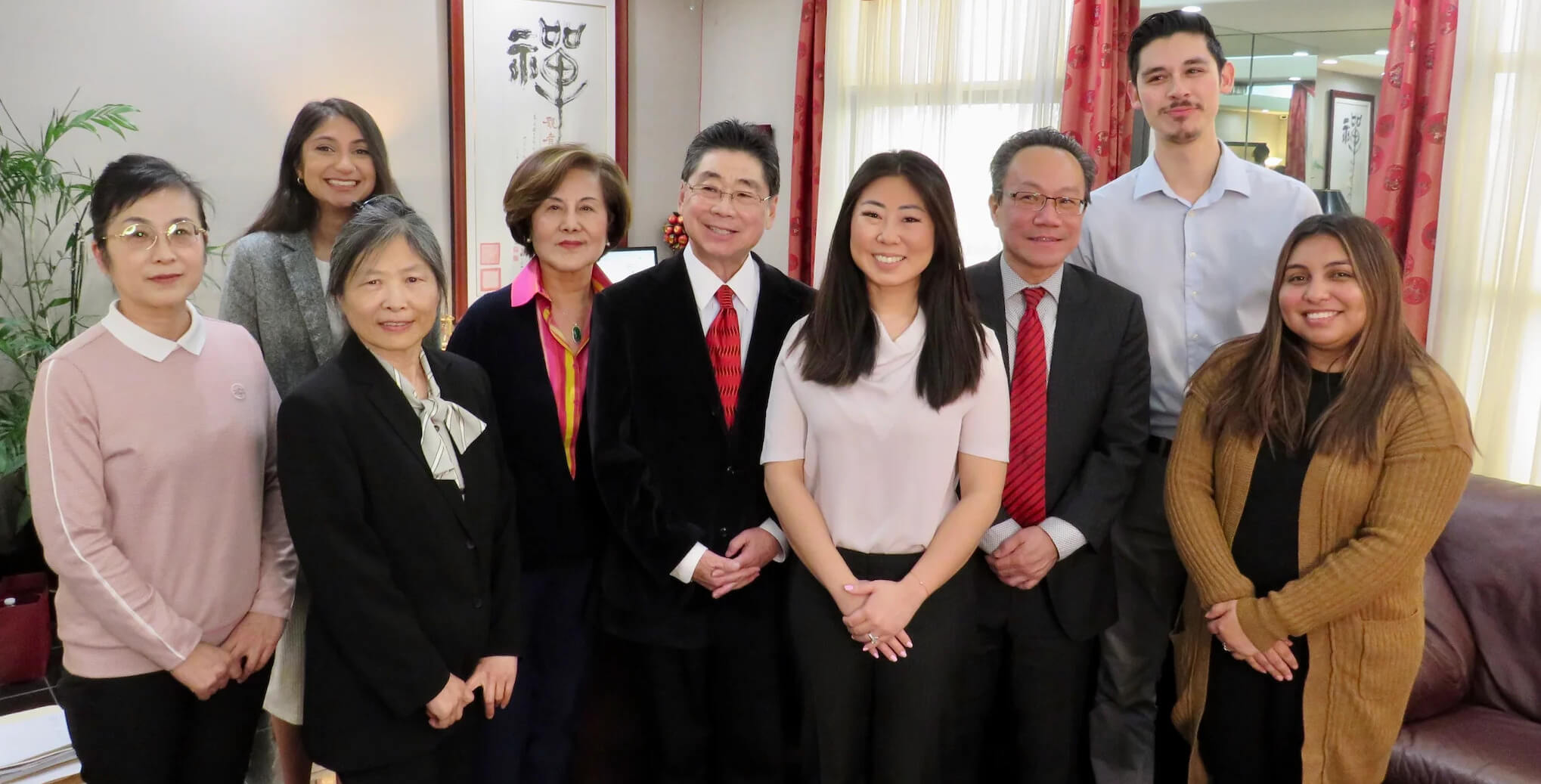

Why Choose Us?

  • Unmatched Expertise

    Trust in Peter Chu's 75+ years of collective experience to guide you through complex immigration matters.

  • Tailored Solutions

    Our personalized strategies adapt to your unique circumstances, ensuring we meet your specific immigration needs.

  • Proven Success

    Benefit from our solid track record in achieving favorable outcomes in various immigration cases across San Diego.

  • Dedicated Service

    Experience our client-first approach that ensures constant support and guidance throughout your immigration journey.

San Francisco's tech and research economy — with over 42,000 researchers employed across UCSF, Stanford-affiliated institutes, and biotech firms as of 2024 — creates exceptional EB-1B outstanding researcher visa opportunities and equally high USCIS scrutiny of petition evidence. For researchers across Mission Bay, SOMA, and the Financial District, the difference between approval and a Request for Evidence often comes down to whether your eb-1b lawyer san francisco understands the California research institution landscape and can document international recognition through peer-reviewed publications, citation metrics, and expert testimony letters. Law office of Peter Darwin Chu has represented outstanding researcher petitions for San Francisco institutions and knows how USCIS adjudicates these cases.

Book a Consultation

Law office of Peter Darwin Chu is a California-licensed immigration law firm serving San Francisco researchers seeking EB-1B outstanding researcher visa representation — offering substantive case assessments, evidence strategy development, and petition drafting with no upfront retainer for qualifying cases. We evaluate your publication record, citation impact, and institutional support to determine whether your profile meets the 'outstanding' standard under 8 CFR 204.5(i)(3)(i) before we discuss representation.

EB-1B Lawyer San Francisco Available Across San Francisco and Surrounding Areas

Law office of Peter Darwin Chu represents researchers throughout San Francisco, CA — including Mission Bay, SOMA, Pacific Heights, and the Richmond District — across zip codes 94080, 94083, 94099, 94101, and 94102. All California researchers with qualifying outstanding achievement evidence are eligible for representation regardless of county, and we regularly represent clients at research institutions across the Bay Area.

What San Francisco Researchers Can Access

EB-1B Outstanding Researcher Petition Preparation

We prepare eb-1b outstanding researcher visa san francisco petitions that document international recognition through the six evidentiary criteria under 8 CFR 204.5(i)(3)(i): major prizes or awards for outstanding achievement, membership in associations requiring outstanding achievements, published material about your work in professional publications, participation as a judge of others' work, original scientific or scholarly research contributions, and authorship of scholarly articles. For San Francisco researchers, this means strategic citation analysis, peer comparison letters from internationally recognized experts, and documentation of your work's impact on the field — not just a list of publications.

Evidence Strategy and USCIS Documentation Standards

USCIS adjudicators at the California Service Center require 'sustained' international recognition and evidence that you are 'one of a small percentage who have risen to the very top of the field.' We develop evidence strategies that meet these standards: citation reports demonstrating impact beyond your immediate research group, expert letters from scholars outside your institution who can attest to your work's influence, and documentation of how your research has been adopted or built upon by others. San Francisco researchers benefit from proximity to top-tier institutions, but USCIS does not grant automatic deference to institutional reputation — the evidence must demonstrate your individual achievement.

Permanent Research Position Requirement and Job Offer Documentation

The EB-1B category requires a permanent or tenure-track research position offer from a qualifying U.S. employer — a university, private research institution, or company with at least three full-time researchers and documented research achievements. We work with San Francisco employers to draft compliant offer letters that specify the research nature of the position, document the employer's research activity, and satisfy the 'permanent' requirement even when the position is grant-funded. For researchers transitioning from postdoctoral fellowships to permanent faculty or industry research roles, we clarify what USCIS considers 'permanent' under current policy guidance.

EB-1B vs. EB-1A and EB-2 NIW Pathway Comparison

Many San Francisco researchers qualify for multiple employment-based visa categories. The EB-1B visa requires employer sponsorship but no labor certification and is current for most countries. The EB-1A visa requires extraordinary ability — a higher standard — but does not require a job offer. The EB-2 visa with National Interest Waiver allows self-petitioning but may have priority date backlogs. We assess which pathway aligns with your evidence profile, employer support, and timeline before we recommend a filing strategy.

Get clear, expert legal guidance tailored to your visa, green card, or citizenship needs.

Licensed California Immigration Practice with Federal Court Experience

Law office of Peter Darwin Chu maintains all required California state bar licenses and operates under California Rules of Professional Conduct Rule 1.0 governing attorney-client relationships. Our immigration practice is authorized under federal law to represent clients before USCIS, the Board of Immigration Appeals, and federal district courts in visa petition appeals. We carry professional liability insurance as required for California-licensed attorneys and maintain IOLTA client trust accounts in compliance with California State Bar regulations. San Francisco researchers benefit from working with a firm that understands both the federal immigration framework and the California research employment landscape.

Inquire now to check if you qualify

What If My Publication Record Is Strong but My Citation Count Is Lower Than Expected for EB-1B in San Francisco?

Citation metrics are one evidentiary criterion, not the sole criterion. USCIS evaluates the totality of evidence across all six categories under 8 CFR 204.5(i)(3)(i). If your citation count is moderate, we strengthen the petition through other evidence: expert letters explaining why your field has lower citation norms (e.g., mathematics, theoretical physics), documentation of your work's adoption in clinical practice or industry applications, evidence of invited presentations at major conferences, or membership in selective professional societies. San Francisco researchers in emerging fields or interdisciplinary areas often have citation profiles that require contextual explanation — we provide that context through expert testimony and field-specific benchmarking.

What If I Am Currently on an H-1B Visa — Can I File EB-1B While Maintaining My San Francisco Research Position?

Yes. The EB-1B petition is filed concurrently with Form I-140 (immigrant petition) and does not disrupt your H-1B status. If your priority date is current, you can file Form I-485 (adjustment of status) concurrently, which allows you to remain in the U.S. while the green card processes. If your priority date is not current, you maintain H-1B status and can extend it beyond the six-year limit once the I-140 is approved under AC21 provisions. San Francisco researchers on H-1B can file EB-1B without employer notification if they are self-petitioning under EB-1A instead, though EB-1B is the standard pathway for employer-sponsored researchers.

What If My San Francisco Employer Is a Private Biotech Company — Does That Qualify for EB-1B?

Yes, if the employer meets the regulatory definition of a 'private research institution.' Under 8 CFR 204.5(i)(2), this requires at least three full-time researchers on staff and documented achievements in the research field — typically demonstrated through patents, peer-reviewed publications authored by company researchers, or products developed from the company's research. San Francisco biotech and AI research companies frequently qualify, but USCIS requires evidence that the company conducts genuine research, not just product development. We work with employers to compile this documentation before filing.

What If I Receive a Request for Evidence (RFE) on My EB-1B Petition Filed from San Francisco?

An RFE means USCIS needs additional documentation to establish one or more evidentiary criteria. The most common RFE issues are insufficient evidence of 'sustained' international recognition, unclear job offer permanence, or failure to meet the 'outstanding' standard relative to the field. We respond to RFEs by submitting supplemental expert letters, additional citation analysis, documentation of post-filing achievements, and legal briefs citing precedent decisions. The RFE response deadline is typically 87 days. San Francisco researchers who receive RFEs benefit from working with counsel familiar with California Service Center adjudication patterns and the specific evidence gaps that trigger RFEs in research-based petitions.

Choosing an Immigration Lawyer vs. DIY EB-1B Filing or Non-Specialist Counsel

San Francisco researchers face three pathways: self-filing through USCIS forms and guidance, hiring a general immigration attorney without EB-1B specialization, or working with counsel experienced in outstanding researcher petitions. Here's the honest answer: EB-1B petitions are legally complex, and the 'outstanding' standard is subjective — USCIS adjudicators have discretion to interpret whether your evidence meets the regulatory threshold. Self-filed petitions have approval rates below 60% according to USCIS data, primarily due to insufficient evidence framing and failure to benchmark achievements against field-specific norms. General immigration attorneys may lack the citation analysis tools and expert witness networks required to build a competitive petition.

PathwayEvidence StrategyCitation AnalysisExpert Witness NetworkProfessional Assessment
Self-FilingUSCIS instructions onlyManual trackingNo coordinationHigh risk of RFE or denial due to evidence gaps
General Immigration AttorneyStandard templatesBasic reviewLimited accessMay lack EB-1B-specific benchmarking expertise
EB-1B Specialist (Law office of Peter Darwin Chu)Field-specific benchmarking, citation reports, expert testimony coordinationComprehensive impact analysisEstablished relationships with internationally recognized scholarsHighest approval probability through evidence optimization

Law office of Peter Darwin Chu focuses on employment-based immigrant petitions, including EB-1B, EB-1A, and EB-2 NIW cases, ensuring every petition is handled by an attorney who understands the evidence standards and has successfully represented researchers in your field.

Get in touch

Frequently Asked Questions

Find answers to common questions about our services

  • USCIS processing times for Form I-140 EB-1B petitions at the California Service Center currently average 4.5 to 7.5 months for standard processing. Premium processing (Form I-907) is available for an additional $2,805 fee and guarantees a 15-business-day

  • USCIS defines 'outstanding' as international recognition and being 'one of a small percentage who have risen to the very top' of your field under 8 CFR 204.5(i)(3)(i). This does not require Nobel-level achievement. For San Francisco researchers, we docume

  • Yes, if the employer meets the 'private research institution' definition: at least three full-time researchers and documented research achievements. A startup can qualify by demonstrating published research output from its team, patents filed, or products

  • EB-1B requires employer sponsorship and a permanent research position offer but has a slightly lower evidentiary standard ('outstanding' vs. 'extraordinary ability'). EB-1A does not require a job offer or employer sponsorship — you self-petition — but req

  • No. The EB-1B category does not require a National Interest Waiver or demonstration of prospective benefit to the U.S. — that is an EB-2 NIW requirement. EB-1B requires only that you meet the 'outstanding researcher' definition and have a qualifying perma

  • Not necessarily. USCIS recognizes that academic research positions are often grant-funded. The key requirement is that the position is 'permanent or indefinite' — meaning the employer intends for it to continue as long as funding is available and performa

  • Yes. While we serve San Francisco researchers extensively, we represent clients throughout California and nationwide for EB-1B outstanding researcher petitions, EB-1A extraordinary ability cases, and other employment-based immigration matters. Immigration

  • Attorney fees for EB-1B petition preparation typically range from $8,000 to $15,000 depending on case complexity, the number of expert letters required, and whether the petition requires citation analysis or field-specific benchmarking. Government filing

Need Personalized Immigration Guidance?

Law office of Peter Darwin Chu provides eb-1b lawyer san francisco representation for outstanding researchers across San Francisco, CA — offering evidence strategy development, petition drafting, and RFE response services with California bar-licensed immigration counsel experienced in EB-1B adjudication standards.

Related Immigration Services for San Francisco Researchers

If you are exploring employment-based immigration pathways beyond EB-1B, Law office of Peter Darwin Chu also represents clients in EB-1A visa extraordinary ability petitions, EB-2 visa advanced degree cases, O-1 visa nonimmigrant petitions for researchers with temporary projects, and H-1B visa specialty occupation matters. For researchers in Los Angeles, Anaheim, Long Beach, and Riverside, we offer parallel EB-1B services: EB-1B visa Los Angeles, EB-1B visa Long Beach, EB-1B visa Anaheim, and EB-1B visa Riverside. Researchers at academic institutions may also benefit from EB-1C visa multinational manager petitions if transitioning from international research roles.

Speak With Us Today