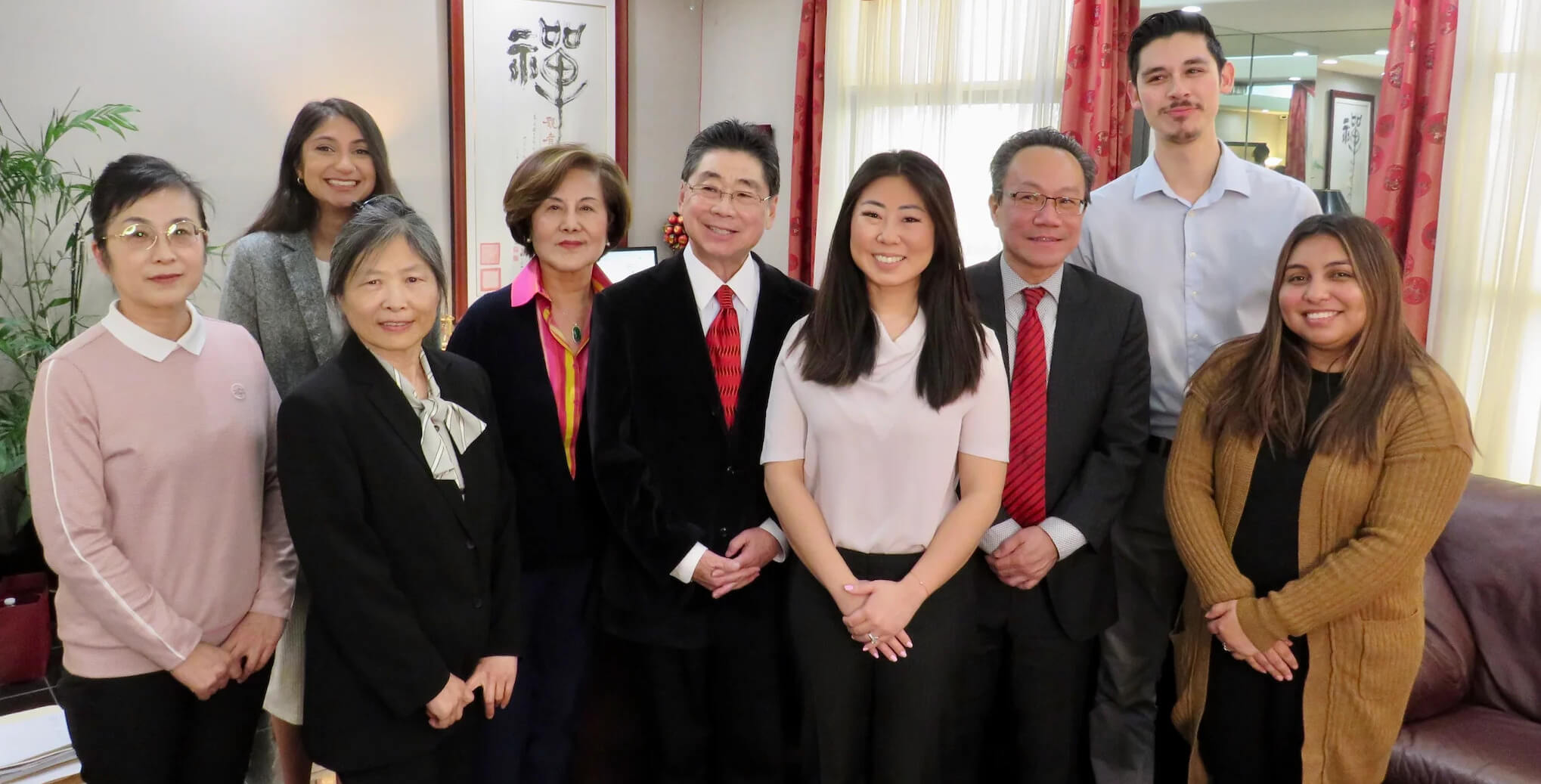

Why Choose Us?

  • Unmatched Expertise

    Trust in Peter Chu's 75+ years of collective experience to guide you through complex immigration matters.

  • Tailored Solutions

    Our personalized strategies adapt to your unique circumstances, ensuring we meet your specific immigration needs.

  • Proven Success

    Benefit from our solid track record in achieving favorable outcomes in various immigration cases across San Diego.

  • Dedicated Service

    Experience our client-first approach that ensures constant support and guidance throughout your immigration journey.

San Ramon's position as a Bay Area suburban hub serving over 76,000 residents — many employed in research-intensive industries along the I-680 corridor and nearby Livermore National Laboratory — creates sustained demand for employment-based immigration counsel. For researchers, professors, and postdoctoral fellows seeking permanent residence through the EB-1B outstanding researcher classification, the difference between a granted petition and a Request for Evidence often comes down to whether the evidence package was assembled by someone fluent in USCIS adjudication standards. Law Office of Peter Darwin Chu has guided EB-1B petitioners through the California Service Center's review process, understanding that this visa category requires proof of international recognition and at least three years of experience in a specific academic field or research discipline.

Book a Consultation

Law Office of Peter Darwin Chu is a California-licensed immigration law firm serving San Ramon, CA residents with EB-1B outstanding researcher visa petitions filed through USCIS — offering consultations, evidence development, and petition representation with no upfront filing until the case strategy is approved. The firm focuses exclusively on employment-based and family-based immigration matters, ensuring every EB-1B petition receives analysis by an attorney familiar with the regulatory criteria under INA Section 203(b)(1)(B) and the corresponding USCIS Policy Manual guidance.

EB-1B Lawyer San Ramon Serving Clients Across Contra Costa County

Law Office of Peter Darwin Chu represents EB-1B petitioners throughout San Ramon, CA and the broader East Bay region — including residents of Dougherty Valley, Crow Canyon, and Bollinger Canyon (zip codes 94582, 94583) as well as researchers at institutions in neighboring Danville, Dublin, and Pleasanton. All California residents with qualifying outstanding researcher credentials are eligible for representation regardless of county, and the firm routinely works with petitioners employed at universities, national laboratories, and private research institutions across Northern California.

What San Ramon EB-1B Petitioners Can Access

Outstanding Researcher Visa Petition Preparation

The EB-1B classification requires proof that the researcher has at least three years of experience in the academic field, is entering the U.S. to pursue tenure or a comparable research position, and has achieved international recognition demonstrated through at least two of six regulatory criteria — including major prizes, membership in associations requiring outstanding achievement, or published material in professional publications. Law Office of Peter Darwin Chu assembles evidence packages that directly address each prong of the test, including citation analysis, letters from independent experts, and documentation of the petitioner's original contributions. San Ramon researchers in fields ranging from computational biology to materials science benefit from counsel familiar with how USCIS evaluates specialized research terminology.

EB-1B Visa National Process Guidance

For petitioners whose cases require coordination across multiple USCIS service centers or involve concurrent filings with premium processing requests, the firm provides strategic guidance on timing, concurrent I-140 and I-485 filing under same-priority-date rules, and how to address Requests for Evidence that question whether the position qualifies as permanent or whether the researcher's contributions meet the 'international recognition' threshold.

EB-1B San Ramon Employer Compliance Review

Every EB-1B petition requires a U.S. employer sponsor — typically a university or research institution — and that employer must demonstrate the ability to pay the proffered wage from the priority date forward. The firm reviews employer documentation including audited financial statements, annual reports, and organizational structure to ensure the petition satisfies 8 CFR 204.5(g)(2) ability-to-pay requirements before filing.

Get clear, expert legal guidance tailored to your visa, green card, or citizenship needs.

Licensed California Immigration Counsel with USCIS Filing Experience

Law Office of Peter Darwin Chu maintains active membership with the California State Bar and adheres to all continuing legal education requirements under California Rules of Professional Conduct. The firm carries professional liability insurance as required for immigration practitioners and operates under the ethical obligations set forth in Rule 1.1 (competence) and Rule 1.4 (communication with clients). San Ramon EB-1B petitioners receive representation that includes written fee agreements, regular case status updates, and direct attorney access throughout the USCIS adjudication timeline — which typically ranges from 4 to 8 months for standard processing or 15 calendar days under premium processing. We maintain all required state and local licenses and insurance.

Inquire now to check if you qualify

What If I'm a Postdoctoral Researcher in San Ramon — Do I Qualify for EB-1B?

Postdoctoral researchers can qualify for EB-1B classification if they meet the three-year experience requirement and can demonstrate international recognition through published research, citations, peer review service, or comparable evidence. The critical question is whether your sponsoring institution in San Ramon or nearby can offer a permanent or indefinite research position — USCIS interprets 'permanent' to mean a position with no defined end date, which excludes most term-limited postdoc appointments. If your current role is temporary, the institution may need to restructure the offer as a research scientist or equivalent position before filing the I-140 petition. Many postdocs successfully transition to EB-1B by securing permanent research staff positions at national labs or universities in the Bay Area.

What If My EB-1B Petition Is Denied — Can I Refile in San Ramon?

Yes, an EB-1B denial does not bar refiling, but the denial notice will specify the grounds — typically insufficient evidence of international recognition, failure to demonstrate three years of qualifying experience, or questions about whether the offered position is permanent. San Ramon petitioners who receive denials should request the full administrative record to understand USCIS's specific objections. The firm evaluates whether to file a motion to reopen, a motion to reconsider, or a new petition with supplemental evidence addressing the deficiencies. Refiling timelines depend on whether new evidence (additional publications, citations, awards) can be generated in the interim or whether the initial package simply needed better presentation.

What If I Want to Change Employers in San Ramon After My EB-1B Is Approved?

Once your EB-1B I-140 petition is approved, the underlying approval remains valid even if you change employers — but your ability to adjust status or use the approved petition depends on whether you filed I-485 concurrently and whether more than 180 days have elapsed since filing. Under INA Section 204(j) portability, you can change to a same or similar position with a new employer after 180 days without jeopardizing your green card application. San Ramon researchers who change from one Bay Area institution to another should consult counsel to determine whether the new position is sufficiently similar and whether the new employer needs to file a successor I-140. Changing employers before I-485 filing typically requires starting the EB-1B process over with the new sponsor.

What If My Citations Are Mostly Domestic — Will USCIS Accept My EB-1B Petition in San Ramon?

USCIS evaluates 'international recognition' not solely by the geographic origin of citations but by the reach and impact of the research within the global scientific community. A San Ramon researcher whose work is cited primarily by U.S.-based scholars may still qualify if those scholars are internationally recognized themselves, if the publications appeared in internationally circulated journals, or if the research addresses problems of global significance. The firm strengthens these petitions by including letters from foreign experts, documentation of international conference presentations, and evidence that the petitioner's work has influenced research directions beyond the United States. Citation analysis tools like Google Scholar and Web of Science help quantify impact metrics that USCIS considers persuasive.

Choosing an Immigration Attorney vs. DIY EB-1B Filing in San Ramon

Researchers pursuing EB-1B classification face a choice: file pro se using USCIS instructions and online guides, retain a general-practice immigration attorney, or work with counsel focused specifically on employment-based petitions. Here's the honest answer: EB-1B petitions have lower approval rates than EB-1A (extraordinary ability) cases because USCIS scrutinizes whether the position is truly permanent and whether the researcher's recognition is genuinely international — distinctions that are heavily case-law dependent and not obvious from the statute alone. A pro se petitioner may assemble evidence that satisfies their own perception of 'outstanding' without addressing the specific regulatory criteria or anticipating common RFE triggers. General immigration attorneys who primarily handle family-based cases may not be familiar with how USCIS evaluates citation metrics, peer review contributions, or the nuances of academic vs. private-sector research roles.

Filing ApproachEvidence StrategyRFE ResponseProfessional Assessment
Pro Se FilingSelf-selected publications and letters from collaboratorsLimited ability to distinguish between evidence that satisfies regulatory criteria vs. evidence that feels impressiveHigh risk of RFE or denial due to incomplete understanding of adjudication standards
General Immigration AttorneyStandard I-140 forms and basic documentationMay lack familiarity with citation analysis tools or academic credentialing normsAdequate for straightforward cases but less equipped for cases with borderline qualifications
EB-1B-Focused CounselTargeted evidence addressing each of six regulatory criteria with expert letters and citation reportsDetailed RFE responses citing case precedent and USCIS Policy ManualBest positioned to maximize approval odds and respond effectively to USCIS scrutiny

Get in touch

Frequently Asked Questions

Find answers to common questions about our services

  • Standard EB-1B I-140 processing through the California Service Center currently averages 4 to 8 months from filing to decision, though this can extend to 12 months during periods of high volume. Premium processing is available for an additional $2,805 fee

  • EB-1A (extraordinary ability) and EB-1B (outstanding researcher) are both first-preference employment-based categories, but EB-1A does not require employer sponsorship or a specific job offer — the petitioner self-sponsors based on sustained national or i

  • Yes, your spouse and unmarried children under 21 are eligible for derivative E-14 and E-15 status once your I-140 is approved. They can file I-485 adjustment applications concurrently with yours if you are in the United States, or they can apply for immig

  • USCIS interprets 'permanent' to mean a position with no predefined end date — not necessarily tenure-track, but indefinite or contingent only on funding availability, which is common in research roles. San Ramon employers offering term-limited postdoctora

  • No, EB-1B outstanding researcher petitions are exempt from the PERM labor certification process that is required for EB-2 and EB-3 employment-based green cards. This exemption saves 12 to 18 months of processing time and eliminates the need for the employ

  • Requests for Evidence (RFEs) are common in EB-1B cases and typically request additional proof of international recognition, clarification on whether the position is permanent, or further documentation of the three-year experience requirement. San Ramon pe

  • Yes, if you maintain valid H-1B, O-1, or other nonimmigrant status, you can travel internationally while your I-140 petition is pending without affecting the petition itself. However, if you filed I-485 adjustment of status concurrently, you must obtain A

  • Researchers with fewer publications can still qualify for EB-1B if they demonstrate international recognition through other criteria — such as peer review service for major journals, membership in selective professional associations, or receipt of major r

Need Personalized Immigration Guidance?

Law Office of Peter Darwin Chu provides EB-1B lawyer services in San Ramon through direct attorney consultations, evidence package development, and I-140 petition filing with USCIS, specializing in outstanding researcher visa cases for California academics and research professionals.

San Ramon EB-1B petitioners may also benefit from exploring related visa categories depending on their career stage and credentials. Researchers with even stronger records of independent recognition may qualify for EB-1A Visa extraordinary ability classification, which does not require employer sponsorship and allows self-petitioning. For those in earlier career stages, the EB-2 Visa advanced degree category may be appropriate if combined with a PERM labor certification, though this adds 12–18 months to the timeline. San Ramon residents employed in high-tech research roles may also explore H-1B Visa specialty occupation status as a temporary bridge while the EB-1B petition is pending. For location-specific guidance, see our EB-1B Visa Los Angeles and EB-1B Visa Anaheim pages. Additional practice areas include O-1 Visa for individuals with extraordinary ability in sciences or education, and EB-1C Visa for multinational executives transferring to U.S. operations.

Speak With Us Today