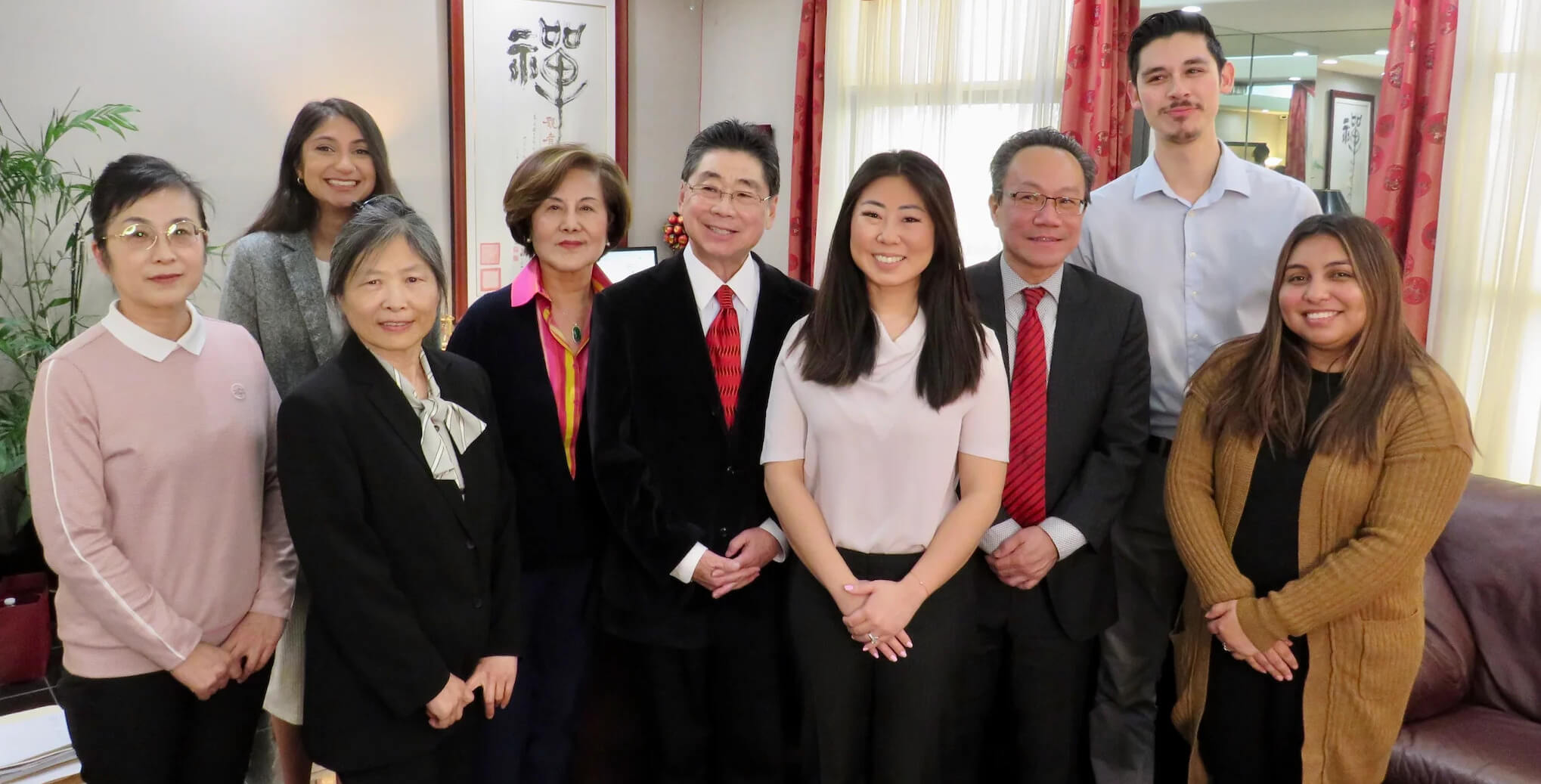

Why Choose Us?

  • Unmatched Expertise

    Trust in Peter Chu's 75+ years of collective experience to guide you through complex immigration matters.

  • Tailored Solutions

    Our personalized strategies adapt to your unique circumstances, ensuring we meet your specific immigration needs.

  • Proven Success

    Benefit from our solid track record in achieving favorable outcomes in various immigration cases across San Diego.

  • Dedicated Service

    Experience our client-first approach that ensures constant support and guidance throughout your immigration journey.

Seattle's tech sector employs over 148,000 workers across Amazon, Microsoft, and research institutions — yet fewer than 12% of foreign-born researchers understand that EB-1B outstanding researcher visas require no labor certification and no employer-sponsored green card queue wait times under current USCIS processing timelines. For researchers at Fred Hutchinson Cancer Center, University of Washington, and private biotech firms across Capitol Hill, South Lake Union, and Fremont, the difference between a delayed H-1B extension and permanent residency often comes down to whether an EB-1B lawyer Seattle reviewed your evidence portfolio before submission. Law office of Peter Darwin Chu has guided researchers through Seattle, WA employment-based immigration cases and knows this pathway.

Book a Consultation

Law office of Peter Darwin Chu is a Washington-licensed immigration law firm serving Seattle residents — specializing in EB-1B outstanding researcher visa petitions with no upfront labor certification requirement and free 60-minute case evaluations available within one week. Our EB-1B lawyer Seattle practice focuses exclusively on employment-based immigrant visas for researchers, professors, and individuals with exceptional ability in sciences, arts, or business, ensuring every case receives attorney review of evidence documentation before USCIS filing.

EB-1B Lawyer Seattle Available Across Seattle and Surrounding Areas

Law office of Peter Darwin Chu represents clients throughout Seattle and King County — including Capitol Hill, South Lake Union, Fremont, Ballard, and University District neighborhoods (zip codes 98060, 98101, 98102, 98103, 98104) — as well as researchers employed at institutions across Bellevue, Redmond, and Tacoma. All Washington residents with qualifying EB-1B outstanding researcher petitions are eligible for representation regardless of current visa status or employer location within WA.

What Seattle Researchers Can Access

EB-1B Outstanding Researcher Visa Petition Preparation

The EB-1B visa category requires evidence of international recognition in your academic field — typically demonstrated through peer-reviewed publications, citation metrics, editorial board memberships, and original contributions to research. Unlike EB-2 National Interest Waiver cases, EB-1B petitions require a permanent job offer from a qualifying employer (university, research institution, or private company with documented research division). Law office of Peter Darwin Chu conducts evidence audits to determine whether your publication record, citation counts, and contribution statements meet the two-prong test under 8 CFR § 204.5(i)(3)(i). We draft expert letters from senior researchers in your field and structure employer support letters to satisfy USCIS evidentiary standards. Seattle researchers typically invest 8–12 weeks in portfolio assembly before filing.

Premium Processing and USCIS Response Strategy

EB-1B petitions filed with Form I-140 are eligible for 15-day premium processing under USCIS fee schedule — currently $2,805 as of 2026 — ensuring faster adjudication for researchers facing H-1B expiration or employment start dates. Our EB-1B outstanding researcher visa Seattle practice includes response strategy for Requests for Evidence (RFEs), which are issued in approximately 30–40% of EB-1B cases nationally. When USCIS questions whether your contributions constitute 'original research' or whether citation metrics demonstrate 'international recognition,' we provide supplemental declarations, additional peer letters, and case law citations (Matter of Price, 20 I&N Dec. 953) to overcome objections. Most RFE responses require 30–60 day turnaround under USCIS notice deadlines.

Get clear, expert legal guidance tailored to your visa, green card, or citizenship needs.

Licensed Washington Immigration Representation

Law office of Peter Darwin Chu maintains all required Washington State Bar licenses and professional liability coverage as mandated by Washington Supreme Court Admission and Practice Rules (APR). Our immigration practice operates under American Immigration Lawyers Association (AILA) ethical guidelines and follows U.S. Citizenship and Immigration Services (USCIS) filing procedures codified in 8 CFR Part 204. We provide written fee agreements before representation begins, disclose all case costs including USCIS filing fees ($700 for Form I-140 as of 2026) and premium processing fees, and maintain client trust accounts in compliance with Washington Rules of Professional Conduct RPC 1.15A. All consultations include case-specific statute of limitations review and eligibility assessment under current USCIS Policy Manual guidance.

Inquire now to check if you qualify

What If My Research Is in a Niche Field — Can I Still Qualify for EB-1B in Seattle?

Yes, EB-1B outstanding researcher classification does not require work in a mainstream academic discipline — USCIS evaluates international recognition within your specific field, however narrow. A computational linguist specializing in Indigenous Pacific Northwest languages can qualify if citation metrics, peer review invitations, and expert letters demonstrate standing among other scholars in that subfield. The key evidentiary requirement is showing that your contributions are recognized by researchers in your area of expertise, not that the field itself is widely known. Seattle-area researchers in emerging interdisciplinary fields — climate informatics, synthetic biology, human-computer interaction — regularly qualify under properly structured petitions.

What If I'm Currently on H-1B — How Does EB-1B Change My Status in Seattle?

Filing an EB-1B petition (Form I-140) does not immediately change your H-1B nonimmigrant status — it is a green card petition, not a work authorization document. Once your I-140 is approved, you remain on H-1B status until you either file Form I-485 (Adjustment of Status) if you are in the U.S. or complete consular processing abroad. However, an approved I-140 provides significant H-1B protection: it allows H-1B extensions beyond the six-year limit in one-year increments under AC21 provisions, and it locks in your priority date for future green card applications. For Seattle researchers employed by universities or research institutions, this means you can continue working on H-1B while waiting for your green card interview without status gaps.

What If My Employer Is a Private Tech Company in Seattle — Can They Sponsor EB-1B?

Yes, private employers qualify as EB-1B sponsors if they can document a research division or department that employs at least three full-time researchers in addition to you. USCIS requires evidence of the employer's research activities — published research, patents filed, funding from government or private grants, or product development tied to original scientific inquiry. Seattle tech companies with R&D teams (biotechnology firms, AI research labs, hardware engineering divisions) regularly sponsor EB-1B petitions, but the employer must provide organizational charts, research budgets, and descriptions of ongoing projects to establish eligibility under 8 CFR § 204.5(i)(3)(ii). The job offer must be permanent and full-time, and the role must involve research responsibilities, not solely product management or business development.

What If I Receive an RFE — How Long Do I Have to Respond in Seattle?

USCIS issues Requests for Evidence with response deadlines typically set at 30, 60, or 87 days from the date printed on the RFE notice. The deadline is calculated from the notice date, not the date you receive it by mail, and it is a hard cutoff — late responses result in petition denial. RFEs in EB-1B cases most commonly question evidence of international recognition (requesting additional citations, peer letters, or evidence of sustained acclaim) or the employer's qualification as a research organization. Washington residents should consult an EB-1B lawyer Seattle within 7 days of receiving an RFE to allow adequate time for evidence gathering, expert letter drafting, and legal argument preparation before the response deadline.

Comparing Your EB-1B Filing Options in Seattle

Seattle researchers face three primary paths when preparing an EB-1B petition: direct filing with USCIS using employer HR departments, online DIY petition services, or licensed immigration attorney representation. HR departments at universities and large research institutions can prepare the employer support letter and Form I-140, but they do not provide legal strategy for evidence sufficiency, RFE response, or alternative visa pathways if EB-1B is denied. Online services offer document templates and filing instructions but cannot provide legal advice, evaluate case-specific weaknesses, or represent you before USCIS in administrative appeals. Here's the honest answer: EB-1B petitions have a 30–40% RFE rate nationally, and RFE responses require legal arguments citing case law, USCIS policy manual sections, and federal regulations — not form completion. Researchers who attempt self-filing without attorney review risk denial based on correctable evidentiary deficiencies that a consultation would have identified before submission.

Filing MethodEvidence StrategyRFE ResponsePremium ProcessingProfessional Assessment
Employer HR DepartmentGeneric templatesLimited to HR staffAvailableMay lack immigration law expertise for complex RFEs
Online DIY ServiceForm instructions onlyNo legal representationAvailableCannot provide legal advice or case evaluation
Licensed Immigration AttorneyCustomized evidence auditFull legal representationAvailableProvides case law citations, expert letters, USCIS appeals
Law office of Peter Darwin ChuEB-1B-specific portfolio reviewRFE response with federal case citationsAvailableFocused exclusively on employment-based immigrant visas

Get in touch

Frequently Asked Questions

Find answers to common questions about our services

  • Standard USCIS processing for Form I-140 EB-1B petitions currently averages 4–6 months from filing to decision, though timelines vary by service center. Seattle-area cases are typically processed by USCIS Nebraska Service Center or California Service Cent

  • Attorney fees for EB-1B petition preparation in Seattle typically range from $6,000 to $12,000 depending on case complexity, evidence volume, and whether the petition requires expert letters or RFE response. This fee is separate from USCIS filing fees ($7

  • Yes, you can file an EB-1B petition while on F-1 student visa status if you have a permanent job offer from a qualifying employer and meet the outstanding researcher criteria. However, EB-1B requires 'at least three years of experience in teaching or rese

  • USCIS requires at least two of the following six types of evidence under 8 CFR 204.5(i)(3)(i): major prizes or awards for excellence, membership in associations requiring outstanding achievements, published material about your work in professional publica

  • No, EB-1B petitions do not require PERM labor certification — this is one of the category's primary advantages over EB-2 and EB-3 employment-based green cards. Your employer does not need to prove that no qualified U.S. workers are available for the posit

  • If USCIS denies your EB-1B petition, you have three options: file a motion to reconsider or reopen with additional evidence within 30 days, appeal to the USCIS Administrative Appeals Office within 30 days, or refile a new petition with strengthened eviden

  • Yes, your spouse and unmarried children under age 21 are eligible for derivative immigrant visas as EB-1B dependents under the E-14 and E-15 visa classifications. They file Form I-485 (Adjustment of Status) concurrently with your application if already in

  • Both EB-1B and EB-2 NIW are employment-based green card categories that do not require labor certification, but they differ in employer requirements and evidentiary standards. EB-1B requires a permanent job offer from a qualifying research employer, while

Need Personalized Immigration Guidance?

Law office of Peter Darwin Chu provides EB-1B lawyer Seattle services for outstanding researcher visa petitions in Seattle, Washington — offering case evaluations within one week, evidence portfolio audits before filing, and RFE response representation under Washington State Bar licensure.

Related Immigration Services in Seattle and Beyond

Researchers exploring EB-1B outstanding researcher visas may also qualify for related employment-based categories depending on their credentials and employer situation. Our EB-1A Visa practice handles cases for individuals with extraordinary ability who do not require employer sponsorship, while our EB-2 Visa services cover advanced degree professionals seeking labor certification pathways. For postdoctoral researchers and visiting scholars on temporary status, our O-1 Visa Guidance page explains extraordinary ability nonimmigrant visas, and our H-1B Visa Guidance resource covers specialty occupation work authorization. Seattle-area clients may also benefit from our location-specific pages including EB-1B Visa Los Angeles, EB-1B Visa Long Beach, EB-1B Visa Anaheim, and EB-1B Visa Riverside for comparison of regional USCIS processing centers. Learn more about our Immigrant Visas services and Our Law Firm team credentials.

Speak With Us Today