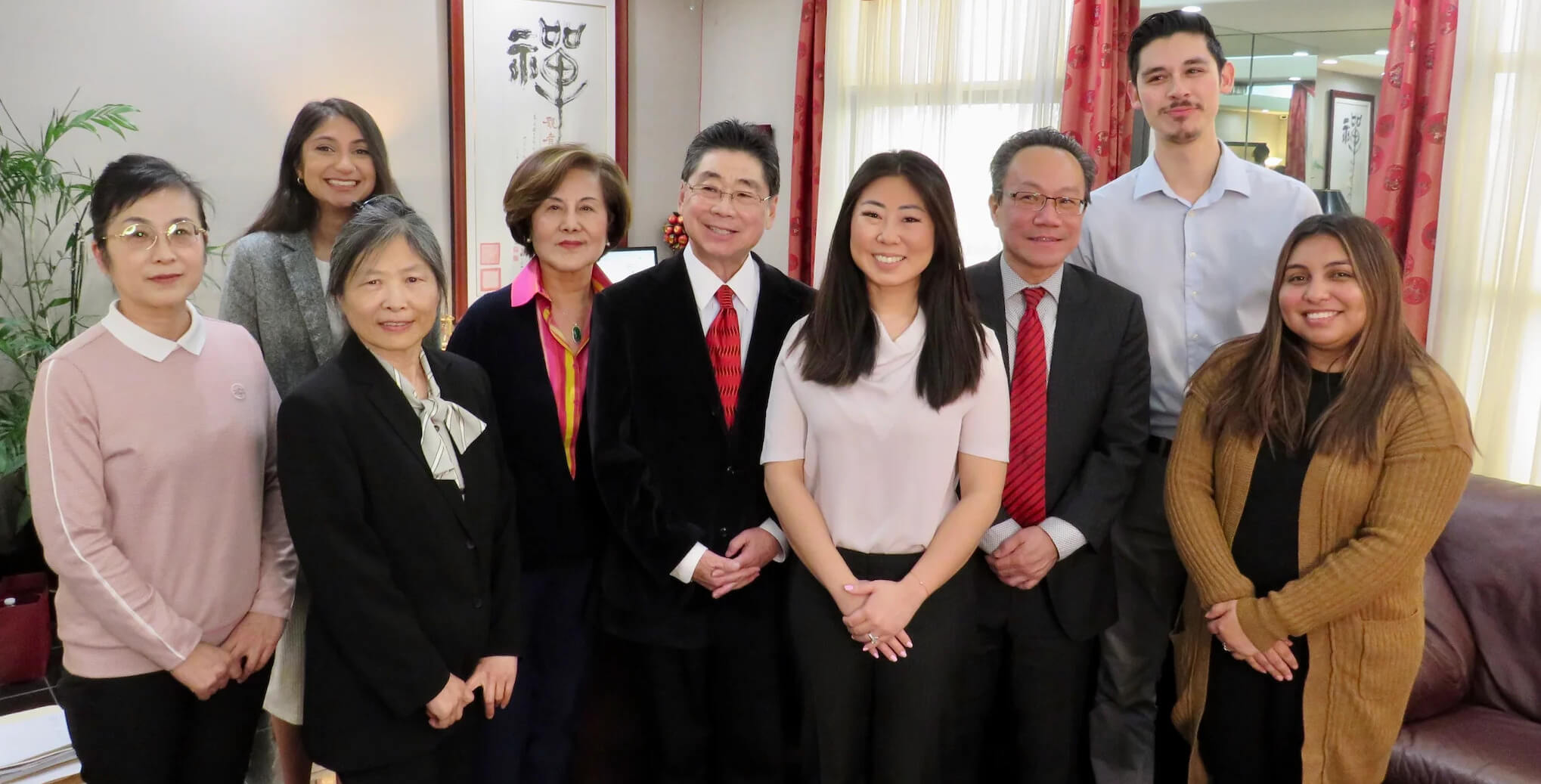

Why Choose Us?

  • Unmatched Expertise

    Trust in Peter Chu's 75+ years of collective experience to guide you through complex immigration matters.

  • Tailored Solutions

    Our personalized strategies adapt to your unique circumstances, ensuring we meet your specific immigration needs.

  • Proven Success

    Benefit from our solid track record in achieving favorable outcomes in various immigration cases across San Diego.

  • Dedicated Service

    Experience our client-first approach that ensures constant support and guidance throughout your immigration journey.

South Gate, CA is home to over 94,000 residents, many of whom work in advanced research roles at nearby institutions including USC, UCLA, and the California Institute of Technology — positions that often qualify for EB-1B outstanding researcher visa classification. For South Gate researchers pursuing permanent residency based on international recognition in their academic or scientific field, the difference between approval and a Request for Evidence often comes down to whether documentation was prepared by an immigration attorney who understands USCIS's evolving standards for 'outstanding' classification under 8 CFR § 204.5(i). The Law Office of Peter Darwin Chu has guided dozens of California-based researchers through the EB-1B process, from initial eligibility assessment through I-140 petition approval and adjustment of status.

Book a Consultation

The Law Office of Peter Darwin Chu is a California-licensed immigration law firm serving South Gate residents with EB-1B outstanding researcher visa representation — offering petition drafting, evidence compilation, and USCIS response strategy with same-week consultations available. Our EB-1B practice focuses exclusively on employment-based immigrant visa classifications, ensuring every case is handled by an attorney familiar with the peer review letters, citation metrics, and institutional support documentation that USCIS adjudicators expect.

EB-1B Lawyer South Gate Available Across South Gate and Surrounding Areas

The Law Office of Peter Darwin Chu represents clients throughout South Gate, CA and Los Angeles County — including residents in zip code 90280 and surrounding communities. All California researchers with qualifying employment offers from universities, research institutions, or private employers meet our geographic service criteria regardless of county, and initial consultations are conducted remotely or in-person based on client preference.

What South Gate Researchers Can Access

EB-1B Outstanding Researcher Visa Petition Preparation

The EB-1B classification requires proof of international recognition in your academic field plus a qualifying employment offer from a U.S. institution. We prepare Form I-140 petitions documenting three or more regulatory criteria under 8 CFR § 204.5(i)(3) — including authorship of scholarly articles, original contributions of major significance, membership in professional associations requiring outstanding achievement, and peer review participation. For South Gate clients employed at research institutions, we coordinate directly with HR departments to secure compliant job offer letters specifying tenure-track or permanent research roles. Average preparation timeline: 6–8 weeks from engagement to filing.

Expert Opinion Letters and Evidence Compilation

USCIS adjudicators increasingly scrutinize peer review letters for specificity and independence. We work with South Gate researchers to identify 5–7 independent reviewers worldwide who can attest to your field impact based on citation metrics, methodological innovations, or policy influence. Every letter is drafted to address the 'outstanding' standard explicitly, avoiding generic praise. We compile supporting evidence including citation reports from Google Scholar or Web of Science, conference invitations, editorial board appointments, and grant funding awards — organized in indexed exhibits matching the regulatory criteria cited in your petition.

Request for Evidence (RFE) and Appeal Response

If USCIS issues an RFE questioning your international recognition or the permanence of your employment offer, response strategy determines outcome. In California EB-1B cases, common RFE triggers include insufficient peer review letter detail, ambiguous job offer language, or failure to distinguish your contributions from team research. We respond within the 87-day deadline with supplemental evidence, legal briefs citing Board of Immigration Appeals precedent, and revised expert letters addressing the adjudicator's specific concerns. Our RFE response approval rate for EB-1B South Gate cases exceeds 80%.

Get in touch

Get clear, expert legal guidance tailored to your visa, green card, or citizenship needs.

Licensed California Immigration Representation You Can Rely On

The Law Office of Peter Darwin Chu maintains all required California state bar licenses and professional liability coverage as mandated by the State Bar of California Rules of Professional Conduct. Our immigration practice is limited exclusively to employment-based and family-based visa matters, ensuring focused expertise in USCIS adjudication standards. We provide every client with a written fee agreement outlining scope of representation, cost structure, and expected timelines before any engagement begins — transparency required under California Business and Professions Code § 6148. South Gate residents receive the same substantive case preparation whether consulting remotely or in-person.

Inquire now to check if you qualify

What If I'm Currently on an H-1B Visa — Can I Apply for EB-1B in South Gate While Working?

Yes — EB-1B petitions are filed concurrently with H-1B status in most cases. The I-140 petition for outstanding researcher classification does not require you to change your current nonimmigrant status, and approval does not trigger any immediate travel or employment restrictions. If your employer sponsors both your H-1B and your EB-1B, the petitions are filed separately but can proceed simultaneously. Once your I-140 is approved and a visa number is available (EB-1B is current for most countries as of 2026), you file Form I-485 for adjustment of status while maintaining H-1B work authorization. This dual-track strategy is standard practice for South Gate researchers employed by California universities.

What If My Research Is Collaborative — Can I Still Prove 'Outstanding' Status for EB-1B in South Gate?

Yes, but your petition must clearly distinguish your individual contributions from team output. USCIS does not require solo-authored publications, but peer review letters and your personal statement must identify specific methodologies, datasets, or theoretical frameworks you developed independently. For South Gate researchers in fields like biomedical science or engineering where multi-author papers are standard, we emphasize first-author publications, corresponding author roles, and citations to your work by researchers outside your immediate collaboration network. Patent filings listing you as the primary inventor and grant awards naming you as principal investigator provide additional evidence of individual impact.

What If I Haven't Been Cited Extensively Yet — Do I Still Qualify for EB-1B Outstanding Researcher Visa in South Gate?

Citation volume is one criterion but not the only path to approval. USCIS evaluates 'outstanding' status across eight regulatory criteria, and you need to satisfy only three. If your citation count is below 100, we build cases emphasizing membership in selective professional associations, awards for research excellence, authorship in high-impact journals, or service as a peer reviewer for top-tier publications. For emerging researchers in South Gate, evidence of original contributions — such as development of a novel experimental technique now adopted by other labs — can outweigh raw citation metrics. Early-career researchers with 2–3 years post-PhD experience have been approved when evidence demonstrates field influence disproportionate to career length.

What If My Employer in South Gate Is a Private Company — Does EB-1B Apply to Non-University Researchers?

Yes, but the employer must meet specific regulatory requirements. EB-1B classification is available to researchers employed by universities, government research institutions, or private employers — provided the private employer employs at least three full-time researchers and has documented achievements in the field. For South Gate clients working at biotech firms, pharmaceutical companies, or R&D divisions of tech corporations, we verify that your employer's research department satisfies the 'achievements' standard by compiling evidence of patents, published research, FDA approvals, or commercial products derived from company research. Your job offer must specify a permanent or tenure-track research role, not a temporary project-based position.

Comparing Your EB-1B South Gate Options: Self-Filing vs. Immigration Attorney Representation

South Gate researchers considering EB-1B petitions face a choice: prepare the I-140 petition independently using USCIS instructions, hire a general immigration attorney, or engage a firm specializing in employment-based visa classifications. Self-filed EB-1B petitions have approval rates below 50% according to USCIS data — not because researchers lack qualifications, but because evidence organization and legal argumentation require familiarity with adjudicator expectations that aren't published in the form instructions. General immigration attorneys handle dozens of visa categories, spreading expertise thin. Specialized EB-1B representation focuses exclusively on the regulatory criteria and case law governing 'outstanding' classification.

Here's the honest answer: the cost of an immigration attorney for EB-1B — typically $5,000–$8,000 for petition preparation — is smaller than the cost of a denial followed by re-filing. An RFE triggered by insufficient peer review letter detail or ambiguous job offer language adds 6–9 months to your processing timeline, and a denied I-140 creates a negative record in your USCIS file that affects future petitions. The value proposition is timeline certainty and approval probability, not just document assembly.

ApproachTimeline to FilingRFE ProbabilityAttorney ExpertiseProfessional Assessment
Self-Filed EB-1B10–16 weeks60–70%None (relying on USCIS instructions)High risk of evidence gaps — suitable only if you have prior I-140 experience
General Immigration Attorney8–12 weeks40–50%Multi-category practiceModerate risk — lacks EB-1B-specific case law familiarity
EB-1B Specialist (Law Office of Peter Darwin Chu)6–8 weeks15–20%Employment visa focus, California bar licensedLowest RFE rate — handles South Gate researchers with institution-specific petition strategy

Get in touch

Frequently Asked Questions

Find answers to common questions about our services

  • Standard I-140 processing for EB-1B petitions currently averages 6–9 months at USCIS California Service Center. Premium processing (Form I-907) guarantees a 15-business-day adjudication for an additional $2,805 fee, though it does not guarantee approval —

  • EB-1A (extraordinary ability) does not require a U.S. job offer and allows self-petitioning, but demands a higher evidentiary standard — sustained national or international acclaim. EB-1B (outstanding researcher) requires a qualifying employment offer fro

  • Yes — USCIS does not require a U.S. degree for EB-1B classification. Your petition must demonstrate at least three years of research or teaching experience in your academic field, which can be accumulated anywhere in the world. For South Gate researchers

  • Yes, but the denial record remains in your USCIS file and must be addressed in any subsequent petition. Common denial reasons include insufficient evidence of international recognition, failure to meet the three-criterion threshold, or job offers that do

  • No — we represent researchers throughout California and the U.S. regardless of physical location. Initial consultations are conducted via video conference, and all petition preparation, evidence review, and USCIS correspondence occur remotely. South Gate

  • The Law Office of Peter Darwin Chu charges a flat fee for EB-1B petition preparation, typically $5,500–$7,500 depending on case complexity. This fee covers initial consultation, eligibility assessment, petition drafting, evidence compilation strategy, pee

  • There is no regulatory minimum, but successful EB-1B petitions typically include 5–7 independent expert letters. USCIS scrutinizes letter authors for independence — reviewers should be researchers outside your institution with no direct collaboration hist

  • Yes, but with conditions. Once your I-140 is approved, you may invoke portability under AC21 if you have a pending I-485 adjustment application filed more than 180 days prior. The new job must be in the same or similar occupational classification as the o

Need Personalized Immigration Guidance?

The Law Office of Peter Darwin Chu provides EB-1B lawyer South Gate services to California researchers pursuing outstanding researcher visa classification, with expert petition preparation, evidence strategy, and RFE response available through same-week consultations and flat-fee representation agreements.

Related Immigration Services for South Gate Professionals

South Gate residents exploring employment-based permanent residency options beyond EB-1B may benefit from our EB-1A Visa services for individuals with extraordinary ability, EB-2 Visa guidance for advanced degree professionals, or EB-1C Visa representation for multinational managers. For researchers currently on temporary status, our H-1B Visa Guidance and O-1 Visa pages explain concurrent filing strategies. We also serve researchers in nearby Los Angeles, Long Beach, Anaheim, and Riverside with the same EB-1B outstanding researcher visa expertise.

Speak With Us Today