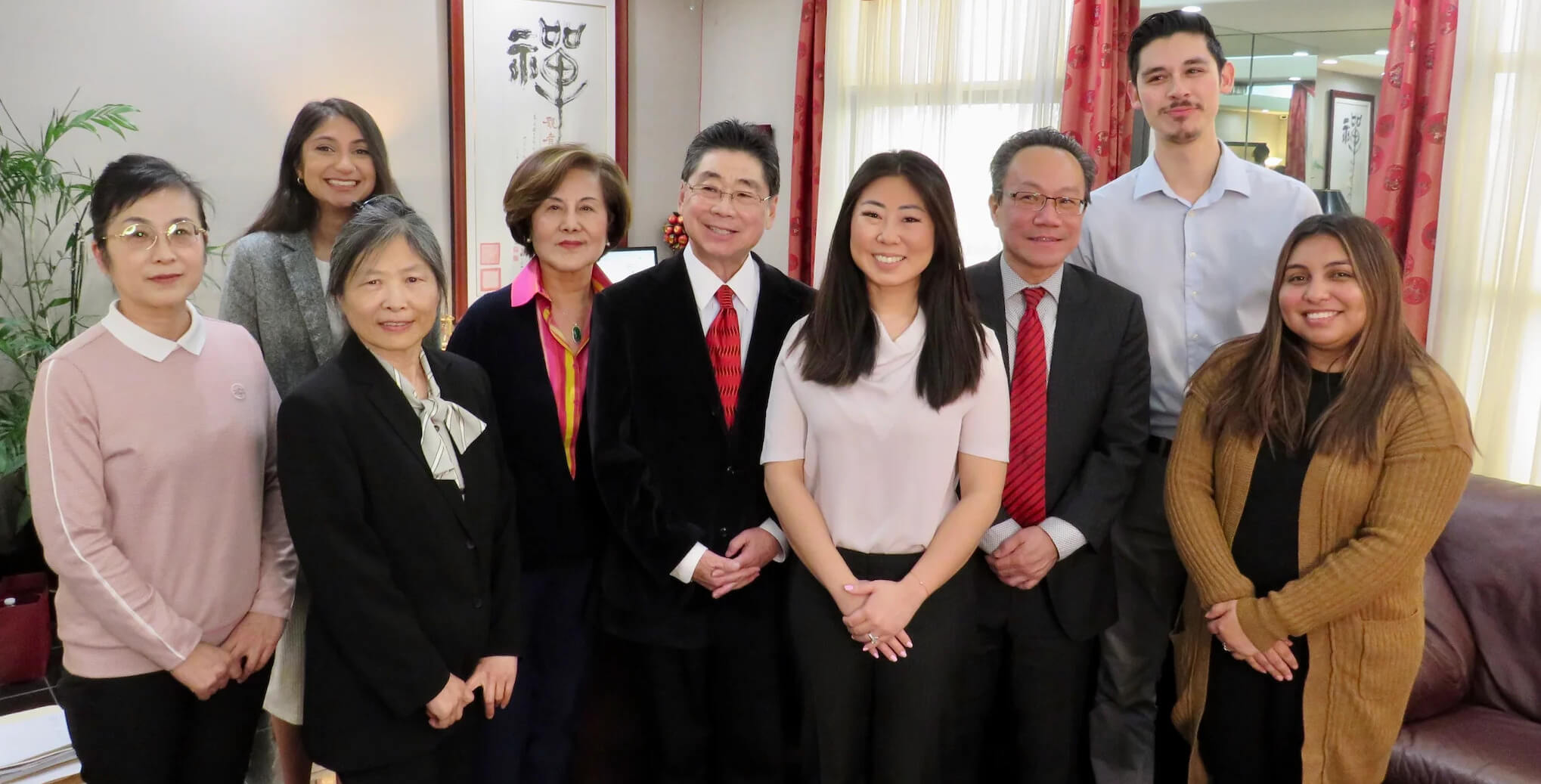

Why Choose Us?

  • Unmatched Expertise

    Trust in Peter Chu's 75+ years of collective experience to guide you through complex immigration matters.

  • Tailored Solutions

    Our personalized strategies adapt to your unique circumstances, ensuring we meet your specific immigration needs.

  • Proven Success

    Benefit from our solid track record in achieving favorable outcomes in various immigration cases across San Diego.

  • Dedicated Service

    Experience our client-first approach that ensures constant support and guidance throughout your immigration journey.

Tulare, CA is home to over 68,000 residents and serves as a critical hub for agricultural research institutions and university partnerships throughout the San Joaquin Valley — creating unique EB-1B visa opportunities for researchers in ag science, veterinary medicine, and plant biology. Researchers seeking EB-1B outstanding researcher visa tulare classification need an immigration lawyer tulare who understands both USCIS evidence standards and the specific academic credentials that qualify under this first-preference employment category. Law office of Peter Darwin Chu represents Tulare-area researchers through every stage of the EB-1B petition — from documentation assembly to Response to Request for Evidence (RFE) — with direct experience filing in California Service Center jurisdiction.

Book a Consultation

Law office of Peter Darwin Chu is a California-licensed immigration law firm serving Tulare residents seeking EB-1B outstanding researcher classification — providing petition preparation, evidence strategy, and USCIS filing for researchers with qualifying academic or institutional offers. We handle cases filed through California Service Center and maintain expertise in agricultural research EB-1B petitions common to the Central Valley.

EB-1B Lawyer Tulare Available Across Tulare and Surrounding Areas

Law office of Peter Darwin Chu serves clients throughout Tulare, CA and surrounding Tulare County communities — including zip codes 93274 and 93275 — as well as researchers affiliated with institutions in Visalia, Porterville, and across the San Joaquin Valley. All California residents with qualifying EB-1B outstanding researcher positions are eligible for representation regardless of county or research discipline.

What Tulare Researchers Can Access

EB-1B Outstanding Researcher Petition Preparation

The EB-1B classification requires evidence of international recognition in a specific academic field, at least three years of research experience, and a permanent or tenure-track research position offer. Law office of Peter Darwin Chu assembles the required documentation — published articles, citation analyses, peer review evidence, and letters from recognized experts — in a format that meets the statutory criteria under INA Section 203(b)(1)(B). This petition is filed directly with USCIS without requiring Department of Labor approval, significantly shortening timeline compared to PERM-based EB-2 cases. Tulare-area researchers in agricultural science, soil biology, and veterinary research benefit from our experience positioning Central Valley research as internationally significant.

EB-1B Visa Evidence Strategy and RFE Response

USCIS issues Requests for Evidence in approximately 40% of EB-1B petitions, typically requesting additional proof of international recognition or clarification of the research position's permanence. We prepare comprehensive initial filings designed to anticipate these requests — including detailed expert letters, publication impact documentation, and employer attestations that satisfy 8 CFR 204.5(i)(3)(i) requirements. When an RFE is issued, our response strategy focuses on the specific deficiency cited, providing supplemental evidence and legal argument within the 87-day response window.

Premium Processing and Timeline Management

EB-1B petitions are eligible for USCIS Premium Processing (Form I-907), which guarantees a 15-business-day adjudication for an additional $2,500 fee. For researchers with time-sensitive employment start dates or concurrent H-1B status nearing expiration, this service provides critical certainty. Standard processing currently averages 8-12 months at California Service Center. Law office of Peter Darwin Chu advises on the cost-benefit analysis of premium processing based on your specific employment timeline and visa status.

Get clear, expert legal guidance tailored to your visa, green card, or citizenship needs.

Licensed California Immigration Representation

Law office of Peter Darwin Chu maintains all required California State Bar licenses and operates in full compliance with American Immigration Lawyers Association (AILA) ethical standards. Our firm carries professional liability insurance as required under California Rules of Professional Conduct Rule 1.15 and maintains IOLTA client trust accounts for all case-related payments. We provide written fee agreements before representation begins, as mandated by California Business and Professions Code Section 6148, ensuring transparent cost expectations for every EB-1B case. All USCIS filings are prepared under attorney supervision and reviewed before submission.

Inquire now to check if you qualify

What If My Research Position in Tulare Is Funded by a Grant — Does That Disqualify Me from EB-1B?

Grant-funded positions can qualify for EB-1B if the position itself is permanent or tenure-track, even if funding comes from renewable grants. The critical distinction under USCIS guidance is whether the research position is indefinite or contingent solely on grant continuation. If your Tulare employer commits to maintaining the position beyond the current grant cycle — documented through an employer letter specifying this intent — the position meets the permanence requirement. Many agricultural research institutions in California structure positions this way specifically to accommodate EB-1B eligibility. Law office of Peter Darwin Chu works with your Tulare employer to draft compliant position descriptions and funding explanations that satisfy USCIS permanence standards.

What If I Have Strong Research Credentials But Fewer Than 10 Published Papers — Can I Still Qualify for EB-1B in Tulare?

USCIS does not impose a specific publication count for EB-1B — the statute requires evidence of 'international recognition' demonstrated through at least two of six regulatory criteria. While published articles are the most common evidence category, you can also satisfy the standard through evidence of peer review service, membership in associations requiring outstanding achievement, or awards for excellence in your field. For Tulare researchers in applied agricultural science, patents, industry adoption of research methods, or citations by USDA or California Department of Food and Agriculture can serve as powerful supplemental evidence. We evaluate your complete research profile — not just publication count — when determining EB-1B viability.

What If I'm Currently on H-1B in Tulare — Can I File EB-1B and Maintain Status If It's Denied?

Yes — filing an EB-1B petition does not affect your current H-1B status, and denial of the EB-1B does not terminate your H-1B authorization. Because EB-1B is a dual-intent classification, you can file the immigrant petition while maintaining H-1B nonimmigrant status without contradiction. If the petition is denied, your H-1B remains valid through its original expiration date, and you retain the option to refile EB-1B with additional evidence or pursue alternative green card pathways such as EB-2 National Interest Waiver. Many Tulare researchers file EB-1B as a first strategy while maintaining H-1B as a backup, which is entirely permissible under immigration law.

What If My EB-1B Petition Is Approved But I'm From a Country With Visa Retrogression — How Long Until I Get a Green Card?

EB-1B is a first-preference employment category that historically has no visa retrogression for most countries, meaning approved petitions move immediately to adjustment of status or consular processing. However, applicants from India and China occasionally experience short retrogression periods due to per-country visa caps. Unlike EB-2 and EB-3 categories, EB-1 retrogression is measured in months, not years — and many months remain current. Once your EB-1B petition is approved by USCIS, you monitor the monthly Visa Bulletin to determine when your priority date is current, at which point you file Form I-485 for adjustment of status. For Tulare residents already in the United States, this typically adds 6-12 months after petition approval to receive the green card.

Why Choose Law Office of Peter Darwin Chu Over Other Immigration Options in Tulare

Researchers pursuing green cards face three primary pathways: EB-1B outstanding researcher, EB-2 National Interest Waiver (NIW), and PERM-based EB-2. Each has distinct evidence requirements, timelines, and employer obligations. Here's the honest answer: EB-1B is faster and more certain than PERM because it skips the 8-12 month labor certification process, but it requires stronger evidence of international recognition than NIW. If your research has generated significant citations, peer review invitations, or adoption by other institutions — and you have a permanent position offer — EB-1B is the optimal path. If your credentials fall slightly below EB-1B thresholds but your work has national importance, NIW becomes the better choice. Law office of Peter Darwin Chu evaluates all three pathways during initial consultation and recommends the strategy with the highest probability of success for your specific profile.

PathwayEmployer Sponsorship RequiredTimeline to FilingEvidence StandardBest For
EB-1B Outstanding ResearcherYes — permanent research offer requiredImmediate filingHigh — international recognition in specific fieldResearchers with strong publication records, citations, and institutional position offers
EB-2 National Interest WaiverNo — self-petitionedImmediate filingModerate — national-level impactResearchers whose work benefits U.S. broadly but lack EB-1B-level recognition
EB-2 PERM Labor CertificationYes — employer sponsors8-12 months for PERM approval before filingLow — basic qualifications for positionEntry-level researchers or positions not meeting EB-1B permanence
DIY Petition Without AttorneyVariesImmediate but high RFE riskSelf-assessed — frequent deficienciesNot recommended — 60%+ RFE rate for pro se EB-1B filers

Get in touch

Frequently Asked Questions

Find answers to common questions about our services

  • Standard processing for EB-1B petitions filed at California Service Center currently averages 8-12 months from submission to approval. Tulare researchers can request Premium Processing (Form I-907) for an additional $2,500 fee, which guarantees adjudicati

  • USCIS defines a permanent position as either a tenured or tenure-track university role, or a research position with an indefinite or unlimited duration at a private employer or research institution. The position cannot be contingent solely on grant fundin

  • Yes — EB-1B petitions can be filed for researchers currently outside the United States through consular processing. Your Tulare employer files Form I-140 on your behalf, and upon approval, you complete immigrant visa processing at a U.S. consulate in your

  • EB-1B requires employer sponsorship and a permanent research position offer, while EB-1A is self-petitioned and requires evidence of extraordinary ability at the very top of your field. EB-1A has a higher evidence threshold — you must demonstrate sustaine

  • Attorney fees for EB-1B petition preparation typically range from $5,000-$12,000 depending on case complexity, evidence volume, and whether premium processing or RFE response is required. USCIS filing fees for Form I-140 are $700, and premium processing a

  • USCIS requires at least two of six regulatory criteria: published scholarly articles, evidence of participation as a judge of others' work, original contributions of major significance, authorship of scholarly books or articles, membership in associations

  • Yes — your spouse and unmarried children under 21 qualify as derivative beneficiaries and can obtain green cards simultaneously with your EB-1B approval. They are classified as E-14 and E-15 dependents respectively. If you file adjustment of status (Form

  • USCIS issues RFEs in approximately 40% of EB-1B cases, typically requesting additional proof of international recognition or clarification of position permanence. You have 87 days to respond with supplemental evidence and legal argument addressing the spe

Need Personalized Immigration Guidance?

Law office of Peter Darwin Chu provides EB-1B lawyer Tulare services for outstanding researchers in California through evidence-based petition preparation, USCIS filing, and RFE response — with representation available for researchers in agricultural science, veterinary medicine, and academic positions throughout Tulare County and the San Joaquin Valley.

Related Immigration Services for Tulare Researchers

Researchers exploring EB-1B classification may also qualify for related visa categories depending on credential strength and position type. EB-1A Visa classification serves individuals with extraordinary ability who do not require employer sponsorship — often a viable alternative for senior researchers with exceptional publication records. Researchers in temporary status may benefit from H-1B Visa Guidance to maintain legal status during the green card process. For researchers seeking efficient pathways without employer sponsorship, EB-2 Visa through National Interest Waiver offers flexibility. Law office of Peter Darwin Chu also handles O-1 Visa Guidance for researchers in temporary nonimmigrant status and EB-3 Visa for positions not meeting EB-1B thresholds. For researchers in Los Angeles, Long Beach, Anaheim, or Riverside, we maintain parallel EB-1B Visa Los Angeles, EB-1B Visa Long Beach, EB-1B Visa Anaheim, and EB-1B Visa Riverside location pages with jurisdiction-specific filing guidance.

Speak With Us Today